Italy has more headline destinations than any single trip can hold. Rome, Florence, Venice, the Amalfi Coast, Tuscany, Sicily, the Dolomites — every one of them earns a place on someone’s list, which is exactly what makes choosing hard. The job of this guide is not to inspire you with another long catalogue. It is to help you decide.
The best way to choose is to split Italy into two buckets: iconic cities and standout regions, coast, islands, and mountains. From there you match destinations to who you are travelling with, how long you have, and what season you are visiting in. This page names the decisive picks, explains who each one suits, and routes you to deeper guides when you are ready to plan a single place in detail.
Quick Answer
Italy’s best places start with Rome, Florence, and Venice — the iconic trio every first trip should anchor on. Split your shortlist into landmark cities and standout regions, then choose by traveler type and trip length. Scenery-led or returning travelers should add the Amalfi Coast or the Dolomites instead.
Trust Layer
Tripstou selection guide for travelers choosing between multiple places. Covers selection criteria, traveler fit, and trip value.
Produced with AI assistance and reviewed by Alex Perrut, working in tourism since 2015, for the Tripstou editorial team. See our editorial process for details.
Last factual review: June 28, 2026.
Official sources consulted: Italia.it, ENIT.
Key Takeaways
- Anchor your first Italy trip on Rome, Florence, and Venice — they cover the country’s defining sights with the easiest connections.
- Split your shortlist into iconic cities and standout regions, then match each pick to your traveler type and trip length.
- Returning or scenery-led travelers should swap a fourth city for the Amalfi Coast or the Dolomites instead.
- Depth beats breadth — two well-chosen bases almost always make a better trip than four rushed stops.
- Pace by trip length, pairing one anchor city with one nearby region every few days instead of chasing coverage.
- Visit headline spots like Venice and Cinque Terre in shoulder season to trade summer crowds for a calmer experience.
Table of Contents
Italy’s best places split into iconic cities and standout regions
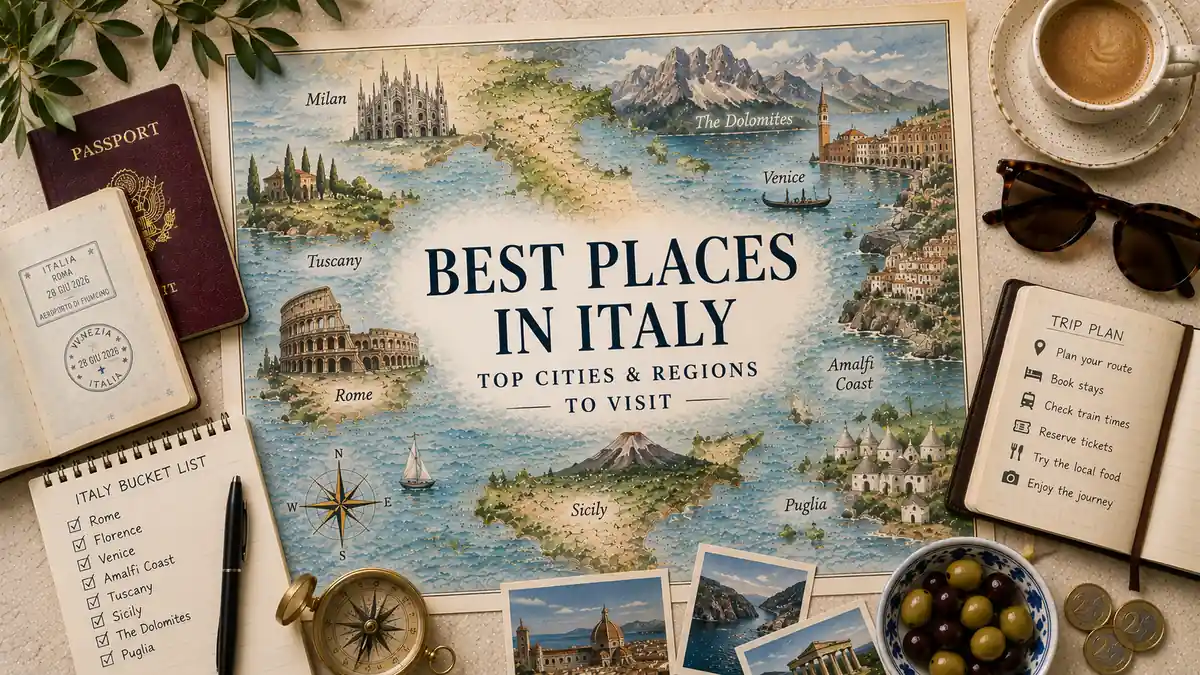
Italy’s best places divide cleanly into iconic cities and standout regions. Rome, Florence, and Venice lead the city picks; Tuscany, the Amalfi Coast, Sicily, and the Dolomites lead the regions, coast, islands, and mountains. This page groups every choice that way so you can match destinations to your trip.
The grouping matters because cities and regions ask for different kinds of travel. Cities concentrate landmark sights, world-class museums, and the easiest rail connections, which makes them ideal when your days are short and your list is long. Regions, coast, and mountains reward a slower pace — a base, a car or a boat, and time to let a landscape unfold.
Use the two sections that follow as your menu. The cities section names the urban anchors most trips are built around; the regions section names the scenery-led picks that turn a good trip into a memorable one. Later sections then filter both lists by traveler type, by the city-versus-countryside question, and by how many places you can realistically combine.
Best Cities to Visit in Italy
Rome, Florence, and Venice are the best cities to visit in Italy, with Milan, Naples, and Bologna close behind. Rome carries the history, Florence the Renaissance art, and Venice the singular canal setting. The second tier adds fashion, southern energy, and food, so your shortlist depends on what each trip prioritizes.
Rome is the default first city and the easiest to justify on any trip. Ancient ruins, Vatican art, and a dense, walkable centre make it the most complete single stop in the country. Read the full Rome travel guide for planning, and the Rome and around guide for day trips when you want a base, not a single-city visit.
Florence is the art capital and the best base for Tuscany. Its compact core packs Renaissance masterpieces within a short walk, and it suits travellers who want culture without a big-city scale. Plan the city with the Florence travel guide, then use the Florence and around guide to fold in the surrounding hill towns and vineyards.
Venice is unlike anywhere else and worth seeing despite the crowds. The canal setting carries the visit on its own, and early mornings or shoulder seasons reward you with a quieter city. Use the Venice travel guide for the islands and timing, and the Venice and around guide for nearby Veneto stops.
Milan, Naples, and Bologna form the strong second tier, each owning a clear identity. Milan leads on fashion, design, and fast rail links — start with the Milan travel guide and the wider Milan and around guide for the lakes. Naples brings raw southern energy and the best pizza in Italy; plan it with the Naples travel guide and the Naples and around guide for the bay and coast. Bologna is the quiet favourite for food and arcaded streets — see the Bologna travel guide and the Bologna and around guide for Emilia-Romagna.
Pick one or two cities as anchors and resist adding a third just because the train is fast. Depth in two cities almost always beats a rushed pass through four.
Best Regions, Coast, and Islands to Visit in Italy
Tuscany, the Amalfi Coast, Sicily, and the Dolomites lead Italy’s regions, coast, islands, and mountains. Tuscany owns rolling countryside and hill towns, the Amalfi Coast owns dramatic coastline, Sicily owns island depth, and the Dolomites own alpine scenery. Cinque Terre, Sardinia, Lake Como, and Puglia round out the shortlist by traveler fit.
Tuscany is the best all-round region and the easiest to pair with Florence. Vineyards, hill towns, and slow lunches define it, and it suits couples and families equally. The tradeoff is that it rewards a car and a few unhurried days. Plan it with the Tuscany travel guide.
The Amalfi Coast is the headline scenery pick for couples and a classic second-trip reward. Cliffside towns and sea views carry it, though summer brings crowds and slow coastal roads — go in shoulder season if you can. Start with the Amalfi Coast travel guide.
Cinque Terre delivers five colourful Ligurian villages linked by trails and trains. It is compact, photogenic, and best visited off-peak, when access pressure eases and the paths feel calmer. Use the Cinque Terre travel guide to time it well.
Sicily is the pick for travellers who want a region with the depth of a country. Greek temples, volcanoes, markets, and distinct food make it a full trip on its own, not an add-on. Plan it with the Sicily travel guide.
Sardinia is the beach-and-nature island, best for travellers chasing clear water and a slower coast over big sights. It rewards a car and a week. See the Sardinia travel guide. Lake Como suits couples and short scenic escapes near Milan — plan it with the Lake Como travel guide.
The Dolomites are the alpine pick for hikers and scenery-led travellers, with dramatic peaks and mountain villages in the north — start with the Dolomites travel guide. Puglia is the value-led southern region of whitewashed towns and quieter coast; plan it with the Puglia travel guide.
One region per trip is plenty. Regions reward time, not coverage, and stacking two distant ones usually trades the scenery you came for against hours in transit.
Best Places in Italy for First-Time Visitors
First-time visitors should anchor on Rome, Florence, and Venice. These three deliver Italy’s defining sights — ancient ruins, Renaissance masterpieces, and the canals — with the easiest connections and the shortest learning curve. Save the Amalfi Coast, Sicily, or the Dolomites for a second trip, when you want depth over the headline highlights.
The trio works because it is connected by fast trains and because each city answers a different “is this really Italy?” expectation. Rome covers the ancient and the grand, Florence covers art and Tuscany’s doorstep, and Venice covers the one cityscape that exists nowhere else. Together they form the backbone of nearly every well-planned first visit.
If you have more than a week, add one nearby region instead of a fourth city — Tuscany from Florence, or the Amalfi Coast from a Rome-and-Naples line. That keeps the trip anchored in the essentials while giving you a taste of the slower, scenery-led Italy that pulls most people back for a second trip.
Where to Go by Traveler Type: Couples, Families, and Foodies
Match the place to the traveler type: couples to the Amalfi Coast, families to Tuscany, foodies to Bologna. Venice also suits couples, Rome suits families, and Naples rewards foodies. Each pairing reflects what that group values most — romance and scenery, space and variety, or regional cooking at its source.
Couples lean toward scenery and atmosphere, which is why the Amalfi Coast and Venice top the list. Families do best where there is variety and room to slow down without losing interest — Tuscany’s countryside and Rome’s mix of ruins and gelato cover both ends. Foodies should travel to the source: Bologna for pasta and Emilia-Romagna’s larder, Naples for pizza and the southern table.
| Traveler type | Lead pick | Strong alternative | Best for |
|---|---|---|---|
| Couples | Amalfi Coast | Venice | Romance, scenery, slow evenings |
| Families | Tuscany | Rome | Space, variety, easy pacing |
| Foodies | Bologna | Naples | Regional cooking at the source |
| First-timers | Rome | Florence | Defining sights, easy connections |
| Returning travelers | Dolomites | Sicily | Depth, scenery, fewer crowds |
Treat these pairings as a starting filter rather than a rule — a foodie couple can happily build a trip around Bologna and the Amalfi Coast. When the experience matters as much as the place, the things to do in Italy guide helps you match destinations to the activities that shape each pick.
Tours and activities
Book skip-the-line tickets, day trips and local tours with free cancellation on most activities.
You can also browse everything on getyourguide.com.
Tripstou may earn a commission if you book through this link, at no extra cost to you.
City or Countryside in Italy: Which Should You Choose?
Choose cities for a first trip and culture, countryside or coast for slow travel and scenery. Italy’s cities pack the landmark sights and the easiest transport, while regions like Tuscany and the Amalfi Coast reward a slower pace. Most first visits lean city; returning travelers lean rural.
The honest answer for most trips is both, in the right ratio. Cities give you the must-see sights and the connections that hold an itinerary together, so they earn the bulk of a first visit. The countryside and coast give you the memories that linger — a long lunch with a view, a quiet morning in a hill town — which is why they reward travellers who already have the highlights behind them.
The deciding variable is pace, not preference. If you want to cover ground and tick off icons, weight the trip toward cities. If you want to settle in and let days slow down, weight it toward one region. For full country-level planning and logistics across both, route to the Italy travel guide.
How Many Places to Visit in One Trip (and Which to Combine)
Pace by trip length: plan one anchor city plus one nearby region every few days. Cramming a new city each morning wastes the trip on transit. A week suits two or three bases, while ten days to two weeks comfortably adds a region or the south. Fewer bases almost always means a better trip.
The combining logic is geographic. Pair places that sit on the same line so travel time stays short: Rome with Florence and Venice along the high-speed spine; Florence with Tuscany; Naples with the Amalfi Coast; Milan with Lake Como or the Dolomites. Islands like Sicily and Sardinia work best as their own trip rather than a tacked-on extra.
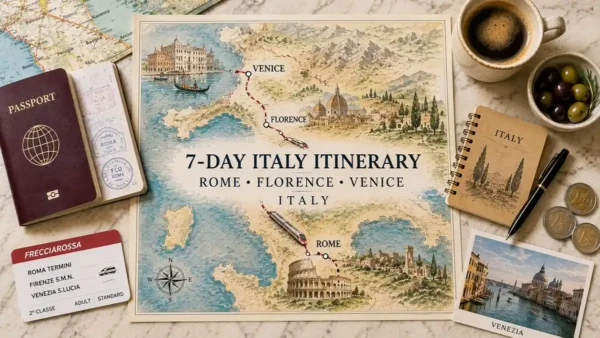
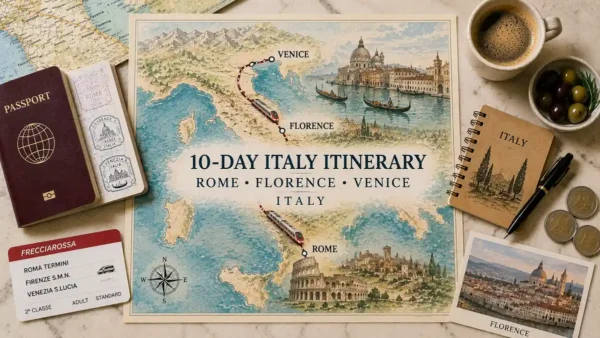
Book the slower legs first and let them set the pace, not the other way round. For day-by-day sequencing once you have chosen your places, route to the dedicated itineraries — the 7 days in Italy plan for a first trip, the 10 days in Italy plan to add a region, and the 14 days in Italy plan when you want cities and the south in one trip.
Frequently Asked Questions
What is the best time of year to visit Italy’s top places?
Spring and autumn are the best times to visit Italy’s top places. April to June and September to October bring warm weather, manageable crowds, and open attractions across cities and coast alike. Summer suits the lakes and mountains but crowds the Amalfi Coast and cities; winter favours quiet culture trips.
Where should you go in Italy to avoid crowds?
To avoid crowds in Italy, lean toward lesser-known regions and travel off-peak. Puglia, Sardinia’s interior, and the quieter corners of Tuscany stay calmer than Venice, Cinque Terre, or the Amalfi Coast in summer. Visiting popular spots early in the day or in shoulder season also thins the crowds noticeably.
What are the best off-the-beaten-path places in Italy?
Italy’s best off-the-beaten-path places include Puglia, Matera, the Aeolian Islands, and quieter Umbria. These reward travelers who already know the headline cities and want fewer crowds with strong character. Keep expectations realistic: lesser-known does not mean empty, and reaching them often takes more planning than the classic stops.
Is southern or northern Italy better to visit?
For most first trips, central and northern Italy wins; the south wins for coastline, food, and value. The north and centre anchor Rome, Florence, Venice, the lakes, and the Dolomites. The south rewards returning travelers with Naples, the Amalfi Coast, Sicily, and Puglia and fewer crowds.
Related Guides
- Italy travel guide — full country planning, logistics, and how the regions connect.
- Things to do in Italy — the experiences and activities behind each destination.
- 7 days in Italy — a first-trip route built around the iconic cities.
- 10 days in Italy — cities plus one region at a comfortable pace.
- 14 days in Italy — combining the north, the cities, and the south.
- Rome travel guide — the default first city, planned in depth.
- Tuscany travel guide — the best all-round region to pair with Florence.
- Amalfi Coast travel guide — the headline coastal scenery pick.
Did this guide save you time or money? Tripstou is independent and reader-funded — if you'd like to give something back, you can support the site with a crypto contribution of any size.