Plan a first trip to Germany as two halves with one anchor city each: Berlin in the north for history, museums, culture and nightlife, and Munich in the south for the Alps, castles, beer-hall tradition and the Romantic Road towns. With about a week, pick one half and do it well. With ten days to two weeks, do both on a single north–south rail line, with one or two stops in between.
Everything else on this page follows from that choice: which half suits you, how far your days stretch along the line, where to sleep, when to go, how the trains work and what your spending style buys. City detail lives on the city pages linked along the way.
The Plan in Brief
- Treat Germany as two trips: Berlin in the north for history, museums and nightlife, Munich in the south for the Alps, castles and beer halls.
- About a week does one half well, while ten days or more lets you ride the north–south line and take both anchors, with a night in Nuremberg, Leipzig or Dresden between them.
- Late spring and early autumn suit a city-and-rail trip best, winter is worth it when the Christmas markets are the goal, and summer belongs to the Alps and the lakes.
- A train-only trip works for the cities, but the Deutschlandticket covers regional trains and city transport only, so the ICE ride between the anchors needs its own ticket.
- Germany is mid-priced for western Europe, and it turns expensive mainly through late-booked long-distance rail or a hotel night during a trade fair or Oktoberfest season.
- EU citizens travel on an ID card, and everyone else should check the Schengen short-stay rules for their own passport before booking.
On This Page
Is Germany worth visiting, and what is it best for?
Germany is worth visiting, and it is strongest for four kinds of trip: history and culture in Berlin, Dresden and Nuremberg; a first Europe-by-rail trip; a winter trip built on Christmas markets or beer culture; and Alps-and-outdoors time in the south. It is a weak pick for a sun-and-beach holiday. The northern coast is cool, and the country’s pull lies in its cities, towns and mountains.
Germany also works differently from France or Italy as a first European country. No single capital swallows the trip. Art, power and history are spread across many cities — Berlin, Munich, Hamburg, Cologne, Dresden — and a dense rail network joins them, so moving between two or three bases is part of the plan from the start.
Who it suits, in short:
- History readers get depth few countries match: Berlin’s twentieth century, Dresden’s rebuilt baroque centre and Nuremberg’s walled old town sit on one journey.
- First-time rail travelers find a train-led trip unusually easy, with the big cities on fast lines and regional trains reaching the smaller towns.
- Winter and beer-culture trips have a purpose here that most of Europe lacks in the cold months, from market squares to Bavaria’s beer halls.
- Hikers and lake people should look south, where the Bavarian Alps and their lakes turn the warm months into an outdoors trip.
The second and third cities on a German route often become the trip’s favourite nights. Travelers who plan only for Berlin and Munich tend to underrate the towns between them.
Berlin or Munich first: the anchor decision for a first trip
Neither half is the wrong choice, but they are different trips. Berlin-first is the history, museums and nightlife trip; Munich-first is the Alps, castles and beer-hall trip. Do both only when your days allow the full line between them.
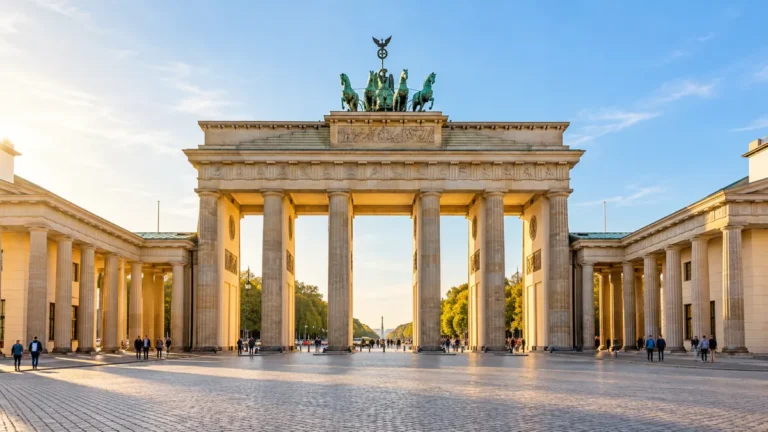
Berlin is the trip for travelers who came for the twentieth century. The glass dome of the Reichstag rises above the parliament, and you can book a guided visit that takes in the government district around it. Museum Island gathers the city’s great collections on one stretch of the Spree. Cold War history runs through whole neighbourhoods, and the sites of the divided city make sense fastest on foot, so it pays to join a walking tour early in the stay.
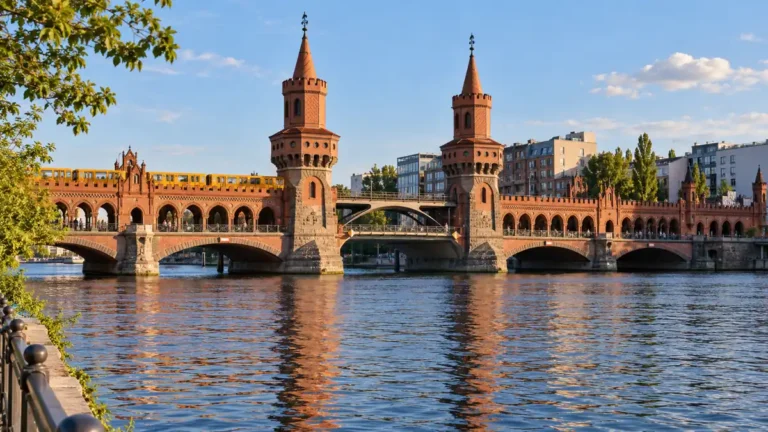
The river is the easiest first look at central Berlin. A boat on the Spree passes the government district from the water and shows how the river ties the centre together. Beyond the city, Potsdam’s palaces are the classic day out and the Sachsenhausen memorial is the sober one. Our Berlin travel guide covers how to plan the city itself.
Munich is the trip for travelers who want Bavaria. The old town of beer halls and churches is the base, the Alps sit within day-trip reach, and so does Neuschwanstein. Oktoberfest season packs the city and its hotels: it is a reason to go or a reason to stay away, never a neutral week. Start with things to do in Munich for the city itself.
Choose by what you came for. Museums, history and evenings out point to Berlin. Mountains, castles and Bavarian towns point to Munich. If you cannot choose and have ten days or more, ride the line and take both.
The anchor you skip is not lost. Berlin and Munich sit at opposite ends of the same rail line, so the half you leave out becomes the obvious shape of a second trip.
Tours and activities
Book skip-the-line tickets, day trips and local tours with free cancellation on most activities.
You can also browse everything on getyourguide.com.
Tripstou may earn a commission if you book through this link, at no extra cost to you.
Germany’s regions as travel choices: character, draw and who they suit
Seven broad regions matter on a first trip to Germany, and only two of them are anchors: Berlin with the east, and Bavaria with Munich and the Alps. The other five work as stops between the anchors, add-ons when time allows, or regions for a second trip.
| Region | Character | Anchor draw | Who it suits |
|---|---|---|---|
| Berlin and the east | Capital scale, layered with twentieth-century history | Reichstag dome, Museum Island, Cold War sites, Potsdam | History and museum lovers, night owls |
| Bavaria | Traditional, mountain-backed, beer-hall culture | Munich’s old town, Neuschwanstein, the Alps | First-timers after classic Germany, castle and mountain fans |
| Franconia | Walled medieval towns | Nuremberg, the Romantic Road towns | Travelers who prefer small historic towns |
| Saxony | Baroque, musical, rebuilt | Dresden’s riverfront old town, Leipzig’s music heritage | Art and music lovers on the Berlin–Munich line |
| Hamburg and the north | Maritime, cooler, mercantile | Hamburg’s harbour and warehouse district | City travelers adding a northern leg |
| The Rhine and the west | River valleys, vineyards, a cathedral city | Cologne Cathedral, the Rhine Valley castles | Second-trip travelers and river lovers |
| Black Forest and the southwest | Forested hills, villages, spa towns | Forest walks and village drives | Walkers and drivers with a car |
Bavaria is the anchor region with the deepest day-trip menu, and its best-known sights sit outside Munich. Neuschwanstein and the Alpine valleys are covered in our guide to day trips from Munich.
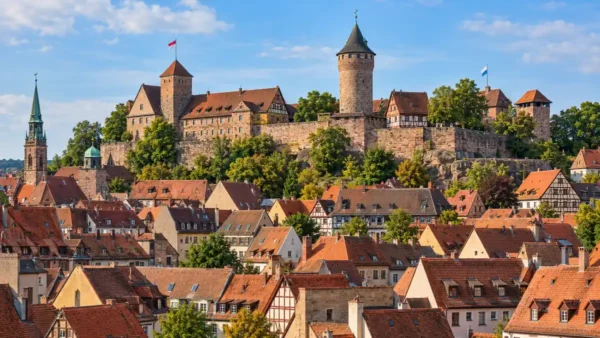
Franconia is the strongest stop between the anchors. Nuremberg pairs a walled old town with heavy twentieth-century history, and the Romantic Road towns spread west and south of it; see things to do in Nuremberg for the city. Saxony is the eastern alternative: Dresden for baroque riverfront grandeur, Leipzig for music and a younger, livelier feel.
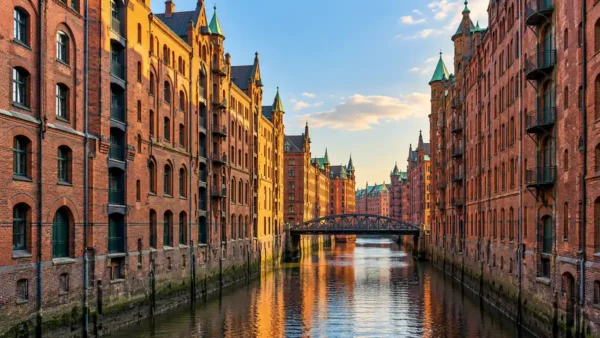
Hamburg and the north make a different country from Bavaria — harbour cranes, brick warehouses, grey skies and a seafaring past. They suit travelers who start in Berlin and want a second big city; two days in Hamburg is the usual allowance.
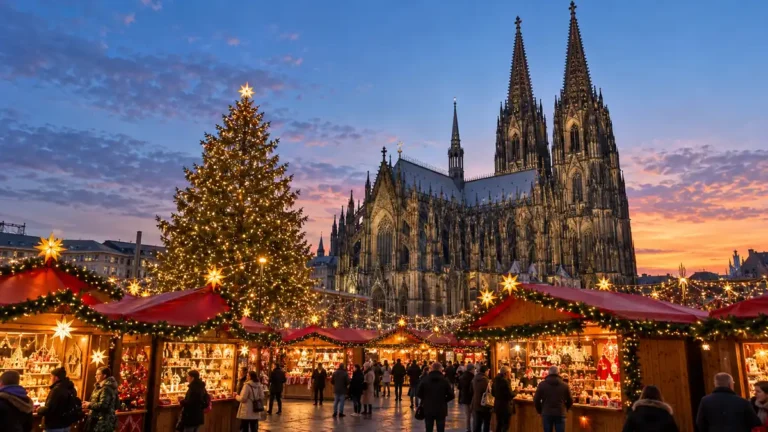
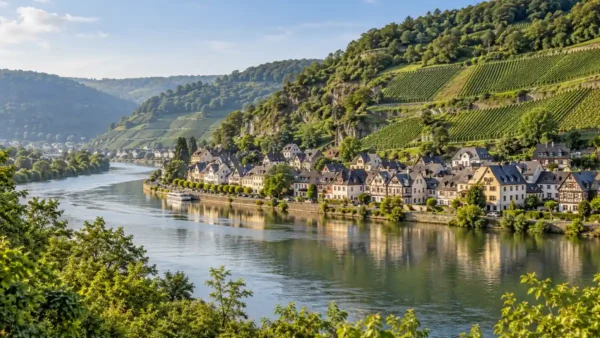
The Rhine and the Black Forest are second-trip regions on a first visit. Cologne’s cathedral and the castle-lined Rhine Valley belong to a western trip, and the Black Forest is car country, where villages and walks reward drivers far more than rail passengers.
How many days do you need in Germany?
About a week buys one half of Germany well. Ten days buys both anchors joined by the rail line with one stop between them, and two weeks or more add a second stop or a northern leg to Hamburg. Fewer than five days is a city trip, not a Germany trip.
| Trip length | Regional pairing | Bases |
|---|---|---|
| About a week | One half: Berlin with Potsdam and Saxony, or Munich with Bavaria and Franconia | Berlin or Munich, plus one optional night elsewhere |
| Ten days | Both anchors on the north–south line, one stop between | Berlin, Leipzig, Dresden or Nuremberg, Munich |
| Two weeks and more | Both anchors, two stops, or Hamburg added in the north | Hamburg or Berlin, two stops, Munich |
Squeezing both halves into a week is the classic first-trip mistake. Every move between bases eats into a day, and a Berlin–Munich week spends too much of itself on packing, stations and check-ins to do either city justice.
Munich takes about three days of any length, with the Alps or Neuschwanstein as a fourth when the trip allows. Our plan for three days in Munich shows how that share fills. With less than five days in total, pick one city and use its own page.
The jump from a week to ten days is worth more than any later addition. Those extra days are what turn one half into the whole line.
Base in Berlin and Munich, and run the trip as one north–south line
The strongest first-trip route runs from Berlin to Munich, or the reverse, on the long-distance line. You sleep in the two anchors and give one or two intermediate stops a night each. Every other shape is a variant of this one.
The anchors make the best bases for three reasons. Their main stations are the country’s big rail hubs, their day-trip radius covers a whole region, and their hotel stock is deep enough to absorb most dates. Sleeping in a smaller town saves little and costs connections.
The candidate stops between the anchors:
- Nuremberg sits on the line in Franconia and earns a night for its old town and history.
- Leipzig is on the line too, and works as a night or a long stopover.
- Dresden lies east of the direct route, so it only makes sense with a night of its own.
- Hamburg is the northern add-on, placed before Berlin when time allows.
Fly into one end and out of the other. Starting in Berlin and leaving from Munich, or the reverse, saves the long ride back and keeps the whole trip moving in one direction.
Hotel pressure shapes the base choice as much as geography. Big trade fairs fill city hotels at short notice, and Oktoberfest season does the same in Munich, so check what is on in each anchor before fixing dates.
A night in Nuremberg or Leipzig turns the long ride between the anchors from a travel day into an extra city.
When is the best time to visit Germany?
Late spring and early autumn are the best time for a city-and-rail trip, with mild weather and thinner crowds. Winter is the season when the Christmas markets are the point. Summer is the warmest and busiest, with thunderstorms, and it is the season for the Alps and the lakes.
The north and south do not share one climate. Hamburg and Berlin run cooler and greyer; Bavaria has warmer summers and reliable snow in the mountains in winter.
- Late spring suits city trips and walking between sights, though evenings can still turn cool in the north.
- Summer is for the Alps, the lakes and long evenings outdoors, and it brings the busiest trains and sights, plus afternoon storms.
- Early autumn works for both anchors and the wine regions; the catch is Munich’s autumn beer festival, which fills the city’s hotels.
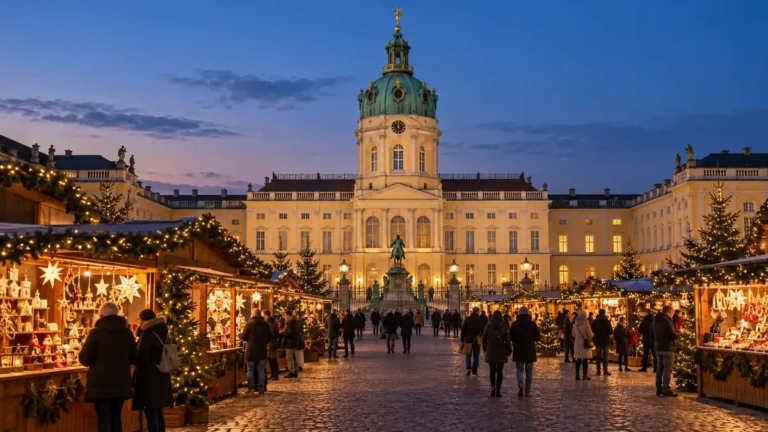
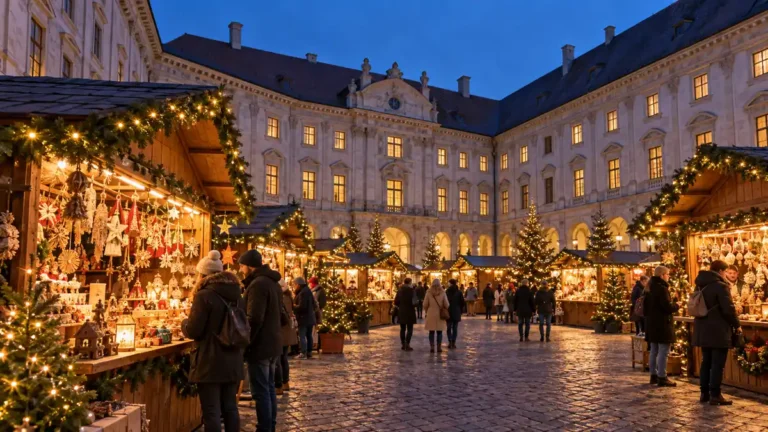
- Winter favours market trips and museum-heavy city breaks, with short days and cold, grey weather as the price. Christmas markets fill the winter calendar, and our guide to Germany’s Christmas markets covers which towns to choose.
Time the Munich end around Oktoberfest season. For a festival trip, book early; for any other trip, keep away from it, because the beer tents set Munich’s hotel market for the whole season.
Can you travel Germany by train only?
Yes, for a city-anchored trip. Fast long-distance trains link the big cities, and regional trains and city networks cover the rest. A car earns its place only for the Romantic Road, the Black Forest and the Alps.
A rail-led trip works in two layers. Long-distance trains carry you between the anchors and the stops on the line. Inside each half, regional trains, S-Bahn, U-Bahn, trams and buses handle the day trips and the city moves.
Hold a valid ticket before you board. On city transport, a paper ticket often needs validating at the stop or on board, and inspectors check without warning.
Rent a car for one leg only. Pick it up for the Romantic Road, the Black Forest or an Alpine loop, and return it before the next city, where parking and traffic make it a burden.
Booking early pays off on the long-distance legs between the anchors, and late bookings are where rail gets expensive. The regional layer is the flexible part of the trip.
Does the Deutschlandticket work on ICE trains?
No. The Deutschlandticket is not valid on ICE, IC or EC trains. It covers local and regional transport nationwide — S-Bahn, RB and RE regional trains, buses, trams and U-Bahn — and is sold as a subscription you can cancel monthly.
For a first trip, the ticket fits the regional half of the journey: day trips out of Berlin or Munich, hops between Franconian towns and city transport in every stop. Combine it with a separate long-distance ticket for the ICE ride between the anchors, and cancel the subscription once the trip is over.
Is Germany expensive to travel?
Germany is mid-priced for western Europe: not cheap, but kinder than Switzerland or the Nordic countries. It is most punishing when rail is booked late or when a city hotel night falls during a trade fair or Oktoberfest season.
- On a tight budget, hostels and simple guesthouses, bakeries and lunchtime menus, and regional trains on the Deutschlandticket keep the trip lean, at the cost of slower moves between regions.
- In the comfortable middle, a central mid-range hotel, sit-down dinners and long-distance trains booked ahead give the classic north–south trip with little friction.
- At the high end, design hotels, tasting menus and first class on the long-distance line — or a car for the southern scenic roads — buy comfort and flexibility.
For daily figures by spend style, see our Germany trip cost breakdown. Non-EU visitors can reclaim tax on qualifying shopping; the steps are in our guide to the VAT refund in Germany.
Do you need a visa to travel to Germany?
It depends on your passport. EU citizens need only an ID card, and other visitors enter under the Schengen short-stay rules, visa-free or with a Schengen visa according to nationality. Germany is in the EU and the Schengen area and uses the euro.
Short stays are capped at 90 days in any rolling 180-day period across the Schengen area as a whole, not per country. Non-EU arrivals are registered biometrically at the border instead of having passports stamped, under the EU Entry/Exit System. Visa-exempt visitors should confirm whether the ETIAS travel authorisation applies to their trip before booking. The rules for your passport are on our Germany visa requirements page.
Sources and Scope
This page plans a first trip across the whole of Germany — which anchor city, how many days, when to go and how to move between bases. It is not a Berlin or Munich city guide or a day-by-day itinerary, and budget figures and entry status live on the linked pages.
Alex Perrut, working in tourism since 2015, went over this country plan for the Tripstou editorial team after it was written with AI assistance; our editorial process sets out the steps.
Official sources consulted: German National Tourist Board, Deutsche Bahn.
Open the Page for Your Anchor City
- Berlin travel guide: planning the capital for a Berlin-first trip.
- Things to do in Munich: the sights of the southern anchor.
- Three days in Munich: how the Munich share of the trip fills.
- Day trips from Munich: Neuschwanstein and the Alps from a Munich base.
- Two days in Hamburg: the northern add-on.
- Things to do in Nuremberg: the strongest stop between the anchors.
Did this guide save you time or money? Tripstou is independent and reader-funded — if you'd like to give something back, you can support the site with a crypto contribution of any size.