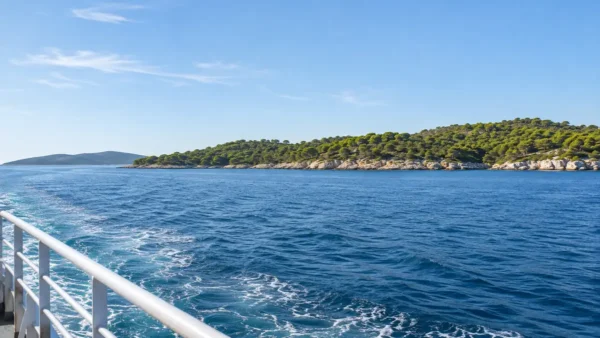
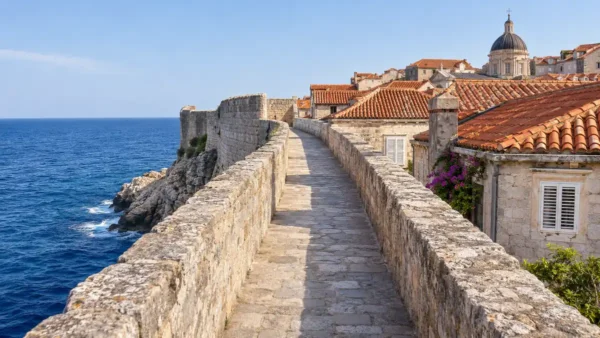
A first trip to Croatia works best built around one stretch of coast, not a sweep of the whole country. For most first-timers that stretch is the Dalmatian coast from Split to Dubrovnik, with one island in between. Around 7–10 days covers it well; with more time, add Plitvice Lakes and Zagreb or a second region, and go in late spring or September instead of July and August.
Everything below follows that order of decisions: which coast suits you, how many days it needs, when to go, where to sleep, how to move between towns and islands, and what it all costs in euro.
The Short Version
- Commit to one stretch of coast on a first trip; for most first-timers that is Split to Dubrovnik with a single island night between them.
- A week covers that coast, ten days adds Plitvice and Zagreb, and a second coastal region only starts to make sense at around two weeks.
- Late May to June and September beat July and August, when Dubrovnik and Hvar are at their fullest and most expensive.
- Base in Split for islands and onward connections, and in Dubrovnik when the walled city itself is the reason for the trip.
- Budget roughly €50–80 a day for a budget trip, €100–160 mid-range and €200 and up for a comfortable one, per person and excluding international flights.
- Plitvice tickets are sold for a set entrance and time slot, so buy them before you fly and plan the rest of that day around the slot.
On This Page
What Croatia Is Best For on a First Trip
Croatia is best for a trip that mixes sea, islands and old stone towns: a long, island-studded Adriatic coast, two walled cities in Dubrovnik and Split’s Diocletian’s Palace, and one inland lakes park at Plitvice, all in a country compact enough to pair them. It is worth visiting as a coast-and-islands trip, and a poor fit for a tick-list of every region.
The country is known for a handful of things it does unusually well. Roman and Venetian old towns sit right on the water. Ferries and catamarans make island days easy in summer. National parks such as Plitvice and Krka put lakes and waterfalls within reach of the coast, and the konoba, a family-run tavern, sets the tone for eating out.
Croatia rewards slowing down. It punishes the opposite: a short trip that tries to fit Istria, the Dalmatian islands, Zagreb and Dubrovnik ends up spent on buses. For the experiences worth building a route around, see the best things to do in Croatia.
Croatia’s Regions and Which Coast to Pick
Croatia’s coast splits into three Dalmatian blocks: south Dalmatia around Dubrovnik, central Dalmatia around Split and the big islands, and north Dalmatia around Zadar, Šibenik and Krka. Istria and Kvarner form the quieter north, and Zagreb with Plitvice is the inland pair. A first trip takes one block or two neighbouring ones: south plus central Dalmatia for the classic postcard trip, north Dalmatia for fewer crowds, Istria for food and small hill towns.
| Region | Character | Anchor draws | Suits | Natural base |
|---|---|---|---|---|
| South Dalmatia | Walled city, busy in summer | Dubrovnik Old Town, Lokrum, Elaphiti Islands | Short trips, first-timers | Dubrovnik |
| Central Dalmatia | Hub city with big islands | Diocletian’s Palace, Trogir, Hvar, Brač | Island-hoppers | Split |
| North Dalmatia | Dalmatia with lighter crowds | Zadar, Šibenik, Krka National Park | Repeat visitors, waterfall days | Zadar |
| Istria | Hill towns, Italian accent | Rovinj, Pula, Poreč, Motovun | Food and wine, road trips | Rovinj |
| Kvarner | Gentle bays and islands | Rijeka, Opatija, Krk, Rab, Lošinj | Families, slow island time | Opatija or Krk |
| Zagreb and continental | Capital and green hills | Zagreb, Zagorje, Varaždin, Samobor | Arrival days, winter trips | Zagreb |
| Plitvice and Lika | Inland lakes and forest | Plitvice Lakes National Park | Drivers between Zagreb and the coast | Day trip or one night |
Dubrovnik and the south
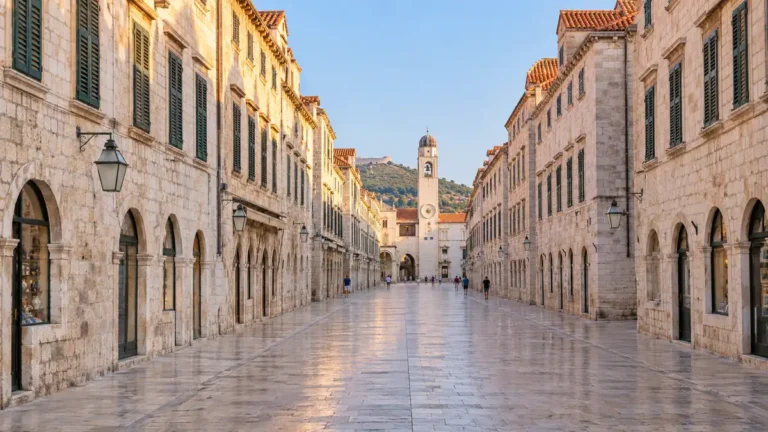
Dubrovnik is the Croatia most people picture: a walled Old Town over the sea, with Lokrum and the Elaphiti Islands a short boat ride out, and Korčula, the Pelješac peninsula and Mljet further up the coast. It is the strongest single base for a short first trip, and the most expensive.
Game of Thrones fans have an extra reason to come. Filming locations run through the Old Town’s streets and out to Lokrum, the island just off the Old Town, so one morning can cover both. From Dubrovnik, Mostar in Bosnia and Herzegovina and Kotor in Montenegro are the usual cross-border day trips. For the full run of sights, see things to do in Dubrovnik.
Split and central Dalmatia
Split is the best-connected base on the coast, and central Dalmatia is where island-hoppers should start. Anchors within reach:
- Diocletian’s Palace, the Roman core of Split’s old town, and the Marjan hill above it
- Trogir, a small walled town close to Split
- Hvar, Brač and Vis, the big islands, all reached by ferry or catamaran
- Omiš and the Cetina canyon for a day off the beach
Pick central Dalmatia if islands are the point of the trip and you want the widest choice of boats.
Zadar, Šibenik and the north coast
North Dalmatia gives you the same Dalmatian stone towns and sea with noticeably fewer crowds than Split or Dubrovnik. Zadar and Šibenik are compact old towns on the water, and Krka National Park, with its river waterfalls, sits inland near Šibenik. This is the coast for travelers who want Dalmatia without the queues.
Istria
Istria is the food-and-wine corner of Croatia, a peninsula in the far north-west where Rovinj, Pula and Poreč sit on the coast and Motovun crowns an inland hill. Truffles and Malvazija white wine define its tables, and its closeness to Italy shows in the towns and the cooking. A car makes the most of it, which is why road-trippers favour it.
Kvarner
Kvarner is the slower, family-friendly side of the coast, centred on the port city of Rijeka, the old resort of Opatija and the islands of Krk, Rab and Lošinj. It sits between Istria and the road to Zagreb, which makes it an easy add-on for a trip that starts in the north. Choose it for unhurried island time over headline sights.
Zagreb and continental Croatia
Zagreb works as an arrival-day city and as a winter destination, when Advent in Zagreb fills the centre. The green hills of Zagorje, baroque Varaždin and small Samobor are easy outings, and štrukli, a cheese-filled pastry, is the dish to try. The region also suits routes that continue into Slovenia or Hungary. To plan your time in the capital, see one day in Zagreb.
Plitvice and Lika
Plitvice Lakes National Park is the one inland sight most first trips should include. Its terraced lakes and waterfalls sit in the forests of Lika, between Zagreb and the Dalmatian coast, so it breaks the journey between the two. It suits anyone with a car or a spare day on that leg; tickets need booking ahead (see the booking section below).
Slavonia, the flat east of the country, is the region for slow travel and hearty food such as kulen sausage and čobanac stew, and it rarely fits a first trip.
How Many Days Do You Need in Croatia?
You need about a week for one stretch of coast, ten days to add Plitvice and Zagreb, and two weeks before a second coastal region makes sense. Three to five days means one base, not a tour.
- 3–5 days: one region from one base, either Dubrovnik with Lokrum and the Elaphiti Islands, or Split with one island. Suits a city break or a long weekend; moving bases would eat a day.
- About 7 days: Split to Dubrovnik with one island night between them. This is the classic first trip and the one most first-timers should take.
- 10 days: the Split–Dubrovnik coast plus Plitvice and Zagreb, or the coast plus a second region such as north Dalmatia. Suits travelers flying into Zagreb and out of Dubrovnik, or the reverse.
- 14 days or more: add Istria or Kvarner, or slow down on the islands with two or three nights each. At this length a side trip into Slovenia, Montenegro or Bosnia and Herzegovina stops costing you the Croatian part.
Every extra base costs half a day of packing and transfers, so on a seven-day trip a second island usually takes more than it gives. For day-by-day plans at each length, see this Croatia itinerary for 7, 10 or 14 days.
Late Spring and September Beat Peak Summer
Late May to June and September are the best time to visit Croatia: the sea is warm enough to swim, ferries run fuller timetables and crowds and prices sit below their summer peak. July and August are the hottest, fullest and most expensive months, with Dubrovnik and Hvar hit hardest.
Peak summer means queues in the walled towns, the highest accommodation rates of the year and catamarans that can sell out. It is also festival season. Ultra Europe in Split and the Dubrovnik Summer Festival draw their own crowds.
The shoulder months trade very little. In late May the sea is still cool, and once September ends many island and coastal services start to thin. September is the stronger of the two for swimming, because the sea has had all summer to warm.
Off-season, the coast goes quiet. Many hotels, restaurants and island connections close or cut back, and the trip shifts inland, where Advent in Zagreb becomes the winter reason to come.
Split or Dubrovnik: Where to Base a First Trip
Base in Split if you want islands, ferries and onward connections; base in Dubrovnik if the walled city is the point of the trip and you accept the highest prices on the coast. Most week-long first trips split the nights between the two, with an island night in the middle.
- Split works as the coast’s transport hub: Trogir is close, Hvar and Brač are a boat ride away, and buses and ferries leave in every direction. See things to do in Split for what fills the days there.
- Dubrovnik is a destination in itself, with Lokrum and the Elaphiti Islands for days off the walls, but it sits at the southern end of the line, so everything else is further away. Our Dubrovnik travel guide covers planning a stay there.
An island base is the slower choice. Every outing depends on ferry times, and the last boat sets the end of the day, so it fits a second trip or a two-week stay better than a first week.
Outside Dalmatia, the base choice is simpler. Rovinj is the natural base for Istria, Zadar for the north Dalmatian coast, and Zagreb for the inland pair with Plitvice.
Getting Around Croatia: Buses, Ferries and When a Car Pays Off
Coastal buses are the backbone of getting around Croatia, ferries and catamarans handle the islands, and a car pays off in Istria, inland and around the national parks but not inside Split or Dubrovnik. Trains are of little use on the coast, and a domestic flight saves a long day between Zagreb and Split or Dubrovnik.
Public transport is enough for the classic Split–Dubrovnik trip. A car earns its cost once the route leaves the main coastal line:
- It pays off in Istria’s hill towns, on the Plitvice leg between Zagreb and the coast, and for Krka and the quieter north Dalmatian coast.
- It works against you inside Split and Dubrovnik, where the old towns are on foot, and on island hops that buses and passenger boats already cover.
Ferries and catamarans run their fullest timetables in summer and thin out outside it. In July and August the fast catamarans, Split–Hvar being the classic example, can sell out, so book the boat legs of the trip first. The islands, routes and how the boats work are covered in island hopping in Croatia.
The Split–Dubrovnik leg is the one every first trip faces: a bus, a catamaran in season, or a car. Journey times, tolls, the border question on the road south and airport transfers are on our page about getting around Croatia by bus, ferry and car.
What a Trip to Croatia Costs per Day
A trip to Croatia costs roughly €50–80 per person per day on a budget, roughly €100–160 mid-range, and €200 and up for a comfortable trip, excluding international flights. July and August push every style to the top of its band, and Dubrovnik is the priciest base in the country.
- Budget, roughly €50–80 a day: a private room or a small apartment, bakery breakfasts and konoba meals, and buses and slow ferries between towns. Croatia’s apartment stock and bus network make this style workable even on the coast.
- Mid-range, roughly €100–160 a day: a mid-range hotel or a sea-view apartment, sit-down restaurant meals, and the occasional catamaran or hire car day. This is where most first trips land.
- Comfortable, €200 and up a day: boutique hotels with sea views, fine dining, a car for the whole trip, a domestic flight and private transfers in place of the bus.
Two things punish every budget here: a Dubrovnik stay in peak season, and a sold-out catamaran that forces a pricier way across. Shoulder dates and an early boat booking protect the band you planned for.
Croatia uses the euro, and prices are quoted in euro throughout. Visitors from outside the EU can look into tax-free shopping in Croatia before a big purchase.
What to Book Before You Fly
Plitvice Lakes is the one thing that must be booked ahead. Tickets are sold for a chosen entrance and time slot, the park highly recommends buying online through its official webshop, and you cannot enter before your slot. Dubrovnik’s City Walls and peak-season catamarans are the next two to lock in.
The time slot shapes the whole day. Pick the entrance and hour first, then plan the drive or bus from Zagreb or the coast around it, because arriving early does not get you in sooner.
Dubrovnik’s City Walls are worth booking for a July or August visit, whether you walk them on your own ticket or reserve a guided walls walk. Summer catamarans to the islands come next, and a peka dinner usually needs ordering in advance, since the dish cooks slowly under its bell lid.
Tours and activities
Book skip-the-line tickets, day trips and local tours with free cancellation on most activities.
You can also browse everything on getyourguide.com.
Tripstou may earn a commission if you book through this link, at no extra cost to you.
Arriving in Croatia: Airports, Entry Rules and the Euro
Most visitors fly into Zagreb, Split or Dubrovnik, with Zadar and Pula busiest in season, and domestic flights link Zagreb with Split and Dubrovnik. Croatia is in the EU and the Schengen area and uses the euro, so for most travelers the entry questions are the EU-wide rules, not a Croatian visa.
Split is the coast gateway for central Dalmatia, and its old town inside Diocletian’s Palace is the natural first stop. Zagreb is the inland gateway: a day in the capital before heading to Plitvice and the coast is an easy way to start a ten-day trip.
Visa-exempt visitors should confirm whether the ETIAS travel authorisation applies to their trip before booking. Non-EU arrivals are registered biometrically at the border instead of having passports stamped, under the EU Entry/Exit System. The full rules by passport are on our page on Croatia visa and entry requirements.
Mostar in Bosnia and Herzegovina and Kotor and Perast in Montenegro lie outside the Schengen area, so a day trip from Dubrovnik to either crosses an external border twice, out and back. Carry your passport on the day, whether you drive yourself or book this day trip to Mostar.
The euro is Croatia’s only currency. The kuna it replaced is now history, so there is nothing to convert beyond your home currency.
Croatian Food Worth Ordering: Peka, Pašticada and Black Risotto
Dalmatian cooking is the coast’s default: grilled fish, peka slow-cooked under a bell lid, pašticada with gnocchi and crni rižot, the black squid-ink risotto. Istria adds truffles with fuži pasta, Zagorje adds štrukli, and the konoba, a family-run tavern, is the place to look for all of it.
Dishes to know by name:
- Peka: meat or seafood with vegetables, cooked slowly under a bell-shaped lid; often ordered ahead.
- Pašticada: Dalmatian braised beef served with gnocchi.
- Crni rižot: risotto coloured black with squid ink.
- Brudet: a coastal fish stew.
- Soparnik: a chard pie from the Poljica area near Split.
- Fuži with truffles: Istria’s hand-rolled pasta with local truffles.
- Štrukli: Zagorje’s cheese-filled pastry.
- Kulen and čobanac: Slavonia’s paprika sausage and its meat stew.
To drink, Plavac Mali is the Dalmatian red, Malvazija the Istrian white, and rakija the fruit brandy that opens or closes a meal.
Who Croatia Suits, and the First Trip That Works
Croatia suits travelers who want sea, old towns and islands in one compact trip and are happy moving by bus and boat. The first trip that works is one coast: Split to Dubrovnik with an island between them, in late spring or September, with Plitvice and Zagreb added once you have ten days or more.
It suits three kinds of trip less well: a single-resort beach holiday, a rail-first journey, and any attempt to see every region in a week. The coast rewards a base-and-boat rhythm, and the train network barely touches it.
Dubrovnik, Hvar and Split have local rules on behaviour and enforce them, from visitor management in Dubrovnik’s Old Town to rules on swimwear and street drinking in town centres. Check the rules of each town before you arrive and follow them.
Leave Istria, Kvarner and the slower islands such as Vis or Lošinj for a second trip. They are the reason most people who enjoy a first week on the Dalmatian coast come back.
How This Guide Was Put Together
This whole-country planner helps you pick a coast, a trip length and a season for Croatia, then sends you to the cluster’s itinerary, island, transport, Dubrovnik and entry-rules pages; it is not a city guide, a day-by-day plan or a hotel list.
Alex Perrut, working in tourism since 2015, went over these regions, costs and booking rules for the Tripstou editorial team; the guide was written with AI assistance, following our editorial process.
Official sources consulted: Croatian National Tourist Board, Plitvice Lakes National Park, European Union.
Croatia Questions First-Timers Still Ask
Is Croatia in the Schengen area?
Yes. Croatia is an EU member and part of the Schengen area, so days spent there count toward the same allowance as the rest of Schengen. Short stays are capped at 90 days in any rolling 180-day period across the Schengen area as a whole, not per country. The rules for each passport are on our page on Croatia visa and entry requirements.
Is Croatia safe for tourists?
Yes, Croatia is a safe country for most visitors, and the problems first-timers actually meet are small ones. Midday summer heat in the stone old towns, sea urchins on rocky beaches (water shoes help) and pickpockets in the busiest streets are the usual cautions.
Is English widely spoken in Croatia?
Yes, in tourism settings: hotels, restaurants and tour operators along the coast and in Zagreb generally work in English. It thins out inland and with older locals, where a few Croatian words such as hvala (thank you) and dobar dan (good day) go a long way.
Keep Planning Croatia
- Croatia itinerary: day-by-day plans for 7, 10 and 14 days.
- Island hopping in Croatia: which islands to pick and how the ferries work.
- Croatia transport guide: buses, ferries, car hire and the Split–Dubrovnik leg.
- Things to do in Croatia: the experiences worth building the trip around.
- Dubrovnik guide: planning a base in south Dalmatia.
Did this guide save you time or money? Tripstou is independent and reader-funded — if you'd like to give something back, you can support the site with a crypto contribution of any size.