Italy holds more iconic experiences than any single trip can fit. One country gives you Roman ruins, Renaissance masterpieces, world-defining food, a coastline of cliffs and islands, alpine peaks, and regional traditions found nowhere else — far more than two weeks can hold. The challenge is not finding things to do; it is choosing which experiences to build your trip around.
This guide sorts Italy’s signature experiences by theme, not by city, so you can shortlist by interest instead of chasing a map. Each section names the headline experiences, explains who each suits, and points to deeper destination guides when you want detail. Read it as a menu: pick the themes that pull at you, then route onward for where to go and how to sequence the days.
Quick Answer
The best things to do in Italy fall into six experience themes, from ancient sites to coast, food, and mountains. You choose by interest, not by route, grouping experiences by theme instead of chasing a destination ranking. First-timers do best blending one history site, one art experience, one food moment, and one coast day.
Trust Layer
Tripstou selection guide for travelers choosing between multiple places. Covers selection criteria, traveler fit, and trip value.
Produced with AI assistance and reviewed by Alex Perrut, working in tourism since 2015, for the Tripstou editorial team. See our editorial process for details.
Last factual review: June 28, 2026.
Official sources consulted: Italia.it, ENIT.
Key Takeaways
- Italy’s signature experiences sort into six themes: ancient ruins, Renaissance art, food and wine, coast, mountains and lakes, and unique regional moments.
- Choose what to do by interest and theme, not by route, then decide where to go afterward.
- First-timers do best blending one ancient site, one art masterpiece, one food experience, and one coastal day.
- The core trade-off is breadth versus depth — no single trip covers all six themes well.
- Once your experience shortlist is set, route to a where-to-go list and an itinerary planner for sequencing.
Table of Contents
The Experiences That Define an Italy Trip
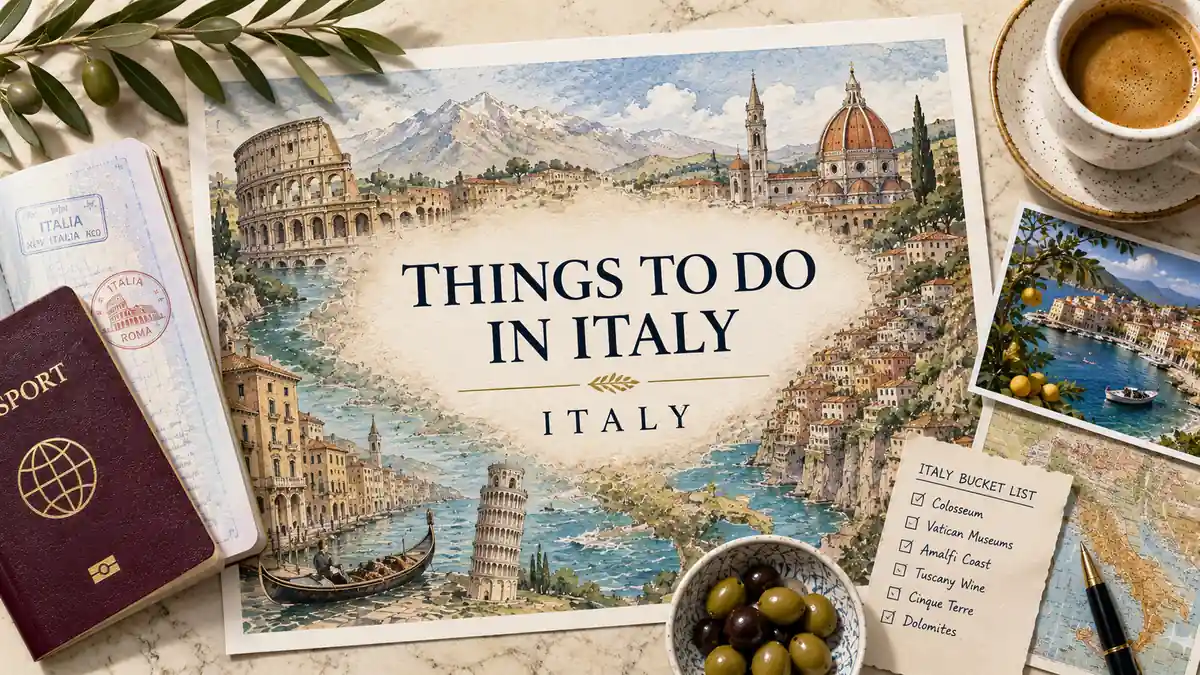
A handful of experiences anchor almost every first Italy trip. Standing inside the Colosseum, gliding through Venice by gondola, facing Michelangelo’s David in Florence, driving the Amalfi Coast, and joining a Tuscan cooking class are the iconic moments most travelers build around. They sort cleanly into a few clear themes.
These headline experiences are not random — they map onto the themes this guide uses to organize everything below:
- Ancient history: the Colosseum and Roman Forum, Pompeii, Sicily’s Greek temples.
- Renaissance art: Michelangelo’s David, the Uffizi, the Last Supper, the Sistine Chapel.
- Food and wine: a Tuscan vineyard tasting, a cooking class, eating a dish where it was born.
- Coast and islands: the Amalfi drive, Capri’s Blue Grotto, Cinque Terre trails, Sardinia’s beaches.
- Mountains and lakes: hiking the Dolomites, slow days on Lake Como.
- Unique regional moments: a Venetian gondola, the trulli of Alberobello.
The point of grouping by experience, not by city, is that it keeps the WHAT separate from the WHERE. Once you know which experiences pull at you, deciding where to go gets far easier — and that companion shortlist lives in our guide to the best places to visit in Italy.
No one does all six themes well in one trip. The travelers who enjoy Italy most pick two or three themes and go deep instead of sprinting between every famous name on the list.
Italy’s Ancient Ruins and Roman History Up Close
Italy’s top ancient experiences sit in Rome, Naples, and Sicily. The Colosseum and Roman Forum put you inside the engine of the ancient city, Pompeii freezes daily life under Vesuvius near Naples, and Sicily’s Valley of the Temples rivals anything in Greece. Each delivers a different scale of history.
What sets these apart is what each one lets you feel:
- Colosseum & Roman Forum (Rome): the monumental, imperial scale of ancient power, side by side with the everyday Forum.
- Pompeii (near Naples): an entire city stopped mid-life — streets, frescoes, and bakeries preserved by ash.
- Valley of the Temples (Sicily): Greek temples in golden stone, often far less crowded than the mainland icons.
History-led travelers usually want at least one big-city ruin and one immersive site. For the Colosseum, Forum, and Pantheon in depth, see things to do in Rome; for Pompeii and Herculaneum, plan from things to do in Naples. Major timed-entry sites often need reservations well ahead — treat that as a rule and book early.
Tours and activities
Book skip-the-line tickets, day trips and local tours with free cancellation on most activities.
You can also browse everything on getyourguide.com.
Tripstou may earn a commission if you book through this link, at no extra cost to you.
Renaissance Art and Masterpieces You Can Stand In Front Of
Italy’s defining art experiences cluster in Florence, Milan, and Rome. Florence’s Uffizi and Michelangelo’s David hold the heart of the Renaissance, Leonardo’s Last Supper survives on a refectory wall in Milan, and the Vatican Museums lead to the Sistine Chapel ceiling in Rome. These are originals you stand before, not reproductions.
The signature art moments each ask for a slightly different plan:
- Uffizi & Michelangelo’s David (Florence): the densest single dose of Renaissance painting and sculpture anywhere.
- The Last Supper (Milan): a fragile mural seen in short, strictly limited time slots.
- Vatican Museums & Sistine Chapel (Rome): a long gallery walk that builds to Michelangelo’s ceiling.
Art-led travelers should accept that two unhurried museum mornings beat five rushed ones. For the Uffizi and David, see things to do in Florence; for the Last Supper, plan from things to do in Milan. The Last Supper in particular releases a fixed number of slots, so reserve as far ahead as you can.
Food and Wine Experiences Worth Planning Around
Food-led travelers should build a day around a class, a tasting, or a regional specialty. A Tuscan vineyard tasting, a hands-on pasta or pizza cooking class, and eating where a dish was born — ragù in Bologna, pizza in Naples — turn meals into the trip’s main events, not refueling stops.
Italy’s food experiences are intensely regional, which is exactly why they reward planning:
- Wine tasting in Tuscany: Chianti and Brunello estates pair the wine with the landscape it comes from.
- A cooking class: fresh pasta in Emilia-Romagna or pizza in Naples teaches a technique you take home.
- Eating regionally: ragù and tortellini in Bologna, Neapolitan pizza in Naples — each city defends its own canon.
The lever here: book a vineyard visit or a popular class a few days ahead, since the best ones fill fast and many sit outside town. For wine country, see things to do in Tuscany; for Italy’s food capital, see things to do in Bologna.
Coast and Island Experiences, From Amalfi to Sardinia
Italy’s headline coastal experiences run from Amalfi to Sardinia. The Amalfi Coast drive, the Blue Grotto and cliffs of Capri, the clifftop trails linking Cinque Terre’s villages, and Sardinia’s white-sand beaches are the coast’s signature days. Each offers a different mix of drama, hiking, and swimming.
Match the coast to the kind of day you want:
- Amalfi Coast: a scenic coastal drive past cliffside towns like Positano and Ravello.
- Capri & the Blue Grotto: a day-trip island of sea caves, viewpoints, and chic harbors.
- Cinque Terre: five colorful villages linked by clifftop walking trails above the sea.
- Sardinia: the clearest water and best beaches, better as a slower stay than a day trip.
Ferries and some coastal trails run on seasonal schedules and can pause in winter or rough weather — treat timetables as ranges and verify before you commit a day to them. Go deeper with things to do on the Amalfi Coast, things to do in Cinque Terre, things to do in Sicily, and things to do in Sardinia.
Mountains and Lakes for Slower, Scenic Days
Scenery-led travelers should head to the Dolomites and the northern lakes. The Dolomites deliver dramatic hiking and the enrosadira, the alpenglow that turns the peaks rose-pink at dusk, while Lake Como’s lakeside towns and gardens reward slow, scenic days. Both trade big-sight intensity for space and calm.
These two scenic regions suit different paces:
- The Dolomites: hiking, cable-car viewpoints, and the rose-pink enrosadira glow at sunrise and sunset.
- Lake Como: grand lakeside villas, gardens, and ferry-hopping between towns like Bellagio and Varenna.
Mountain lifts and lake ferries follow seasonal calendars, with many alpine services thinner outside summer — check current opening windows; do not assume year-round access. For lakeside days, see things to do in Lake Como; for the peaks, see things to do in the Dolomites.
Unique Regional Experiences You Can Only Have in Italy
Some Italian experiences exist nowhere else on earth. Riding a gondola through Venice’s canals and sleeping among the cone-roofed trulli of Alberobello in Puglia are singular, place-bound moments. They reward travelers who want a trip defined by atmosphere and regional character over checklist landmarks.
These one-of-a-kind experiences carry a trip’s emotional high points:
- A gondola in Venice: the classic ride through quiet back canals, best away from the busiest stretches.
- The trulli of Alberobello (Puglia): whitewashed cone-roofed houses, some now atmospheric places to stay.
If a sense of place matters more to you than ticking off big sights, build a day or a night around one of these. For the canals, see things to do in Venice; for the trulli and Puglia’s countryside, see things to do in Puglia.
Which Experiences Should First-Timers Prioritize?
First-timers should blend a few themes rather than chase every famous sight. Pick roughly one experience from each pillar — one ancient site, one art masterpiece, one food experience, one stretch of coast — and leave the rest for a return trip. The biggest mistake is over-packing a single visit.
A balanced first-timer mix usually looks like Rome for ancient history, Florence for Renaissance art, a Tuscan food or wine experience, and one coastal day on the Amalfi Coast or in Cinque Terre. That single arc covers four of the six themes without exhausting you.
The core trade-off is breadth versus depth: Italy is large and slow to cross, so every extra theme costs travel time and energy. Fewer bases and fewer themes almost always make for a better trip than a packed checklist.
Once you have your shortlist of experiences, the next decisions are sequencing and logistics. For the day-by-day route and how-many-days planning, use our Italy itinerary planner; for transport, timing, and money basics, start with the broader Italy travel guide.
Frequently Asked Questions
Do you need to book tickets in advance for Italy’s main attractions?
Yes, for major timed-entry sites you should book ahead. The Colosseum, Vatican Museums, Uffizi, and Milan’s Last Supper release limited slots that sell out, especially in peak season. Reserve these weeks in advance; smaller attractions are usually fine on the day. Check each destination guide for current booking rules.
What is the best time of year for these experiences?
Spring and autumn suit most experiences best, balancing good weather with thinner crowds. Cities and art museums work year-round, the coast and islands peak in summer when ferries run fully, and the Dolomites split into a summer hiking season and a winter snow season. Shoulder months reward flexible travelers.
How many days do you need to do the main things in Italy?
Plan about 10 to 14 days to cover Italy’s main experiences comfortably. A week lets you pair two regions, such as Rome with Florence or the Amalfi Coast, while two weeks adds a third theme like the lakes or coast. Fewer bases and themes beat a packed sprint.
Do you have to choose between cities, coast, and mountains on one trip?
Usually yes, on a first trip you should choose two or three of these rather than all. Italy is long and slow to cross, so mixing alpine lakes, southern coast, and major art cities in one short visit burns days in transit. Pick a focus, then add a contrasting region if time allows.
What can you do in Italy beyond the famous big-city sights?
Plenty — Italy rewards travelers who venture past Rome, Florence, and Venice. Hike the Dolomites, taste wine across Tuscany, sleep in Puglia’s trulli, walk Cinque Terre’s coastal trails, or explore Sicily’s Greek temples. Each region defends its own food, landscape, and traditions, so regional experiences often become a trip’s most memorable moments.
Are Italy’s top experiences a good fit for families?
Yes, most of Italy’s signature experiences suit families well. Pompeii’s ruined streets, gondola rides, pizza-making classes, and Cinque Terre’s short trails engage children as much as adults. Long museum mornings and clifftop drives test younger kids, so balance big sights with beach time, gelato stops, and slower days between the headline experiences.
Related Guides
Use these guides to turn your experience shortlist into a real plan — where to go, how to sequence the trip, and where to dig into specific destinations.
- Best Places to Visit in Italy — the WHERE companion to this experience guide.
- Italy Itinerary Planner — sequencing, pacing, and how many days you need.
- Italy Travel Guide — transport, timing, money, and trip logistics.
- Things to Do in Rome — the Colosseum, Forum, Pantheon, and Vatican in depth.
- Things to Do in Florence — the Uffizi, David, and Renaissance core.
- Things to Do on the Amalfi Coast — the signature coastal drive and towns.
Did this guide save you time or money? Tripstou is independent and reader-funded — if you'd like to give something back, you can support the site with a crypto contribution of any size.