Plan Turkey as Istanbul plus one more region for each week of travel. For most first trips that second region is Cappadocia; make it the coast if the trip falls in summer. Adding a third region takes about two weeks, so trip length is what decides the pairing.
Türkiye is the country’s official name; this page uses Turkey. It sits outside the EU and the Schengen area, and its currency is the Turkish lira. Most first-timers arrive long-haul into Istanbul, and that is where this plan starts.
Scope and Sources
This page plans a first trip across the whole of Turkey: the anchor city, the region you pair with it, how long to stay, when to go, how to move between regions and what each spending level costs. Istanbul’s sights, day-by-day itineraries, visa detail and a ranked list of places each have their own linked page.
Written with AI assistance, this country plan was read through by Alex Perrut, working in tourism since 2015, for the Tripstou editorial team. The steps behind it are set out in our editorial process.
Official sources consulted: Go Türkiye, UK Foreign, Commonwealth & Development Office.
Turkey Is Big-Name History Plus a Second Landscape
Turkey is worth a first trip because it stacks Istanbul’s imperial sights on top of a second, completely different landscape: the valleys and rock-cut churches of Cappadocia, or the Turquoise Coast. It does this at better value than most of Western Europe. It suits first-timers who want both halves, and it frustrates anyone hoping to see all of it in a week.
The country is strongest on four things. History comes first, from Byzantine and Ottoman Istanbul to the Roman ruins of Ephesus. Landscape follows, with Cappadocia’s eroded valleys and the travertine terraces of Pamukkale. Food runs through every region, and the Mediterranean and Aegean coasts add beaches and boat days from late spring into autumn.
Turkey fits the traveler who will trade breadth for depth: one great city and one region seen properly beats five places glimpsed from a bus window. Anyone who needs a single compact circuit will find the distances here fight them at every turn. Value is the other draw: rooms and meals generally cost less than in Western Europe, and the cost section below puts figures on it.
Istanbul Plus What? Cappadocia, the Coast, or Both
Istanbul is the fixed anchor and the usual arrival point, so the real first-trip decision is the second region: Cappadocia or the coast. Cappadocia is inland, reached by air, and works in every season except deep winter, when snow and cancelled balloon flights become a risk. The coast is a summer trip: the Aegean for Ephesus and Pamukkale, the Mediterranean for Antalya, Fethiye and Kaş. Trying all three in one week fails on distance.
The strongest first-trip route shape is Istanbul, then a flight to Cappadocia, then a flight home or on to the coast when there is time. Each region needs one base. Istanbul is the obvious one, and the neighbourhood choice is a decision of its own, covered in where to stay in Istanbul. Göreme is the base for Cappadocia, Selçuk or İzmir for Ephesus, and Antalya, Fethiye or Kaş for the Mediterranean.
- Istanbul + Cappadocia: the classic first trip, workable from spring to late autumn, for travelers who want a city and a landscape that look nothing alike. It gives up the beach.
- Istanbul + the Aegean: Ephesus, Pamukkale and a beach base in one region, for history readers who still want to swim. It needs warm months, and Pamukkale sits inland, so expect a road day.
- Istanbul + the Mediterranean: Antalya, Fethiye or Kaş for a beach-and-boat second half, for couples and families treating the trip partly as a holiday. It trades ancient-site density for coastline.
The coast pairing only makes sense between May and early October; book a spring or late-autumn trip and Cappadocia becomes the second region almost by default.
Turkey’s Regions, From Istanbul to the Turquoise Coast
Six broad regions matter for a first or second trip to Turkey, and four of them carry nearly every first-trip plan: Istanbul, Cappadocia, the Aegean with Pamukkale, and the Mediterranean. Marmara and Thrace, and the regions beyond the postcard, are for a return visit or a longer loop.
Istanbul
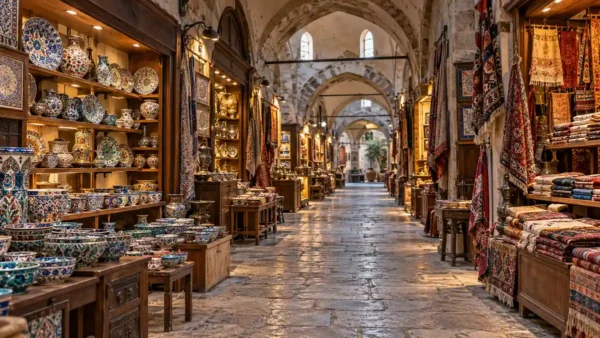
Istanbul is the former imperial capital spread across two continents, and it earns at least three days of any Turkey trip. Hagia Sophia, the Blue Mosque and the Basilica Cistern form the Sultanahmet core, and most visitors see the three together on their first morning because they stand within a short walk of one another. Dolmabahçe Palace and the Grand Bazaar fill the next layer; tax-free shopping in Turkey, useful for bigger bazaar purchases, has its own page. A whirling dervish ceremony is the evening many visitors add.
The Bosphorus is the city’s other half. A cruise along the strait between Europe and Asia is the classic first-evening experience, and it shows the palaces and waterfront mansions you cannot reach on foot; you can reserve a cruise seat ahead of a short stay. The full list of sights, with what each is worth your time for, is in things to do in Istanbul.
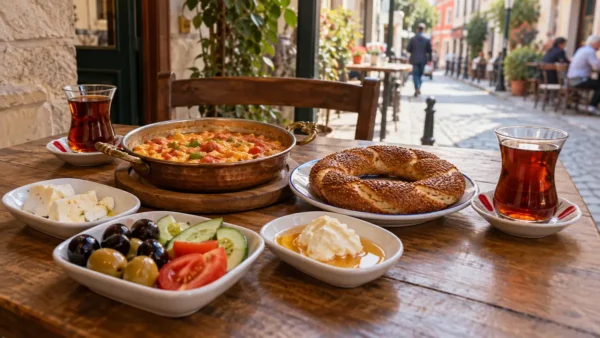
Food is a reason to come in itself: kebabs, meze, baklava and the lokanta, the cafeteria-style restaurant serving home cooking at lunchtime. The Istanbul food guide covers what to order and where. Istanbul suits every first-timer; it is the one region no Turkey plan skips.
Cappadocia
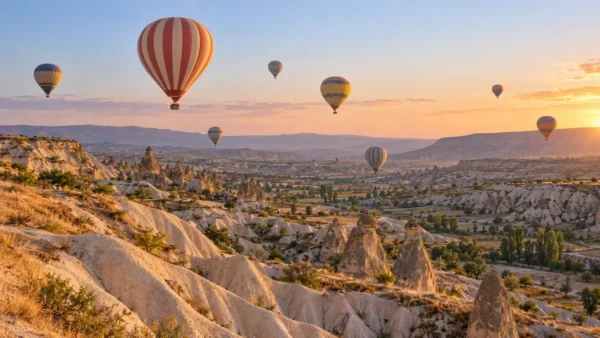
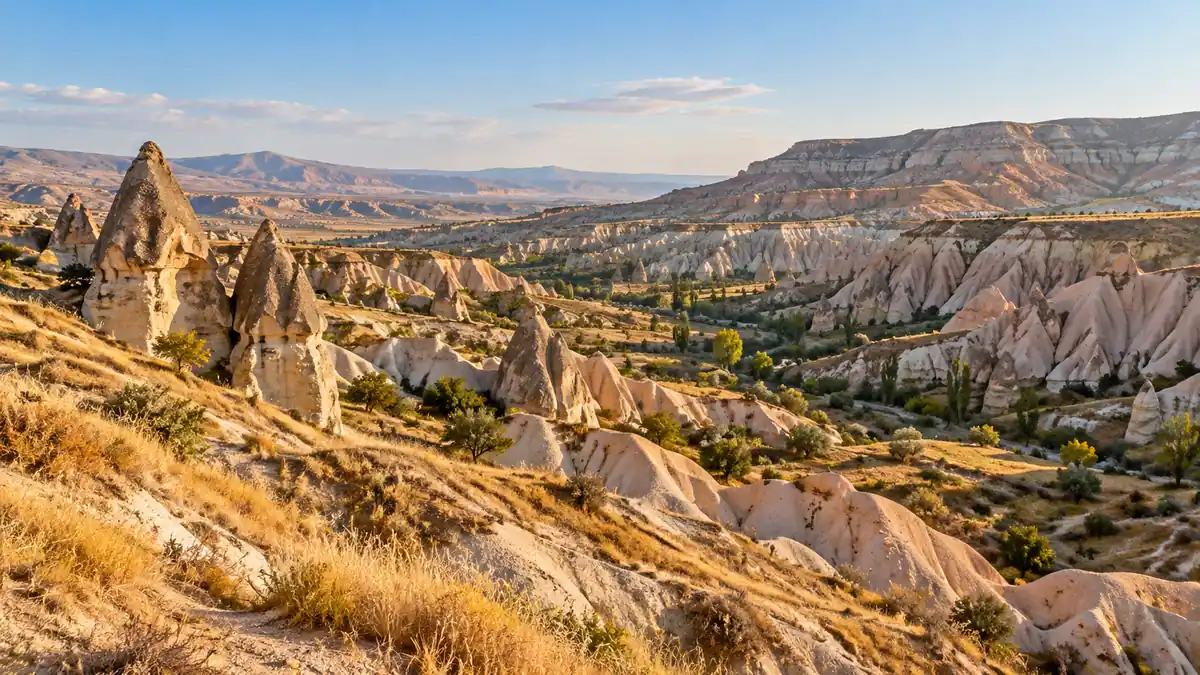
Cappadocia is a landscape of eroded valleys, rock-cut churches and underground cities in central Anatolia. Its signature is the dawn sky full of balloons, and the Cappadocia hot air balloon page covers that experience on its own. Göreme is the base, and its cave hotels sit at the upper end of the country’s cost range. You reach the region by air from Istanbul. Cappadocia fits travelers who want walking, views and a slower pace after the city.
The Aegean Coast and Pamukkale
The Aegean coast pairs ancient sites with swimming, which is why history readers who also want a beach pick it. It has a short list of names that matter:
- Ephesus: the region’s great Roman city, reached from Selçuk or İzmir.
- Pamukkale: white travertine terraces with the ruins of Hierapolis above them, inland from the coast.
- Bodrum: the resort town where the Aegean meets the Mediterranean.
- İzmir: the region’s big city and airport gateway.
The Turkish Riviera
The Turkish Riviera is the Mediterranean shore around Antalya, Fethiye, Kaş and Dalyan, and it is a summer region first. Antalya is the large gateway city; Fethiye and Kaş are smaller harbour towns built around boat days and coves, and Dalyan is the quieter alternative. This stretch suits beach-first travelers and families who want the second half of the trip to feel like a holiday.
Marmara, Thrace and Beyond the Postcard
Marmara and Thrace sit within reach of Istanbul for a longer trip: Edirne for its Ottoman mosques, Gallipoli and Troy on the Dardanelles, and Bursa, an early Ottoman capital. The Black Sea coast is green and little visited by first-timers. The Southeast holds the prehistoric site of Göbeklitepe and Gaziantep, a food city in its own right. Ankara, the capital, is mainly a stop on the high-speed rail axis. The full ranked list lives in best places to visit in Turkey.
Tours and activities
Book skip-the-line tickets, day trips and local tours with free cancellation on most activities.
You can also browse everything on getyourguide.com.
Tripstou may earn a commission if you book through this link, at no extra cost to you.
How Many Days Do You Need in Turkey?
About a week is the realistic minimum for Turkey: Istanbul plus one region. Ten days adds a coastal stretch, and two weeks or more allows the wider loop through Istanbul, Cappadocia, Pamukkale, Ephesus and the coast. Three or four days is Istanbul alone. The common mistake is underestimating distance, because every region beyond Istanbul is a flight or a long road day away.
| Trip length | Regional pairing | Bases | How you move between them |
|---|---|---|---|
| 3–4 days | Istanbul only | Istanbul | No domestic leg |
| About a week | Istanbul + Cappadocia, or Istanbul + one coast | Istanbul; Göreme or one coastal town | Fly |
| About 10 days | Istanbul + Cappadocia + a coastal stretch | Istanbul; Göreme; Selçuk, Antalya, Fethiye or Kaş | Fly, then bus or car on the coast |
| Two weeks or more | Istanbul, Cappadocia, Pamukkale, Ephesus and the coast | Istanbul; Göreme; Selçuk; a Riviera town | Fly, bus and a rental car |
Istanbul takes about three days inside a one-week trip, and it rarely gets less on a longer one. The shape of those days, sight by sight, is laid out in the Istanbul 3-day itinerary. On a ten-day or two-week trip, the extra time goes to the regions, not to more Istanbul.
Spring and Autumn for the Cities, Summer for the Coast
Turkey has no single best month. April–May and September–October suit Istanbul and Cappadocia, while the coast’s swimming season runs from May to early October, so the pairing you choose sets the season.
Spring and autumn are the strongest overall. Istanbul is comfortable for long walking days, Cappadocia’s valleys are pleasant to hike, and the early or late edge of the coastal season overlaps with both.
July and August are hot and crowded inland and at their most expensive on the coast. They still suit a beach-first trip, as long as Istanbul is kept short and the sightseeing starts early.
Winter is a city-break and value season. Istanbul stays open and quieter, Cappadocia is often under snow and balloon cancellations become more common, and coastal resorts wind down from late autumn. A winter trip is Istanbul plus Cappadocia, with no beach.
How Do You Get Around Turkey?
Fly between regions. Turkey is large, domestic flights are the practical link between Istanbul, Cappadocia and the coast, and the high-speed train helps only on the Istanbul–Ankara/Konya axis.
Istanbul has two airports. Istanbul Airport (IST) is on the European side, far from the old city; Sabiha Gökçen (SAW) is on the Asian side. Check which one a domestic flight uses before choosing where to sleep. Long-distance buses run from each city’s otogar, the main bus station, and cover the routes flights skip. A rental car makes sense on the coast or in Cappadocia, where villages, viewpoints and beaches sit between towns.
The high-speed rail map explains why train-based itineraries pass through Ankara and Konya and never reach the beach.
Is there a high-speed train in Turkey?
Yes: Turkey’s high-speed train is the YHT, and it runs on Istanbul–Eskişehir–Ankara, Istanbul–Eskişehir–Konya, Ankara–Konya and Ankara–Sivas. It does not reach the coast or Cappadocia, so it serves a trip that includes Ankara or Konya and little else on a first visit.
How do you get to Cappadocia from Istanbul?
Fly. Cappadocia has two airports: Nevşehir Kapadokya, the closer one to Göreme, and Kayseri, which has more flights. Choose by schedule and transfer, since both serve the same valleys. A long-distance bus from Istanbul’s otogar is the slow alternative for travelers with time to spare.
Is Turkey Expensive to Travel?
No, not by Western European standards. A first trip runs roughly €25–50 a day on a budget, roughly €55–150 mid-range and from about €150–200 upward at the high end, per person, excluding international flights.
- Budget (roughly €25–50 a day): hostels or simple guesthouses, street food and lokanta lunches, and long-distance buses between regions.
- Mid-range (roughly €55–150 a day): three- and four-star hotels, sit-down restaurants, and domestic flights to save the road days.
- High-end (from about €150–200 a day): a cave hotel in Göreme or a boutique hotel on the coast, private transfers and guided days.
Istanbul and the summer coast resorts push the bill up. Cappadocia is where a mid-range budget stretches thinnest, because its cave hotels price at the top of the band. Carry some cash in lira for small shops, markets and tips. Haggling is expected in the bazaars and not in shops with marked prices.
Is Turkey Safe for a First Visit?
Yes, for the regions this page covers. The only area-level official advisory confirmed is the UK Foreign Office’s advice against all travel within 10 km of the Syria border, which is far from Istanbul, Cappadocia and both coasts.
The everyday precautions are the ones any large city asks for: watch bags and phones in Istanbul’s crowds, on trams and around the busiest sights. Mosques ask visitors to dress modestly, with shoulders and knees covered and a headscarf for women.
Travel medical insurance
SafetyWing Nomad Insurance provides travel medical coverage designed for travelers and digital nomads, with flexible Monthly and Annual plans.
Check Nomad Insurance coverage and current pricing →
New Nomad Insurance Essential members can get 8 weeks of electronic theft coverage free with reward code TRIPSTOU8.
Apply the reward before creating your SafetyWing account by looking for the pink camera icon on the Nomad Insurance page.
Tripstou may earn a commission if you purchase through this link, at no extra cost to you.
Turkey’s Entry Rules Depend on Your Passport
Entry rules for Turkey depend on your nationality (visa-free, e-Visa obtained online before travel, or an embassy visa); check the official e-Visa site before you book. The rules by nationality are set out on the Turkey visa requirements page.
Before You Book Anything
- Istanbul is the fixed anchor and arrival point, so a first trip adds one more region for each week of travel.
- Cappadocia is the default second region for most of the year, while the coast only earns its place between May and early October.
- Istanbul, Cappadocia and the coast in a single week fails on distance; covering all three takes about two weeks.
- Domestic flights link the regions, because the high-speed train runs only on the Istanbul–Ankara/Konya axis and reaches neither Cappadocia nor the coast.
- Turkey costs less than most of Western Europe, but Istanbul, the summer resorts and Cappadocia’s cave hotels stretch a mid-range budget furthest.
- Entry depends on your passport, so check the rule for your nationality before booking flights.
Where to Go Next
- Things to do in Istanbul: the anchor city’s sights, from Sultanahmet to the Bosphorus.
- Istanbul 3-day itinerary: how to spend the city days inside a one-week trip.
- Where to stay in Istanbul: choosing the neighbourhood for your first base.
- Best places to visit in Turkey: the ranked list for building a longer loop.
- Cappadocia hot air balloon: what the region’s signature morning involves.
- Turkey visa requirements: the entry rule for your passport before you book.
Did this guide save you time or money? Tripstou is independent and reader-funded — if you'd like to give something back, you can support the site with a crypto contribution of any size.