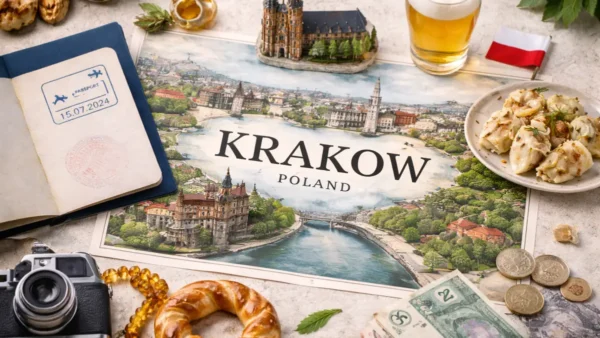
Travel to Poland works best as a pair of regions, not a sweep of the whole map. The country sorts into a south (Krakow with the Tatra Mountains), a capital (Warsaw, the main gateway), a north (Gdansk and the Baltic coast) and a west (Wroclaw and Poznan). The strongest first trip flies into Warsaw, moves on to Krakow as the base, and adds the Tatras on a short trip or Gdansk on a longer one. Trip length sets the pairing: about a week buys Warsaw and Krakow, ten days adds Wroclaw or Gdansk, and two weeks opens the full north–south loop.
This planner is written for a first visit from far away: a long-haul arrival into Warsaw or Krakow, seven to fourteen days on the ground, and a currency that is the złoty, not the euro. It settles which regions belong together, how long each pairing needs, when to go and where to sleep. Sights, tickets and day-by-day plans for each city sit with the city guides.
Decide These First
- A week in Poland is a Warsaw-and-Krakow trip with one day in the Tatras; anything more ambitious spends the week on trains.
- Ten days adds one third city, Wroclaw for old squares and a quieter rhythm or Gdansk for summer and the sea, but not both.
- Gdansk and Krakow sit at opposite ends of the country, so link them with a flight or a night in Warsaw or Torun instead of a full day on the train.
- Krakow deserves the most nights because it is the base for the Tatras, the Wieliczka Salt Mine and the Auschwitz-Birkenau memorial.
- Late spring and early autumn suit a city-pair trip best; July and August make sense only when a Baltic beach is the point.
- Poland is in the EU but uses the złoty, and euros are not widely accepted, so plan to pay by card or in local currency.
What Poland Is Best For on a First Trip
Poland is best for a city-pair trip with one wild add-on. Its old towns in Krakow, Gdansk, Warsaw and Wroclaw are either preserved or rebuilt with care, its twentieth-century history is told seriously in museums and memorials, and mountains or coast sit within a train ride of the cities. The whole trip costs less than the same plan in western Europe.
First-time visitors to Europe who want cities plus one landscape get the most from it. History-minded travelers find a country that explains the war, the occupation and the Solidarity years in the places where they happened. Walkers head for the Tatras. Summer travelers can pair a city with the Baltic beaches around Gdansk.
Poland is a poor fit for a single resort base or a Mediterranean-style beach holiday. The Baltic is a summer coast with a short season, and the country rewards moving between two or three bases.
Food is part of the case. Pierogi turn up on almost every menu, with ruskie (potato and cheese) the classic filling, and Żubrówka, the bison grass vodka, is the bottle people carry home.
Poland suits the traveler who wants Europe’s history and old towns at a gentler price, with a mountain or a sea day folded in.
Where to Go in Poland: The Regions That Shape a Trip
The regions that do the work on a first trip sort into south, capital, north and west. Krakow and the Tatras hold the south, Warsaw is the capital and gateway, Gdansk leads the Baltic north, and Wroclaw and Poznan cover the west. The first choice is which two to pair.
Krakow and Lesser Poland
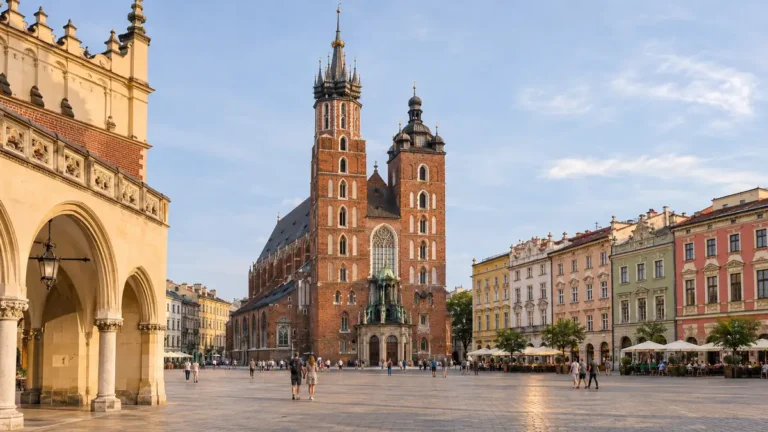
Krakow is the base most first trips need. Its Old Town is the Historic Centre of Krakow on the UNESCO list, Wawel Castle stands above the river, and Kazimierz, the old Jewish quarter, is where the city’s past and its café life meet; a guided walk is the clearest way in, and you can reserve a walking tour that also covers the former ghetto.
The ring of trips around the city is what makes it a base. The Wieliczka Salt Mine, part of the Wieliczka and Bochnia Royal Salt Mines UNESCO listing, sits just outside the centre, and most visitors book a guided visit from Krakow.
The memorial at the German Nazi concentration and extermination camp Auschwitz-Birkenau is a day of remembrance from Krakow, and it needs a full day of its own. Plan it apart from the lighter days, not squeezed between them.
Booking, transport and the order of these days belong in our Krakow guide, which plans the city and its surroundings in detail. At country level, the point is simpler: give Krakow more nights than any other stop.
Tatra Mountains and Zakopane
The Tatras are worth visiting on a first trip, and Zakopane is the way in. Tatra National Park is Poland’s main high-mountain area, and Zakopane is the gateway town on its edge, reached from Krakow.
A day trip from Krakow is enough for a first-timer short on days who wants to see the peaks and the mountain town. One or two nights in Zakopane earn their place for walkers, because a single day leaves little time on the trails once the journey is counted.
The season changes the trip. Summer is for hiking; winter brings snow and turns Zakopane into Poland’s mountain resort.
The Tatras repay a night only if you plan to walk; for the view and the town, the day trip from Krakow does the job.
Warsaw
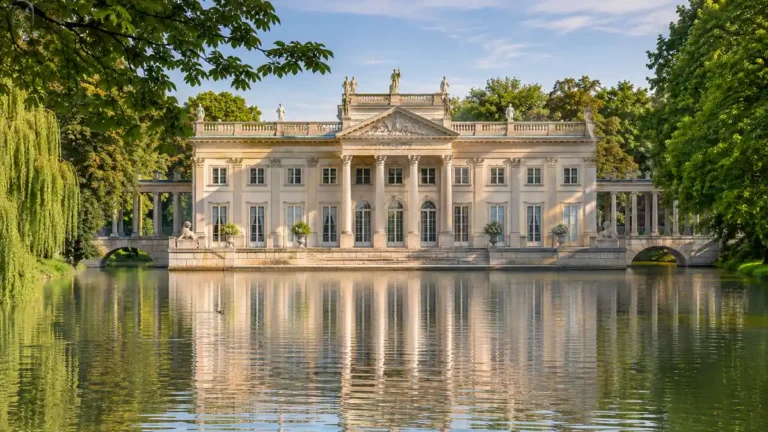
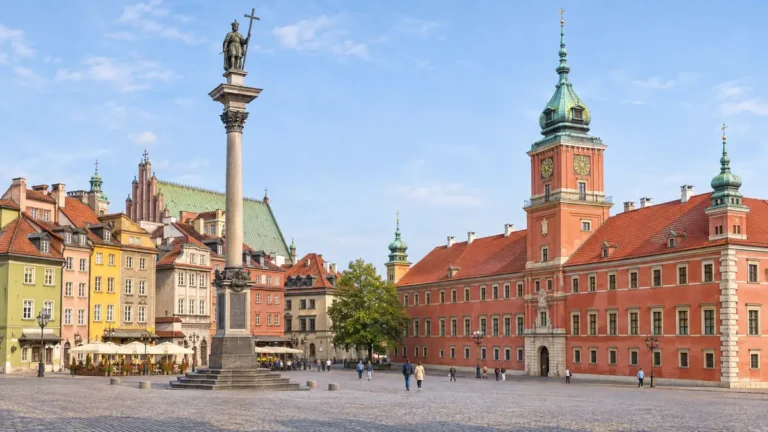
Warsaw is the gateway and the modern capital, and it suits a two-night start, not the whole trip. Its Old Town, destroyed in the war and rebuilt, is on the UNESCO list as the Historic Centre of Warsaw. The Royal Castle anchors it, the Warsaw Rising Museum tells the story of the city’s uprising, and Łazienki Park gives the capital its green side.
Arrive curious about how a city rebuilt itself and Warsaw repays the two nights; as a base for day trips it gives much less.
Gdansk and the Baltic Coast
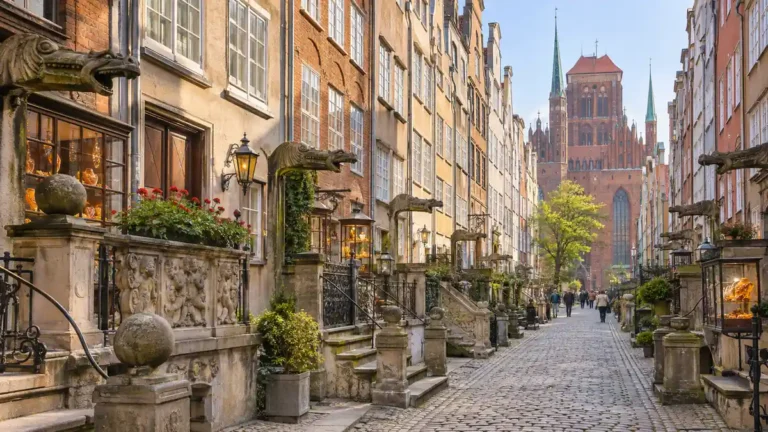
Gdansk is the north’s anchor and the only base that combines a historic city with a beach. The Long Market and St Mary’s Church carry the old port city, while the Museum of the Second World War and the European Solidarity Centre explain why Gdansk mattered twice in the last century.
Gdansk, Sopot and Gdynia form the Tricity along the bay. The three towns run together along the coast, so a Gdansk base covers all of them.
Two trips stretch the stay. Malbork Castle, the Castle of the Teutonic Order on the UNESCO list, is the classic day trip from Gdansk. In summer, the Hel Peninsula and the dunes of Słowiński National Park add the wilder Baltic.
Gdansk is the pick for a summer trip that wants sea air and a city in the same base.
Wroclaw and Lower Silesia
Wroclaw is the west’s main city and the natural ten-day add-on from Krakow. Its Market Square anchors the old town, Cathedral Island (Ostrów Tumski) holds the oldest quarter, and Centennial Hall is on the UNESCO list.
Lower Silesia around it adds the Churches of Peace in Jawor and Świdnica, also on the UNESCO list and seen by few first-time visitors.
Once Krakow’s Old Town is done, Wroclaw is the second historic centre with fewer crowds.
Poznan, Masuria and the Rest
Poznan is a stop on the western leg, not a base for a first trip. Its Old Town and Cathedral Island make a good break between Wroclaw and Gdansk on a two-week loop.
Masuria, the lake district built for sailing and kayaking, belongs to a second trip. Torun (the Medieval Town of Torun), Lublin, Zamosc (the Old Town of Zamosc), Białowieża Forest and the Bieszczady mountains are the reasons to come back once the main regions are done.
| Region | Character | Anchor draw | Suits |
|---|---|---|---|
| Krakow and Lesser Poland | Intact old royal city | Old Town, Wawel, Kazimierz, Wieliczka | Every first trip, as the main base |
| Tatras and Zakopane | High mountains | Tatra National Park | Walkers and winter visitors |
| Warsaw | Rebuilt modern capital | Old Town, Royal Castle, Warsaw Rising Museum | A two-night start on arrival |
| Gdansk and the Baltic | Port city and summer coast | Long Market, Sopot, Malbork Castle | Summer trips and longer loops |
| Wroclaw and Lower Silesia | Western historic city | Market Square, Centennial Hall | The ten-day add-on from Krakow |
| Poznan | Compact western city | Old Town, Cathedral Island | A break on the two-week loop |
Tours and activities
Book skip-the-line tickets, day trips and local tours with free cancellation on most activities.
You can also browse everything on getyourguide.com.
Tripstou may earn a commission if you book through this link, at no extra cost to you.
Warsaw or Krakow: Which Should Anchor Your First Trip?
Do both, in that order: Warsaw is the arrival and a two-night start, and Krakow is the base you give the most nights to. If the trip only allows one city, choose Krakow.
The reason is what surrounds each city. Warsaw’s strength is its rebuilt centre and its museums, which fill two good days and then thin out. Krakow has an Old Town that survived the war intact, plus a ring of trips within easy reach: the Tatras, the Wieliczka Salt Mine and the Auschwitz-Birkenau memorial. A night in Krakow can feed three different days; a night in Warsaw mostly feeds Warsaw.
The exception is a Baltic summer. A trip built around the coast anchors on Gdansk with Warsaw as the gateway and leaves Krakow for another visit, because Gdansk and Krakow sit at opposite ends of the country.
How Many Days Do You Need in Poland?
About a week covers Warsaw and Krakow with one day in the Tatras. Ten days adds Wroclaw or Gdansk. Two weeks allows the north–south loop through Warsaw, Gdansk, Poznan or Wroclaw and Krakow, but only if the Gdansk–Krakow leg is treated as a travel day or a flight.
Count the arrival day honestly. From North America, the first day after a night flight is mostly lost to jet lag, so a week on the ground gives fewer usable days than it sounds. That is why the week pairing stays at two cities.
| Trip length | Pairing | What it buys | Who it fits |
|---|---|---|---|
| About a week | Warsaw + Krakow | The capital, Krakow’s Old Town, one Tatras or Wieliczka day, the memorial | First-timers combining Poland with nothing else |
| Ten days | Warsaw + Krakow + Wroclaw or Gdansk | A third city: the west’s old squares or the Baltic coast | Travelers who want a second historic centre or the sea |
| Two weeks | Warsaw, Gdansk, Poznan or Wroclaw, Krakow | The full north–south loop, with Malbork and a Tatras night | Slow travelers happy to spend one day moving |
A ten-day trip forces one choice: Wroclaw if the draw is old towns and a quieter rhythm, Gdansk if it is summer and the sea. Trying to fit both into ten days spends the extra city on trains.
The Strongest First-Trip Route: Warsaw In, Krakow as the Base
Fly into Warsaw Chopin Airport, take the train south to Krakow, base there for most of the trip, and spend the remaining days on the Tatras (short trip) or Gdansk (longer trip, flying or breaking the journey on the way back north).
The order follows the logic of arrival. Warsaw is the main long-haul gateway, and two nights there absorb the jet lag in a city that needs no day trips. Krakow comes second because it is the better base, and ending there means the best nights come last. When fares allow, an open-jaw ticket into Warsaw and out of John Paul II Krakow-Balice International Airport removes the trip back to the capital.
The two branches split by time and taste. The Tatras branch suits a week-long trip and the traveler who wants mountains; it takes one day from the Krakow stay, or two nights for walkers. The Gdansk branch suits ten days or more and a summer trip; it adds the coast and Malbork, and it needs the long leg between the two ends of the country planned in advance.
The days inside Krakow, including the memorial visit, Wieliczka and the order to see them in, are set out in the Krakow guide, which covers the base, the day trips and the memorial visit.
Check the entry rules that apply to your passport before booking. Short stays are capped at 90 days in any rolling 180-day period across the Schengen area as a whole, not per country.
When to Go: Late Spring and Early Autumn Beat Summer
Late spring and early autumn are the best windows for a city-pair trip in Poland. July and August are the busiest months in Krakow, on the Baltic coast and in the Tatras, and they are the right choice only when a Baltic beach is the point of the trip.
The shoulder seasons suit both halves of a typical trip. Cities are comfortable for long days on foot, and the Tatra trails see fewer people than at the summer peak.
Summer belongs to the coast. The Baltic beach season is short and concentrated, which is why Gdansk, Sopot and the Hel Peninsula fill up at the same moment Krakow does.
Season and region pull against each other: a summer trip should lean north, and a shoulder-season trip should lean south.
Is winter a good time to visit Poland?
Winter is a good time to visit Poland for the Tatras and the Christmas markets. Zakopane becomes the country’s snow resort, and the old-town squares of the big cities hold their markets. The tradeoff is short days and real cold, so city walking hours shrink. Winter is the wrong season for the Baltic coast or for long hikes.
How to Get Around Poland
Trains are the backbone between Poland’s main cities, and booking ahead is cheaper than buying on the day. The one awkward link is Gdansk–Krakow, which takes most of a day by train.
The rest of the network is easy. Warsaw–Krakow is a short train hop, and Krakow–Wroclaw and Gdansk–Warsaw take a few hours each. Wroclaw–Poznan and Poznan–Gdansk are comparable legs, which is what makes the western loop work. Book the long-distance trains once the dates are fixed.
The two air gateways are Warsaw Chopin Airport and John Paul II Krakow-Balice International Airport. A car is only worth it for Masuria, the Bieszczady or Białowieża, where trains do not reach the places you came for.
Should you fly between Gdansk and Krakow?
Fly between Gdansk and Krakow on a two-week loop, or break the journey with a night in Warsaw or Torun; either beats a full day on the train. On a ten-day trip, pick Gdansk or Krakow’s south as the second region instead of trying to link both ends.
Is Poland Expensive to Visit?
No. Poland is one of the kinder countries in the EU for a city trip, and the budget question is about spend style, not about whether the trip is affordable.
A tight budget goes far here. Hostels and guesthouses cover the beds, milk bars and pierogi cover lunch, and second-class train tickets booked in advance cover the moves between cities.
A comfortable middle buys central hotels in Krakow and Gdansk, sit-down dinners every night, and one guided day in the Tatras or at Wieliczka without the trip feeling stretched.
A high-end trip is where Poland is unusually generous. Historic hotels and private transfers cost less than the same standard in western Europe, so the top end gains the most from choosing Poland. Poland punishes two habits whatever the style: travelling in July and August in Krakow and on the coast, and leaving the long Gdansk–Krakow leg to the last minute.
Does Poland use the euro?
Poland does not use the euro. The currency is the złoty (PLN), divided into 100 groszy, and euros are not widely accepted. Cards are widely accepted, and ATMs are common in the cities. Poland is in the EU and the Schengen area but outside the euro zone, so plan to pay in złoty.
Where to Base Yourself in Poland
Two bases cover most first trips: Krakow for the south (the Tatras, Wieliczka and the memorial) and Warsaw for the start. Gdansk becomes the northern base and Wroclaw the western one when the trip grows.
- Krakow takes the most nights and every day trip in the south; it is also the busiest base in summer.
- Warsaw handles the arrival and two days of museums; beyond that it has little to feed a longer stay.
- Gdansk covers the Tricity coast and Malbork Castle in one base, at the price of summer crowds.
- Wroclaw is the quieter western base for a ten-day trip, a second old town without Krakow’s crowds.
Sources and Review
This page plans a first trip across the whole of Poland (which regions to pair, how many days each pairing needs and which season suits it); it is not a Krakow guide and not a day-by-day itinerary.
Alex Perrut, working in tourism since 2015, went over these regional pairings for the Tripstou editorial team. Produced with AI assistance, as our editorial process describes.
Official sources consulted: Polish Tourism Organisation.
Did this guide save you time or money? Tripstou is independent and reader-funded — if you'd like to give something back, you can support the site with a crypto contribution of any size.