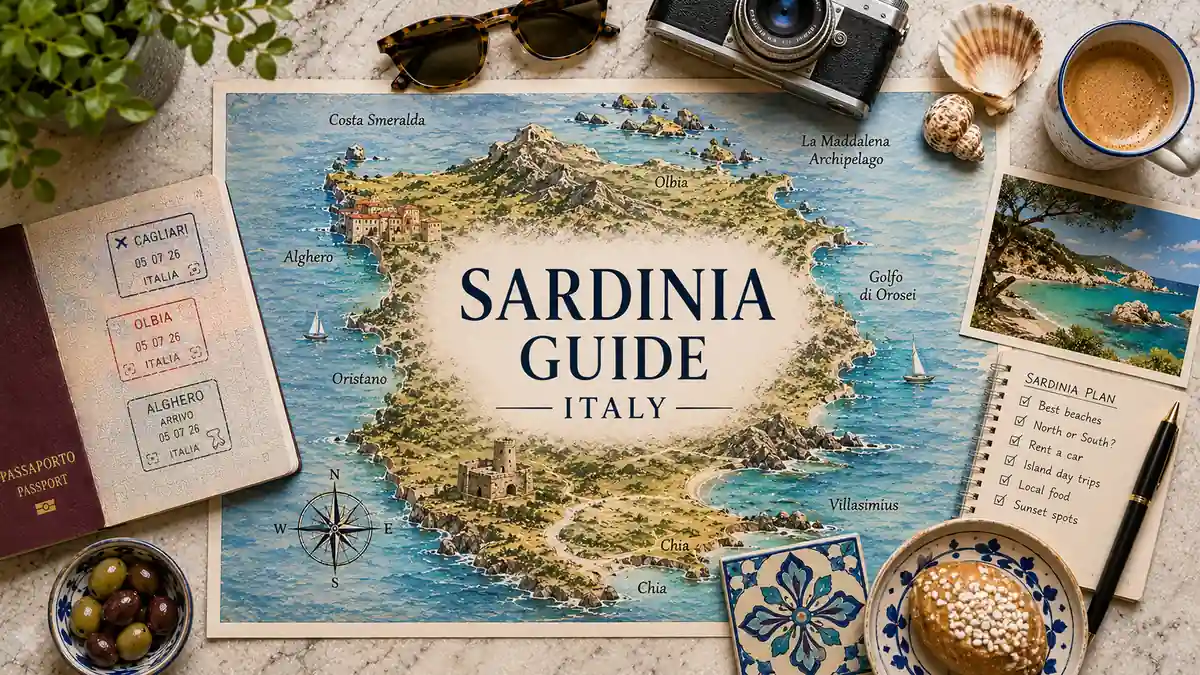
Sardinia is a big, deeply divided island, and how well your trip goes depends on a handful of planning choices made before you book. Season sets your weather and your crowds. Days decide how much coast you can reach. North or south decides your budget and your scene. Base and car decide whether you spend the week swimming or sitting in transfers. This guide makes each of those calls in a single decision-aid pass, with the north-versus-south choice as its spine. You will leave knowing when to go, how long to stay, which half of the island fits you, where to base, and how to actually get around once you land.
Quick Answer
Sardinia rewards beach-and-coast travelers, and most trips hinge on choosing a north or south base. Around a week lets you commit to one region well; ten days or more allows a north-plus-south split. Base south around Cagliari or Chia for value and variety, north near Olbia for glamour. A rental car is effectively required.
Trust Layer
Tripstou region guide for travelers planning a regional trip. Covers sub-areas, trip shape, base strategy, timing, and mobility tradeoffs.
Produced with AI assistance and reviewed by Alex Perrut, working in tourism since 2015, for the Tripstou editorial team. See our editorial process for details.
Last factual review: July 5, 2026.
Official sources consulted: Italia.it, ENIT.
Key Takeaways
- Sardinia suits beach-first travelers who want Caribbean-clear water and a wild interior over dense city sightseeing.
- Visit between late May and September; June and September deliver warm sea with far fewer crowds than peak August.
- Give one region five to seven days; only ten or more justifies splitting your trip between north and south.
- The south around Cagliari wins on value and variety, while the north’s Costa Smeralda charges a premium for glamour.
- Rent a car and book it early; without one, the island’s best coves stay out of reach.
- Treat Sardinia as a self-contained week within a wider Italy trip, not a rushed day-trip off the mainland.
Table of Contents
What Sardinia Is Known For and Why Visit
Sardinia is known for some of Europe’s clearest water and a rugged, less-Italian interior. The draw is coastline — hundreds of white-sand coves and turquoise shallows — backed by mountains, ancient nuraghe stone towers, and a distinct island culture. It suits beach-first travelers who also want wildness over polished city sightseeing.
What sets the island apart is that the coast delivers Caribbean-grade water without leaving Europe, while the interior stays stubbornly untouristed. You come for the beaches — Cala Goloritzé, the Costa Smeralda coves, the long southern sands — and stay for the shepherds’ villages, the seafood, and a language that is not quite Italian. Those specific beaches and sights get their full roundup in our guide to the things to do in Sardinia, and the quieter corners in our hidden gems in Sardinia guide. Here they matter only as the reason to go.
The honest catch is that Sardinia rewards effort. Its best beaches are not the ones you can walk to from a hotel lobby — they reward drivers, early risers, and travelers happy to trade nightlife for nature. If you want a city-break with museums and dense sightseeing, mainland Italy serves you better.
When to Visit Sardinia
Late May to September is the reliable coastal window; June and September balance weather and crowds best. July and August bring the hottest weather, the fullest beaches, and the highest prices. Outside the warm months much of the coast winds down — many beach hotels and restaurants close entirely.
Sardinia is a summer island, and its calendar is unusually seasonal even by Mediterranean standards. June and September are the sweet spots: warm sea, long days, and beaches you can still find space on. July and August are peak everything — peak heat, peak crowds, peak room rates — and the Costa Smeralda in August is a different, far pricier place than the same coast in June. This is Sardinia-specific timing; for how the island slots into the country’s wider seasons, see our guide to the best time to visit Italy.
Shoulder season here is not just cheaper — it is more of the island. In late September the water is still warm from a full summer of sun, yet the August crowds and the surcharges have gone. Come outside roughly May to October, though, and much of the coastal infrastructure simply shuts.
How Many Days You Need in Sardinia
Plan five to seven days for one region, and ten or more to combine north and south. Sardinia is large and slow to cross, so days translate directly into how much coastline you can realistically reach. Fewer days means committing to a single base instead of chasing the whole island.
Match your trip length to how much of the island you want, using three tiers:
- 3–4 days: one base, one stretch of coast at highlight pace. Right as an add-on leg for travelers who want a taste of the beaches without building a full island trip.
- 5–7 days: one region done properly — its beaches, a hill-town day, and time to slow down. The sweet spot for a first Sardinia trip.
- 10+ days: north and south combined, with the long drive between them justified. Best for repeat visitors or travelers set on seeing both the Costa Smeralda and the south.
A week feels generous until you remember Sardinia runs nearly 300 km end to end — swapping coasts can eat half a driving day by itself. For how these days string into a route across the country, see our Italy itinerary guide. Keep the shape simple. Two bases in a week is plenty.
North or South Sardinia: Which Should You Choose?
Choose the south for value and variety, and the north for glamour and iconic beaches. The south around Cagliari mixes city, culture, and long sandy coast at gentler prices. The north around Costa Smeralda delivers the postcard beaches and the celebrity scene, but at Sardinia’s steepest cost.
The two halves are genuinely different trips, not two versions of the same one. The table below sets them side by side across the factors that actually decide it.
| Factor | South Sardinia | North Sardinia |
|---|---|---|
| Peak room prices | Gentler, often around €80–180 a night | Steepest, often around €150–300 a night |
| Scene and mood | Relaxed, local, city-plus-coast mix | Glamorous, resort-driven, celebrity draw |
| Signature beaches | Chia, Villasimius, long sandy coves | Costa Smeralda, La Maddalena archipelago |
| Main base towns | Cagliari, Chia, and Villasimius | Olbia, Palau, and Alghero in the northwest |
| Best for | Value seekers wanting variety | Glamour seekers chasing iconic sand |
Treat those price bands as ranges and verify before booking; they swing hard with season and how far ahead you book. The non-obvious part: the Costa Smeralda premium buys the scene, not better swimming — the water at Chia and Villasimius in the south is every bit as clear for a fraction of the room rate. Go north if the glamour is the point; otherwise the south wins on value and range. For how those room rates fit a whole-trip budget, see our guide to Italy trip cost.
Where to Base Yourself in Sardinia
Base in Cagliari or Chia for the south, and Olbia or Alghero for the north. One well-chosen base beats moving hotels every two nights, since drive times eat into beach time fast. Pick the base whose surrounding coast matches the trip you actually want.
These five bases cover the strongest first-trip options, each with a distinct fit:
- Cagliari — the southern capital, with a lived-in old town, an airport, and city beaches at the doorstep. Anchor experience: culture plus coast in one stay. Best for: first-timers who want a city and beaches together.
- Chia — a low-key stretch of the south coast built around dune-backed white sand. Anchor experience: the south’s most photogenic swimming. Best for: beach purists chasing the finest southern sand.
- Villasimius — a resort town on the southeast tip fronting calm, shallow bays. Anchor experience: easy, family-grade coves. Best for: families wanting sheltered, gentle water.
- Olbia — the northern gateway, a short hop from the Costa Smeralda and its islands. Anchor experience: the launch point for the glamour coast. Best for: travelers set on the north’s iconic beaches.
- Alghero — a walled Catalan-flavored town on the northwest coast. Anchor experience: old-town charm with rugged nearby cliffs. Best for: travelers wanting character over resort polish.
Villasimius and Chia both sit under an hour from Cagliari’s airport, so a southern base rarely costs you a long transfer on arrival day. Beyond these, the depth belongs on dedicated pages. Anchor first, day-trip second.
Hotels and places to stay
Compare hotels, apartments and stays for your dates in one search.
Search hotels and stays on hotels.com →
Tripstou may earn a commission if you book through this link, at no extra cost to you.
Getting to Sardinia: Airports and Ferries
Most travelers fly into Cagliari, Olbia, or Alghero; ferries connect the mainland for those bringing a car. Flying is faster and usually simpler for a one-week trip. Ferries make sense mainly if you want your own vehicle without paying island rental rates.
The island has three main airports, each anchoring a different region: Cagliari-Elmas in the south, Olbia Costa Smeralda in the northeast, and Alghero-Fertilia in the northwest. Choose the one nearest your base rather than defaulting to the biggest — landing at the right airport can save you a cross-island drive on day one. Ferries run from several mainland ports to arrival points like Olbia and Cagliari, and they matter most for travelers who want to bring their own car for a longer trip. Schedules and frequencies shift by season, so check current timetables directly before you commit.
Train and bus tickets
Compare routes, schedules and prices across rail and bus operators in one search, with mobile tickets on your phone.
New to Omio? Code NEW10 takes 10% off your first booking — or APPNEW10 if you book inside the Omio app. Both apply to bookings up to €80.
Search routes and compare prices on Omio →
Tripstou may earn a commission if you book through this link, at no extra cost to you.
Getting Around Sardinia: Do You Need a Car?
You effectively need a rental car; public transport reaches the cities but not the best beaches. Sardinia’s finest coves sit at the end of unserved back roads, and buses between towns are slow and infrequent. Without a car, your trip shrinks to a handful of city-adjacent beaches.
A car is the single decision that unlocks the island. The main north-south artery, the SS131, makes long transfers straightforward, but the payoff of a rental is the last few kilometers of unpaved track down to a hidden cove that no bus serves. You can build a car-free trip based in Cagliari or Alghero, leaning on city beaches and the occasional tour, and it works fine for a short, relaxed stay. It just quietly deletes most of why people come. One booking note worth acting on: island rental cars sell out and spike in August faster than the flights do — reserve the car before the room, not after.
How Sardinia Fits Into a Wider Italy Trip
Sardinia is best as a standalone week, not a day-trip bolt-on to a mainland route. The island sits off the west coast and needs a flight or ferry to reach, so quick side trips waste more time than they buy. Treat it as its own dedicated leg.
The reaching cost is what makes Sardinia a poor add-on and a great main event. A quick two-day dip means half your time is spent on transfers to and from the mainland, so the island works far better bookended as its own leg of a longer Italy trip — fly in, base up, fly out. If you are weighing it against other regions, our guide to the best places in Italy puts it in context, and our broader Italy travel guide covers how to sequence a multi-region trip. Slot Sardinia in as a self-contained week and it earns its place; force it into a rushed detour and it disappoints.
Frequently Asked Questions
Is Sardinia expensive?
Sardinia can be, but it depends heavily on which half you choose. The north’s Costa Smeralda ranks among Italy’s priciest coasts in peak summer, while the south around Cagliari and Chia offers similar water for far less. Travel in June or September and value improves sharply across the whole island.
Is Sardinia worth visiting?
Yes, especially if beaches and nature top your list over cities and museums. Sardinia rewards travelers who will rent a car, rise early for the best coves, and swap nightlife for scenery. Those wanting dense sightseeing, walkable art cities, or a car-free trip are better served on mainland Italy.
Is Sardinia safe?
Yes, Sardinia is one of Italy’s safer regions, with low violent crime and calm rural areas. Standard precautions cover it: watch belongings on busy summer beaches and in Cagliari, lock valuables in your rental car, and respect the sea, since some coves have strong currents and no lifeguards.
Can you visit Sardinia without a car?
It’s possible if you base in Cagliari or Alghero, both walkable towns with city beaches, airport links, and some bus and tour access. Expect to miss the remote coves that make the island famous, since no public transport reaches them. A car-free trip works best as a short, relaxed city-and-coast stay.
Is Sardinia part of Italy?
Yes, Sardinia is an autonomous region of Italy, the second-largest island in the Mediterranean after Sicily. It has special self-governing status and a strong local identity, including the Sardinian language, distinct food, and ancient nuraghe culture. You will still use the euro and need no separate documents, though the culture feels noticeably different from the mainland.
Do you need to speak Italian in Sardinia?
No, you can travel Sardinia comfortably without Italian, especially in tourist areas, airports, and larger towns where English is common. Learning a few Italian phrases is appreciated and helps in small inland villages, where locals may also speak Sardinian. Menus and signs are widely translated across the main coastal resorts.
Related Guides
- Things to do in Sardinia — the beaches, sights, and experiences worth planning around.
- Hidden gems in Sardinia — the quieter coves and inland corners most visitors miss.
- Italy itinerary — how to sequence Sardinia into a wider route across the country.
- Italy trip cost — full budget breakdown to plan your spending.
- Best time to visit Italy — country-wide seasonality beyond Sardinia’s coast.
- Best places in Italy — where Sardinia ranks among the country’s regions.
- Italy travel guide — the national planning hub for a multi-region trip.
Did this guide save you time or money? Tripstou is independent and reader-funded — if you'd like to give something back, you can support the site with a crypto contribution of any size.