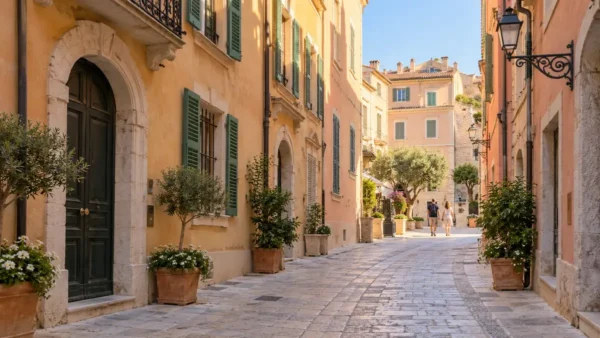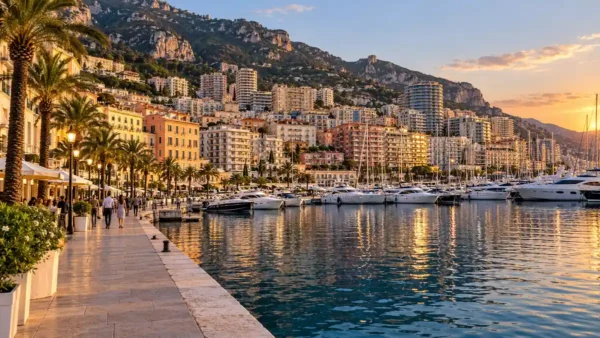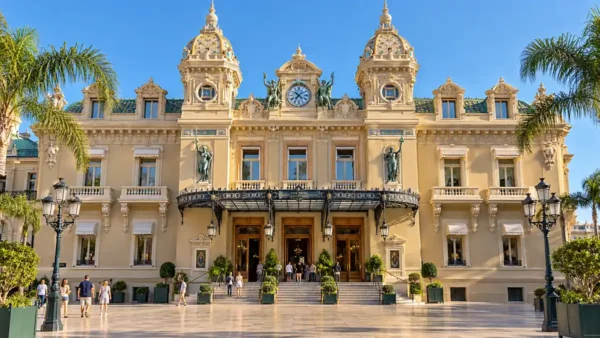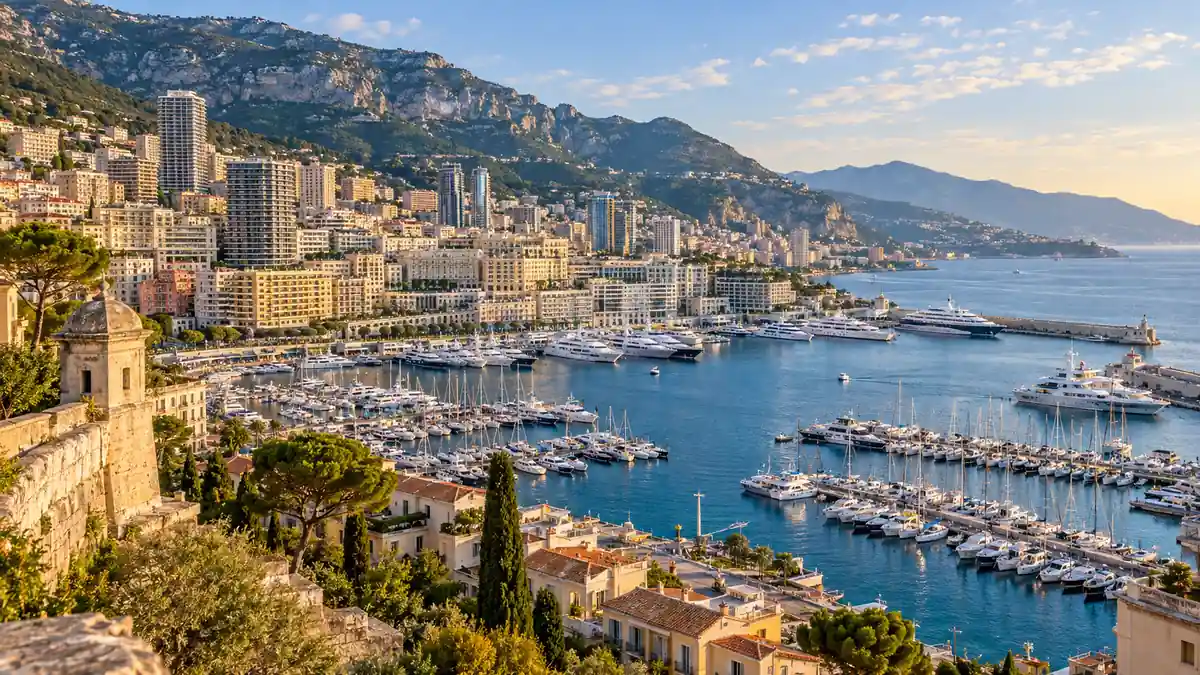
Monaco is a city-state of about two square kilometres, stacked up a steep slope on the Riviera coast. You enter it through France, you can cross it on foot, and it is far easier to visit than its yacht-and-casino image suggests. Good Monaco travel tips start with geography, not glamour. Once you know how the quarters sit on the hillside, and how the public lifts connect them, most first-visit problems disappear.
This guide resolves one question: how to visit Monaco well on a first trip. It moves in planning order — the layout of the quarters, the way in from Nice, getting around on foot, the dress and etiquette rules, safety, cost, how long to stay, when to go and where to base yourself. It assumes no prior knowledge and stays inside the principality.
Quick Answer
Treat Monaco as one compact walking city: arrive from Nice and cross it on foot using the public lifts. A full day covers the Rock, the port and Monte Carlo; an overnight adds the evening. Come by train, dress smart-casual off the beach, and spend on one good meal, not the hotel.
Trust Layer
Tripstou country guide for travelers planning a trip across a whole country. Covers route direction, trip length, season, budget, bases, and transport tradeoffs.
Produced with AI assistance and reviewed by Alex Perrut, working in tourism since 2015, for the Tripstou editorial team. See our editorial process for details.
Last factual review: September 28, 2026.
Official sources consulted: Visit Monaco, Monaco Tourist and Convention Authority, Monaco Government Public Service portal, Nice Côte d’Azur Airport.
Key Takeaways
- Monaco has no airport, so every trip starts in France: fly into Nice, then take the coastal train or the airport bus in.
- Monaco is steep but small: public lifts and escalators turn most climbs into short rides, and the whole principality is walkable.
- The dress rule is the one that matters: beachwear stays on the beach, while shops, restaurants and evenings expect covered, smart-casual clothes.
- One full day covers the Rock, the port and Monte Carlo; a night inside adds the lit-up evening and a quiet morning.
- Hotels and sit-down meals are where Monaco gets expensive; walking, the lifts, the gardens and the views cost little or nothing.
- Check the race calendar before booking a late-spring trip: the race weeks fence in the port, close walkways and fill hotels along the coast.
Table of Contents
Monaco’s Quarters and What Each Offers
For a visitor, Monaco comes down to five small quarters, all walkable from one another. Monaco-Ville sits on the Rock, La Condamine wraps the port, and Monte Carlo, Fontvieille and Larvotto fill the rest. They climb from sea level to cliff top, and each has one clear reason to go. That map makes the hillside easy to plan.
| Quarter | Character | Best for |
|---|---|---|
| Monaco-Ville | Old town on the Rock, quiet lanes above the sea | First-time visitors after history and the palace setting |
| La Condamine | Working port quarter built around a market square | Travelers who want everyday Monaco and harbour cafés |
| Monte Carlo | Grand hotels, boutiques and the famous casino square | Visitors chasing glamour and evening atmosphere |
| Fontvieille | Newer quarter on reclaimed land with calmer streets | Families and walkers wanting gardens and a slower pace |
| Larvotto | Beach strip along the eastern seafront promenade | Travelers who want a swim or a seafront stroll |
Each quarter has one draw worth building the visit around:
- Monaco-Ville: the Prince’s Palace, the cathedral and the Oceanographic Museum sit close together on the Rock, with sea views from the ramparts.
- La Condamine: the port and the market square are the draw, and the quarter is the natural crossing point between the Rock and Monte Carlo.
- Monte Carlo: the casino square is the landmark, framed by grand hotels and gardens; read the Monte Carlo quarter in depth before planning an evening there.
- Fontvieille: the rose garden and the small marina give it a slower rhythm, away from the busiest streets of the principality.
- Larvotto: the public beach and its promenade are the reason to go, especially on a warm afternoon after the uphill sights.
La Condamine is the hinge of any Monaco visit. Every walk between the Rock and Monte Carlo passes through it, so it is where breaks and lunch fit most naturally. For the sights in each quarter, see the full sight list in our things to do in Monaco guide.
Tours and activities
Book skip-the-line tickets, day trips and local tours with free cancellation on most activities.
You can also browse everything on getyourguide.com.
Tripstou may earn a commission if you book through this link, at no extra cost to you.
How You Get Into Monaco
Monaco has no airport, so you arrive through France, almost always via Nice Côte d’Azur. There is no border to plan around: regional trains and an airport bus bring you straight in. The simplest way in is the train from Nice-Ville, which lands underground at Monaco-Monte-Carlo station in about 20–25 minutes.
- Train from Nice-Ville: ZOU!/TER regional trains follow the coast to the underground Monaco-Monte-Carlo station in about 20–25 minutes. It suits anyone staying in Nice; the tradeoff is reaching Nice-Ville first if you have just landed.
- Airport bus line 80: the ZOU! line 80 (formerly 110) leaves from Terminal 1 and Terminal 2 (bay 1) on the Monaco > Menton route and takes under an hour. It suits arrival day with luggage; the tradeoff is a road journey that depends on coastal traffic.
A helicopter transfer from the airport also exists, and it is a splurge for the arrival itself. Every route in runs through France. Check the entry rules that apply to your passport before booking.
Is Monaco Hilly? How to Get Around on Foot
Monaco is very hilly, and walking with the public lifts and escalators is how you get around. The principality rises steeply from the port to its upper streets, but the network turns most climbs into short rides. You can cross the whole country on foot in under an hour.
The government counts 79 public lifts, 35 escalators and 8 travelators. They link the port and the seafront to the streets above, so most climbs never need to be done on the stairs. Local buses cover the ends of the principality when legs give out.
Wear shoes with grip. Stone steps and polished pavements turn slippery, and summer heat makes the climb to the Rock harder than it looks from the port.
The Rock is the one climb worth planning around. Go up by lift early and walk down toward the port, so the steep part is behind you before the heat builds.
Monaco Rules for Tourists: Dress and Etiquette
Monaco’s rules for tourists come down to dressing for the setting and behaving quietly. Beachwear stays on the beach, shops and restaurants expect you covered, and a bonjour opens every exchange. None of this is exotic, but Monaco expects it more consistently than the neighbouring Riviera towns, and visitors who ignore it stand out.
- Swimsuits and bare chests belong on the beach and at pools, not in the streets, shops or cafés.
- Shops, restaurants and the area around the casino square expect shoulders and torso covered.
- Evenings lean smart-casual — long trousers or a dress, and proper shoes over flip-flops.
- Greet with bonjour (bonsoir after dark) before asking anything; it sets the tone of every exchange.
- Keep photography discreet around residents, the palace guard and police, and ask before photographing people.
- Keep voices down and drinks on terraces; loud street partying is out of step with the place.
Dress for the quarter where your day ends. A beach outfit that works in Larvotto at noon looks wrong on the Monte Carlo terraces by evening, so carry a cover-up. The casino adds its own layer — see the casino’s own dress code and entry rules in our Monte Carlo guide.
Is Monaco Safe to Visit?
Monaco is very safe to visit, with a heavy police and camera presence and very little street crime. Visitors walk at night, travel solo and carry phones openly without the worries of larger Riviera cities. The practical hazards are physical ones: heat, steep steps and event-week crowds.
Walking home after dinner is normal in every quarter. Solo travelers, women included, move around at night without special planning. Police are visible on foot.
Ordinary care still applies. Keep bags closed and phones in hand in the thick of a crowd, the way you would anywhere busy.
Save your caution for the crowded moments around the visit — a packed train platform on the way back to Nice, a race-week queue — more than for the streets themselves. Money belts and no-go lists are unnecessary here.
Travel medical insurance
SafetyWing Nomad Insurance provides travel medical coverage designed for travelers and digital nomads, with flexible Monthly and Annual plans.
Check Nomad Insurance coverage and current pricing →
New Nomad Insurance Essential members can get 8 weeks of electronic theft coverage free with reward code TRIPSTOU8.
Apply the reward before creating your SafetyWing account by looking for the pink camera icon on the Nomad Insurance page.
Tripstou may earn a commission if you purchase through this link, at no extra cost to you.
Is Monaco Expensive? How to Keep Costs Sane
Monaco is expensive for hotels and restaurants, and nearly free for everything you do on foot. Sleeping and sit-down meals are where the budget goes. Walking the Rock, riding the public lifts, visiting the gardens and taking in the harbour views cost little or nothing, so a well-planned visit is cheaper than its reputation.
- Budget: sleep outside the principality and come in by train, eat from bakeries and the market, and picnic by the port; walking and lifts cover all your mobility. Monaco punishes this style only at night, when there is almost nowhere cheap to sleep — see where to base for value.
- Mid-range: base outside or take one simpler night inside, book one sit-down meal away from the casino square, and pay for a museum or the palace. Monaco is kind to this style on free views and punishing on terrace prices in Monte Carlo.
- High-end: stay in Monte Carlo, dine on the terraces, add the casino evening and perhaps a helicopter arrival. This is the style Monaco is built for, and the evening is what the money buys.
A terrace table often sells the same view the lifts and ramparts above it give you free. Pay for the meal when the food is the point. For the view alone, climb.
How Long to Spend in Monaco
One full day is enough for a first visit to Monaco, and an overnight is the upgrade. Half a day covers the Rock and the port at a fast pace. A full day adds Monte Carlo and a slower lunch, while a night in the principality buys the lit-up evening and the quiet morning.
- Half day: Monaco-Ville and La Condamine — the palace square, the old lanes and the port. It fits travelers passing along the coast who want the essentials at speed.
- One full day: adds Monte Carlo and the casino square, plus Fontvieille or Larvotto at an easy pace. It fits most first-time visitors basing in Nice.
- Overnight or two days: adds an evening in Monte Carlo and an early walk on the Rock before the crowds arrive. It fits travelers who care about atmosphere more than covering sights.
A night inside changes Monaco more than extra daytime hours do. Most visitors leave by early evening. The Rock is far calmer the next morning, and that quiet is hard to get any other way. For the one-day route in order, follow our one day in Monaco itinerary.
When to Go to Monaco
Spring and autumn are the best time to visit Monaco, outside the late-May race weeks. High summer is the other crowded, expensive stretch. Shoulder seasons bring warm walking weather and room on the terraces. Summer adds beach days along with heat and queues, while the race weeks close streets and push hotel prices up.
Shoulder seasons suit most first visits. The climbs are comfortable, the gardens are at their best, and restaurant terraces have space without a booking scramble.
Summer suits travelers who want Larvotto and the sea. Expect heat on the Rock by midday and busy streets around the port. Start early.
Winter is mild and quiet, with the lowest crowds and some beach businesses closed. It suits walkers and museum visitors; the tradeoff is shorter days and a sleepier evening scene.
The late-May race weeks reshape the whole principality. Grandstands and barriers go up around the port, some streets and walkways close, and hotels along the coast fill early. Check the race calendar before booking any late-spring trip, because the dates that look ideal for weather can be the ones when the port is fenced in.
Where to Base Yourself
Stay inside Monaco if the evening matters; stay outside and ride the train in if value matters. A night in the principality buys the harbour after dark and a quiet early start. Nice and the neighbouring coastal towns offer far more choice at lower prices, a short regional-train ride away.
Inside Monaco, Monte Carlo suits a grand-hotel evening, La Condamine puts you central between the port and the station, and Fontvieille trades nightlife for calm. Keep it simple. Compare the options in our quarter-by-quarter where to stay in Monaco guide.
Frequently Asked Questions
Is Monaco part of the EU, and what currency does it use?
Monaco is not a member of the European Union, but it uses the euro, so travelers coming from France or Italy have no currency to change. Prices, receipts and cash machines work in euros. For a visitor, EU membership changes little: every route in runs through France, with no border to plan around.
Does Monaco have an airport?
No. Monaco has no airport, so flights land at Nice Côte d’Azur, the nearest one, and you continue by road or rail. The principality has only a heliport for helicopter transfers. From the Nice terminals, the ZOU! line 80 bus runs to Monaco, or you can reach Nice-Ville and take the coastal train.
Do you need a passport or visa to visit Monaco?
Plan your documents around France, because that is how you reach Monaco. The principality has no airport, so every visitor arrives through French territory, whether by air into Nice, by regional train along the coast or by road. Keep your travel documents with you for the day. Check the entry rules that apply to your passport before booking.
Is Monaco crowded?
Monaco is crowded in predictable pockets, not everywhere at once. The palace square and the casino square fill around midday, the port and the trains in summer, and the whole principality during the late-May race weeks. Early mornings stay calm in every season, and shoulder months keep even the busy spots comfortable.
Do people speak English in Monaco?
Yes, English is widely spoken in Monaco’s hotels, restaurants, shops and tourist sites, though French is the official language. Visitors get by without French. Open with bonjour before switching to English; it is expected, and it changes the tone of the reply. Staff are used to international visitors, and the welcome is polished if formal.
Is Monaco safe for women travelling alone?
Yes, Monaco suits women travelling alone, including after dark. The part to plan is the journey, not the streets. A late evening usually ends with a train back to Nice, and platforms get packed after big events. Staying the night inside Monaco, or leaving before the post-event rush, removes that step. Ordinary crowd care covers the rest.
Related Guides
- Things to do in Monaco — the sights, quarter by quarter.
- One day in Monaco itinerary — the one-day walking route in order.
- Where to stay in Monaco — bases inside and outside the principality.
- Monte Carlo guide — the Monte Carlo quarter, casino square and Larvotto.
Did this guide save you time or money? Tripstou is independent and reader-funded — if you'd like to give something back, you can support the site with a crypto contribution of any size.