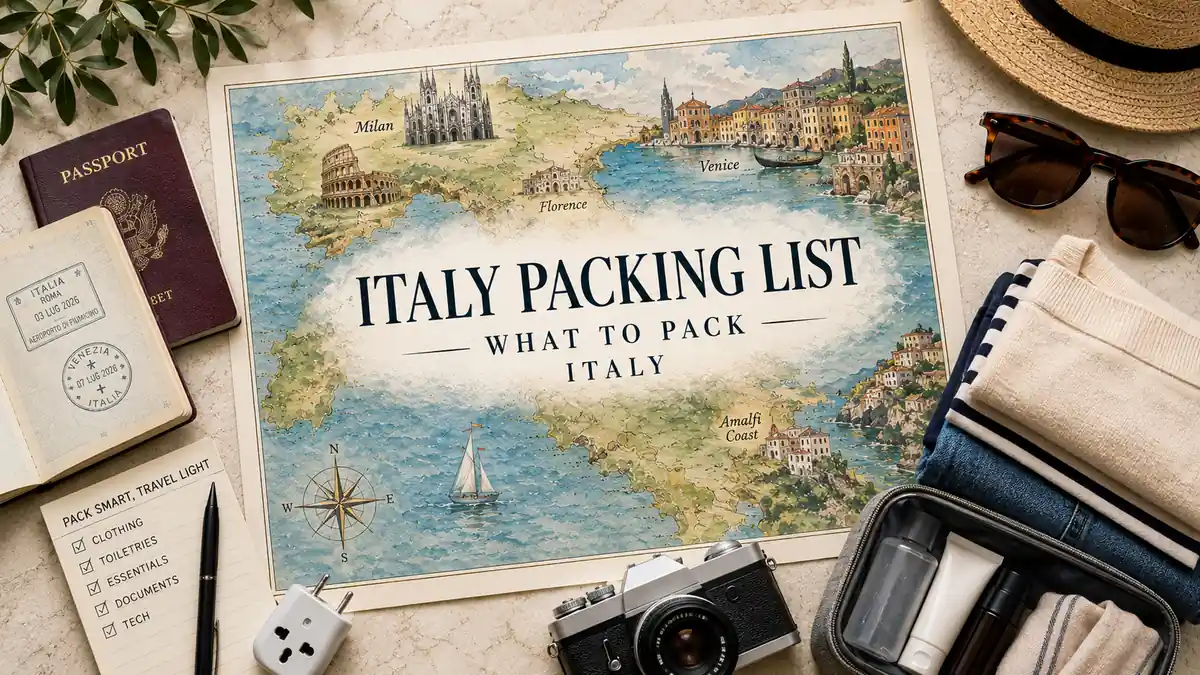
You have the Italy trip booked—now you need to know what actually goes in the bag, and what to leave on the shelf. This is a complete, categorized packing list built for Italy specifically, not a generic Europe checklist. It covers the five core categories and the reasoning behind the items travelers second-guess most: which shoes survive cobblestones, what to wear into churches, whether you need a plug adapter, and how the list shifts between summer, winter, and shoulder season. The goal is a bag that carries a full week, flexes with the weather, and skips the dead weight. Everything below is decision-led: what to bring, why it belongs, and what to confidently skip so a carry-on is enough for most trips.
Quick Answer
Pack versatile layers, comfortable broken-in walking shoes, a church-appropriate cover-up, a Type L/F plug adapter, and core documents. Season and bag strategy drive the rest: summer needs light breathable layers, winter needs warmth, and most trips fit a carry-on. Pack for seven days, plan a laundry stop, and leave bulky just-in-case items home.
Trust Layer
Tripstou planning guide for travelers resolving one travel decision. Covers the main variable, traveler context, and practical tradeoffs.
Produced with AI assistance and reviewed by Alex Perrut, working in tourism since 2015, for the Tripstou editorial team. See our editorial process for details.
Last factual review: July 3, 2026.
Official sources consulted: italia.it, enit.it.
Key Takeaways
- Pack versatile, mixable layers plus one pair of broken-in walking shoes; cobblestones and long sightseeing days punish new or dressy footwear.
- Keep a lightweight scarf or cover-up in your day bag so covered shoulders and knees never block church entry.
- Bring a Type L/F plug adapter, but check device labels first—it changes plug shape, not the 230-volt supply.
- Pack the same core list year-round and let only the outer layers shift between summer, winter, and shoulder season.
- Pack for about seven days and plan a mid-trip laundry stop instead of sizing up to a checked bag.
- Leave the full-size hairdryer home—nearly every Italian hotel supplies one, and it is the bulkiest item travelers needlessly carry.
Table of Contents
What should you pack for Italy?
A complete Italy packing list breaks into five categories: documents and tech, clothing, shoes, toiletries, and extras. Build each around versatile, Italy-specific essentials instead of a generic Europe list. Layers you can mix, one pair of proven walking shoes, and a cover-up for churches carry most trips regardless of when you go.
The list below is the base kit—the part that stays constant before you adjust for the season. Pack for about seven days regardless of trip length; beyond a week, a laundry stop is cheaper and lighter than extra outfits. Everything here should earn its place. If an item only handles one unlikely scenario, it is a candidate to leave home.
| Category | Core essentials | Why it belongs |
|---|---|---|
| Documents and tech | Passport, cards, phone, chargers, plug adapter | Non-negotiable access, payment, and navigation |
| Clothing and layers | Mixable tops, bottoms, one light jacket | Adapts to weather and church dress codes |
| Shoes | Broken-in walking shoes, optional sandals | Cobblestones and long days demand support |
| Toiletries and health | Travel-size basics, medications, sun protection | Compact, personal items you may not find |
| Extras | Reusable bottle, day bag, cover-up scarf | Small items that solve daily friction |
Documents and tech
Bring your passport, payment cards, phone, chargers, and a Type L/F plug adapter as the non-negotiable core. These items unlock access, spending, and navigation, so they belong in your carry-on, never in a checked bag. Add a small backup of card and passport photos stored offline.
Passport validity and any ETIAS or visa rules depend on your nationality, and they sit outside a packing list—confirm the entry mechanics in our Italy visa and entry requirements before you fly, read our Italy travel tips for the rest, and pack the documents accordingly. For broader trip planning around this checklist, the Italy travel guide connects the packing decision to routes, regions, and pace. Keep digital copies of bookings and IDs where you can reach them without data.
Clothing and layers
Pack mixable layers in a tight color palette so a handful of pieces make many outfits. Italy rewards versatility: a light base, a mid layer, and one weatherproof top cover most conditions you will meet in a single trip. Choose fabrics that resist wrinkles and dry overnight.
Italy’s regions are not one climate. The north around Milan and the lakes runs cooler and wetter than the south around Naples and Sicily, and the two can differ by a full layer on the same dates. Pack for the specific cities on your route, not for “Italy” as a whole, and lean on breathable pieces you can add to or peel off through the day.
Toiletries and health
Keep toiletries generic, travel-sized, and personal: the essentials you use daily plus any prescription medication in its original packaging. Pharmacies across Italy stock the everyday items you forget, so there is no need to carry full-size backups of everything. Prioritize what is hard to replace or personal to you.
Bring enough of any prescription to cover the full trip plus a few spare days, and pack sun protection year-round—Italian light is strong even outside summer. A compact first-aid pouch with blister plasters earns its space once the walking days begin. Everything else can be bought locally without stress.

What shoes should you pack for Italy’s cobblestones?
Pack comfortable, broken-in walking shoes with good support—cobblestones and long walking days punish new or dressy footwear. Italian city centers are paved with uneven stone, and a typical sightseeing day covers real distance on foot. One reliable pair beats several stylish ones you cannot walk in for hours.
Your primary pair should have cushioning, grip, and a supportive sole. Good options include cushioned sneakers, walking shoes, or sturdy low boots in cooler months. Add a second lighter pair only if it earns its space—flat sandals for summer evenings, or a slightly dressier flat for dinners.
- Cushioned sneakers or trainers for full sightseeing days
- Supportive walking shoes with grippy, uneven-ground soles
- Flat sandals for warm evenings and lighter days
- One low boot in winter for wet, cold streets
Bring shoes you have already logged several long walks in. Italy is where blisters happen, not where you break footwear in—polished stone gets slick in rain, and heels catch in the gaps between cobbles. Skip anything stiff, brand-new, or narrow-heeled.
What to wear to enter Italian churches
Major Italian churches require covered shoulders and knees, so pack a light scarf or cover-up and knee-length options. Dress codes at basilicas and cathedrals are enforced at the door, and bare shoulders or short hems can mean being turned away. A packable layer solves it without changing your whole outfit.
The practical fix is small: a lightweight scarf or shawl that folds into a day bag, plus at least one pair of trousers, a longer skirt, or knee-length shorts you can wear on church days. This keeps you cool in summer heat while staying covered enough to walk straight in. Enforcement varies by site, so travel prepared rather than counting on a relaxed door.
One scarf does double duty here—it covers shoulders in a basilica and warms you on an over-air-conditioned train, so it earns its space twice. Church dress code is one slice of Italian etiquette; for wider cultural conduct and how to blend in, see our Italy travel tips.
Do you need a plug adapter for Italy?
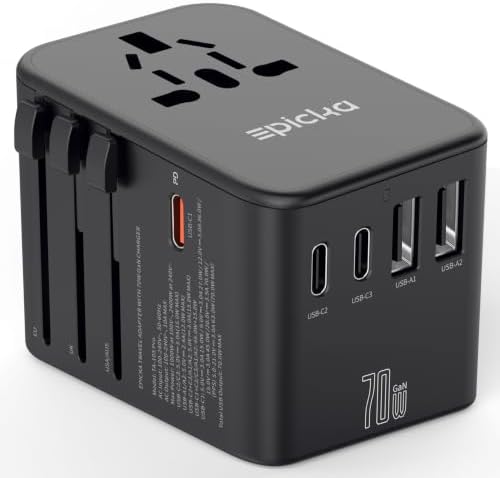
Yes—Italy uses Type L and F sockets at 230 volts, so US and UK devices need an adapter. An adapter changes the plug shape; it does not change voltage. Most phone and laptop chargers handle 230 volts automatically, but high-draw appliances may not.
Italian outlets take the three-pin Type L plug and also accept the two-pin Type F common across Europe. A single universal adapter, or a Europe-specific one, covers you. Check each device’s label: if it reads “100–240V,” it works on Italian power with only an adapter.
The mistake most travelers make is not forgetting the adapter—it is assuming it converts voltage, then plugging in a 120-volt-only hair tool that Italian power quickly ruins. High-draw items like hairdryers and straighteners are the usual casualties, and most hotels supply a hairdryer anyway, so leaving yours home avoids the problem entirely.
How to adjust your Italy packing list by season
The core list stays the same; the season only changes the layers. Summer calls for light, breathable fabrics and sun cover; winter needs warm, insulating layers and waterproofing; shoulder season rewards adaptable mid-weight pieces. Pack the base list once, then adjust the outer layer to the months you travel.
Think in layers, not outfits. The season decides how heavy your layers run and whether you add sun cover or rain protection—the shoes, documents, and toiletries barely move. Because Italy’s north and south can sit a full layer apart on the same dates, match your packing to your actual route, and use our best time to visit Italy guide for the month-by-month weather that sits behind these choices.
| Season | Layer strategy | Add to base list | Safe to skip |
|---|---|---|---|
| Summer | Light, breathable single layers | Sun hat, sunglasses, sandals, cover-up | Heavy coats and thermal layers |
| Winter | Warm insulating layers, waterproof shell | Coat, gloves, scarf, waterproof shoes | Sandals and warm-weather-only pieces |
| Shoulder | Adaptable mid-weight, easy to peel | Light jacket, compact umbrella, sweater | Both extremes of heavy and minimal |
Summer packing (light, breathable, sun cover)
In summer, pack light, breathable fabrics and dependable sun cover. Cotton and linen tops, shorts or airy trousers, and a sun hat handle the heat, while a folded scarf keeps shoulders covered for churches. Breathable walking shoes plus one pair of sandals cover the days.
Winter packing (warm layers, waterproofing)
In winter, prioritize warm insulating layers and waterproofing. A packable down or fleece under a weatherproof coat, plus gloves, a scarf, and a warm hat, handle cold and rain. Waterproof shoes with grip matter most on wet, slick cobblestones during shorter, darker days.
Shoulder-season packing (adaptable layers)
In spring and autumn, pack adaptable mid-weight layers you can add or shed as the day shifts. A light jacket, a sweater, and a compact umbrella cover the swing between warm afternoons and cool evenings. This is the most versatile season, so a smaller, mixable kit works well.
Carry-on only or checked bag for Italy?
Most Italy trips fit a carry-on if you pack versatile layers and plan to do laundry mid-trip. Disciplined packing—one color-coordinated palette, one pair of shoes plus sandals, and quick-dry basics—keeps a week or more inside cabin size. Checked bags make sense mainly for longer or multi-climate trips.
Carry-on only moves faster through stations and airports, dodges the risk of lost luggage, and forces the kind of tight packing that makes a trip easier. It rewards travelers who commit to a small, mixable wardrobe. A checked bag earns its place for winter trips with bulky coats, families sharing a case, or itineraries that swing between very different climates.
A mid-trip laundry stop, not a bigger bag, is what lets a carry-on cover two weeks in Italy—hotels, B&Bs, and self-service laundromats make it straightforward. Baggage fees and airline size limits do change the math on which bag is cheaper; when cost is the deciding factor, weigh it against the rest of your budget in our Italy trip cost guide.
What to leave behind when packing for Italy
Leave behind bulky just-in-case items, excess outfits, heavy appliances, and valuables you would hate to lose. Overpacking wastes the carry-on space you need for the layers and shoes that actually earn their place. Italy sells anything you forget, so pack for the trip you will take, not every hypothetical.
The usual dead weight is easy to name once you look for it. Cut the pile of “maybe” outfits down to a mixable core, and trust that a laundry stop replaces a second suitcase.
- Excess outfits you packed “just in case” but never wear
- Full-size toiletries that pharmacies stock everywhere
- Heavy hairdryers and straighteners most hotels already provide
- Expensive jewelry and valuables that invite theft
- Guidebooks and gear your phone already replaces
Skip the full-size hairdryer above all—nearly every Italian hotel and B&B keeps one in the room, and it is the bulkiest item most people needlessly carry. Leaving high-value jewelry home also lowers your stress in crowded, pickpocket-prone spots, so you travel lighter in every sense.
Frequently Asked Questions
What should you wear in Italy to not look like a tourist?
Dress in fitted, neutral-toned clothing and leather shoes rather than athletic wear, giant sneakers, and logo-heavy gear. Italians favor smart-casual pieces, so a few polished layers help you blend in. Skip beachwear away from the coast, and save shorts and flip-flops for genuinely casual, hot-weather days.
How many outfits should you pack for a week in Italy?
Pack around five to seven mix-and-match outfits for a week, built from a tight color palette so tops and bottoms combine freely. Roughly four to five tops, two or three bottoms, and one light layer cover most itineraries. A mid-trip laundry stop stretches the same wardrobe across longer trips.
What toiletries and medications should you pack for Italy?
Limit liquids to travel-sized containers under 100ml if you fly carry-on, and consider solid bars for shampoo and soap to save space. Pack prescription medication in its labeled original packaging with enough for the full trip. Everyday items—toothpaste, deodorant, sunscreen—are cheap and easy to buy from Italian pharmacies on arrival.
Is it better to pack a backpack or a suitcase for Italy?
A wheeled suitcase suits travelers on flat, elevator-served routes, while a backpack wins on Italy’s cobblestones, stairs, and train platforms. If your trip involves multiple cities and older buildings without lifts, a carry-on backpack or a hybrid wheeled backpack moves far easier. For a single-hotel base on smooth ground, a wheeled case is fine.
What should you keep in your day bag while sightseeing in Italy?
Carry a compact crossbody or anti-theft day bag holding water, sunscreen, a church cover-up scarf, phone, a portable charger, and a copy of your ID. Keep valuables zipped and in front of you in crowds. A refillable bottle matters most in summer, when Italy’s public fountains offer free, drinkable refills.
What extra items should families with kids pack for Italy?
Families should pack a lightweight stroller or carrier for cobblestones, refillable water bottles, snacks, and layers for temperature swings between churches and streets. Bring wet wipes, any child-specific medication, and a familiar comfort item for downtime. A compact carrier often beats a bulky stroller on stairs, narrow lanes, and crowded train platforms.
Related Guides
Use these guides to build the rest of your trip around this packing list, from timing to budget to on-the-ground etiquette.
- Italy travel guide — the hub that connects packing to routes, regions, and trip pace.
- best time to visit Italy — month-by-month weather behind your seasonal packing choices.
- Italy trip cost — budget, baggage fees, and where gear spending fits.
- Italy travel tips — etiquette, church conduct, scams, and entry mechanics.
Did this guide save you time or money? Tripstou is independent and reader-funded — if you'd like to give something back, you can support the site with a crypto contribution of any size.