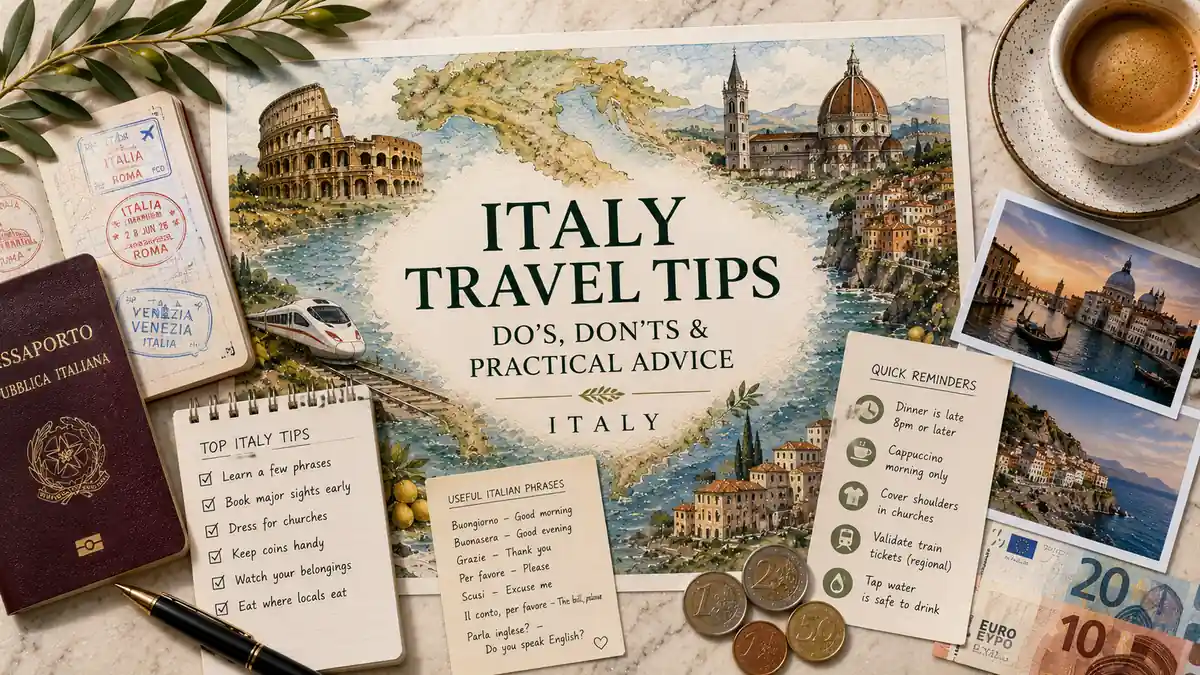
Italy is one of the easiest countries in the world to travel — once you understand a handful of customs and logistics that consistently catch first-timers off guard. The friction is rarely about danger or difficulty. It comes from small things: ordering coffee the wrong way, showing up for dinner two hours early, getting turned away from a basilica for bare shoulders, or losing an afternoon in a sold-out ticket queue. This page consolidates the practical do’s, don’ts, and prep moves that make an Italian trip run smoothly — from dining etiquette and tipping to booking sights and catching trains. Deeper or fast-changing topics like entry requirements, safety, scams, and staying connected live on their own dedicated guides, linked where they matter. Read this once before you go, and you’ll skip the mistakes that trip up most visitors.
Quick Answer
Italy rewards travelers who respect dining customs, dress modestly at churches, book major sights ahead, and stay alert to pickpockets. Most friction comes from etiquette and logistics, not danger — cards work almost everywhere, but keep small coins handy. Learn a few phrases, pre-book headline attractions, and eat where locals do.
Trust Layer
Tripstou planning guide for travelers resolving one travel decision. Covers the main variable, traveler context, and practical tradeoffs.
Produced with AI assistance and reviewed by Alex Perrut, working in tourism since 2015, for the Tripstou editorial team. See our editorial process for details.
Last factual review: July 1, 2026.
Official sources consulted: Italia.it, ENIT.
Key Takeaways
- Most trip friction in Italy comes from etiquette and logistics, not danger — so prepare for customs, not crime.
- Greet with “buongiorno” before speaking, eat dinner late, and skip cappuccino after meals to blend in with locals.
- Pay by card almost everywhere in cities, but carry coins for paid restrooms, small bars, and rural stops.
- Pre-book headline, timed-entry attractions online before you arrive, since sold-out days turn walk-ins away entirely.
- Cover shoulders and knees to enter major churches — the dress code is enforced at the door regardless of heat.
- Keep valuables zipped and close in crowded stations, buses, and monument queues, where pickpockets target distracted tourists.
Table of Contents
What should you know before your first trip to Italy?
Before your first Italy trip, focus on four things: meal customs, church dress codes, booking headline sights, and pickpocket awareness. These trip up first-timers far more than language or safety. Master them and the rest of this page fills in the practical detail that makes the trip run smoothly.
Everything else is a variation on those four. The visitors who struggle usually aren’t unlucky — they simply arrive without knowing how Italy actually works day to day. Here is the short version worth internalizing before you land:
- Respect meal timing — lunch and dinner both run later than you expect.
- Pack one item that covers shoulders and knees for churches.
- Pre-book headline sights online before you arrive, not on the day.
- Keep valuables zipped and close in crowds and on transport.
- Learn a few Italian phrases; a greeting opens almost every door.
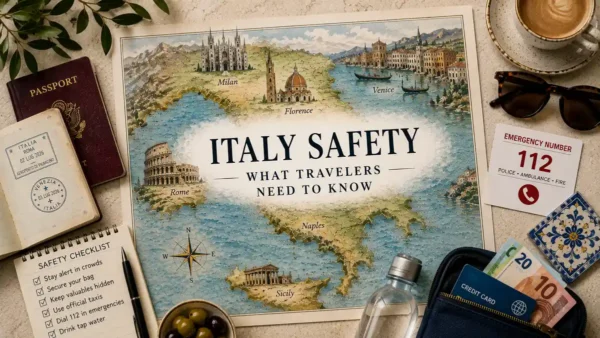
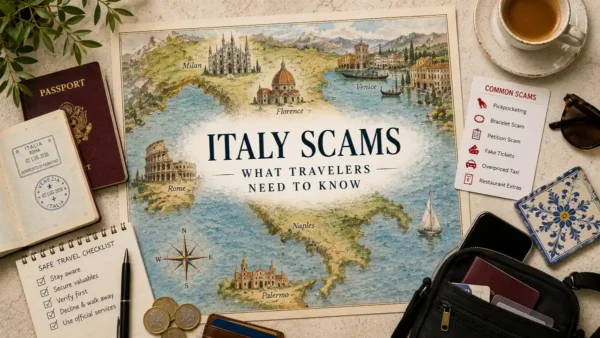
Italy is a safe destination for most travelers, and serious crime against tourists is rare — for the full picture, see our guide to staying safe in Italy. The real risk is petty theft. Pickpockets work crowded stations, buses, and monument queues, so a zipped bag and basic awareness go a long way; our Italy scams guide breaks down the specific tricks to watch for.
Italian etiquette: the do’s and don’ts that matter
Everyday Italian etiquette is mostly about warmth and small courtesies, not rigid rules. Greet people before asking questions, keep your voice down on public transport, and don’t expect to split a bill item by item. Most “rules” travelers fear are soft social norms — respected, not policed.
The one habit that changes how locals treat you is greeting first. A “buongiorno” as you enter a shop or cafe, and “buonasera” in the evening, signals respect and warms every interaction that follows. Skip it and service turns brisk. Say it and Italy opens up.
Table manners are relaxed but have a few tells. Locals rarely ask for extra cheese on seafood pasta, don’t drink cappuccino after a heavy meal, and never rush a meal — dining is social time, not a pit stop. None of this is enforced. It simply marks the difference between passing through and blending in.
| Situation | Do this | Avoid this |
|---|---|---|
| Greetings | Say “buongiorno” as you enter a shop or bar | Launching into English without a greeting first |
| At the table | Eat pasta with a fork and take your time | Asking for parmesan on seafood pasta |
| Coffee | Order an espresso after a full meal | Ordering a cappuccino after a large lunch |
| Public transport | Keep your voice low and phone calls short | Taking loud calls or blocking seats with bags |
| Paying | Ask for “il conto” when you are ready to go | Expecting staff to rush the bill to you |
When do Italians eat, and are the coffee rules real?
Italians eat dinner late — often from 8pm onward — and the coffee “rules” are real but gentle. Cappuccino after a meal reads as odd to locals, though no waiter will refuse you. Both lunch and dinner run later than most visitors expect, so shift your schedule to match.
The practical takeaway is timing. Kitchens often quiet down mid-afternoon and don’t get busy again until well into the evening. Arrive at opening time and you’ll dine among fellow tourists in a half-empty room. Wait an hour and the place fills with locals — a good sign you chose well.
Can you order a cappuccino after 11am?
Yes, you can order a cappuccino after 11am — no one will stop you. The convention is simply that Italians treat milky coffee as a morning drink, so ordering one after lunch quietly marks you as a visitor. After a meal, locals reach for a quick espresso instead, standing at the bar.
What time do Italians actually eat dinner?
Italians typically eat dinner later than northern Europeans or Americans, often starting around 8pm and later still in the south. Many restaurant kitchens don’t hit their stride until well after opening. If you show up the moment doors open, you may find yourself dining early among other travelers rather than locals.
How do you avoid tourist-trap restaurants in Italy?
Spot tourist-trap restaurants by three signals: multilingual menus, staff hawking from the doorway, and a prime square location. Walk a few streets back instead. The best-value meals usually sit where locals eat, on quieter side streets away from the headline monuments and photo crowds.
You don’t need to be an expert to read the warning signs. Run through this quick checklist before you sit down:
- Menus printed in six languages, often with photos of every dish.
- A host outside actively pulling passersby in from the street.
- A table directly on a famous piazza or beside a major sight.
- No visible locals — only other tourists at the tables.
- A generic menu doing everything from pizza to sushi at once.
A menu with photos of the food is the surest tell — kitchens confident in their cooking rarely need pictures to sell a plate. When in doubt, walk two or three streets away from the main attraction and look for a short, seasonal menu written mostly in Italian. That single move improves your average meal more than any guidebook pick.
Is Italy cashless, and do you still tip?
Italy is largely cashless in cities — cards and contactless work almost everywhere — but you should still carry some coins. Tipping is modest and never obligatory. Small vendors, markets, rural spots, and public restrooms may want cash, so keep a little on hand alongside your card.
The coins you actually need aren’t for shopping — they’re for the paid restrooms and small espresso bars that still wave cards away for a token charge. Treat cash as a backup for small, everyday moments, not your main payment method. For anything meaningful, tap or insert your card.
Can you pay by card everywhere in Italy?
You can pay by card in most Italian hotels, restaurants, shops, and museums, and contactless is standard across cities. Some small businesses, market stalls, and rural cafes still prefer cash, and acceptance thins out in smaller towns. Carry modest cash as a fallback, not as your primary way to pay.
Do you tip in Italy?
Tipping in Italy is modest and optional, unlike the percentage-based custom of North America. Many restaurants add a cover charge to the bill, so an extra tip is a small gesture, not a duty. Rounding up or leaving a little for genuinely good service is welcome — but never expected of you.
Do you need to book Italy’s top attractions in advance?
Yes — pre-book Italy’s headline, timed-entry attractions well ahead, especially in peak season. Sites with capacity limits sell out fastest and often bar walk-ins entirely. Lesser-known museums and churches rarely need reservations. Booking the big-ticket sights online saves hours of queuing and protects your itinerary from sold-out disappointment.
Fame and capacity set the booking timeline. The more famous and capacity-limited a site is, the further ahead you should book — the busiest headline attractions can fill their slots days or weeks out in high season. Smaller sights you can usually leave flexible and decide on the day.
Timed-entry slots aren’t only about skipping the line — once a day sells out, the site simply turns walk-ups away, so “arriving early” stops working as a strategy entirely. Booking ahead is less about convenience and more about guaranteeing you get in at all.
Tours and activities
Book skip-the-line tickets, day trips and local tours with free cancellation on most activities.
You can also browse everything on getyourguide.com.
Tripstou may earn a commission if you book through this link, at no extra cost to you.
What to wear in Italy: church dress code and blending in
Italy’s major churches enforce a strict dress code: shoulders and knees must be covered to enter. This applies to everyone, regardless of the heat. Beyond churches, Italians dress a notch smarter than many visitors, so leaning tidy over beachwear helps you blend in and feel comfortable almost anywhere.
The church rule is the one to plan around, because it’s actively enforced at the door of cathedrals and basilicas. A light layer solves it without wrecking your day:
- A scarf or shawl to drape over bare shoulders on demand.
- Trousers, a long skirt, or a dress that reaches past the knee.
- Closed shoes for cobbles and long days on your feet.
- A packable layer for cool churches and evening temperature drops.
Outside places of worship, no one polices what you wear, but tidy, put-together clothing simply fits Italian cities better than gym gear or beachwear. Pack a versatile, modest layer and you cover both the dress code and the “blend in” instinct at once. A full breakdown belongs on a dedicated packing checklist rather than here.
Getting around Italy: trains, tickets, and staying trip-ready
Italy runs on an excellent train network: high-speed Trenitalia and Italo link major cities, while regional trains reach smaller towns. Validate regional paper tickets before boarding where required, or risk a fine. Trains beat driving between cities on speed and hassle, making rail the default for most first trips.
The validation machine catches more tourists than the ticket price ever will — a validated regional ticket costs exactly the same, but an unvalidated one reads as fare evasion to an inspector. High-speed tickets are tied to a specific train and don’t need stamping; the older paper regional tickets do. When in doubt, stamp it.
Two logistics topics sit just outside this playbook and change more often, so we cover them in depth elsewhere. Check current Italy entry requirements before you fly — passport validity, ETIAS, and EES rules evolve, and this is not the place to rely on a fixed answer. For data and calls on arrival, our Italy SIM card and eSIM guide explains the fastest way to get online.
Train and bus tickets
Compare routes, schedules and prices across rail and bus operators in one search, with mobile tickets on your phone.
New to Omio? Code NEW10 takes 10% off your first booking — or APPNEW10 if you book inside the Omio app. Both apply to bookings up to €80.
Search routes and compare prices on Omio →
Tripstou may earn a commission if you book through this link, at no extra cost to you.
Frequently Asked Questions
Do you need coins for public restrooms in Italy?
Yes, many public restrooms in Italy charge a small fee, so carry a few coins. Train stations, tourist sites, and highway stops often have attended or turnstile toilets that only take cash. Cafes and bars usually let paying customers use theirs free, so a quick espresso doubles as restroom access.
Do you have to validate train tickets in Italy?
Only paper regional tickets need validating — stamp them in the small platform machines before boarding, or an inspector can fine you. High-speed and app-based digital tickets are tied to a specific train and validate automatically. If you hold a paper ticket without a seat reservation, always stamp it first.
What basic Italian phrases should you learn?
Learn a handful of courtesy phrases: buongiorno (good morning), buonasera (good evening), grazie (thank you), per favore (please), and scusi (excuse me). Add “parla inglese?” (do you speak English?) and “il conto” (the bill). Even a clumsy attempt signals respect and consistently warms how locals respond to you.
Is English widely spoken in Italy?
English is widely spoken in tourist areas, major cities, hotels, and popular restaurants, but far less so in small towns and rural regions. Younger Italians and hospitality staff usually manage well. Away from the tourist trail, expect limited English, so a translation app and a few Italian phrases go a long way.
Can you drink the tap water in Italy?
Yes, tap water in Italy is safe to drink almost everywhere, and public drinking fountains are common in many cities. Rome’s cast-iron “nasoni” run continuously with cold, potable water. Carry a refillable bottle and top up as you go — restaurants typically serve bottled water by default, so ask for “acqua del rubinetto” if you want tap.
What is the biggest first-timer mistake to avoid in Italy?
The biggest first-timer mistake is rushing — cramming too many places into too few days and treating meals as quick refuels. Italy rewards a slower pace: fewer bases, longer stays, and unhurried dinners. Trying to tick off every famous sight leaves you exhausted and skimming the surface of what makes the country special.
Related Guides
Use these guides to plan the rest of your trip and go deeper on the topics this page routes out to:
- Italy travel guide — the full country planning hub for your whole trip.
- Best places to visit in Italy — where to go and how to shape your route.
- Rome travel tips — city-specific advice for the capital.
- Florence travel tips — practical pointers for the Renaissance city.
- Venice travel tips — how to navigate the canals and crowds.
- Milan travel tips — advice for Italy’s style and business capital.
- Naples travel tips — getting the most from the south’s liveliest city.
- Bologna travel tips — a food-lover’s guide to the region’s heart.
- Best Italy eSIM
Did this guide save you time or money? Tripstou is independent and reader-funded — if you'd like to give something back, you can support the site with a crypto contribution of any size.