Most first trips to Switzerland go wrong in the same way: the plan tries to cover the whole country, and the traveler ends up packing a suitcase every morning. The fix is a method, not a longer trip. Pick two or three regions that sit next to each other, base three or four nights in each, and let the trains handle the day trips.
This guide works through that method one decision at a time: which regions to pair, how long to stay, where to base yourself, how to get around, when to go, what the trip costs in practice, and what to know before landing. Each decision then hands off to a dedicated guide for the detail. One point for North American readers up front: Switzerland is not in the EU and does not use the euro, yet it is one of the easiest countries in Europe to cross by train.
Quick Answer
Plan a first Switzerland trip around two or three neighbouring regions, with 3–4 nights in each. Trip length decides the pairing: one week buys a city plus one mountain base; ten days buys the classic triangle. First-timers should pair Lucerne, the Jungfrau region and Zermatt, flying into Zurich or Geneva and connecting by train.
Trust Layer
Tripstou country guide for travelers planning a trip across a whole country. Covers route direction, trip length, season, budget, bases, and transport tradeoffs.
Produced with AI assistance and reviewed by Alex Perrut, working in tourism since 2015, for the Tripstou editorial team. See our editorial process for details.
Last factual review: October 2, 2026.
Official sources consulted: Switzerland Tourism, SECO Tourism Policy, About Switzerland (Swiss FDFA).
Key Takeaways
- Pair two or three neighbouring regions instead of sweeping the whole country, because slow mountain transfers eat the days a sweep seems to save.
- Trip length sets the pairing: one week fits a city plus one mountain base, while ten days fits Lucerne, the Jungfrau region and Zermatt.
- Stay three or four nights per base and day-trip by train, since every move costs a morning of luggage, checkouts and regional connections.
- A car is optional on a first trip: trains, postbuses and boats reach most villages, and Zermatt is car-free beyond Täsch.
- Season sets the trip’s character: summer for hiking and lake boats, winter for skiing, and quieter shoulder months with some lifts closed.
- Switzerland is among Europe’s most expensive countries, but fewer paid summit days, supermarket meals and the right rail product keep costs workable.
Table of Contents
How to Plan a First Trip to Switzerland
A first trip to Switzerland works best as two or three neighbouring regions, not a whole-country sweep. Choose one base in each region and cross between them by train. The country is small, but mountain transfers are slow, so a tight regional plan buys more time on the lakes and peaks.
Transfer time is what breaks the sweep. On a map, Switzerland looks like a country you could cross in a morning. Reaching a high valley, though, usually means switching from a main-line train to a regional line, then to a cog railway or cable car. Repeat that every day and the trip turns into a series of station platforms.
The classic first-timer triangle solves this. It links Central Switzerland around Lucerne, the Bernese Oberland around the Jungfrau region, and Zermatt in the Valais. Each corner shows a different side of the Alps — lake and city, glacier valleys, and the Matterhorn — and trains between them run often enough that a cloudy day never strands you.
Your arrival city follows from the pairing. Zurich is the natural gateway for Lucerne and the Jungfrau region. Geneva suits a trip weighted toward Lake Geneva and the Valais. Flying into one and out of the other saves a long backtrack.
Choosing what to see inside each region is a separate decision. Our guide to the best places to visit in Switzerland compares the destinations, and the roundup of things to do in Switzerland covers the experiences worth building a day around. The rest of this page follows the planning order: regions, length, bases, transport, season, cost and orientation.
The triangle works because each corner faces a different mountain experience, so a fourth alpine base on a first trip usually repeats a view you already have.
Switzerland’s Main Regions and What Each Is Best For
First-timers mostly choose between Central Switzerland, the Bernese Oberland, the Valais and a gateway city. The first three form the classic triangle, with Zurich or Geneva as the gateway, and rail links between them are frequent. Ticino, Graubünden and the Lake Geneva side reward a second trip or a longer stay.
Each profile below gives the region’s character, its main draw and the traveler it fits. Pick two or three that sit together.
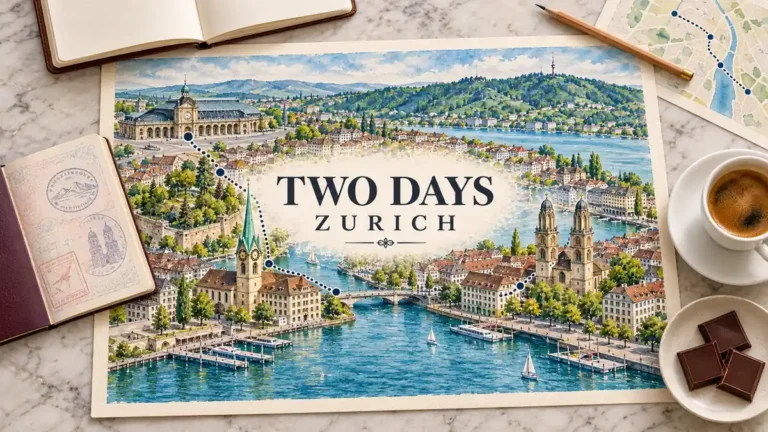
- Zurich and the north: the country’s largest city, set on a lake with a compact old town and the main international airport. Best for: travelers who want one city night at arrival or departure. Start with our Zurich travel guide.
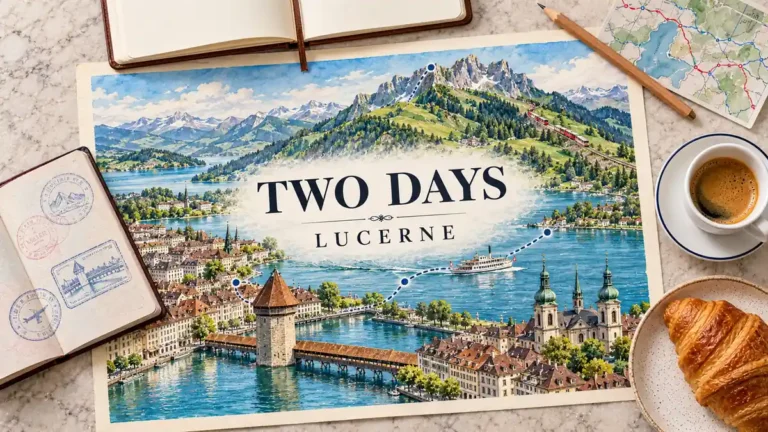
- Central Switzerland: Lucerne sits on its lake ringed by easy-access peaks, with boats doubling as transport. Best for: first-timers who want lake scenery with little effort. See the best things to do in Lucerne.
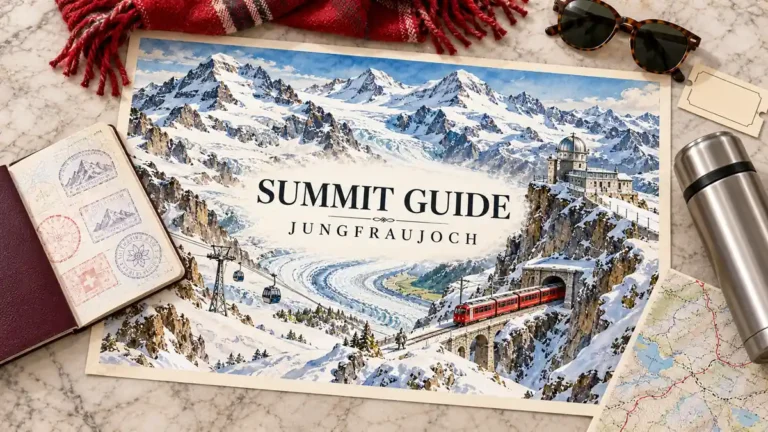
- Bernese Oberland: steep glacier valleys, waterfalls and high villages reached by cog railway and cable car. Best for: hikers and anyone chasing big alpine views. Our Jungfrau region guide covers the valleys.
- Valais around Zermatt: a car-free village at the foot of the Matterhorn, high up at the end of its rail line. Best for: travelers who want one iconic peak framed from the village. Browse the things to do in Zermatt.
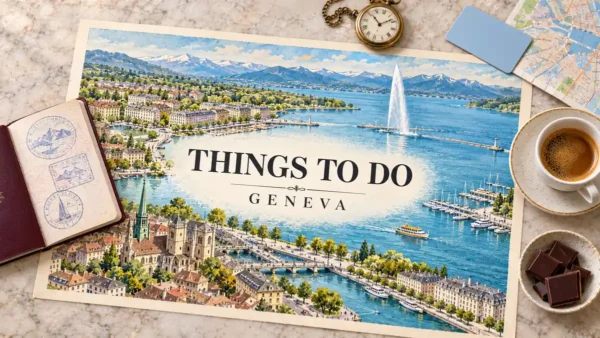
- Lake Geneva side: French-speaking, with Geneva and Lausanne on the shore and terraced vineyards along the lake. Best for: wine, lakeside towns and a gentler urban pace. Plan the city with our list of things to do in Geneva.
- Ticino: Italian-speaking, with lakes, palm-lined promenades and a Mediterranean feel south of the Alps. Best for: a second trip with warmer lake days. The Switzerland destination shortlist places it against the rest.
- Graubünden: the quietest of the big regions, with Romansh-speaking pockets, wide high valleys and scenic mountain rail lines. Best for: longer stays and slow travel by panoramic train.
| Region | Character | Anchor draw | Best for | Base town |
|---|---|---|---|---|
| Central Switzerland | Lake city with peaks close by | Lake Lucerne boats and easy summit trips | Low-effort lake and mountain scenery | Lucerne, with fast links to Zurich |
| Bernese Oberland | Glacier valleys and high mountain villages | The Jungfrau massif and valley waterfalls | Hikers and big alpine views | Interlaken or a higher valley village |
| Valais | High valleys under famous peaks | The Matterhorn seen from car-free Zermatt | One iconic peak on a first trip | Zermatt, at the end of its line |
| Lake Geneva | French-speaking lakeshore cities and vineyards | Geneva, Lausanne and terraced lakeside vineyards | Wine, towns and an urban pace | Geneva or Lausanne on the shore |
| Ticino | Italian-speaking lakes south of the Alps | Lakeside promenades and a Mediterranean feel | A second trip with warmer days | Lugano or Locarno by the lakes |
| Graubünden | Quiet high valleys with Romansh pockets | Scenic mountain rail lines and wide valleys | Longer stays and slow travel | Chur or a village in the Engadine |
Ticino and Graubünden sit a long transfer away from the triangle, so adding either one to a first trip costs the nights of a full extra base.
Tours and activities
Book skip-the-line tickets, day trips and local tours with free cancellation on most activities.
You can also browse everything on getyourguide.com.
Tripstou may earn a commission if you book through this link, at no extra cost to you.
How Many Days You Need in Switzerland
Ten days is the comfortable first-trip length because it fits the three-region triangle without a nightly move. It gives each base three nights or more. One week works if you narrow the plan to a city and one mountain base; two weeks or more opens the outer regions.
Each tier reads as length, then what it buys, then who it fits.
- One week: one city base plus one mountain base, such as Lucerne with the Jungfrau region. It fits travelers adding Switzerland to a wider Europe trip.
- Ten days: the full triangle of Lucerne, the Jungfrau region and Zermatt, with three nights or more in each. It fits first-timers who want lakes, glacier valleys and the Matterhorn in one trip.
- Two weeks or more: the triangle plus Ticino, Graubünden or the Lake Geneva side as a fourth base. It fits returning visitors, slow travelers and anyone pairing serious hiking with lake time.
Day-by-day sequencing belongs elsewhere. The Switzerland itinerary by train turns each tier into a route. Drivers who want passes and lakeside roads should start with the Switzerland road trip guide.
Cutting from ten days to one week should drop a whole base, never a night from each, because a two-night mountain stop leaves no spare day if cloud hides the peaks.
Where to Base Yourself in Switzerland
Base in two or three towns for three or four nights each and day-trip by train instead of moving nightly. Swiss trains make return day trips easy, so a fixed base costs little in reach and saves the hours lost to packing, check-ins and mountain transfers. Lucerne, the Jungfrau region and Zermatt are the classic anchors.
Hopping costs more than it looks. Every move means hauling luggage onto regional trains, a morning checkout and an afternoon check-in. Two moves in a row can swallow most of a day.
Each region has an obvious anchor. Lucerne covers Central Switzerland, and its lake boats and nearby peaks fill several days; the guide to Lucerne’s sights and lake trips shows how. In the Bernese Oberland, the choice is Interlaken in the valley or a higher village such as Grindelwald, Wengen or Mürren, and the guide to the Jungfrau region compares them. Zermatt is a base in its own right; the list of Zermatt activities covers how to fill the days.
Valley or high village is a trade between connections and scenery. A valley town like Interlaken has more trains, more places to eat and easier day trips when the weather turns. A high village gives the view from the window and quiet evenings, at the cost of an extra cable car or cog-railway leg each day. Hikers usually prefer high. Travelers with heavy bags or a packed day-trip plan do better in the valley.
Keep cities to one on a first trip. Zurich or Geneva works best as a single night at arrival or departure. The mountains are why most people come.
A high village like Wengen wins on a clear-weather trip but loses on a wet one, when the valley town’s rail links to lakes and cities are the only easy alternative.
How to Get Around Switzerland
An integrated network of trains, buses, boats and mountain railways reaches most villages, so a car is optional. Timetables are built to connect, and postbuses and lake boats fill the gaps where rails stop. A car only earns its cost on a road trip over mountain passes or around the lakes.
The network behaves like one system. Trains meet buses at the station, boats on the big lakes run as scheduled transport, and cog railways and cable cars climb from the valley stations. A single national journey planner covers most of it.
A car helps on the high passes, around lakes with patchy rail access and on rural detours between villages. The Swiss road trip route is built around exactly those strengths.
A car hurts in the cities, where trams and walking are faster and parking is an extra cost. It also hurts in the Valais. Zermatt is car-free: you leave the car at Täsch and continue by shuttle train or taxi.
Two points round out the picture. Luggage is manageable on Swiss trains, and forwarding services exist for travelers changing base. Panoramic routes such as the Glacier Express are a way of traveling in themselves, worth treating as a day of the trip.
A funicular or cable car is often the last leg to a viewpoint or trailhead, so even a car-based Swiss trip ends up on public transport the moment it reaches the scenery.
Swiss Travel Pass or Half Fare Card: How to Decide
Choose by how many paid journeys and mountain trips you will take. The Swiss Travel Pass gives unlimited train, bus and boat travel on its validity days, plus discounts on mountain railways and museum entry. The Swiss Half Fare Card halves ticket prices instead. Frequent movers lean toward the pass; slow travelers on fixed bases often do better with the half-price card. Our Swiss Travel Pass guide runs the comparison for your route.
When to Go to Switzerland
Summer is for hiking and lakes, winter for skiing and snow villages, and shoulder months are quieter. The season decides which version of the triangle you get: open trails and summer lake cruises, or snow-covered villages and ski lifts. Between the two, some lifts and high passes close.
Summer opens the whole triangle. Trails climb above the Jungfrau valleys, boats work the lakes, and Zermatt becomes a hiking base. Route ideas and difficulty levels are in our guide to hiking in Switzerland.
Winter turns the same bases into snow villages. Zermatt and the Jungfrau region run as ski resorts, while Lucerne and the lakes take on a quieter, colder mood. Many mountain railways run in both seasons.
Shoulder seasons trade crowds for access. Spring and autumn bring fewer visitors and calmer villages, but some cable cars and high passes close between seasons, and higher trails can still hold snow. They suit lake-and-city trips better than high-alpine ones.
Hikers should aim for summer. Skiers should aim for winter. First-timers who want green valleys under snowy peaks get the most from early summer or early autumn, accepting a few closures at the edges. Month-by-month detail lives in the guide to the best time to visit Switzerland.
Zermatt is the triangle’s most season-proof corner: its height keeps snow on the surrounding peaks in summer, and the car-free village works as a base in both seasons.
Is Switzerland Expensive to Visit?
Switzerland is one of Europe’s most expensive countries, but bases, transport product and eating pattern decide how much. Accommodation and restaurant meals push costs up fastest. Transport is pricey too, yet a pass or half-price card changes the maths, and supermarket meals, free trails and tap water keep a careful budget workable.
Each spend style buys a different version of the same trip.
- Budget: hostels or simple guesthouses in valley towns, supermarket picnics and self-catering, and slow travel on a half-price card. Switzerland is kind here on free hiking trails, drinkable tap water and reliable regional trains. It punishes anyone who wants restaurant dinners or a mountain excursion every day.
- Mid-range: three-star hotels in Lucerne, Interlaken or Zermatt, one restaurant meal a day and a pass for the busiest travel days. The country is kind on transport reliability and clean, well-run mid-range rooms. It punishes high-village stays and frequent mountain railway tickets, which add up fast.
- High-end: lakeside grand hotels or high-village chalets with views, restaurant dinners every night, and first-class rail. Here spending buys standout views from the room and calm, comfortable travel. The punishment is scarcity: premium rooms in Zermatt and the high villages go quickly in peak season.
Daily figures by style sit in the Switzerland trip cost breakdown. The Swiss food guide explains which eating patterns keep meals affordable.
The bill that surprises most first-timers is the mountain railway, so a trip with one summit day per base costs far less than one with a summit every day.
Traveling to Switzerland: CHF, Four Languages and Entry Rules
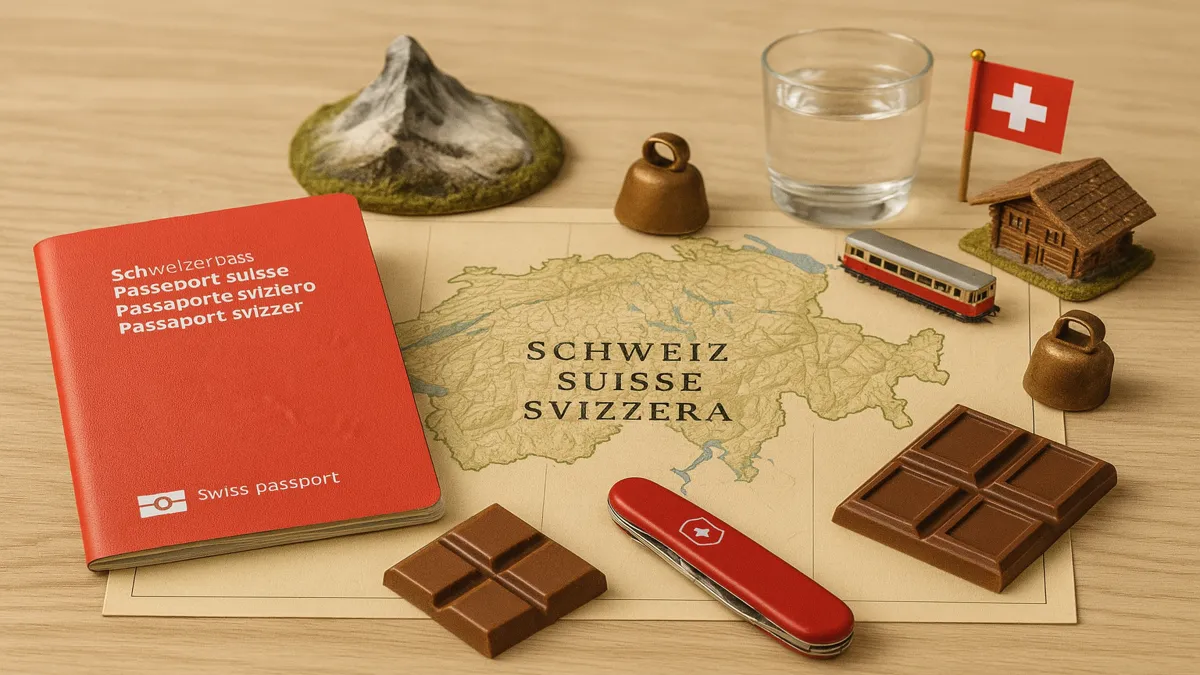
Switzerland is in the Schengen area but not the EU, pays in Swiss francs and speaks four national languages. Those three facts change how you pay, how your phone works and how the trip feels from one region to the next, so settle them before landing.
The currency is the Swiss franc (CHF), not the euro. Euros are not the norm for everyday payments. Plan in francs from the start.
EU roaming rules do not apply by default, so check how your phone plan treats Switzerland before you arrive.
German is the main language for more than 60% of the population. French is spoken in Romandie, around Geneva and Lausanne; Italian in Ticino and parts of Graubünden; Romansh in parts of Graubünden. The split shapes the trip. Lucerne and the Jungfrau region feel German-Swiss, the Lake Geneva side feels French, and Ticino feels Italian, from menus to station announcements.
Check the entry rules that apply to your passport before booking. Short stays are capped at 90 days in any rolling 180-day period across the Schengen area as a whole, not per country.
A few practical points are worth sorting out before departure:
- Cards and cash, and when each one works
- Tipping and service charges
- SIM or eSIM options outside EU roaming
- Plug type and adapters
- Sunday shop closures
- Tap water and luggage forwarding
Our practical guide to visiting Switzerland covers each one in detail.
Frequently Asked Questions
Is Switzerland worth visiting?
Yes, for travelers who value mountain scenery, lakes and easy train travel above a low daily spend. Few countries put glacier valleys, car-free villages and lake cities this close together on one connected network. The trade-off is cost: a careful plan with fewer bases and fewer paid summits keeps the trip worthwhile without overspending.
Do you need a car in Switzerland?
No, not for a first trip built on Lucerne, the Jungfrau region and Zermatt, since trains, postbuses and boats reach all three. Rent one only if the plan centres on mountain passes or rural lake roads. Even then, drivers heading to Zermatt park at Täsch, because the village itself is car-free.
What language do they speak in Switzerland?
Switzerland has four national languages: German, French, Italian and Romansh. German is the main language for more than 60% of the population, French dominates around Geneva and Lausanne, and Italian is spoken in Ticino. English is widely used in hotels, stations and tourist areas, so visitors rarely need a local language on a first trip.
Is one week enough for Switzerland?
One week is enough for one city and one mountain base, such as Lucerne with the Jungfrau region, but not for the full triangle. Adding Zermatt to a week means two-night stops and little slack for cloudy days. Travelers set on the Matterhorn should either swap a base or stretch the trip to ten days.
Should you fly into Zurich or Geneva?
Fly into Zurich if the trip centres on Lucerne and the Jungfrau region, and into Geneva if it leans toward Lake Geneva and the Valais. A one-week city-plus-mountain trip works best as a Zurich round trip. For the full triangle, arriving in one city and leaving from the other avoids doubling back by train.
Is Switzerland a good first trip to Europe?
Yes, for travelers who want an easy start: trains connect cities and mountain villages on one network, distances are short, and the country has a reputation for safety. The catch is cost and pace, since Switzerland rewards slow travel. Travelers wanting several countries on a tight budget may prefer to add it as one stop.
Related Guides
- Best places to visit in Switzerland: choose the destinations inside each region you pair.
- Switzerland itinerary: turn your trip length into a day-by-day route by train.
- Switzerland trip cost: daily budget figures for each spend style.
- Swiss Travel Pass guide: decide between the pass and the Half Fare Card for your route.
- Best time to visit Switzerland: month-by-month detail behind the seasonal choice.
- Practical guide to visiting Switzerland: cards, tipping, SIM, plugs and other essentials before you go.
- Jungfrau region guide: compare valley and high-village bases in the Bernese Oberland.
- Zurich travel guide: make the most of a gateway night in the largest city.
Did this guide save you time or money? Tripstou is independent and reader-funded — if you'd like to give something back, you can support the site with a crypto contribution of any size.