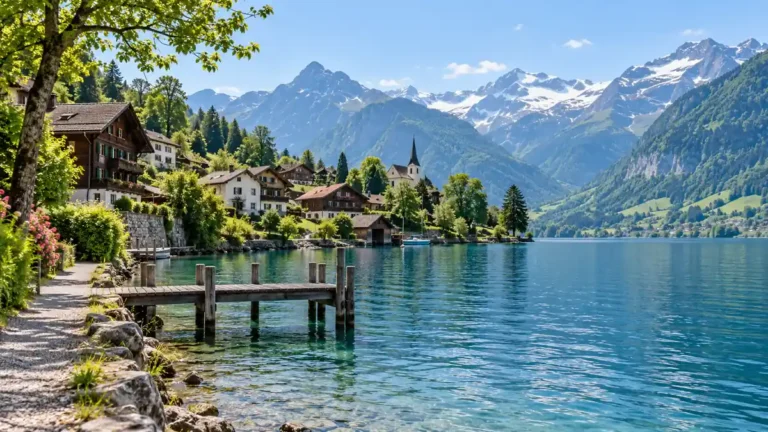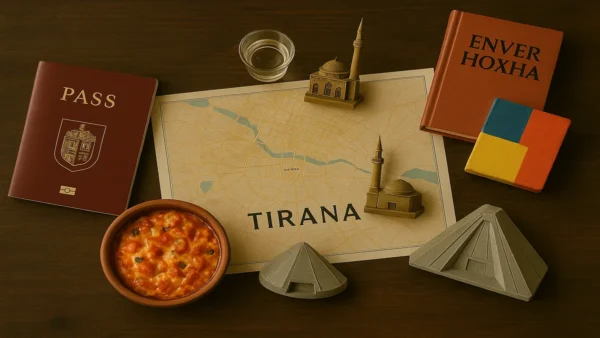
Travel to Albania works best when Tirana is treated as the way in, not the trip. A first visit pairs the capital with two or three of the country’s distinct regions: the Ottoman stone towns of Berat and Gjirokaster, the Albanian Riviera and Saranda on the Ionian coast, and the Albanian Alps around Shkoder. One week covers Tirana plus two of them; two weeks loops all three. The shoulder season suits the coast best. Distances take longer than the map suggests, so fewer stops beat more.
Albania is its own country, outside the European Union and outside the Schengen Area, with its own currency, the lek. It is cheap by European standards, and English is common in the places travelers go. What it lacks is polish: buses run on their own logic and mountain roads eat time. What it offers is an Ionian beach, a UNESCO-listed old town and an alpine valley within a few hours of one another.
What Is Albania Like to Travel, and Who Is It For?
Albania is a low-cost, high-contrast country where an Ionian coast, Ottoman stone towns and a serious alpine range sit within a few hours’ drive of one another. It suits travelers who trade polish for value and are comfortable on buses that leave when they are full.
The country is strongest as a short trip that mixes all three moods. A morning in a castle quarter, an afternoon swim and, on a longer trip, a mountain hike all fit in one itinerary. Few European countries pack that range into such a small map at this price.
Independent planners and road-trippers get the most from it. Anyone who needs rail, fixed timetables or resort-style infrastructure will find it harder work. Information is patchy, roads are slow, and some plans get made on the day with a driver or a guesthouse owner.
Food is one of the easy wins. Tave kosi (baked lamb with yoghurt), byrek pastries and fergese (peppers and cheese) turn up across the country, and Italian and Greek influence shows on the coast. Raki, the local grape spirit, is offered as a welcome as often as it is ordered.
The culture runs on hospitality. Besa, the code of keeping one’s word, still shapes how hosts treat guests, and the evening xhiro (the slow walk along the main street) is the moment to see a town at its liveliest. Skanderbeg, the national hero, is everywhere: on squares, statues and castle museums.
The honest tradeoff is logistics. Albania rewards a loose plan and punishes a tight one, because a map that shows a short hop rarely shows the mountain road in between.
The Three Albanias You Choose Between: Stone Towns, Riviera, Alps
Albania sorts into three trip ingredients (the stone towns, the Riviera with Saranda, and the Alps around Shkoder) with Tirana as the gateway. Most first trips combine two of the three, and the choice is about mood: history and food, sea and beach towns, or hiking and remote valleys.
| Region | Character | Best for | Base |
|---|---|---|---|
| Tirana | Busy capital, cafés, communist-era landmarks | Arrival and a first night or two | Tirana |
| Stone towns | Ottoman houses, hilltop castles, slow food | History, walking, a quieter pace | Berat or Gjirokaster |
| Riviera and Saranda | Ionian beaches, coastal villages, ruins | Swimming and beach towns | Saranda or a Riviera village |
| Shkoder and the Alps | Lake city, high valleys, mountain villages | Hiking and remote scenery | Shkoder, then Theth or Valbona |
Tirana: the way in, and worth a day or two
Tirana is where most trips start, because Tirana International Airport “Nënë Tereza” is the country’s main international gateway. The capital earns a night or two of its own. Skanderbeg Square, with the national hero on horseback, anchors the centre, a short walk from the Pyramid and the bars and cafés of Blloku, once the closed quarter of the communist leadership and now the city’s liveliest district. A guided walk through those three areas is the fastest way to get the city’s recent history in one go. Sights, neighbourhoods and the airport transfer are covered in our Tirana guide, and the plan for two days in Tirana sets out the city leg. Kruje and Bovilla Lake are the easy day trips from here.
Berat or Gjirokaster: which stone town, or both?
See both if your route runs south to Saranda; otherwise pick by direction. Berat suits a short loop from Tirana, and Gjirokaster suits a trip that is already heading for the coast. The two share one UNESCO World Heritage listing, the Historic Centres of Berat and Gjirokastra, so neither is the lesser stop.
Berat is the softer of the two. The white-walled houses of the Mangalem quarter stack up the slope beneath the castle, which still has people living inside its walls, and the river promenade fills for the evening xhiro. Travelers based in Tirana without a car can book a Berat tour and see the old town without changing hotels.
Gjirokaster is darker and steeper. Grey stone roofs, fortified Ottoman tower houses and a vast castle above the town give it a harder edge, and it is the birthplace of the novelist Ismail Kadare. Order qifqi, the town’s fried rice balls with herbs, at least once.
Sleeping in the stone town you pick changes the visit more than the choice itself. Both towns are at their best after the day visitors leave.
The Albanian Riviera and Saranda: which town to pick
Pick the Riviera town by the kind of beach day you want: Ksamil for shallow water and islets, Himare for a working town with beaches, Dhermi for beach clubs, Vlore for a city base. The coast road climbs over the Llogara Pass between Vlore and the Ionian shore, and that pass is where the Riviera proper begins.
- Vlore is a full city on the bay, convenient and well connected, with a long seafront more than a village feel.
- Dhermi sits below the pass, with a steep old village above a beach strip that runs to bars and clubs in summer.
- Himare keeps a working-town rhythm, with several coves within reach and an old upper town on the hill.
- Ksamil has the clear, shallow water and small islands of the postcards, and the densest crowds in high summer.
Saranda is the practical base for the far south. It puts Butrint, the UNESCO-listed ancient site, and the Blue Eye spring within reach, and Ksamil sits between the town and the ruins. Corfu lies across the water from Saranda, close enough to see on a clear day.
High summer changes the whole coast. The villages fill, the beach space shrinks, and the quiet Riviera of the photographs belongs to the shoulder season.
Shkoder and the Albanian Alps: are Theth and Valbona worth it?
Theth and Valbona are worth it for anyone with four or more days to spare and a summer or late-shoulder date. The road and the trails are snow-limited for much of the year, so the Alps are a seasonal ingredient, not a year-round one. They are not worth forcing into a one-week coast trip.
Shkoder is the gateway. The city sits on its lake below Rozafa Castle, and it is where hikers organise the trip into the mountains. The classic route links Valbona and Theth over a high pass on foot, with Komani Lake as the scenic water approach on the Valbona side. Anyone after a taste without the full traverse can book a Theth hike and leave the mountain driving to someone else.
The reward is the remotest landscape in the country: stone guesthouses, high valleys and villages that empty out once the season closes. Hikers and slow travelers get the most from it.
Kruje and the rest: where the round-up places fit
Kruje is the easiest day trip from Tirana. Its hilltop castle holds the Skanderbeg museum, and the old bazaar below it is a covered lane of craft and antique stalls. Without a car, you can reserve a Kruje tour from the capital.
The other places fit as add-ons, not as reasons to come. Durres is the port city closest to Tirana, with a Roman amphitheatre and a busy beach. Korce is the southeastern hub, with a restored bazaar and a cooler upland feel. Permet and the Vjosa valley suit a slower detour for river scenery and thermal pools. Pogradec sits on the Albanian shore of Lake Ohrid. Bovilla Lake, a reservoir in the hills above Tirana, is the short hike for anyone who will not reach the Alps.
Tours and activities
Book skip-the-line tickets, day trips and local tours with free cancellation on most activities.
You can also browse everything on getyourguide.com.
Tripstou may earn a commission if you book through this link, at no extra cost to you.
One Week Covers Two of the Three; Two Weeks Loops All of Them
About a week buys Tirana plus the stone towns and the south coast; about ten days adds the north or more time on the coast; two weeks loops all three regions. The week-long run south, from Tirana through Berat and Gjirokaster to Saranda and the Riviera, is the strongest first trip because each leg is short and the route never doubles back.
| Trip length | Regional pairing | Who it fits |
|---|---|---|
| About one week | Tirana, the stone towns, Saranda and the Riviera | First-timers who want history and sea |
| About ten days | The one-week run plus the Alps, or a longer coast stay | Hikers in season, or beach-first travelers |
| Two weeks | All three: stone towns, Riviera and the Alps | Road-trippers and slow travelers |
Distances take longer than the map suggests. Mountain roads wind, coastal roads climb, and a bus may wait until it fills before leaving. A plan that looks relaxed on paper often turns into a day spent moving.
The strongest first trip runs in one direction: Tirana, then Berat, then Gjirokaster, then Saranda and the Riviera, finishing on the coast. The north works as a separate add-on from Tirana, or as the opening leg when the season allows. Our day-by-day Albania route turns this order into nights and legs, and the capital’s leg is planned in two days in Tirana.
Ten days is where the Alps question gets decided. Add them only if the trip falls in their season; otherwise those spare days buy more on the coast than in a half-open mountain valley.
When to Go: Shoulder Season for the Coast, Summer for the Alps
The coast is best in the shoulder season on either side of high summer, while the Alps only reliably open in summer. A trip that wants both leans to the late shoulder, when the sea is still warm and the mountain trails are still open.
High summer is the Riviera’s hardest season. Heat peaks, the villages fill with domestic and regional visitors, and rooms in places like Ksamil become scarce. The same weeks are the safest window for Theth and Valbona.
Snow limits the road and trails into Theth and Valbona through winter and into spring. Winter still works for Tirana and the stone towns, which are quieter and cheaper, but snow and flooding in the north can disrupt transport. In the dry months, wildfires are a risk in the countryside.
Should You Rent a Car in Albania or Ride the Furgons?
Rent a car if the trip includes the Riviera villages or the north and you are a confident driver. Ride buses and furgons if the trip is Tirana plus the stone towns and Saranda, where the main corridors are served. Rail is marginal for visitors, so the choice is road against road.
- Hire car: the freedom to stop at Riviera coves, reach Theth on your own terms and change plans on the day. It demands patience with mountain roads and erratic driving.
- Buses and furgons: the cheap way along the main routes between Tirana, Berat, Gjirokaster and Saranda. Departures happen when the vehicle fills, so schedules are loose.
- Buses plus day tours: public transport for the long legs and a tour from Tirana for Kruje, Berat or Theth. It suits non-drivers who still want the harder-to-reach places.
Furgons are minibuses that leave when full, and the fare is paid in cash to the driver. Timetables published online are unreliable, and Tirana’s intercity departure points have moved, so confirm the current stop locally on the day. Your guesthouse is usually the best source.
Driving is where the real risk lies. Driving standards are erratic, road deaths are among the highest in Europe, and rural roads are often poor and unlit, so avoid driving at night.
The car pays for itself on the coast and in the north, not in the stone towns. Berat’s and Gjirokaster’s old quarters are steep, narrow and best on foot.
Where to Base Yourself: Four Bases Cover the Country
Four bases cover Albania: Tirana, one stone town, Saranda or a Riviera village, and Shkoder for the north. A one-week trip only needs three of them, and dropping the fourth is what keeps the week from becoming a transit trip.
The stone-town base follows the direction of travel. Berat suits a short loop out of Tirana; Gjirokaster suits a route that continues to the coast, since it sits on the road south. One night in either is enough to see it after the day visitors leave; two make it a rest stop.
On the coast, the choice is convenience or quiet. Saranda has the most rooms and restaurants and the easiest access to Butrint and the Blue Eye. Himare and Dhermi trade that convenience for calmer evenings and beaches closer to the door, which works best with a car.
Shkoder is the launch point for the north. It is where the trip to Komani Lake and Theth is organised, and a night there before and after the mountains keeps the logistics simple. Skip the Alps and this base drops out entirely.
Tirana works as both bookends. A night on arrival and a night before the flight home remove the stress of tying a long road day to a departure time.
Albania Stays Cheap at Every Spend Style
Albania is low-cost by European standards at every spend style, so the money question is less whether you can afford it than how you carry it. Cash in lek does most of the work outside the capital, and that habit matters more to a smooth trip than the daily total.
A tight budget buys more here than almost anywhere else on the continent. Family-run guesthouses, byrek and grill houses for most meals, and furgons between towns keep spending low without making the trip feel like a sacrifice. The punishing case is high summer on the Riviera, when rooms in the popular villages climb and fill.
The comfortable middle is where Albania feels generous. Boutique guesthouses in Berat and Gjirokaster, sit-down dinners with wine and raki, and a hire car for the coast and the north all fit without strain. Car hire is the cost that hurts a solo traveler most, because nobody shares it.
A high-end trip buys comfort that is still modest by Western European standards. Design hotels in Tirana and on the coast, private drivers between regions and guided hikes in the Alps are the main upgrades. A private driver changes the trip the most, since it removes the road stress entirely.
The daily budgets, sample prices and the cash and ATM picture are set out in what a trip to Albania costs.
Albania for First-Timers: Lek, Cash, Raki and the Entry Check
First-timers most often get three things wrong in Albania: the currency, which is the lek even though many hotels quote in euros; the cash habit, because lek in cash is what works outside the capital; and the assumption that the EU rules they know apply here. Each one is easy to fix before the trip starts.
- Lek, with euros quoted: many hotels and transfer drivers quote prices in euros, but the currency is the lek. Carry lek for furgons, cafés and small guesthouses.
- Cash outside Tirana: cards work in much of the capital, much less reliably in the stone towns, the villages and the mountains.
- Offline maps: Google Maps can misplace roads and suggest routes that do not exist on the ground, so download offline maps and check routes with your host.
- Raki and hospitality: a glass of raki is a common welcome, and accepting one, even a small sip, is part of how besa hospitality works.
- The evening xhiro: towns come alive on the evening walk, which is the best time to eat out and see the main street.
- English: common in tourist areas and among younger Albanians, less so in rural places.
- Driving care: roads are the main risk on the trip, as set out in the car-or-furgon section above.
Entry rules for Albania depend on your nationality, and Albania is outside the Schengen Area, so check the Albanian foreign ministry’s visa-regime table before you book. Our Albania visa requirements page explains how to read it for your passport.
The euro prices on a booking page are the trap. They make Albania look like a euro country until the first furgon driver asks for lek.
What to Decide Before You Book
- On a one-week trip, pair Tirana with the stone towns and the south coast, and keep the full loop of stone towns, Riviera and Alps for about two weeks.
- Aim the coast at the shoulder season and the Alps at summer, and lean to the late shoulder if the trip needs both.
- Add Theth and Valbona only with four or more spare days in their season, because outside it those days buy more on the coast.
- Rent a car for the Riviera villages and the north if you drive confidently, and use buses and furgons for Tirana, Berat, Gjirokaster and Saranda.
- Carry lek in cash outside the capital, even when a hotel or transfer driver quotes the price in euros.
- Check the entry rules for your passport before booking, since Albania sits outside the Schengen Area and runs its own border.
How We Checked This Guide
This guide plans a trip across all of Albania (its regions, trip shape, seasons, transport and cost positioning); it is not a Tirana guide, a day-by-day itinerary, a budget breakdown or a visa page.
Alex Perrut, working in tourism since 2015, went over the region, season and transport calls here for the Tripstou editorial team. Produced with AI assistance; the steps are in our editorial process.
Official sources consulted: National Agency of Tourism of Albania, UK Foreign, Commonwealth & Development Office, Tirana International Airport, UNESCO World Heritage Centre, Albanian Ministry for Europe and Foreign Affairs.
Albania Questions First-Timers Ask
Is Albania safe for tourists?
Albania is generally safe for tourists, and crime against foreigners is rare; the real risk on a trip is the road. Driving can be aggressive and erratic, road deaths are among the highest in Europe, and rural roads are poor and unlit, so avoid driving at night. In remote areas near the Kosovo border, stay on marked paths because of the landmine risk. Wildfires are common in the dry season, and snow and flooding in the northern mountains can disrupt transport in winter.
Is Albania in the EU or the Schengen Area?
No. Albania belongs to neither the European Union nor the Schengen Area, and it has its own currency, the lek. A trip that pairs Albania with Greece or Italy therefore crosses a Schengen external border on the way in or out, with a passport check at the crossing.
Can you visit Albania from Corfu?
Yes. Corfu lies across the water from Saranda, and arriving through Corfu or a neighbouring country is a known alternative to flying into Tirana. The ferry between Corfu and the Albanian coast crosses into the Schengen Area, so treat it as an international border and confirm the crossing details with the operator before you travel.
Do EU roaming plans work in Albania?
Not automatically. EU roaming rules stop at the EU’s borders and Albania is outside the EU, so a plan that roams freely in Greece or Italy may charge extra in Albania or not cover it at all. Check your plan before you arrive, or buy a local SIM or an eSIM.
Keep Planning Albania
- Albania itinerary: the route through the stone towns, coast and north, day by day.
- Albania trip cost: daily budgets, prices and how to handle cash.
- Albania visa requirements: entry rules by nationality.
- Tirana guide: the capital’s sights, areas, airport transfer and day trips.
- Two days in Tirana: the capital before the road.
Did this guide save you time or money? Tripstou is independent and reader-funded — if you'd like to give something back, you can support the site with a crypto contribution of any size.