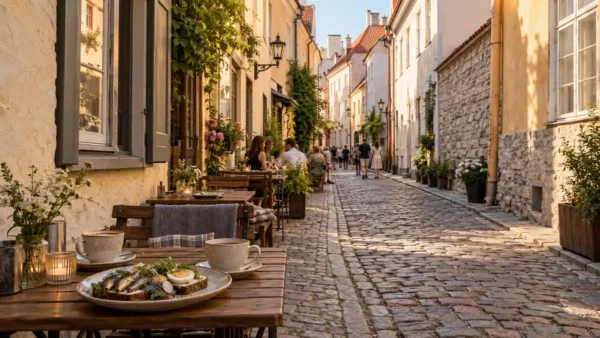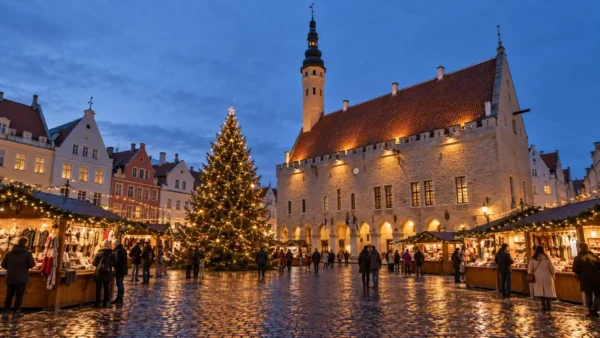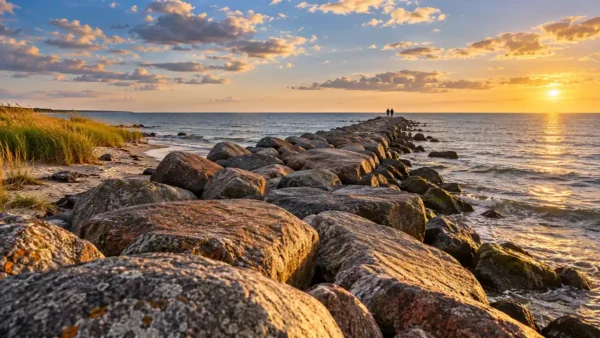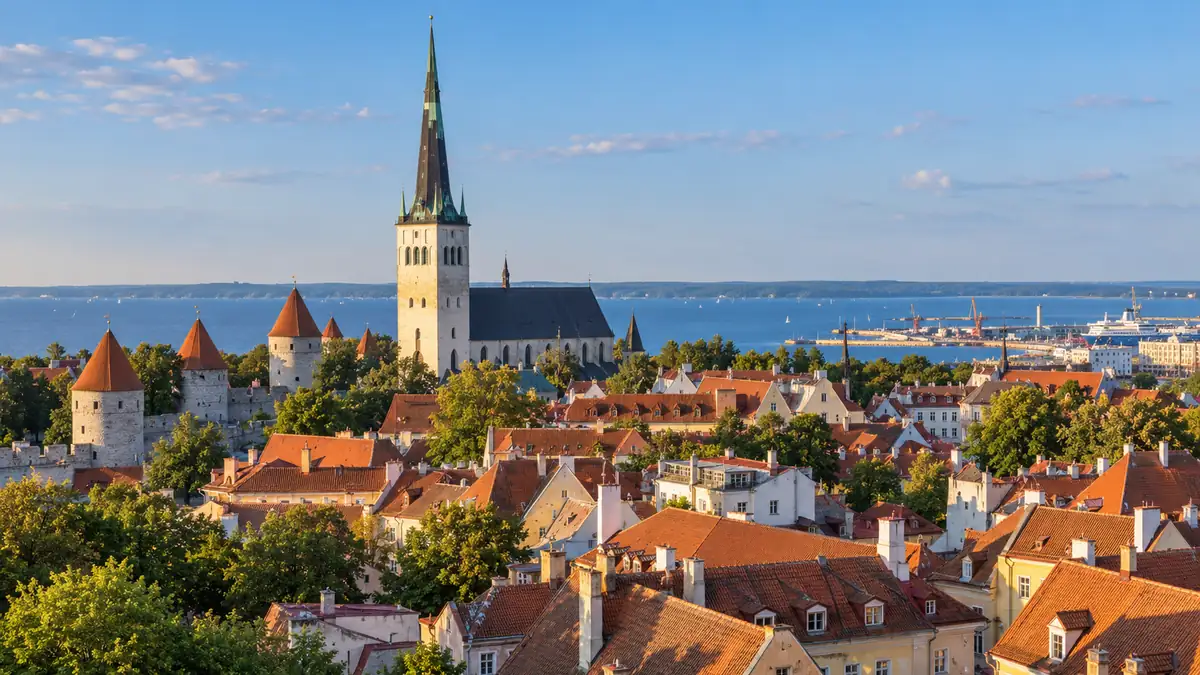
Plan a first trip to Estonia as Tallinn plus one region. Base yourself in Tallinn, then add a second region chosen by your days and the season: about a week covers the classic loop of Tallinn, then Tartu or Pärnu, and Saaremaa. Summer belongs to the islands and the coast; winter belongs to Tallinn and its Christmas atmosphere. Trip length is what changes the plan most: a long weekend stays in Tallinn with one day trip, and about a week is what it takes to add a real second region.
What follows plans the country as a whole: how long to stay, which region to pair with the capital, when to go, how to move between them and what it costs. Tallinn itself, the day-by-day route and the practical checklist each have their own page, linked where you need them.
The Short Version for First-Timers
- Pick the second region by season before you pick it by sights: Saaremaa and the west coast in summer, Tartu and the south once the beaches go quiet.
- A long weekend only ever buys Tallinn and a day trip to Lahemaa, while about a week is the shortest stay that adds a second town and an island.
- Change beds once, not every night: a couple of nights in Tallinn, then a single second base in Tartu or on Saaremaa.
- Elron trains cover the two-hour Tallinn–Tartu leg, but the rail network does not reach Pärnu, Haapsalu or the islands, so the west means buses, car ferries or a short flight.
- A rental car pays off for Lahemaa, Soomaa, Lake Peipus or island hopping, and is dead weight between the cities.
- Estonia undercuts the Nordic countries across the Gulf; Tallinn’s Old Town dining and island stays in July are where it stops being cheap.
Is Estonia Worth Visiting on a First Trip?
Estonia is worth a first trip for a traveler who wants a compact medieval capital and real nature within a few hours of it, at lower prices than the Nordic countries. It suits city-plus-nature breaks far better than beach-resort holidays or big-nightlife weekends, and travelers chasing either of those should look elsewhere.
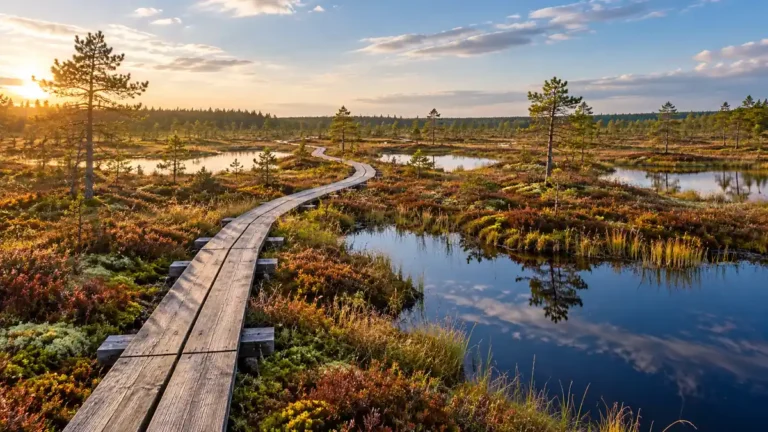
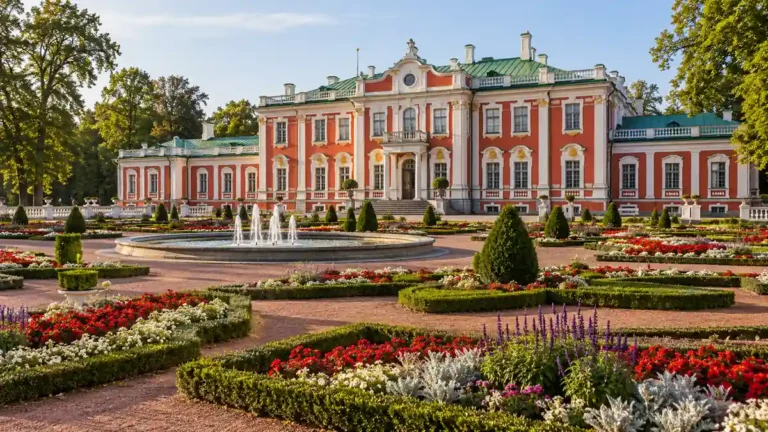
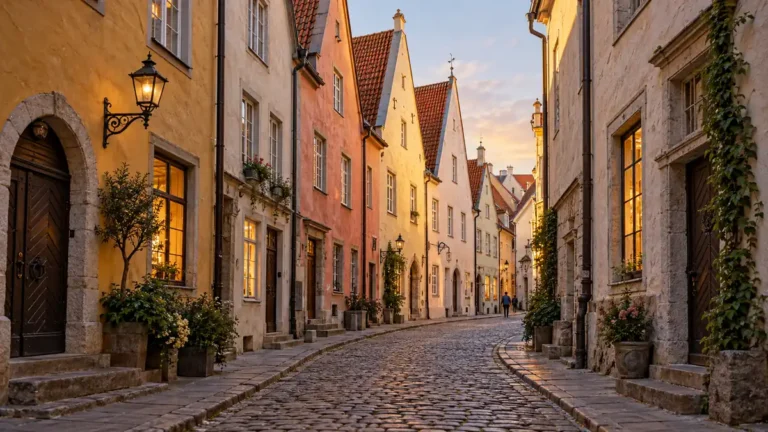
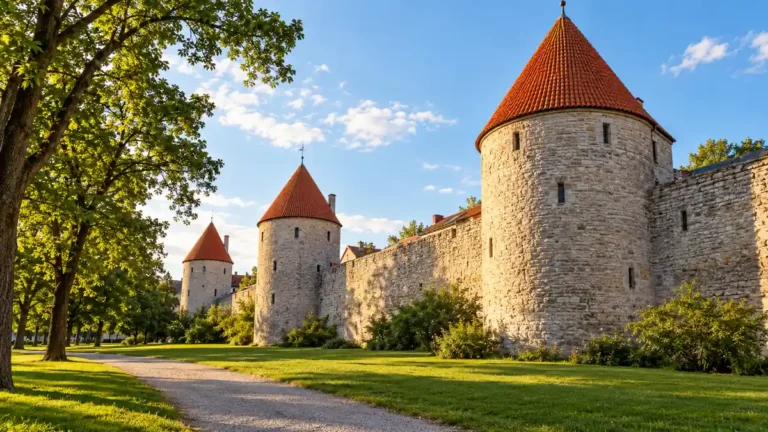
Tallinn is the draw most people come for. Its UNESCO-listed Old Town is small enough to walk end to end, and the city doubles as the country’s main entry point, so a first trip starts there without any routing effort. Beyond the capital, the landscape turns quickly to forest, raised bog, quiet coast and low islands where windmills and stone churches outnumber visitors.
The country is also unusually easy to run a trip in. Cards work almost everywhere, tickets are bought online or by tapping a bank card, and distances between the main towns are short. Couples looking for a city break with a nature day attached will find the balance hard to beat. First-time visitors to the Baltics get the most varied introduction of the three states here, because the Old Town and the islands sit a single ferry crossing apart. Winter-market travelers get a capital that leans fully into December.
Food is part of the case, too: rye bread, smoked fish and a new-Nordic restaurant scene in Tallinn, all covered in the Estonian food guide.
How Many Days Do You Need in Estonia?
About a week is the sweet spot for a first trip to Estonia. A long weekend is Tallinn plus one day trip; ten days or more lets you add a second nature region or the quieter island of Hiiumaa.
- A long weekend: Tallinn plus a day trip to Lahemaa National Park, under an hour’s drive east (book a guided day trip). It fits a city break from elsewhere in Europe, at the cost of seeing only the capital’s side of the country.
- About a week: Tallinn, then Tartu or Pärnu, then Saaremaa. This is the classic loop and the length most first-timers should aim for, since it covers a capital, a second town and an island without rushing.
- Ten days or more: the week’s loop plus Lahemaa, Soomaa, Lake Peipus or Hiiumaa. It suits travelers who came for the nature as much as for Tallinn, and it usually means renting a car for part of the trip.
The jump from a weekend to a week matters more than the jump from a week to ten days. Three or four nights only ever buys Tallinn; seven buys the contrast between the capital and the countryside, which is what most people remember. Once you have picked a length, the day-by-day Estonia itinerary puts the stops in order.
Tours and activities
Book skip-the-line tickets, day trips and local tours with free cancellation on most activities.
You can also browse everything on getyourguide.com.
Tripstou may earn a commission if you book through this link, at no extra cost to you.
Beyond Tallinn: Estonia’s Regions and Who Each Suits
Tallinn is not the only place worth visiting in Estonia, but it is the right first base. The second region is the choice that shapes the trip, and the answer changes with the season: the islands and the west coast in summer, Tartu and the south when the beaches go quiet.
| Region | Character | Anchor draw | Who it suits | From Tallinn |
|---|---|---|---|---|
| Tallinn and the north | Medieval capital, forested coast | UNESCO-listed Old Town; Lahemaa National Park | Every first trip; short breaks | Base city; Lahemaa under an hour’s drive |
| Tartu and the south | University town, rolling hills | Tartu; Viljandi; Otepää | Shoulder-season and winter trips | About two hours by train or bus |
| West coast | Resort towns, shallow bays | Pärnu; Haapsalu | Summer beach days on the way west | Bus; no train |
| The islands | Rural, slow, windswept | Saaremaa; Muhu; Hiiumaa | Summer road trips | Car ferry or short flight |
| The east | Border country, lake shore | Lake Peipus; Narva | Return visitors and drivers | Train to Narva; car for the lake |
Tallinn earns its place as the base because everything else radiates from it: trains, buses, the ferry ports and the island flights. Give it at least two nights before moving on. Sights, neighbourhoods and the Old Town on foot are in the Tallinn travel guide.
Tartu is the natural second stop for anyone travelling outside summer. The university gives it a young, café-heavy feel that Tallinn’s Old Town lacks, and the two hours by train make it the easiest move in the country. It also opens the south, with Viljandi and the hills around Otepää within reach. What to fill a stay with is covered in things to do in Tartu.
The islands are where Estonia stops feeling like a city break. Saaremaa, the largest, carries Kuressaare Castle and the Kaali meteorite crater, while Muhu sits on the way across and Hiiumaa stays quieter still. They reward slow travelers with a car in summer more than anyone ticking off sights.
The west coast works best as the stop that breaks the journey to the islands. Pärnu is the summer resort, with a long beach and a spa-town feel; Haapsalu is smaller and calmer. Ideas for a stay are in things to do in Pärnu.
The east and the wetlands are for a longer or second visit. Narva faces Russia across its river, Lake Peipus brings onion-growing villages and a lake shore that feels far from the capital, and Soomaa National Park floods in spring, when canoes replace footpaths. None of the three fits easily into a first week.
Choose the second region by season before you choose it by sights: Saaremaa out of season is quiet and dark, while Tartu in July loses much of its buzz because the students have gone.
When to Go: White Nights or Christmas Lights
Go between June and August for the coast, the islands and the long light; go in December for Tallinn’s Christmas market and a snow-covered Old Town. The shoulder months suit Tartu and the national parks, with fewer people on the trails.
Summer is the peak, and Midsummer (Jaanipäev, on 23–24 June) is the biggest national holiday of the year, with bonfires across the countryside and towns emptying towards the coast. Winter is dark and cold but atmospheric, and it narrows the trip to Tallinn and perhaps Tartu. Spring and autumn split the difference: inland Estonia is at its best, the islands at their quietest. Month-by-month detail is in the best time to visit Estonia, and December trips can build around the Tallinn Christmas market.
How Do You Get Around Estonia Without a Car?
Getting around Estonia without a car is easy on the Tallinn–Tartu axis and to most mainland towns, by Elron train or Lux Express bus. The rail network does not reach Pärnu, Haapsalu or the islands; buses do, so the west and the islands are bus, car-ferry or short-flight territory.
- Train: Elron trains leave Tallinn’s Balti jaam station for Tartu, Viljandi, Narva, Rakvere, Paldiski and smaller towns. Tartu is about two hours away. Tickets are sold online, at the station or on board from the ticket collector by card or cash, which makes the train the simplest choice for the Tartu leg.
- Bus: Lux Express is the main intercity operator, and buses reach most of mainland Estonia in three hours or less, plus Muhu, Saaremaa and Hiiumaa. Book on the tpilet.ee ticket platform, at bus stations or with an Ühiskaart. The bus is the default for the west coast and the islands.
- Car: traffic drives on the right, headlights stay on at all times and the drink-driving limit is zero tolerance. Major towns are usually no more than three hours’ drive apart. A car pays off for parks and islands, not for the cities.
- Ferry and flight: year-round car ferries and short scheduled flights link the mainland to Saaremaa and Hiiumaa; the details are below.
Inside Tallinn, buses and trams accept contactless bank cards at the validators, so a first-time visitor needs no local travel card for the capital.
How do you get to Saaremaa from Tallinn?
You reach Saaremaa from Tallinn by car ferry from Virtsu to Kuivastu, crossing Muhu on the way, or by a scheduled flight to Kuressaare of about 45 minutes. Direct buses ride the ferry and take about four hours including the crossing, which suits travelers without a car.
Drivers should book the car ferry ahead in summer: an e-ticket bought online in advance gives priority boarding for that departure, which matters on July weekends. Hiiumaa works the same way, with a year-round ferry from Rohuküla to Heltermaa and flights from Tallinn to Kärdla.
Is it worth renting a car in Estonia?
Renting a car in Estonia is not worth it for Tallinn, Tartu or the axis between them, where trains and buses cover everything. It becomes worth it when the trip leans on Lahemaa, Soomaa, Lake Peipus or more than one island, because buses there are thin and the sights are spread out.
The usual compromise is to travel car-free between the cities and rent for the nature leg only. A traveler doing the classic week can manage without one; a traveler hopping between Saaremaa, Muhu and Hiiumaa will spend more time waiting for buses than seeing the islands.
Tallinn Plus Tartu or Tallinn Plus Saaremaa: Where to Base
Base yourself in Tallinn for the first nights, then move once to a second base instead of touring with a new bed every night. Tartu is the pairing for the shoulder season and winter; Saaremaa, with Pärnu on the way, is the summer one.
One move works because Estonia is small and its transport fans out from the capital. Tartu sits on the two-hour axis, and Saaremaa needs a ferry step, a bus or a flight, so each extra base adds a half-day of transit to a short trip.
Tallinn plus Tartu is the shape for spring, autumn and winter. The train link is simple, Tartu stays lively during the university term, and the south’s hills and lakes can be reached from it on day trips.
It suits travelers without a car and anyone visiting outside the beach season. The trade-off is that the coast and islands are left out entirely.
Tallinn plus Saaremaa is the shape for June to August. Break the journey in Pärnu for a night or simply pass through, then settle on the island long enough to slow down. Kuressaare makes the easiest island base.
Summer road-trippers and travelers who want countryside more than museums get the most from it. It asks for more planning: a ferry booking for drivers, or a bus or flight for everyone else.
With ten days or more, add a third base. Tartu fits between Tallinn and the south; Hiiumaa or a stop near Lahemaa extends the summer version.
Is Estonia Expensive to Visit?
Estonia is cheaper than the Nordic countries across the Gulf and broadly in line with its Baltic neighbours. Tallinn’s Old Town is the priciest pocket, and prices drop as soon as you leave the capital or travel outside summer.
A tight budget works well here. Hostels and guesthouses, bakery breakfasts and lunch-menu meals keep daily spending down, and the bus network is cheap enough to cross the country without a car. Long summer days help too: the light lasts well into the evening, and walking the Old Town or a bog boardwalk costs nothing.
A comfortable middle buys a central hotel in Tallinn, a guesthouse or farm stay in the countryside and dinners in neighbourhood restaurants. Trains and buses still carry most of the movement; a short car rental for the islands or parks is the biggest step up.
A high-end trip buys boutique hotels inside the Old Town walls, new-Nordic tasting menus and island manor stays in summer. Two settings — Old Town dining and island accommodation in July — are where Estonia stops being a bargain at every level of spending.
What Should You Know About Estonia Before You Go?
Estonia is in the EU, the euro zone and the Schengen area, and cards work almost everywhere. Check the entry rules that apply to your passport before booking.
Short stays are capped at 90 days in any rolling 180-day period across the Schengen area as a whole, not per country.
The currency is the euro. Contactless payment is the norm in shops, cafés and on Tallinn’s buses and trams, so carrying much cash is rarely necessary. Plugs, tipping, SIM cards, etiquette and the rest of the practical detail are in the Estonia travel tips.
Scope and Sources
This page plans a first trip across the whole of Estonia (regions, trip length, transport and timing); it is not a Tallinn city guide, a day-by-day itinerary or a practical-tips checklist.
Written with AI assistance, this planner was then gone over by Alex Perrut, working in tourism since 2015, for the Tripstou editorial team. How we work is set out in our editorial process.
Official sources consulted: Visit Estonia, Elron, TS Laevad (Praamid), Visit Saaremaa.
Keep Planning Estonia
- Estonia itinerary: the classic week laid out day by day.
- Best time to visit Estonia: month-level timing for the coast, the islands and the cities.
- Estonia travel tips: the practical checklist before you fly.
- Tallinn travel guide: your first base in depth.
Did this guide save you time or money? Tripstou is independent and reader-funded — if you'd like to give something back, you can support the site with a crypto contribution of any size.