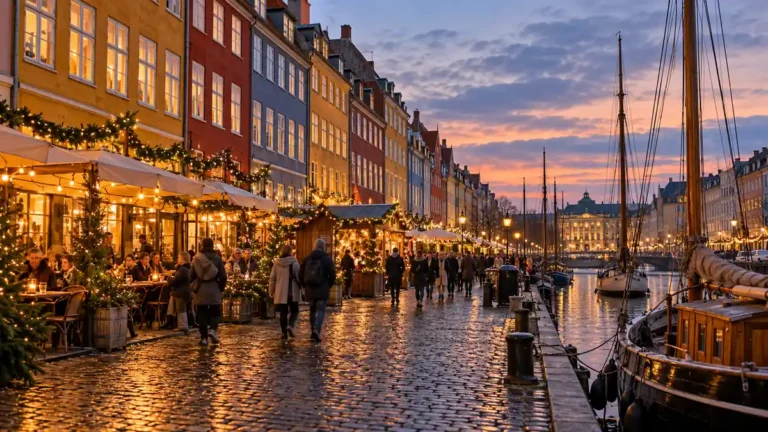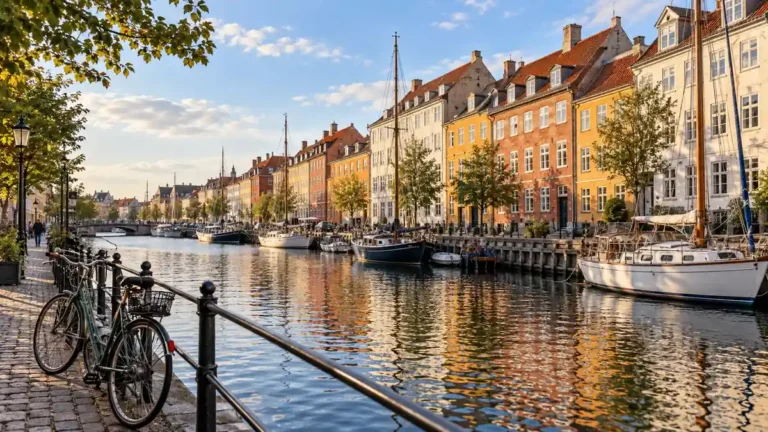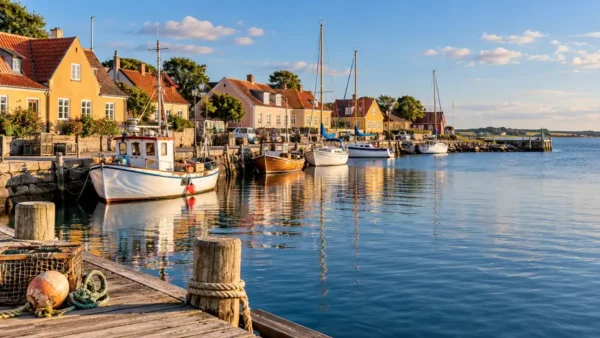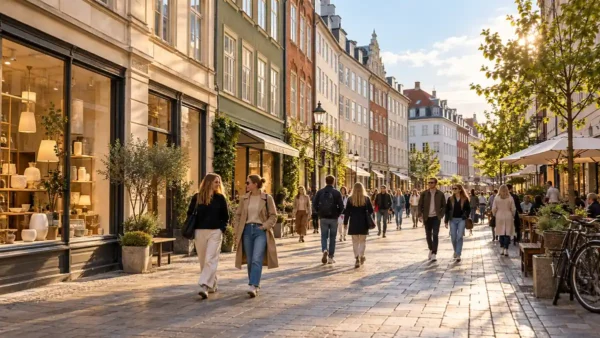
Plan travel to Denmark as Copenhagen plus one more region, not as a sweep of the whole country. A long weekend is Copenhagen with a day trip, a week adds a second base on Funen or in Jutland, and ten days or more earn a leg on the Jutland coast.
This guide settles the decisions in the order a planner meets them: whether Copenhagen alone is enough, how long to stay, which region to add, when to go and how to move between bases. Where a question deserves its own page — the capital in depth, the full list of places, daily costs, entry rules — it sends you there.
Who Checked This Guide
This page plans Denmark country-wide: how long to give it, where to base yourself and how to move between regions. Copenhagen in depth, day-by-day itineraries and budgets each have their own page.
AI assistance drafted this planner; Alex Perrut, working in tourism since 2015, then reviewed it for the Tripstou editorial team and checked the two rail times against DSB. How that review runs is set out in our editorial process.
Official sources consulted: VisitDenmark, DSB (Copenhagen–Odense), DSB (Aarhus).
Denmark rewards a short, well-based trip more than a grand tour
Denmark is worth visiting for its design, its food culture, easy cycling, castles and Viking heritage, and a long, flat coastline, all inside a compact country where nothing is far away. It suits first-time visitors to Scandinavia, families, design and food lovers and cyclists best. Anyone chasing mountains or cheap sun will find it limiting.
The headline sights are spread across the country but never hard to reach. Kronborg in Helsingør is UNESCO-listed, Roskilde holds the Viking Ship Museum, Odense is Hans Christian Andersen’s town and Aarhus has the ARoS art museum. Families get Legoland in Billund and Tivoli in the capital.
The land is flat. That makes Denmark one of the easiest countries in Europe to explore by bike, and one of the least tiring to cross by train.
If you like a country you can read in a week without rushing, Denmark fits. Price is the catch: it ranks among Europe’s more expensive destinations, and the way you eat and sleep decides how much that hurts (see the cost section below).
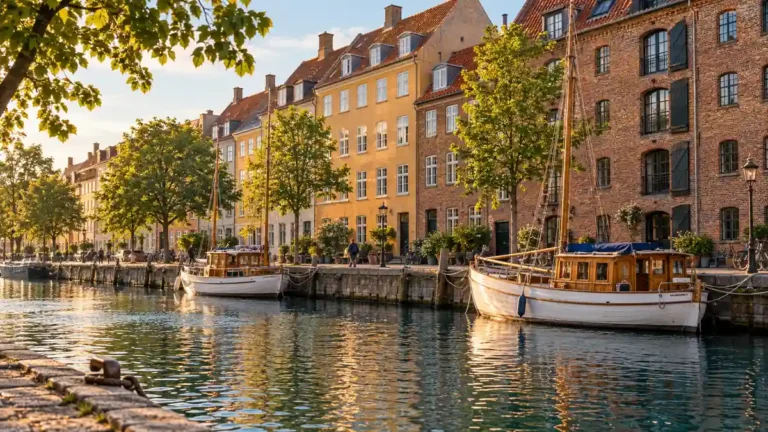
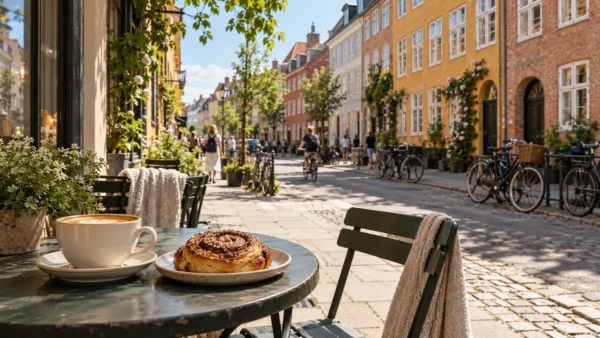
Denmark’s best days are ordinary ones: a harbour swim, a bakery breakfast, a cycle lane that ends at a beach. None of that appears on a sights list, and all of it needs a settled base, not a checklist of towns.
Is Copenhagen enough, or should you see more of Denmark?
Copenhagen alone is enough for a long weekend, and it is the right default base for every first trip. From about a week, adding one more region gives a truer picture of Denmark than a second Copenhagen neighbourhood would.
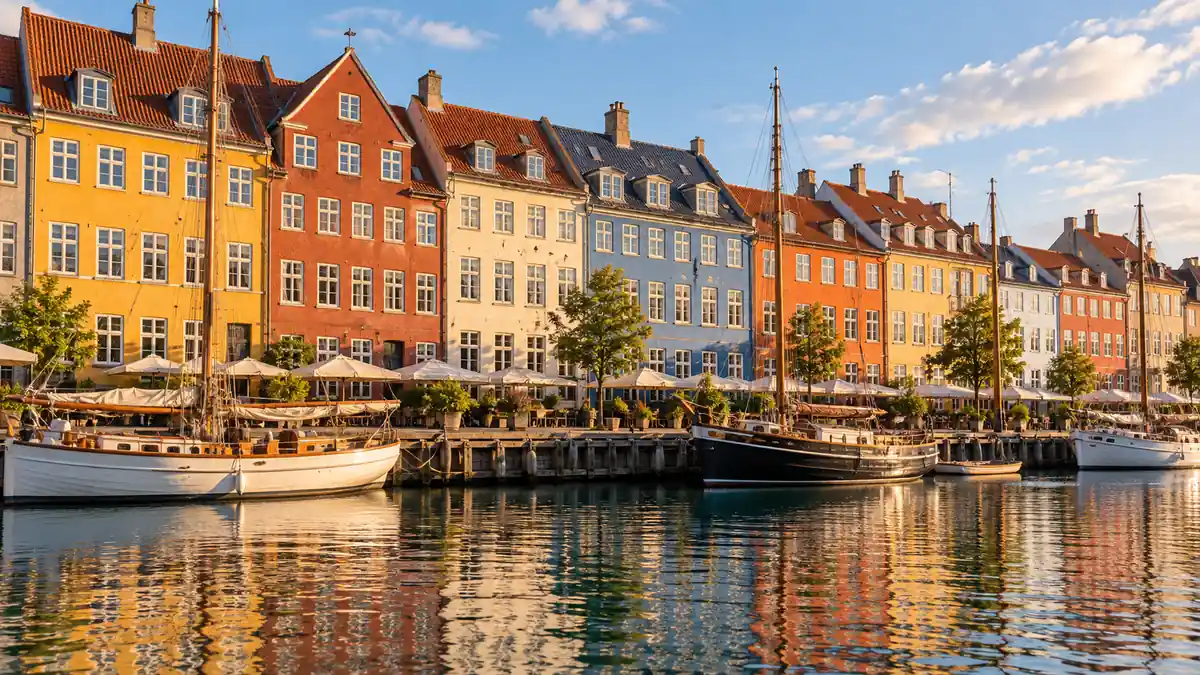
The capital earns the default for three reasons. It is where most visitors arrive, it holds the densest concentration of sights, and the two classic day trips — Helsingør for Kronborg and Roskilde for the Viking ships — are both reachable by train without changing hotel. Our Copenhagen travel guide covers the city’s areas, arrival and what to see.
“More” becomes worth the move once the trip passes four or five nights. At that point a further day in Copenhagen adds less than a change of scene. The choice is then between a second base (Aarhus or Odense) and a car loop through Jutland, and the route section below settles which.
A second Copenhagen neighbourhood teaches you more about Copenhagen. A night in Odense or Aarhus shows you how Denmark lives outside its capital: slower, smaller and noticeably gentler on the wallet.
Tours and activities
Book skip-the-line tickets, day trips and local tours with free cancellation on most activities.
You can also browse everything on getyourguide.com.
Tripstou may earn a commission if you book through this link, at no extra cost to you.
How many days do you need in Denmark?
A long weekend covers Copenhagen with one day trip; a week pairs Copenhagen with Funen or Aarhus; ten days or more allow a Jutland coast leg to Skagen or the west coast, or a separate stretch on Bornholm. Each extra base adds a packing day, so the pairing matters more than the total.
- Long weekend: Copenhagen only, with Helsingør or Roskilde as the day out. It suits city-break travelers and a first taste of Scandinavia; anything further costs more travel time than the weekend can spare.
- One week: Copenhagen for four or five nights, then a second base. Odense is a short train hop and works for a gentler, family-paced week; Aarhus is a half-day move and gives a livelier second city.
- Ten days or more: Copenhagen, Aarhus, then the coast — Skagen and North Jutland, or the dunes of the west coast around Ribe and Billund. Bornholm is the alternative for a summer trip that wants an island.
Because the bridges make Jutland look one train ride away, first-timers tend to squeeze Skagen into a week that already holds Copenhagen and Aarhus. That trade loses the slow coast days that make the north worth reaching at all; give Skagen its own nights or leave it for the next trip.
Denmark’s regions and what each one offers
Denmark splits into three touring regions linked by bridges: Zealand (Copenhagen), Funen (Odense) and Jutland, the mainland peninsula bordering Germany (Aarhus, Aalborg, Skagen, Billund and the west coast). Bornholm sits far to the east in the Baltic. A first trip picks Copenhagen and one of the other two.
The Great Belt Bridge carries road and rail from Zealand to Funen, and the Little Belt bridges continue to Jutland, so the main regions read as one line from east to west. The table compares the five areas most first trips choose between.
| Region | Character | Anchor draw | Suits | From Copenhagen |
|---|---|---|---|---|
| Copenhagen and north Zealand | Capital, harbour, design and dining | Kronborg in Helsingør; Viking Ship Museum in Roskilde | First-timers who want the most in one base | The capital itself |
| Funen, Odense and the southern archipelago | Farmland, manor houses, small islands | Hans Christian Andersen’s Odense | Families and slow travelers after a calm middle stop | A short train hop |
| Aarhus and east Jutland | Second city, young and lively, beaches near town | ARoS art museum | City lovers who want a second base with energy | About half a day by train |
| Billund, Ribe and the west coast | Dunes, wide beaches, wind | Legoland; Ribe’s old town | Families with children, and drivers chasing open coast | A long day; easiest with a car |
| North Jutland (Aalborg, Skagen) | Big skies, dunes, the country’s northern tip | Skagen | Longer trips with nights to spare for the coast | A long day or an overnight |
Aarhus is the region most first trips add, and the things to do in Aarhus guide covers what fills a stay there.
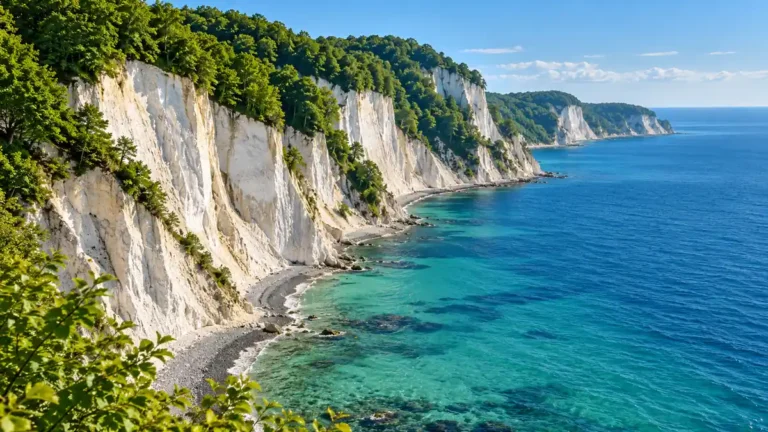
Two more areas sit outside the main line. South Zealand and the island of Møn suit a day of chalk cliffs and quiet countryside for anyone with a car out of Copenhagen. Bornholm, reached by ferry or flight, is a summer island trip in its own right and works best as a separate stretch of a long holiday. For every other town and island worth a detour, see our ranked list of the best places to visit in Denmark.
When to go to Denmark: light, crowds and price
Late spring and September are the pick for a first trip, with long days, fewer crowds and calmer prices than high summer. Summer (June to August) is the warm, long-daylight season and the only time the coast and islands fully work. Winter is dark, wet and short-dayed, best kept for a Copenhagen-only city break.
Summer suits families and beach trips. Legoland, Bornholm and the west coast are at their best, and so are the crowds and the hotel rates in Copenhagen.
The shoulder months suit city-and-region trips. Copenhagen, Odense and Aarhus run at full pace, cycling is pleasant, and the coast is quieter even if the sea is cold.
Daylight is the variable most planners miss. A September day still leaves time for a Funen stop after a morning in Copenhagen; a December day is dark by late afternoon, which is why a winter trip should stay in one city.
Do you need a car in Denmark?
No, not for the city axis. DSB trains link Copenhagen, Odense, Aarhus and Aalborg across the Great Belt Bridge and the Little Belt, with Odense under 1.5 hours and Aarhus about three hours from Copenhagen. A car earns its cost only for the west and north Jutland coast, rural Funen and Legoland-centred family trips.
DSB is the national rail operator, and Rejseplanen is the one planner that covers trains, buses and ferries together, so a single search answers most “how do I get there” questions.
- Rail for: moving between Copenhagen, Odense, Aarhus and Aalborg, day trips to Helsingør and Roskilde, and any trip that stays in cities.
- Car for: the dunes and beaches of the west coast, Skagen’s surroundings, the Funen countryside and its islands, and a Billund-based family stay.
Pick the car up where the Jutland or Funen leg begins, in Aarhus or Odense, never in Copenhagen. The capital is the one place in Denmark where a car is all cost and no use, and the train already covers the bridge crossing.
Cycling is the everyday mode in Copenhagen and Aarhus and the natural way to explore small islands. Flat roads and dedicated lanes make it realistic for casual riders, not only enthusiasts.
Copenhagen plus Aarhus is the strongest first-trip route
Base in Copenhagen, then move to Aarhus for the second half of the trip, stopping in Odense on the way if you have a spare day. Odense and Funen make the gentler second base for a shorter week, or for a family who wants the archipelago and Legoland within reach. A Jutland road loop is the variant for ten days or more.
Copenhagen works as the first base because it is central to everything on Zealand and is where the rail line starts. One unpack covers the city and both classic day trips.
Aarhus wins the second slot. It is Denmark’s second city, it has ARoS and the east Jutland coast on its doorstep, and it sits on the same rail line as Copenhagen, so the move is one train with no car needed.
Odense beats Aarhus in two cases: a week too short to justify the longer move, and a family trip where Funen’s calm and Legoland’s position in Jutland, closer from Odense than from Copenhagen, matter more than a second city’s nightlife.
The broad route shape is simple: Copenhagen first, a stop or a stay on Funen, Aarhus to finish, and a car from Aarhus only if the trip continues to the coast. On the long version, the loop runs north to Skagen or west to the dunes before heading back.
Odense works as a stop as well as a base. The line to Aarhus runs straight through it, so a few hours with Andersen’s town only means catching a later train onward.
What a trip to Denmark costs, by spend style
Denmark is one of Europe’s more expensive countries, hardest on restaurant dinners and hotel rates and kinder to anyone who leans on bakeries, lunch menus, supermarkets, free nature and beaches. Your spend style, more than the destination, decides the bill.
- Budget: hostels or simple guesthouses, bakery breakfasts, supermarket picnics and street food, and trains booked ahead with days on foot or by bike. Denmark is punishing if this style slips into sit-down dinners, and kind in everything that is free: beaches, parks, harbour swims.
- Mid-range: a comfortable hotel in Copenhagen and Aarhus, a lunch menu most days and a few good dinners, rail between cities and a short car hire for the coast. This is where Denmark feels fair, provided lunch carries the restaurant budget.
- High-end: design hotels, tasting menus in Copenhagen and a car for the whole Jutland leg. Denmark rewards this style with some of Europe’s best dining; it punishes it with dinner bills that climb fast.
Lunch is the Danish price lever. Many restaurants serve a lunch menu that costs noticeably less than the same kitchen at dinner, and the Copenhagen food guide explains how locals eat well on that pattern.
For daily figures by style, see our breakdown of the Denmark trip cost. Visitors from outside the EU can reclaim VAT on larger purchases, and the guide to tax-free shopping in Denmark covers how.
Entry rules, kroner and cards before you travel to Denmark
Denmark is in the EU and Schengen, pays in Danish kroner (DKK, shown as kr.) instead of euros, and runs almost entirely on cards. Entry rules depend on your nationality and are covered in detail on the visa page.
Who needs a visa or an ETIAS for Denmark?
Whether you need a visa or a travel authorisation depends on your passport. The Denmark entry requirements guide sets out each case by nationality. Visa-exempt visitors should confirm whether the ETIAS travel authorisation applies to their trip before booking. Non-EU arrivals are registered biometrically at the border instead of having passports stamped, under the EU Entry/Exit System. Short stays are capped at 90 days in any rolling 180-day period across the Schengen area as a whole, not per country.
Do you need cash in Denmark?
You need little or no cash in Denmark: cards are accepted almost everywhere, including small shops and, in most cases, buses. Bring a card with no foreign-transaction fee, and keep a small kroner reserve only if it reassures you.
Decide These First
- Base the whole first trip in Copenhagen and use Helsingør and Roskilde as day trips before you think about changing hotel.
- Add a second region only once the trip passes four or five nights, because a sweep of the whole country costs more packing days than it gives back.
- A week pairs Copenhagen with Aarhus for a livelier second city or with Odense for a gentler, family-paced stay, while Skagen and the west coast need ten days or more.
- Late spring and September give long days without high-summer crowds and prices, and winter suits a Copenhagen-only city break.
- Trains cover the Copenhagen–Odense–Aarhus axis, so hire a car only for the Jutland coast or rural Funen and pick it up in Aarhus or Odense.
- Let lunch menus, bakeries and supermarkets carry the food budget, since restaurant dinners are where Denmark’s prices bite hardest.
Two Questions First-Time Visitors Still Ask
Is English widely spoken in Denmark?
Yes. English is spoken widely across Denmark, in shops, on public transport and throughout tourism, so a first-time visitor does not need a phrasebook. A couple of Danish words, such as hej (hello) and tak (thank you), are appreciated but never expected.
Can you combine Denmark and Sweden in one trip?
Yes. Malmö sits across the Øresund from Copenhagen and is reachable by train, so it fits as a day trip from a Copenhagen base without changing hotel. Sweden uses the Swedish krona (SEK), not the Danish krone, so expect a second currency on the far side of the bridge.
Plan the Rest of Your Denmark Trip
- Copenhagen travel guide: the base city, with its areas, arrival and what to see.
- Where to go in Denmark: the full ranked list of places beyond the regions above.
- Cost of a trip to Denmark: the daily figures this page deliberately leaves out.
- Do I need a visa for Denmark?: entry rules by nationality, ETIAS and EES.
Did this guide save you time or money? Tripstou is independent and reader-funded — if you'd like to give something back, you can support the site with a crypto contribution of any size.