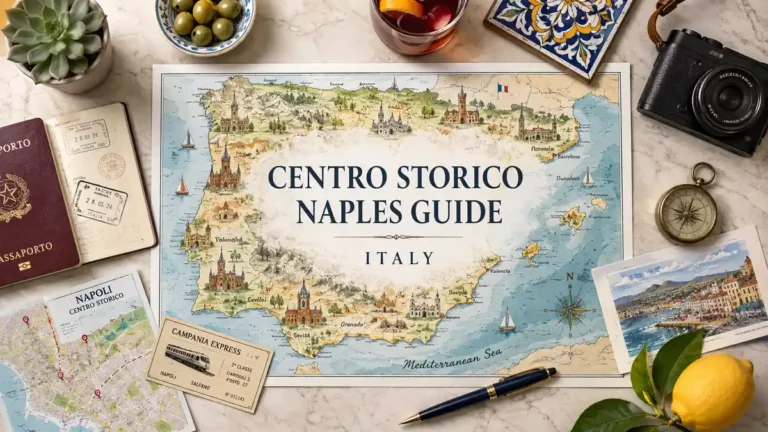
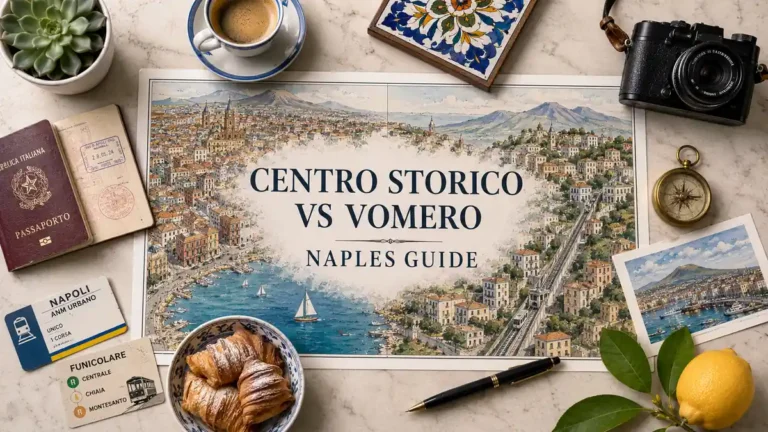
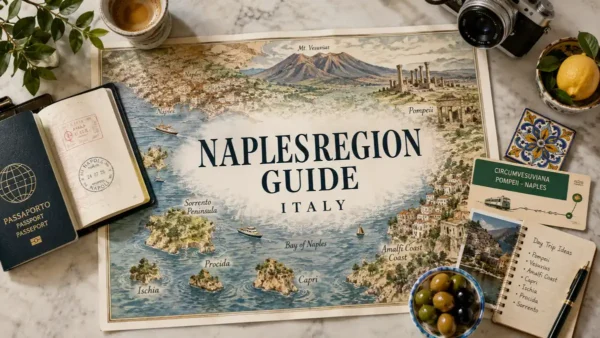
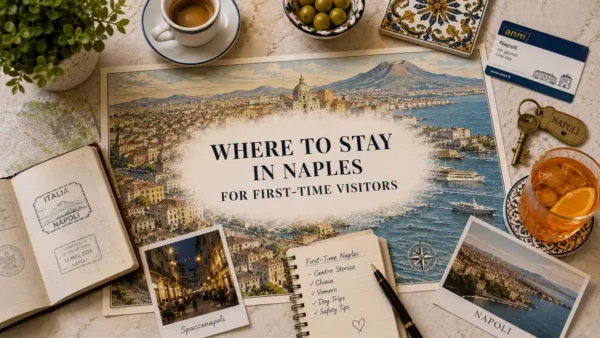
Naples divides travelers like no other Italian city, and that split is exactly what this guide resolves. The city is loud, worn at the edges, and gloriously alive — the birthplace of pizza, the gateway to Pompeii, and the big city with the best food-to-cost ratio in the country. Underneath the surface chaos sit one of Europe’s great historic centers, a world-class archaeological museum, and a bay framed by Mount Vesuvius. This guide covers the decisions that shape a first trip: whether Naples deserves a place on your route, how many days to give it, when to go, which neighborhoods suit which travelers, what to eat, and which day trips justify extra nights. It also answers the two questions first-timers ask most — is it safe, and how do you get around — in brief, with deeper guides linked for each. Read this as your orientation; the detail lives one click away.
Quick Answer
Naples is worth visiting — it delivers Italy’s best pizza, world-class ancient sites, and unfiltered big-city life. Plan two to three days for the city itself, more if you add Pompeii, Vesuvius, or the bay islands. It suits travelers comfortable with a loud, gritty city; a base in the historic center works for most first-timers.
Trust Layer
Tripstou city guide for travelers planning a city trip. Covers trip length, stay style, season, cost, and mobility tradeoffs.
Produced with AI assistance and reviewed by Alex Perrut, working in tourism since 2015, for the Tripstou editorial team. See our editorial process for details.
Last factual review: July 24, 2026.
Official sources consulted: italia.it, enit.it.
Key Takeaways
- Naples rewards travelers who accept noise and grit with Italy’s most alive big city and its best food value.
- Give Naples two to three days for the city, then add one night for every day trip you plan.
- Spring and autumn hit the sweet spot; summer heat punishes the dense center, while winter suits food-and-museum trips.
- Base first-timers in or near the Centro Storico for atmosphere; choose Chiaia or Vomero for calmer nights.
- As a base, Naples puts Pompeii, Vesuvius, the Amalfi Coast, and the islands all within easy day-trip reach.
- Normal big-city awareness keeps the city safe, and its walkable core means no car is needed inside Naples.
Table of Contents
Is Naples Worth Visiting?
Yes — Naples is worth visiting, especially for travelers who prioritize food, ancient history, and real city life. It is not a polished postcard city, and it does not try to be. The reward for accepting the noise and the grit is Italy’s most alive big city, at its most affordable.
The case for Naples is simple. It has pizza the rest of the world still imitates, ruins and museums few cities can match, and street life that still belongs to residents instead of visitors. It also costs noticeably less than Rome, Florence, or Venice for a comparable trip. The case against it is honest too: traffic is anarchic, some buildings are crumbling, and the city makes no effort to charm you on arrival.
Travelers who thrive here are curious eaters, history lovers, and anyone tired of destinations that feel curated. Travelers who need tidy streets and quiet evenings should weigh that tradeoff — or balance Naples with a calmer stop on the same route. Nationally, Naples is a fixture among the best places to visit in Italy, and our Italy travel guide shows how it fits into a wider trip.
The visitors who leave disappointed usually gave Naples half a day between Rome and the coast. The city only pays off once you stop treating it as a transfer point and give it at least one full evening.
What to See in Naples on a First Visit
First visits revolve around four anchors — the Centro Storico’s streets, the Archaeological Museum, Naples Underground, and the bay itself. Everything else is a bonus. All four fit into two unhurried days, which is why Naples rewards even a short stop on a longer Italian route.
The essential highlights, at orientation depth:
- Centro Storico — the ancient grid of narrow streets where daily life, centuries-old churches, and the city’s great pizzerias collide.
- National Archaeological Museum (MANN) — home to the finest finds from Pompeii and Herculaneum anywhere in the world.
- Naples Underground — tunnels and cisterns carved beneath the historic center over two millennia.
- Quartieri Spagnoli — steep, dense lanes of laundry lines, shrines, and street food beside the center.
- The bay waterfront — a long seafront walk with Vesuvius across the water; the city’s best free view.
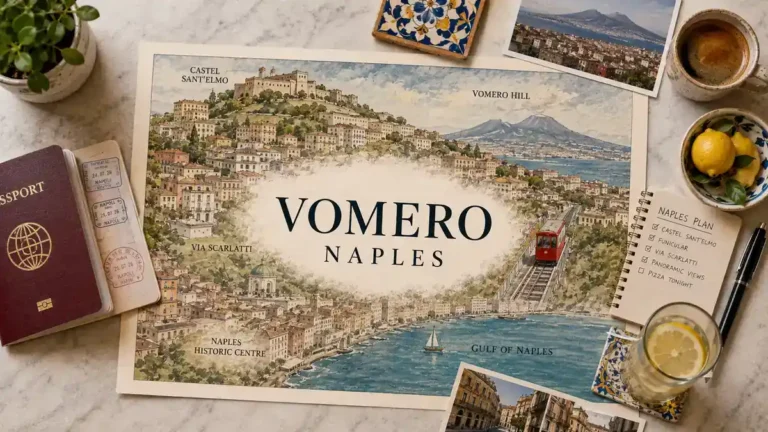
- Vomero’s viewpoints — ride a funicular uphill for the full sweep of the bay below.
This is deliberately a shortlist, not a catalogue. For the full set of sights with priorities and skip calls, use our guide to the best things to do in Naples.
How Many Days You Need in Naples
Two to three days covers Naples itself; add one extra night for each day trip you want. Two days handles the essential sights and the food. A third buys slower mornings and a neighborhood beyond the center. Most first-timers who add Pompeii end up staying three or four nights.
Two days is the honest minimum: the Centro Storico, the museum, an underground tour, and enough meals to understand why people cross the world for this food. Three days adds breathing room — a morning in Chiaia or Vomero, a return to a favorite pizzeria, time to wander without a list. Beyond that, extra days exist for day trips, not for the city itself.
Pompeii is the deciding variable. It consumes a full day once travel is factored in, so it adds a night to your stay, not an afternoon — and the same math applies to Vesuvius, the islands, and the coast.
For structured plans, use our 2-day Naples itinerary or the 3-day Naples itinerary. If Naples is one stop on a longer route, our Italy itinerary guide shows where it fits best.
When to Visit Naples
Spring and autumn are the best times to visit Naples — warm enough for the bay, cool enough for the streets. Summer brings serious heat that makes a dense, walkable city harder to enjoy. Winter stays mild by northern standards and suits food-and-museum trips well.
The shoulder seasons combine comfortable walking weather with a lively bay — ferries and terraces in full swing without summer’s intensity. Summer still works if your plan leans toward islands and beaches; it works less well if the trip centers on the dense historic core, where heat concentrates. Winter is the quiet option. Mild days, open museums, and long meals suit it perfectly, and the city feels most like itself with fewer visitors around.
To see how Naples’s seasons compare with the rest of the country, read our guide to the best time to visit Italy.
The Main Neighborhoods of Naples (and Who They Suit)
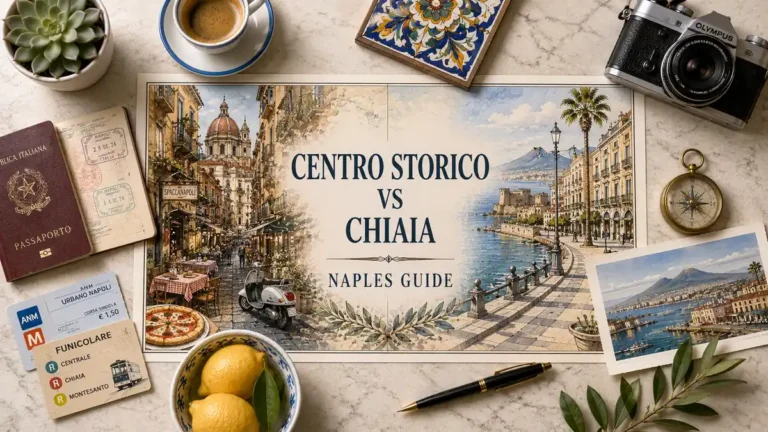
Five areas define Naples for visitors: Centro Storico, Quartieri Spagnoli, Chiaia, Vomero, and Posillipo. Each has a distinct character, and choosing between them shapes the trip more than any hotel does. First-timers usually land in or near the Centro Storico, because its atmosphere is the reason they came.
Character at a glance:
- Centro Storico — the dense historic heart; best for first-timers who want everything on foot.
- Quartieri Spagnoli — steep, intensely local lanes; best for travelers chasing street life and street food.
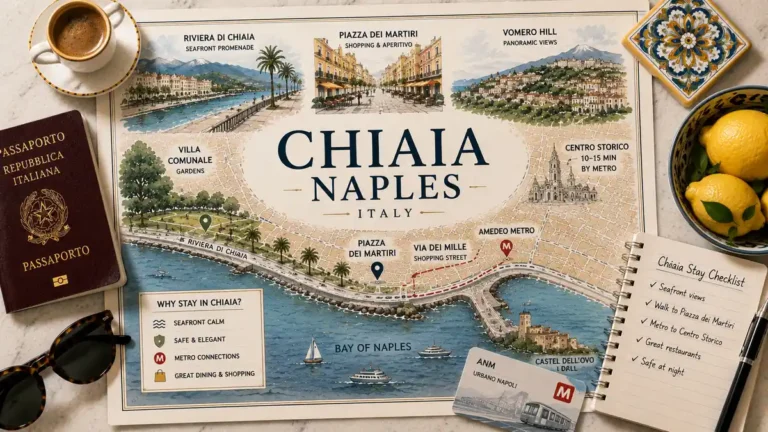
- Chiaia — elegant, calm, and close to the seafront; best for couples and anyone who wants polish.
- Vomero — hilltop and residential with panoramic views; best for families and quieter nights.
- Posillipo — leafy, scenic, and removed from the action; best for slow stays built around the bay.
The tradeoff that matters is noise against atmosphere. The closer you sleep to the centro’s energy, the more of it you hear at night — Chiaia and Vomero exist for travelers who want Naples by day and calm after dark.
Our guide to where to stay in Naples resolves the decision area by area. For specific traveler profiles, see the dedicated picks: first-time visitors, couples, families, nightlife-focused stays, budget stays, luxury stays, and the best luxury hotels in Naples.
Hotels and places to stay
Compare hotels, apartments and stays for your dates in one search.
Search hotels and stays on hotels.com →
Tripstou may earn a commission if you book through this link, at no extra cost to you.
The Food Naples Is Famous For
Naples invented the Margherita pizza and remains Italy’s street-food capital. Eating is the core experience here, not a side activity. Pizza, fried snacks from the counter, sfogliatella with strong coffee — the canon is cheap, fast, and eaten standing up as often as seated.
Neapolitan pizza is the obvious pilgrimage: soft, blistered, and served in places that have measured their reputations over generations. The fried counter is the other pillar. Fried pizza dough, croquettes, and paper cones of fried snacks come straight off the counter across the historic center, and they anchor the city’s claim to Italy’s best street food. Finish the picture with pastry and coffee culture — the sfogliatella and a short, strong espresso taken at the bar are daily rituals, not tourist performances.
The practical consequence for travelers: eating cheaply in Naples is not a compromise. The cheapest food in the city is also some of its best, so budget for quantity and variety instead of a few set-piece dinners.
The Best Day Trips from Naples
Four day trips define the region — Pompeii and Herculaneum, Mount Vesuvius, the Amalfi Coast, and the bay islands. No other Italian city puts this much within easy reach. Naples works as the base for all of them, and that reach is a large part of its value.
The fan, at a glance:
- Pompeii and Herculaneum — UNESCO-listed Roman ruins, reached on the Circumvesuviana line toward Sorrento.
- Mount Vesuvius — the volcano itself, often paired with the ruins on the same day out.
- The Amalfi Coast — the famous cliffside coastline south of the bay, a full-day commitment from the city.
- Capri, Procida, and Ischia — three distinct islands with direct ferries from the port.
The islands are the easier win from Naples — ferries leave from the city itself — while the Amalfi Coast rewards an overnight more than a rushed loop. Start with our full Pompeii guide for the headline trip, and use the Naples region guide to plan the coast, the islands, and wider Campania properly.
Tours and activities
Book skip-the-line tickets, day trips and local tours with free cancellation on most activities.
You can also browse everything on getyourguide.com.
Tripstou may earn a commission if you book through this link, at no extra cost to you.
Is Naples Safe for Tourists?
Naples is safe for tourists who apply normal big-city awareness. Violent crime rarely touches visitors; petty theft is the realistic risk, concentrated in crowded streets and around the main station. Keep valuables out of sight and the city is no harder to manage than other large European capitals.
The city’s rough reputation runs decades behind its reality. Bag zipped, phone away in crowds, extra attention around the station — that is the whole strategy for most trips. Our Naples safety guide covers the topic in proper depth, and our Naples travel tips collect the small habits that smooth a first visit.
How to Get Around Naples
Naples is a walking city at its core, backed by a metro and funiculars for the hills. The historic center works best on foot — driving into it is a mistake. You will not need a car at any point inside the city.
The metro’s Line 1 links the main station with the historic center and the Vomero hill, and the funiculars climb where streets turn into stairs. Taxis fill the gaps at night. The airport sits close to the city, so arrival is one of the simplest parts of the trip. Full route logic lives in our Naples transport guide, and arrivals are covered step by step in the Naples airport transport guide.
What a Naples Trip Costs
Naples is one of the cheapest big-city trips in Italy. Food is the clearest saving — you can eat brilliantly here on a genuine street-food budget. Comfort also costs less than in Rome, Milan, or Florence, which stretches mid-range budgets noticeably further.
Street food, pizza, and coffee keep daily spending low without any effort, and accommodation undercuts Italy’s northern cities at every comfort level. Day trips and island ferries are where budgets climb, so plan those first if money is tight. For real numbers, see our Naples trip cost breakdown, with the national picture in our Italy trip cost guide.
Frequently Asked Questions
Do you need a car in Naples?
No — you do not need a car in Naples, and having one is a liability. The historic center is walkable, the metro and funiculars cover the hills, and parking and traffic are punishing. Rent a car only for a wider Campania road trip, never for the city itself.
Do people speak English in Naples?
English is widely spoken in tourist-facing settings — hotels, main restaurants, and major sights — but less so than in northern Italian cities or among older locals. A few basic Italian phrases go a long way, especially in neighborhood pizzerias and markets where warmth matters more than fluency.
Is Naples a good base for the Amalfi Coast and the islands?
Yes — Naples is an excellent base for the Amalfi Coast and the bay islands. Ferries to Capri, Procida, and Ischia leave from the city port, and the rail line runs toward Sorrento and the coast. It is also cheaper to sleep in than the coastal resort towns.
Is Naples worth a day trip from Rome?
A day trip from Rome only scratches Naples, and most visitors who try it leave underwhelmed. The city’s food, museums, and street life reward an overnight, not a rushed afternoon between trains. If Naples is your goal, give it at least one full evening instead of a single daytime dash.
Is Naples good for solo travelers?
Yes — Naples works well for solo travelers who stay alert in crowds and around the station. The compact, walkable center makes navigating alone easy, and the city’s café and pizzeria culture is welcoming to solo diners. Standard petty-theft precautions cover the main risk, just as they would anywhere.
Related Guides
- Naples in 2 days: the first-timer itinerary
- Naples in 3 days: the full-city itinerary
- Where to stay in Naples: neighborhoods compared
- Best things to do in Naples
- Is Naples safe? The full safety guide
- Getting around Naples: transport guide
- Pompeii guide: planning the ruins day trip
- Naples region guide: Amalfi, the islands, and Campania
Did this guide save you time or money? Tripstou is independent and reader-funded — if you'd like to give something back, you can support the site with a crypto contribution of any size.