Austria is planned Vienna-first: fly into Vienna, give the capital the most nights, then pair it with Salzburg and one day on a Salzkammergut lake. That Vienna, Salzburg and lake shape is the strongest first trip in the country. About a week makes the pairing work. Shorter stays keep to Vienna plus a day in the Wachau, and longer ones add Tyrol in the west or Graz and Carinthia in the south.
The rest of this page settles the choices that follow from that shape: which regions to combine, how many days each pairing needs, the season that fits your trip, where to sleep and how the trains connect the cities. It plans the whole country and leaves the Vienna detail to the city’s own guide.
Sources and Scope
This is the whole-country planner for Austria: regions, trip length, seasons, rail links and bases. It is not a Vienna city guide, a day-by-day itinerary or a list of tips.
Alex Perrut, working in tourism since 2015, went over the regions and rail links on this page for the Tripstou editorial team; the text was written with AI assistance, and our editorial process sets out the checks.
Official sources consulted: Austrian National Tourist Office (Austria by Train), Austrian National Tourist Office (Salzkammergut).
Austria Is Imperial Cities and Alpine Lakes in One Short Country
Austria is best for a trip that combines two imperial cities with lakes and mountains, without long transfers between them. Vienna and Salzburg carry the palaces, the museums and the music; the Salzkammergut lakes and the Tyrolean Alps sit within two to three hours of them by train. Classical music and coffeehouse culture run through all of it. Austria suits first-timers who want cities and nature in one trip far more than it suits travelers on a backpacker circuit chasing nightlife and low prices.
It also works as one half of a bigger Central European trip. Couples and families pair it easily with Munich, Prague, Budapest or Bratislava, because Vienna and Salzburg sit close to those borders.
Austria is not a smaller Germany. It speaks German with its own dialect and vocabulary, runs at a slower café pace and keeps a Habsburg imperial identity that shapes its capital, its food and its calendar. What it does better than its neighbours is compression: a baroque old town, a lake you can swim in and an alpine valley fit into the same week, all reached by train.
Food is part of the reason to come. Wiener Schnitzel and Tafelspitz (boiled beef with its broth and horseradish) are the classic mains, Knödel dumplings turn up beside most of them, and Kaiserschmarrn, the torn sweet pancake, finishes a meal in the mountains as often as in Vienna. Käsespätzle, cheese noodles from the west of the country, belong to the same hearty table. Sachertorte and apple strudel are coffeehouse orders, and the coffeehouse itself is an institution where one cup buys an hour with the newspapers. Around Vienna, Heuriger wine taverns pour the winemaker’s own young wine in garden courtyards.
Austria’s Regions as Trip Choices: Vienna, Salzburg, the Lakes and the Alps
Austria sorts into seven distinct trip choices, and a first trip combines two or three of them, never all. They are the capital, the baroque second city, the lake district between them, the Alps around Innsbruck, the Danube valley near Vienna, Styria in the south-east and the warm lakes of Carinthia. The administrative map has nine federal states, but travelers plan by these regions instead.
Vienna: the imperial capital and your arrival base
Vienna (Wien to Austrians) is where nearly every Austria trip starts and where it should spend the most nights. It is the country’s palace, museum and music capital, with coffeehouses on every block and the Ring boulevard tying the old centre together. St Stephen’s Cathedral marks the middle of the city, and the Hofburg holds centuries of Habsburg court life a short walk away.
Schönbrunn Palace, the Habsburg summer residence with its formal gardens on the western side of the city, is the half-day most first visits build around; you can book a guided palace tour to cover the state rooms and the grounds together. The Belvedere is the art stop, a pair of baroque palaces facing each other across a sloping garden.
The Spanish Riding School is the most Viennese sight of all, home of the white Lipizzaner horses, and a morning session lets you reserve a seat for the exercise without committing to a full gala performance.
Evenings belong to music. A classical concert at the Musikverein or under the dome of the baroque Karlskirche is the classic first-night plan in the capital. The best things to do in Vienna covers the sights and the concert choices in full, and the Vienna travel guide handles transport, the airport transfer, neighbourhoods and hotels. Vienna earns half of a week-long Austria trip, and on a short visit it earns all of it.
Salzburg: Mozart’s baroque city and the gateway to the lakes
Salzburg is the second night-base of a first Austria trip and the doorway to the lake district. Mozart’s birthplace is a compact baroque old town under the Hohensalzburg Fortress, with Getreidegasse as its narrow shopping lane and the Mirabell Palace and Gardens across the river. Two or three nights cover the city and leave room for a lake day. The best things to do in Salzburg sets out the sights at full depth.
Salzkammergut: Hallstatt and more than seventy lakes
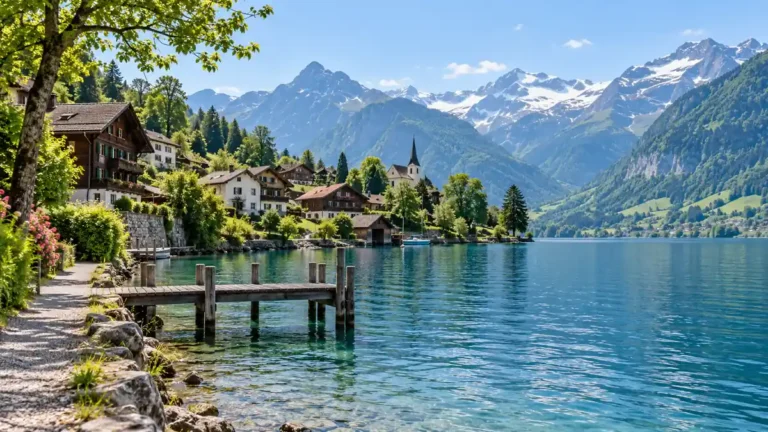
The Salzkammergut is the lake district between Salzburg and the mountains, with more than seventy lakes framed by steep alpine slopes. Its best-known corners:
- Hallstatt — the lakeside village inside the UNESCO-listed Salzkammergut landscape, the image most travelers have of Austria.
- St Gilgen and the Wolfgangsee — a gentler lake with village quays and boats, the easier day from Salzburg.
- Bad Ischl — the imperial spa town of the Habsburg summers, with the emperor’s Kaiservilla.
Most first trips see it as a single day from Salzburg. Nature-first travelers do better with an overnight by the water, when the day crowds have left.
Tyrol and Innsbruck: the Alps for skiing and hiking
Tyrol is Austria’s high-mountain region, and Innsbruck is the city that puts the Alps at the end of its streets. In winter the region is ski country, from the Zillertal valley to the resort town of Kitzbühel. In summer the same slopes turn into hiking terrain, with cable cars carrying walkers straight up to high trails. Tyrol fits a trip of ten days or more, or a traveler who came for mountains first and cities second.
The Danube and the Wachau: wine villages a day from Vienna
The Wachau is the stretch of the Danube valley west of Vienna where terraced vineyards run down to riverside wine villages. Melk Abbey, a huge baroque monastery above the river, anchors its western end. It is the day or two that stretches a Vienna-only stay into a trip with countryside in it.
Graz and Styria: the south-east most first trips skip
Graz is the city gateway to Styria, the green south-east that most first trips leave out. The Schlossberg hill rises over a red-roofed old town, and the Kunsthaus art museum lands in the middle of it like a blue bubble. South of the city, the South Styria wine roads and pumpkin seed oil give the region its own table. Graz belongs to a second Austria trip or a stay of ten days and more, where it pairs naturally with Carinthia.
Carinthia: Austria’s warm swimming lakes
Carinthia, in the far south, is where Austria’s lakes are warm enough for a proper swim. The Wörthersee and the Millstätter See are its summer resorts, with Klagenfurt and Villach as the towns. Summer families and a southern loop through Graz get the most from it; a first trip built on Vienna and Salzburg can leave it for next time.
Three more names come up in every Austria plan: the Grossglockner High Alpine Road over the highest peaks, the timber villages of the Bregenzerwald in Vorarlberg, and the Vienna Woods, a UNESCO Biosphere Reserve on the capital’s edge. For the ranked list of where to go, see the best places to visit in Austria.
Tours and activities
Book skip-the-line tickets, day trips and local tours with free cancellation on most activities.
You can also browse everything on getyourguide.com.
Tripstou may earn a commission if you book through this link, at no extra cost to you.
How Many Days Do You Need in Austria?
About a week is the length that makes a first Austria trip work: enough for Vienna, Salzburg and one lake day. Four to five days keep to Vienna with a Wachau day, and ten or more add Tyrol or Graz with Carinthia. Nights are the real limit, since short train rides keep the transfers small. Fewer than four days is a Vienna city break, not an Austria trip.
| Trip length | Regional pairing | What it buys and who it suits |
|---|---|---|
| About 4–5 days | Vienna plus a Wachau day | One base, no hotel change; a city break with a countryside day |
| About 7 days | Vienna, Salzburg and a Salzkammergut lake day | The classic first trip: two cities and the lakes on one rail line |
| 10+ days | The week’s route plus Tyrol, or Graz and Carinthia | Mountains or the warm south for travelers who want nature as much as cities |
Each shorter length drops a region whole instead of rushing it. Five days lose Salzburg and the lakes; a week loses the high Alps and the south. Pushing Salzburg into a five-day trip costs a full travel day out of the capital for one night in the second city. Add a day to Vienna and stay put.
When to Go: Shoulder Seasons for the Cities, Summer for the Lakes, Winter for the Slopes and Markets
May to June and September to October are the strongest windows for a cities-and-lakes trip, with thinner crowds in Vienna and Salzburg and the lake season open at the edges. July and August are peak months in the Alps and on the lakes. December to March is ski season, and early winter adds the Advent markets.
- Late spring and early autumn — the pick for a first trip mixing Vienna, Salzburg and a lake day: comfortable walking weather and room in the old towns, though swimming is only for the hardy.
- High summer — the lake and hiking season, when Carinthia’s water is warmest and alpine trails are open; the cities are busy, and Salzburg is at its fullest.
- Winter — the season for skiing in Tyrol and for the Christmas markets in the cities; days are short and lake villages go quiet.
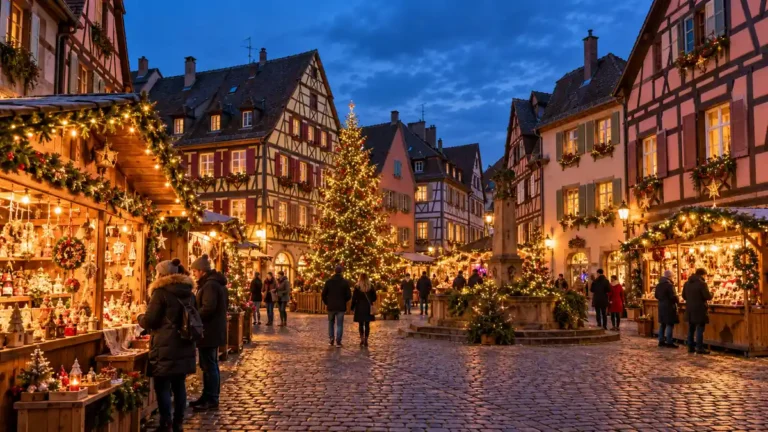
The Advent markets are Austria’s great winter draw, filling Vienna’s squares with stalls, mulled wine and lights before Christmas; the guide to Vienna’s Christmas markets covers which squares to visit. A December trip and a cities-and-lakes trip want different packing and different bases, so pick the season before you pick the route.
Vienna, Then Salzburg, Then One Lake Day Is the First-Trip Route
The strongest first route runs Vienna, then Salzburg, then a Salzkammergut day at Hallstatt or the Wolfgangsee, in that order. Vienna is the arrival hub, and Salzburg sits on the main rail line between the capital and the lakes, so the route never doubles back. It suits a first week in Austria. The cost is the high Alps, which this route leaves out.
The nights fall mostly in Vienna, then in Salzburg, with the lake as a day out from Salzburg or a single night by the water. Because the route only ever moves west, no day goes to retracing a leg.
Two extensions build on the same spine. Westward, the line continues from Salzburg to Innsbruck and the Tyrolean valleys. Southward, Graz and the Carinthian lakes form a loop that suits a second week or a summer trip.
Austria’s neighbours slot in at the edges. Bratislava and Budapest sit east of Vienna, Prague lies to the north, and Munich is just beyond Salzburg, so each makes an easy add-on before or after the Austrian part of the trip. On a short stay without Salzburg, the variant is simpler: Vienna as the only base and the Wachau as the day out.
Where to Base Yourself in Austria
Two bases carry most first trips in Austria: Vienna first, Salzburg second. A third base by a lake or in the Alps earns its place only when nature is the point of the trip. The rail line gives both cities a long day-trip reach, while every extra base costs a travel day of packing and checking out.
Each base reaches its own countryside. From Vienna, the Wachau and Melk are a day out, and Bratislava is close enough to visit too. From Salzburg, the Salzkammergut lakes are the day trip. From Innsbruck, the Tyrolean valleys open up in every direction.
In a week, Vienna takes about four nights and Salzburg about three. Travelers who want mornings on the water swap one Salzburg night for a lake base around St Gilgen or the Hallstatt area, and a mountain-first trip trades a city night for Innsbruck.
In Vienna, first-timers sleep inside or just beyond the Ring, near a U-Bahn line, which puts the sights within walking distance or a short ride. The Vienna guide’s neighbourhood and hotel advice goes through the districts in detail.
Can You Travel Austria by Train Only?
Yes, for the main route: ÖBB’s Railjet links Vienna, Salzburg, Innsbruck and Graz, and each leg of that spine takes under three hours. A car earns its place only for the lakes, the Wachau villages and the Alps, where buses thin out and the views sit off the rail line.
| Route | Approximate Railjet time | Note |
|---|---|---|
| Vienna–Salzburg | Under 2 h 30 min | The first-trip leg |
| Salzburg–Innsbruck | Under 2 h | The westward extension into Tyrol |
| Vienna–Graz | About 2 h 40 min | The southern extension |
Railjet is ÖBB’s long-distance train, with free Wi-Fi on board. Sparschiene saver fares are sold online for a specific train and are non-refundable, so they suit travelers whose dates are fixed. Direct Railjets also run from Vienna Airport to Salzburg and Innsbruck, which lets a trip skip the capital at the start; the transfer from the airport into Vienna itself is covered in the city guide.
A car makes sense for the lakes, the Alps and the Wachau villages. Driving on Austrian motorways and expressways requires a vignette, the toll sticker or digital toll for the car. The usual compromise is rail between the cities and a rental for two days in the lake district or Tyrol.
City transport runs on an honour system: buy and validate your ticket before boarding, because there are no barriers and inspectors make random checks.
Is Austria Expensive to Visit?
Austria costs more than its Central European neighbours and clearly less than Switzerland, and Vienna and Salzburg are the dearest stops whatever your style. A budget trip runs on hostels or simple guesthouses, meals at bakeries, sausage stands and Heuriger taverns, and Sparschiene saver fares booked early. Mid-range means a comfortable hotel, sit-down lunches and dinners, and Railjet between the cities. High-end buys historic city hotels, fine dining and private transfers. Austria is kind to every style on the lakes and trails, which cost nothing to enjoy. It punishes in the Alps in peak season and in hotel rooms in Vienna and Salzburg, where the bed takes the largest share of any budget.
Entry Rules, Euros and Sunday Closures Before You Travel to Austria
Austria is in the European Union and the Schengen area and uses the euro. Short stays follow the Schengen rules, and passport-by-passport detail sits on the entry-rules page.
- Short stays are capped at 90 days in any rolling 180-day period across the Schengen area as a whole, not per country.
- Visa-exempt visitors should confirm whether the ETIAS travel authorisation applies to their trip before booking.
- Non-EU arrivals are registered biometrically at the border instead of having passports stamped, under the EU Entry/Exit System.
The Austria visa requirements guide sets out the rules for each passport.
Cards are widely accepted across Austria. Non-EU residents can reclaim VAT on qualifying purchases, and the Austria VAT refund guide explains how tax-free shopping works.
German is the official language, and English is common in Vienna, Salzburg and the tourist areas. The emergency number is 112. Cash, Sunday opening, tipping and safety are answered in the questions below.
The Short Version
- Fly into Vienna and give it the most nights, then pair it with Salzburg and one Salzkammergut lake day: that is the strongest first-trip shape in Austria.
- About a week fits Vienna, Salzburg and a lake day, four to five days keep to Vienna with a Wachau day, and ten or more add Tyrol or Graz with Carinthia.
- Late spring and early autumn suit a cities-and-lakes trip, high summer belongs to the lakes and trails, and winter belongs to skiing and the Advent markets.
- Railjet covers the Vienna, Salzburg, Innsbruck and Graz spine in under three hours per leg, so a car is worth renting only for the lakes, the Wachau villages and the Alps.
- Two bases carry most first trips (Vienna, then Salzburg), and a lake or alpine base is worth its extra travel day only when nature is the point.
- Austria costs more than its Central European neighbours and less than Switzerland, and hotel rooms in Vienna and Salzburg take the largest share of any budget.
Austria Questions Travelers Still Ask
Are credit cards accepted in Austria, or do you need cash?
Cards are widely accepted, but carry some cash as well. Bakeries, market stalls, small cafés and some Heuriger taverns still lean on cash for small purchases, so a few euros in your pocket covers the places where a card is unwelcome.
Are shops open on Sunday in Austria?
Mostly not: shops, supermarkets included, are generally closed on Sundays. Bakeries, restaurants and shops in railway stations are typically open, so plan groceries and errands for Saturday, especially before a self-catering stay.
Is Austria safe to travel?
Yes, Austria is broadly a safe country for travelers. Take the usual city precautions with bags and phones in the busy parts of Vienna and Salzburg and on crowded trams and trains, and call 112 in an emergency.
How do you tip in Austria?
Round up the bill or add about 5–10% in restaurants, and tell the server the total you want to pay as you hand over the money. In cafés and taxis, rounding up to a convenient figure is enough.
Plan the Rest of Your Austria Trip
- Vienna travel guide — transport, the airport transfer, neighbourhoods and hotels for your arrival base.
- Things to do in Vienna — the sights and concerts the Vienna block only names.
- Things to do in Salzburg — the Salzburg sights at full depth.
- Best places to visit in Austria — the ranked list the regions section does not give.
- Vienna Christmas markets — the Advent season in detail.
- Austria visa requirements — entry rules by passport.
- Austria VAT refund — tax-free shopping for non-EU residents.
Did this guide save you time or money? Tripstou is independent and reader-funded — if you'd like to give something back, you can support the site with a crypto contribution of any size.