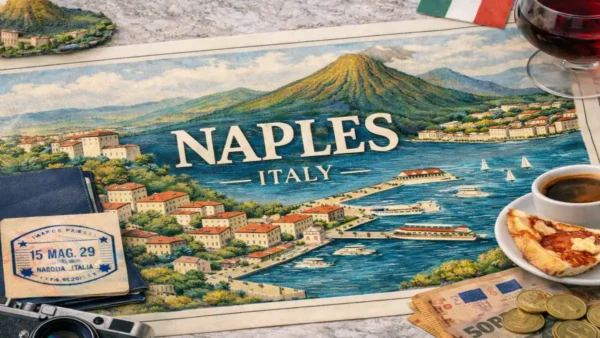
Few places in Europe pack this much within an hour of one city. From Naples you can reach Pompeii’s ruins, the crater of Mount Vesuvius, the Sorrento Peninsula, the Amalfi Coast, and three islands — Capri, Ischia, and Procida — almost entirely by train and ferry. That density is the region’s real appeal: you unpack once and let the day trips do the traveling. It also creates the two questions every visitor faces. Which trips deserve a day, and which base — Naples or Sorrento — should anchor them? This guide answers both. It maps the sub-areas around the bay, sorts the day trips by traveler fit, sets realistic duration tiers, and settles the base decision, so you can shape the trip before touching a timetable.
Quick Answer
Naples is one of Italy’s best day-trip bases, with Pompeii, Vesuvius, the coast, and three islands in easy reach. Trip length is the main variable: one Naples base handles short stays, while longer trips justify adding Sorrento. Plan on three to four days for the headline trips from a single base.
Trust Layer
Tripstou region guide for travelers planning a regional trip. Covers sub-areas, trip shape, base strategy, timing, and mobility tradeoffs.
Produced with AI assistance and reviewed by Alex Perrut, working in tourism since 2015, for the Tripstou editorial team. See our editorial process for details.
Last factual review: July 24, 2026.
Official sources consulted: Italia.it, ENIT — Italian National Tourist Board.
Key Takeaways
- Naples is the region’s most connected base, putting Pompeii, Vesuvius, the coast, and three islands within a short train or ferry ride.
- Plan three to four days from a single base for the headline trips; six or more justifies adding a second base.
- Pompeii deserves its own full day, while Herculaneum and Vesuvius pair naturally, and islands combine badly with ruins.
- Choose Naples for connections and lower cost, or Sorrento for resort calm and quieter evenings near the coast.
- A car adds little here: the Circumvesuviana railway and ferries from Naples’s port reach nearly every day trip.
- Spring and early autumn balance warm sightseeing weather, full ferry schedules, and thinner crowds at Pompeii and on Capri.
Table of Contents
Is Naples a Good Base for Exploring the Region?
Yes — Naples is the most connected base in the region, and for most trips the practical one. Every headline day trip starts from its stations or its port. The tradeoff is atmosphere: Naples is loud and gritty where Sorrento is calm, so you trade resort ease for reach.
The transport geometry decides it. The Circumvesuviana railway runs east from the city through Herculaneum and Pompeii to Sorrento, while ferries and hydrofoils leave the port for Capri, Ischia, and Procida. Almost every trip in this guide begins within a short walk of central Naples. No other town in the region can say that.
Base elsewhere if your trip is mostly coast and pool time. Travelers who plan one ruin visit and four slow days by the water will be happier on the Sorrento Peninsula, where evenings are quieter and the sea is on the doorstep. For the city’s own sights, food, and neighborhoods, see our full Naples city guide; for how the region compares with the country’s other highlights, start with the best places to visit in Italy.
The Sub-Areas Around Naples and What Each Offers
The region splits into five groups: archaeological belt, Sorrento Peninsula, Amalfi Coast, the islands, and inland outliers. Distance matters less than access here: each group hangs off its own rail line or ferry route, and that determines how easily it fits into a day trip.
- Vesuvius archaeological belt — a workaday corridor east of the city hiding the region’s greatest ancient sites. Anchor experience: walking Pompeii’s excavated streets. Natural base: Naples itself — the belt is for day trips, not overnights. Best for: ancient-history travelers who want ruins without changing hotels.
- Sorrento Peninsula — polished clifftop resort country at the bay’s southern arm. Anchor experience: sunset from Sorrento’s cliffside terraces. Natural base: Sorrento, the rail line’s final stop. Best for: first-timers who want a calm, resort-style springboard.
- Amalfi Coast — vertical villages stacked above the open sea on the peninsula’s far side. Anchor experience: the coastal road between Positano and Amalfi. It rewards a stay of its own more than a rushed visit from the bay. Best for: scenery-driven travelers with nights to spare.
- The islands — Capri, Ischia, Procida — three personalities on one bay: glamour, thermal spas, and pastel fishing harbors. Anchor experience: a boat day out of Naples’s port. Natural base: Naples, beside the ferry terminals. Best for: travelers who want boat days built into the trip.
- Inland and southern outliers — Caserta and Paestum — royal-palace grandeur to the north, Greek temples to the south. Anchor experience: Paestum’s three standing temples. Natural base: Naples via national rail. Best for: repeat visitors who have already covered the headlines.
| Sub-area | Character | Natural base | Best for |
|---|---|---|---|
| Archaeological belt (Pompeii, Herculaneum, Vesuvius) | Workaday suburbs hiding the region’s greatest ancient sites | Naples — visit the belt as day trips | History-first travelers avoiding hotel changes |
| Sorrento Peninsula and its resort towns | Polished clifftop resort country above the bay | Sorrento, at the end of the rail line | First-timers wanting a calm springboard |
| Amalfi Coast (orientation only here) | Vertical villages stacked above the open sea | Best treated as its own overnight trip | Scenery-driven travelers with nights to spare |
| The islands: Capri, Ischia, Procida | Three distinct personalities across one shared bay | Naples, beside the main ferry port | Travelers building boat days into the trip |
| Outliers: Caserta and Paestum | Royal palace north, Greek temples south | Naples, connected by national rail lines | Repeat visitors past the headline sights |
Five groups is the useful ceiling at planning depth. Once you know which two or three belong in your trip, the dedicated guides take over.
The Best Day Trips From Naples
Pompeii is the headline day trip, with Herculaneum, Vesuvius, Capri, Sorrento, and Procida close behind. None of them is objectively best. The right picks depend on what you travel for, so the list below sorts by fit — history, views, or island time — instead of ranking.
- Pompeii — a full excavated Roman city that needs most of a day on its own. Fits every first-time visitor to the region.
- Herculaneum — smaller, denser, and better preserved than its famous neighbor; half a day is enough. Fits travelers short on time or planning a second archaeology day.
- Mount Vesuvius — a crater-rim walk with views over the whole bay. Fits active travelers, and pairs naturally with Herculaneum.
- Capri — a boat day of sea cliffs, chairlift views, and celebrity polish. Fits scenery seekers happy to share the island with crowds.
- Sorrento — an easy rail escape for lemon groves and cliff terraces. Fits anyone who wants a low-effort day.
- Procida — the shortest island hop, all pastel harbors and quiet lanes. Fits photographers and travelers dodging Capri’s ferry queues.
Combining is where plans go wrong. Pompeii deserves its own day — the site is too big to split with anything else. Herculaneum and Vesuvius pair well in a single day because the crater connections leave from the same short rail stretch, which makes that pairing the belt’s best planning shortcut. Islands combine badly with ruins: ferry time eats the margin. For entry strategy and how long the site really takes, see our guide to planning a Pompeii visit.
Tours and activities
Book skip-the-line tickets, day trips and local tours with free cancellation on most activities.
You can also browse everything on getyourguide.com.
Tripstou may earn a commission if you book through this link, at no extra cost to you.
How Many Days You Need for Naples and Around
Most trips need three to five days for Naples and its surroundings. Two days covers the city and Pompeii at a rush; five lets every headline trip breathe. The math is straightforward: each major sight eats a full day once travel is counted.
- 2–3 days — the city plus Pompeii and one more trip at highlight pace. Buys the essentials. Fits travelers folding Naples into a longer route.
- 4–5 days — the full day-trip fan: ruins, the volcano, one island, and Sorrento from a single base. Fits first-timers making the region a main stop.
- 6+ days — a two-base trip: Naples for the city and archaeology, then the peninsula or coast for the slow half. Fits travelers treating the bay as the whole holiday.
Four days here buys five headline sights with zero hotel changes — a density almost no other Italian base can match. How those days slot into a national route is a sequencing question for a dedicated Italy itinerary; for how the region fits the country’s broader shape, start with our Italy travel guide.
Naples or Sorrento: Choosing Your Base
Choose Naples for connections and cost, Sorrento for calm and coast proximity. Naples puts every rail line and ferry route at your door and keeps prices lower; Sorrento trades some reach for a prettier, easier evening. Which matters more depends on how many island and coast days you plan.
The split comes down to what your mornings and evenings are for. Naples wins mornings: trains and boats leave sooner, from more terminals, to more destinations. Sorrento wins evenings — a compact, strollable center where dinner is the event. Costs follow the same line, with Naples generally the cheaper place to sleep and eat.
Basing in Sorrento also quietly shrinks the islands: the widest fan of ferry departures leaves from Naples’s port, while Sorrento’s smaller pier serves mainly Capri. If the trip runs five days or fewer, keep one base and let the trains do the work. Beyond that, split — the cost is one packing-up day lost against calmer nights near the coast.
Hotels and places to stay
Compare hotels, apartments and stays for your dates in one search.
Search hotels and stays on hotels.com →
Tripstou may earn a commission if you book through this link, at no extra cost to you.
How to Get Around the Naples Region Without a Car
Two modes cover the region: the Circumvesuviana railway and the ferries from Naples’s port. The train runs east through the archaeological belt to Sorrento; boats fan out to Capri, Ischia, Procida, and the coast. Between them, a car adds almost nothing but parking stress.
The Circumvesuviana is the workhorse. It leaves from the city center and stops at Herculaneum, Pompeii, and Sorrento, with Naples to Pompeii running roughly 35–45 minutes. Trains are frequent enough that you rarely plan around a timetable. It is a commuter line, though — expect crowds and few frills at peak times.
Ferries and hydrofoils leave from Molo Beverello and the neighboring Calata Porta di Massa, reaching the islands and the coast. Service is generous in the warm months and thins noticeably in winter, when some island routes drop to a skeleton schedule. Check crossings on the day and treat published times as approximate. A car earns its keep only for Caserta and Paestum, and even those run by national rail.
When to Visit the Naples Region
Spring and early autumn are the best times for the Naples region. Shoulder seasons bring warm sightseeing weather, full ferry schedules, and manageable crowds at the ruins. Summer adds heat and packed boats; winter is quiet but trims island service to a minimum.
The season shapes the trip more than it shapes the city. May, June, and September balance sea warm enough for boat days with heat mild enough for walking Pompeii’s shadeless streets. July and August concentrate crowds on Capri and at the excavations. Midwinter suits a city-and-ruins trip far better than an island one. For month-level planning across the country, see the best time to visit Italy.
Frequently Asked Questions
Can you visit Pompeii and the Amalfi Coast in one day from Naples?
Not comfortably. Both are full-day trips in opposite directions, and pairing them means rushing Pompeii and seeing the coast from a bus window. Choose one per day. If you want a taste of both, combine Pompeii with nearby Sorrento or Vesuvius instead, and give the Amalfi Coast its own day.
Is Capri worth a day trip from Naples?
Yes, if you want sea cliffs, chairlift views, and glamour, and don’t mind crowds. The fast ferry from Naples’s port reaches Capri in under an hour, leaving a full day on the island. Go early to beat the day-trippers, and expect higher prices than the mainland for food and drinks.
How far is Pompeii from Naples?
Pompeii sits about 40 minutes from central Naples on the Circumvesuviana railway, which runs frequently through the day. The ruins are close enough for an easy morning start and a full afternoon on site. No car is needed; the station sits beside the main entrance to the excavations.
Is Ischia or Procida a better day trip?
Procida suits a shorter, photogenic hop; Ischia rewards a fuller day. Choose Procida for pastel harbors, quiet lanes, and a quick crossing that fits a half-day. Choose Ischia for thermal spas, gardens, and beaches worth lingering over. Both leave from Naples’s port by ferry, so the pick comes down to pace.
Do you need a car to explore around Naples?
No, and a car often gets in the way. The headline trips run on trains and ferries, while Naples traffic, restricted zones, and scarce parking make driving a liability. A rental only earns its place for the inland outliers like Caserta and Paestum, and those are reachable by national rail anyway.
Is the Amalfi Coast doable as a day trip from Naples?
Yes, but it rewards an overnight far more. A day trip means a long ferry or bus each way and only a few hours in Positano or Amalfi. It works if you just want a taste, though the coast’s slow evenings and clifftop villages are the real draw. Give it its own stay if you can.
Related Guides
- Naples city guide — sights, neighborhoods, and practicalities for the base city itself.
- Pompeii visit planner — how to structure the region’s headline day trip.
- Best places to visit in Italy — where the Naples region sits among the country’s highlights.
- Italy itinerary — sequencing Naples and the bay inside a full national route.
- Best time to visit Italy — month-by-month timing beyond this region’s seasonal frame.
- Italy travel guide — the national planning hub for the whole trip.
Did this guide save you time or money? Tripstou is independent and reader-funded — if you'd like to give something back, you can support the site with a crypto contribution of any size.