Seven days in Greece works best as two stops: three nights in Athens, then three or four on Santorini, flying home from the island. One crossing joins them, by fast ferry or a short flight. That shape suits a first trip that wants the capital and one island unhurried; adding a second island makes the week brisk.
A 7 day Greece itinerary has less room than the number suggests. Arrival and departure eat into both ends, so one week in Greece means six or seven nights on the ground. That is enough for two stops done properly, and not enough for three.
This page commits to one route: Athens first, then Santorini, flying home from the island. It explains the night split, why the order matters and how to handle the single transfer between the two. The variable that shapes every Greek week is simple. Each island change eats most of a day.
If you want a second island or have fewer days, the adaptation rules near the end show what to cut and what to add. For trips of ten days or longer, the Greece itinerary planner covers the longer route shapes.
Recommended Route: Athens and Santorini in 7 Days
The strongest one-week Greece route is Athens for three nights, then Santorini for the rest, flying home from the island. Days 1–3 cover the capital’s ancient core, Day 4 carries the one crossing, and Days 4–7 close the trip on the caldera. There is no backtrack and only one transfer.
- Days 1–3: Athens — the classical core
- Day 4: Piraeus to Santorini — the one crossing
- Days 4–7: Santorini — the island close
This shape suits a first trip because it pairs the two things most first-time visitors come for: the ancient sites of the capital and a Cycladic island. It stays simple on purpose. One move means one day lost to logistics, and the rest of the week goes to the places themselves.
It is also the seven-day cut of the longer routes. A ten-day trip keeps the same bookends and slots a middle island between them. For the country-level picture, start with the Greece travel guide; each stop has its own depth in the Athens guide and the Santorini guide.
Days 1–3: Athens, the classical core
Give Athens three nights: the first is a landing buffer, the next two are the ancient core. That covers the Acropolis and its museum, the Ancient Agora and one unhurried evening in the old town. Three nights also keeps Day 4 free for an early move to the port or the airport.
You are in Athens for three nights, arriving on Day 1. Stay near Plaka or Syntagma, close to the main ancient sites and the old-town streets.
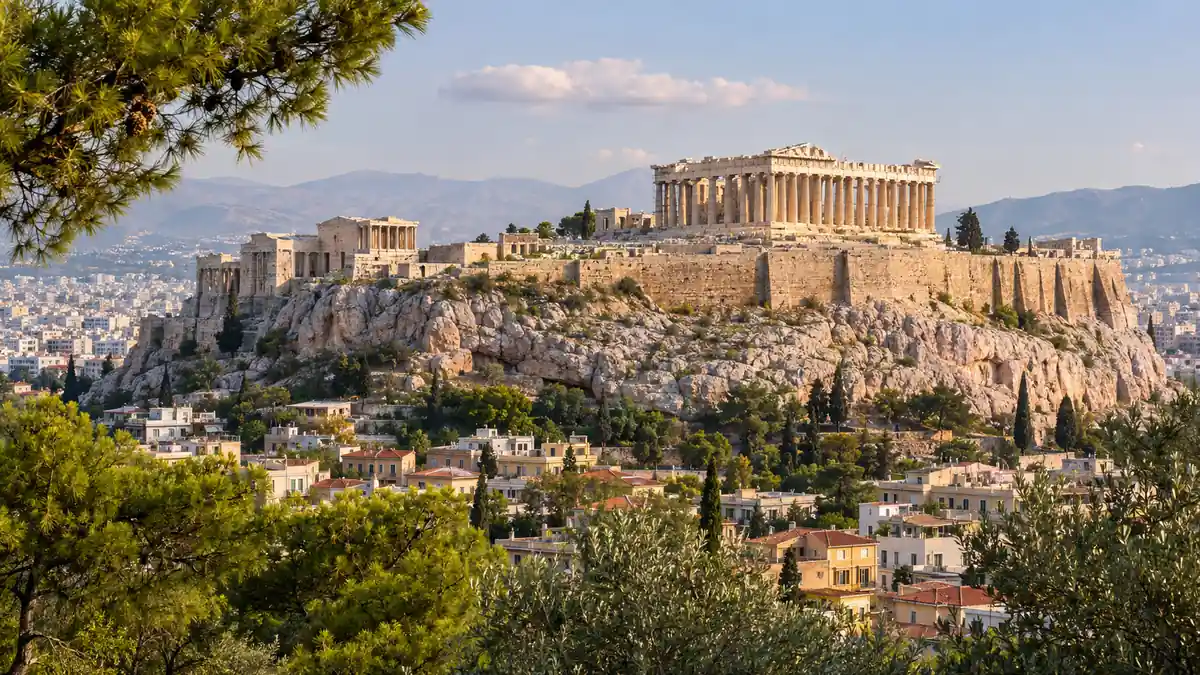
Athens plays the classical layer of the trip, and it sits first because this is where the flights land. Day 2 belongs to the Acropolis and the Acropolis Museum below it. Day 3 takes in the Ancient Agora, with the evening spent in Plaka and Monastiraki. Keep it to that.
Acropolis entry is sold in timed slots on the official Hellenic Heritage platform (hhticket.gr). Book the slot ahead in summer. Put it on Day 2, never the landing day: a delayed flight turns a timed ticket into a lost one.
The onward move comes on the morning of Day 4. Head to Piraeus for the fast ferry, or to the airport for a short flight to Santorini; the next section settles which. For more than these anchors, the Athens city guide covers neighbourhoods and sights in depth.
Tours and activities
Book skip-the-line tickets, day trips and local tours with free cancellation on most activities.
You can also browse everything on getyourguide.com.
Tripstou may earn a commission if you book through this link, at no extra cost to you.
Ferry or flight from Athens to Santorini?
Take the fast ferry if you can spare the day; fly if the week is already tight. The fast ferry from Piraeus runs about five hours and arrives with the caldera in view. The flight is short but adds airport time at both ends. Choose the ferry with seven nights, the flight with six.
| Option | Time band | What it costs you in the day | Best for |
|---|---|---|---|
| Fast ferry | About five hours from Piraeus | Most of Day 4 at sea and in port | Seven-night weeks that want the sea approach |
| Conventional ferry | Most of a day at sea | All of Day 4, little left after arrival | Travelers who treat the crossing as the experience |
| Flight | A short flight plus airport time | Airport transfers and check-in at both ends | Six-night weeks where every island hour counts |
Treat this as a route decision, not a transport puzzle. The sea approach is part of the Santorini experience for many travelers, and the ferry keeps the day’s logistics in one port. The flight wins when the week has six nights. Every afternoon on the island then counts.
The conventional ferry only makes sense if you want the crossing itself; on a seven-day route it hands the island an evening it cannot spare.
Santorini sits in the southern Cyclades island group, which is why the crossing from the mainland is a long one. Ports, booking windows and schedules sit in the Greece island-hopping guide.
Train and bus tickets
Compare routes, schedules and prices across rail and bus operators in one search, with mobile tickets on your phone.
New to Omio? Code NEW10 takes 10% off your first booking — or APPNEW10 if you book inside the Omio app. Both apply to bookings up to €80.
Search routes and compare prices on Omio →
Tripstou may earn a commission if you book through this link, at no extra cost to you.
Days 4–7: Santorini, the island close
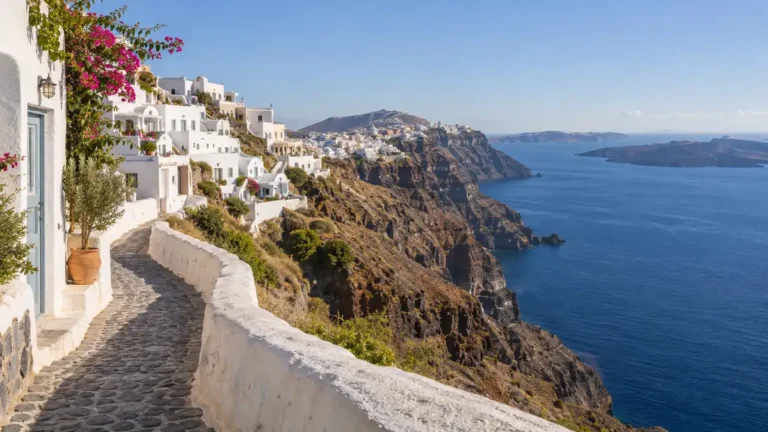
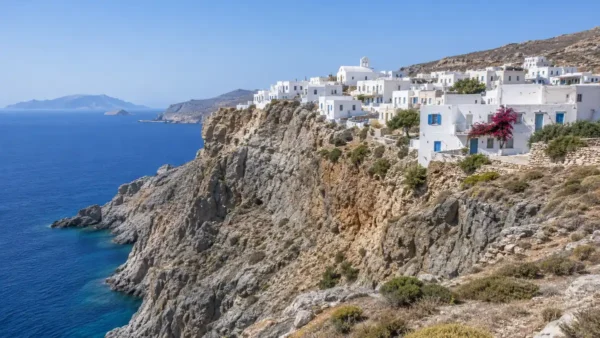
Santorini gets the last three or four nights so the week ends at the island’s own airport. The arrival evening, the caldera villages, a walk between Fira and Oia and one sunset fill the stay comfortably. The final morning then runs straight to the airport with no return crossing.
You are on Santorini for three nights on a six-night trip, or four on a seven-night one, arriving on Day 4. Stay near Fira or along the caldera rim, close to the route’s anchors.
Santorini plays the island close, and it sits last because its airport lets the trip end here. Day 5 belongs to the caldera rim and the villages along it. Day 6 carries the Fira–Oia path, walked toward Oia so you finish there for the sunset. A fourth night, when the week allows it, goes to a slow beach day.
Santorini asks something in return. It is the busiest and priciest island choice, and the caldera villages crowd around sunset. Its volcanic beaches are a side note on this route; the best beaches in Greece guide sets them against the rest of the country.
The onward move is the flight home from Santorini, direct or connecting via Athens. The Santorini guide covers the villages and sights in depth.
Athens first, Santorini last: why the order and the exit matter
Start in Athens and end on Santorini so the week never doubles back to the capital. Athens is the main international gateway and a natural jet-lag buffer. Santorini has its own airport, so the trip can end on the island without a return crossing or a repositioning flight.
Reversing the order costs you a day. Starting on Santorini means ending in Athens, so the island leg needs a crossing or flight back before the flight home. That is a second transfer the route does not need.
Book the trip as an open-jaw ticket: fly into Athens and out of Santorini. From the island, travelers fly home direct or connecting via Athens, depending on where home is.
The first night in Athens does quiet work. A long-haul arrival rarely leaves energy for sightseeing. The landing evening absorbs the flight, and the ancient sites wait for Day 2.
The exit airport decides this route: once the return flight leaves from Santorini, the island has to come last, and everything else falls into place behind it.
Season shifts the logic at the edges. Ferries thin out off-season and much of Santorini closes in winter, so check the best time to visit Greece before fixing dates. Ferry corridors and how the islands connect belong to the Greece island-hopping guide.
Should I take a ferry on the same day as my flight home?
Avoid it. A ferry that runs late can cost you an international flight, which is far harder to rebook than one extra night. This route sidesteps the risk by flying home from Santorini itself; if a variation ends in Athens, spend the final night on the mainland before the flight.
Is 7 days enough for Greece?
Seven days is enough for Greece if you plan two stops, not three. A week holds Athens and one island comfortably, with time to settle into each. A third stop only works if it is compact and reached fast, because every island change costs most of a day in transit and check-ins.
The arithmetic is tight. A seven-day trip usually means six or seven nights, and the arrival and departure days each lose half their hours to airports. That leaves about five full days to spend on the ground.
Each island change costs more than the crossing itself. You check out, get to the port, sail, find the new base and check in again. Most of that day is gone before you see anything.
Two islands in a week is possible, but it means two nights on each and a brisk pace. That shape suits travelers who want variety and accept constant packing. It does not suit a first trip that also wants proper time in Athens.
A week in Greece is measured in transfers: every crossing you drop hands back most of a day on the ground, which is why this route has only one.
Longer trips change the maths completely, and the full Greece itinerary guide sets out how ten and fourteen days add stops. Which island to pick is a separate question, covered in the guide to the Greek islands.
Who this route suits, and the one trade-off
This route suits a first Greece trip that values pace over island count. It fits travelers who want the capital and one iconic island without packing every day. The trade-off is real: you see one island, and it is the most crowded and most expensive of the usual first-trip choices.
It works best for couples, first visits, weeks of six or seven nights and summer travel, when connections to the island are at their busiest. Cost is the one factor that can overturn it. Santorini sits at the top of the island price range, so the Greece trip cost guide is worth a look before you commit.
This is not the right route if:
- you want quiet beaches and uncrowded villages at sunset;
- the budget cannot absorb Santorini’s accommodation prices;
- you would trade Athens time for a second or third island.
Dropping Santorini for a quieter island keeps the same route shape. Only the island changes, and the next section shows which swaps work in a week. Readers who want quieter or cheaper islands can compare them in the best places to visit in Greece.
How to adapt this route with more or fewer days
When the week shrinks, Athens loses a night first; when it grows, a second island goes in before anything else. The island is where the week slows down, so it keeps its nights. A new region never enters a single week, because every addition costs another transfer day.
- Add a second island: cut Athens to two nights and give two nights each to Naxos or Paros and then Santorini; the week turns brisk. Mykonos is the busier alternative, a short fast-boat hop from Santorini.
- Swap the island block: keep Athens and the shape, change the island.
- Naxos — a shorter crossing than Santorini and a calmer Cycladic base.
- Milos — a Cycladic swap that trades caldera views for coastline.
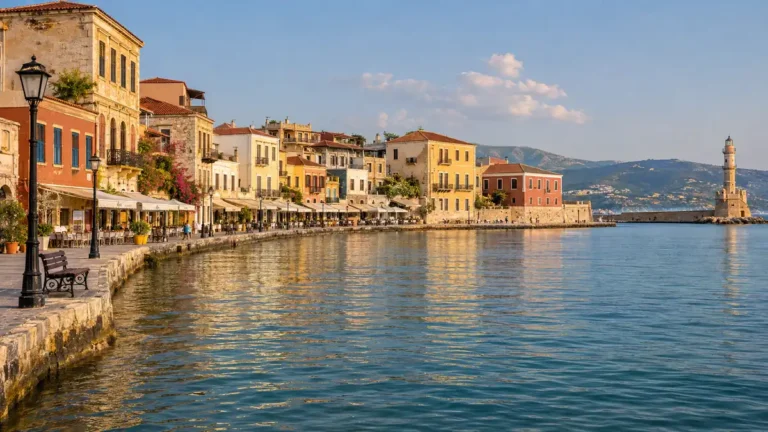
- Crete via Chania — a bigger island with its own airport for the exit.
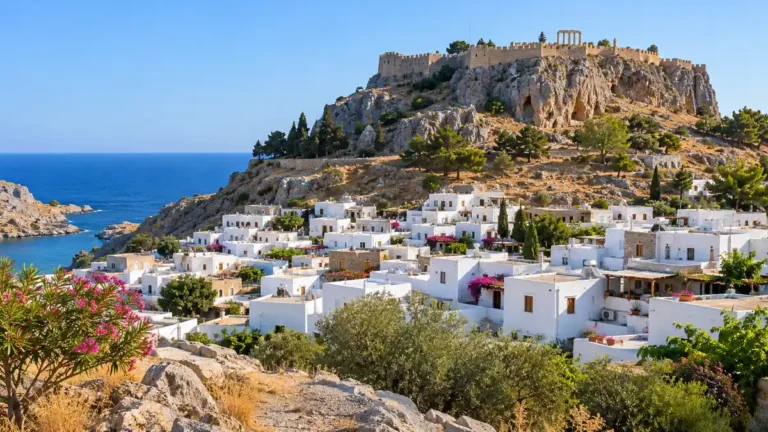
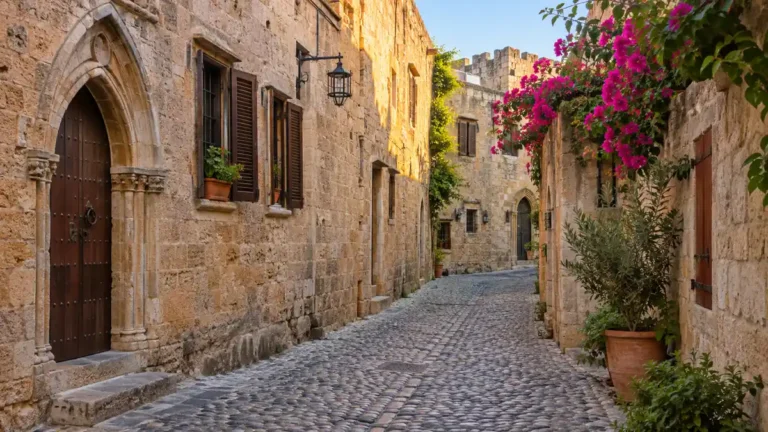
- Rhodes — a Dodecanese swap, also with its own airport.
- Corfu or Zakynthos — the Ionian islands on the west side; no ferry links them to the Cyclades, so the two groups never combine in one week.
- Swap for the mainland: replace the island with a Greece road trip by car through the Peloponnese.
- Five days: Athens two nights, island three. Take the fastest crossing so the island days stay whole: five days leaves no room for a second island.
- More days: ten days adds a middle island between Athens and Santorini, and the Greece itinerary planner lays out that longer route.
Naxos and Paros fit as a second island because both sit in the Cyclades between Piraeus and Santorini. The stop splits one long crossing into two shorter legs instead of adding a detour. That is the cheapest extra island a week can take in time.
Scope, Review and Sources
This page plans one seven-day route through Greece, Athens then Santorini, with its night split, stop order and single crossing; it is not a broad Greece guide, a things-to-do list for either stop, a hotel roundup or a general trip planner.
The night split, stop order and crossing advice on this page were produced with AI assistance; Alex Perrut, working in tourism since 2015, approved them for the Tripstou editorial team, and the steps behind that approval are on our editorial process page.
Official sources consulted: Visit Greece, Greek Ministry of Tourism, Hellenic Heritage e-ticketing.
Did this guide save you time or money? Tripstou is independent and reader-funded — if you'd like to give something back, you can support the site with a crypto contribution of any size.