The things to do in Greece that earn the trip are its ancient sites, a sea day, one mountain day, and long taverna meals. Traveler type sets the mix: history-first travelers weight Athens and its ancient sites, island-first travelers the sea and caldera, active travelers Meteora or Samaria. Book Acropolis tickets ahead and go early; skip Oia at sunset if you dislike crowds.
Every list of things to do in Greece repeats the same two images: the Acropolis and a white Santorini village at dusk. Few say which experiences actually justify the flight, which disappoint, and which work far better done a different way. That gap is what this page fills.
This guide covers what to do in Greece, one experience at a time. Each gets a verdict, the traveler it suits, its main tradeoff, and the version worth booking, followed by a pointer to the page that plans it in detail. Where to go and how to order the days are separate decisions with their own guides.
The page is organised by type of experience: ancient history, the islands and the sea, mountains and gorges, food and wine, and festivals and living traditions. It closes with a picking rule by traveler type and the few logistics that change a visit.
What Greece Is Best Known For: The Experiences That Define a Trip
Greece is best known for ancient sites, island seas, mountain days, taverna culture, and living festivals. A good trip takes one or two experiences from the types that fit the traveler and never tries to cover every one. Attempting all of them turns the trip into transit between highlights.
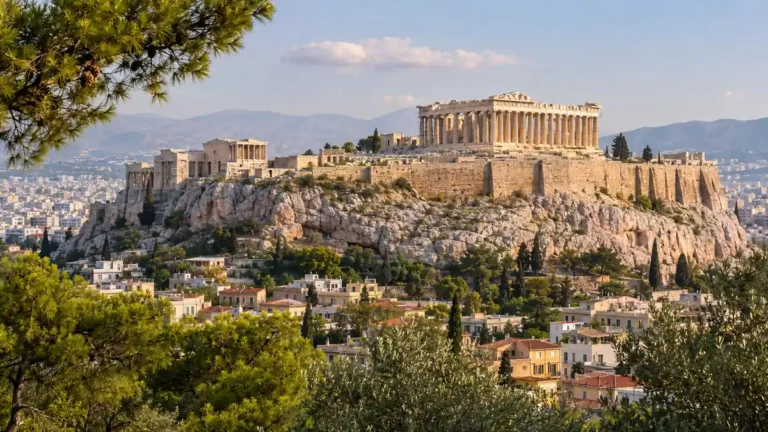
Ancient history is the experience most visitors come for. The flagship is walking up to the Parthenon at opening time and then reading the same stones again in the Acropolis Museum below. Outside Athens, the great sanctuaries and palaces turn a history day into a full outing.
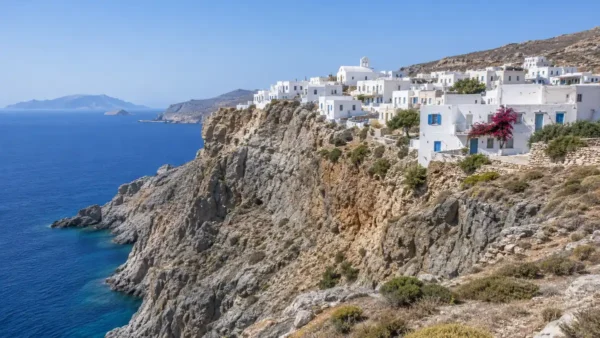
The sea is the second pillar. Swimming off volcanic rock, sailing along a caldera, eating on a harbour front at dusk: this is what most travelers picture as Greece. It rewards slow days far more than a tick-list.
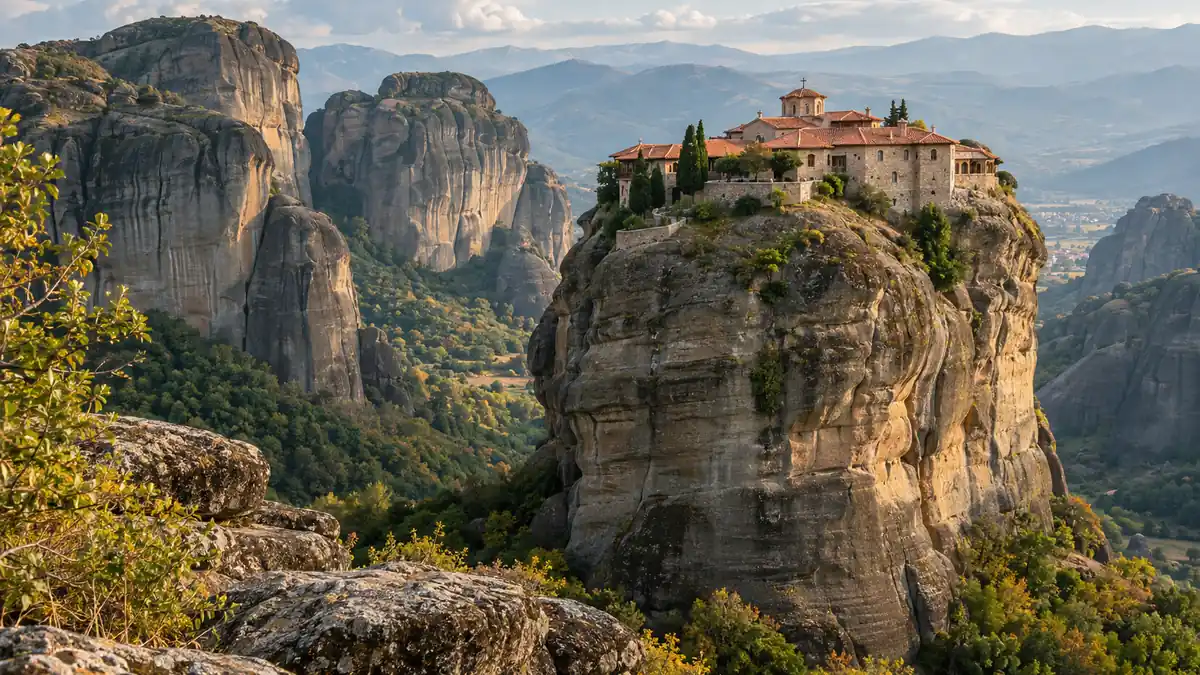
Mountains and gorges are the side of Greece most visitors never see. Climbing to a monastery on a rock pillar at Meteora or hiking down the Samaria Gorge in Crete gives a trip a physical, memorable day that no beach can replicate.
Food and wine run through everything. A long taverna lunch, a market morning or a tasting of island wine counts as an experience in its own right. Festivals are the last layer. Orthodox Easter and summer village feasts show a Greece that still lives by its calendar.
Which island or region to base these experiences in is a separate decision, covered in our guide to the best places in Greece. For first orientation on the country as a whole, start with the Greece guide. This page stays on the doing.
Ancient Greece Is Worth a Full Day, Not a Drive-By
The ancient sites reward a full, early day each and disappoint as a midday drive-by. The Acropolis is the one nobody should skip. Delphi and Knossos are the strongest second picks, while Olympia and Mycenae with Epidaurus suit history-first travelers willing to travel for them. Heat and crowds build by late morning.
A drive-by visit fails for a simple reason. Most Greek sites are ruins spread over open, sun-exposed ground, and their meaning comes from walking the layout slowly with a map or a guide. Rushed in an hour between beaches, they read as piles of stone. Given a morning, they read as cities.
Is the Acropolis worth it, and do you need to book ahead?
The Acropolis is worth it for every first-time visitor to Greece, and yes, you should book ahead. Buy tickets in advance from the Ministry of Culture’s official ticket site. Turning up without one leaves the visit to chance.
When you go shapes the visit more than the ticket itself:
- Early visit (at opening): suits anyone who wants cooler air, softer light and room to see the Parthenon properly, at the price of an early start from your hotel.
- Late-afternoon visit: suits travelers who cannot face an early alarm or who want golden light over the city. Summer heat lingers, though, and the site closes on you, so the visit feels shorter.
Pair the hill with the Acropolis Museum on the same day. Its galleries hold the original sculptures and make the ruins legible. Seeing the Parthenon frieze indoors after walking past its empty setting is what turns a crowded hilltop into a story you can follow. Ticket types, routes up the hill and the museum pairing are covered step by step in our guide to things to do in Athens.
Delphi, Olympia, Knossos and Mycenae: Which Ancient Site Beyond Athens
Delphi is the strongest ancient site beyond Athens for most travelers, with Knossos a close second for anyone in Crete. The others reward history-first travelers most. Each verdict below names who it suits and what it costs you.
- Walk Delphi for the setting: the sanctuary climbs a mountainside on the slopes of Mount Parnassus, and the landscape carries the visit even for non-specialists. It sits on the mainland away from the islands, so it takes a dedicated day.
- Explore Knossos for the Minoan palace and its story. Its partial concrete reconstructions divide opinion: some visitors find them vivid, others find them artificial. Go knowing that, or the site can disappoint.
- Walk Olympia for the original stadium and the sense of where the Games began. The ruins are low and scattered, though, so it suits travelers who already care about the history.
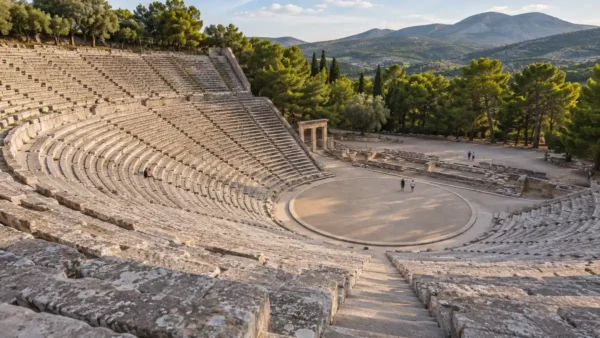
- Visit Mycenae and Epidaurus together for a Bronze Age citadel and a theatre with famous acoustics in one outing. Both need a car or a tour to link them.
For Knossos and the rest of the island’s history, see our guide to things to do in Crete. Olympia, Mycenae, Epidaurus and the harbour town of Nafplio as a base are covered in things to do in the Peloponnese.
Do you need a guided tour for Greece’s ancient sites?
Not for the Acropolis, which works well self-guided when paired with the Acropolis Museum and its original sculptures. A guide adds most at Delphi, Mycenae and Olympia, where low ruins and scattered layouts are hard to read alone. Travelers who prefer going solo should bring a good site map or guidebook and allow a full morning.
Tours and activities
Book skip-the-line tickets, day trips and local tours with free cancellation on most activities.
You can also browse everything on getyourguide.com.
Tripstou may earn a commission if you book through this link, at no extra cost to you.
Is the Santorini Sunset in Oia Worth It?
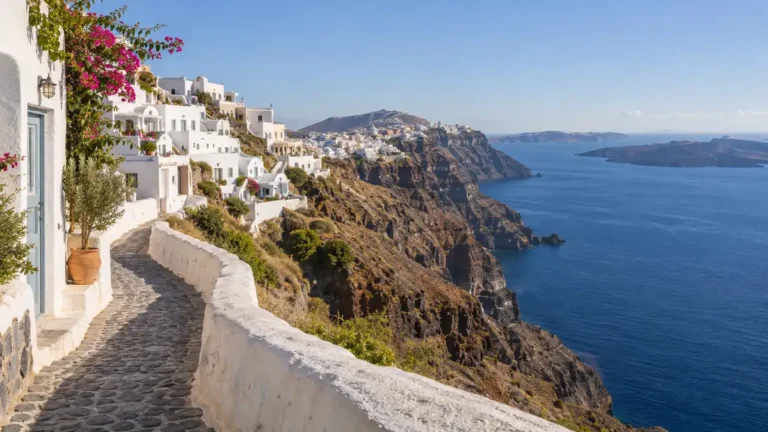
The caldera view is worth the trip; the Oia sunset crowd is not, for most travelers. Walking the caldera path or watching sunset from a quieter caldera village gives the same light with space to enjoy it. Oia at sunset suits only travelers who accept the crush for the postcard shot.
The whole caldera rim faces west, so Oia holds no monopoly on the sunset — only on the crowd. That changes the decision. Three versions are worth weighing:
- Oia at sunset: suits travelers who want the famous image and accept shoulder-to-shoulder crowds to get it. You arrive early to hold a spot and leave in a slow stream of people.
- The caldera walk from Fira to Oia: the pick for fit walkers who want the view as a continuous experience. The path is exposed, so it is a morning activity in summer.
- A quieter caldera village or a sea-level sunset: right for couples and anyone who wants to watch the light in peace. What you give up is the exact Oia frame.
Cruise-day Santorini needs a different plan. The crowds arrive in the middle of the day, when cruise passengers fill the caldera villages at once. Stay overnight, or see the caldera early before the ships come in. Evenings and mornings on the island feel like a different place.
Viewpoints, timing and the rest of the island’s experiences are covered in our guide to Santorini experiences.
Is Island Hopping in Greece Worth It?
Island hopping is worth it on trips of a week or more with two or three contrasting islands. It fails as a race to tick off islands, where ferry days eat the holiday. For multi-island trips, a ferry hop between neighbours beats a boat-day sampler; a boat day suits travelers based on one island.
The format matters more than the islands chosen:
- Boat day from one base: suits travelers staying on one island who want a taste of the coast and nearby coves. You see islands from the water, never at night.
- Two-island ferry hop: suits most first-time travelers with a week. It costs one travel day but brings two very different island moods.
- Three-island hop: works on longer trips, for travelers who enjoy movement. Expect more packing and port time, and less beach.
Each extra island costs a travel day’s worth of packing, port waiting and crossing. So a third island only earns its place when it feels nothing like the first two.
The sea experiences themselves are what make the hop worth doing. Across the Cyclades islands, the draw is white villages, dry hills and clear water. Naxos adds mountain villages and long sandy beaches, covered in things to do in Naxos. Paros brings fishing-harbour evenings and an easy island pace; see what to do in Paros.
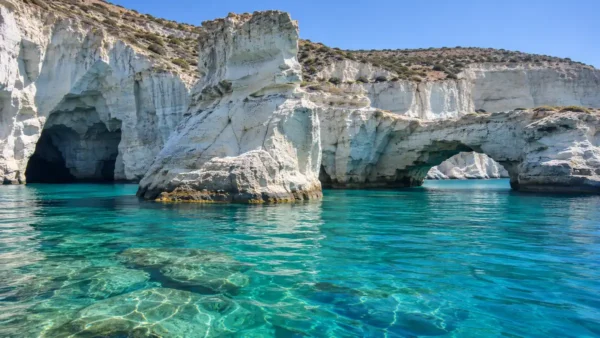
Swimming among the volcanic coves and pale rock formations of Milos is the most unusual sea day in the Aegean. Our guide to things to do in Milos covers the coastline. In the Ionian, a boat view of Navagio and sea turtles off the coast define things to do in Zakynthos.
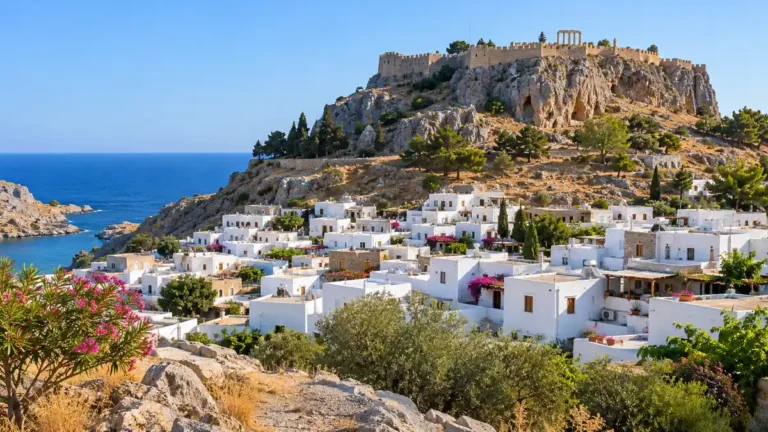
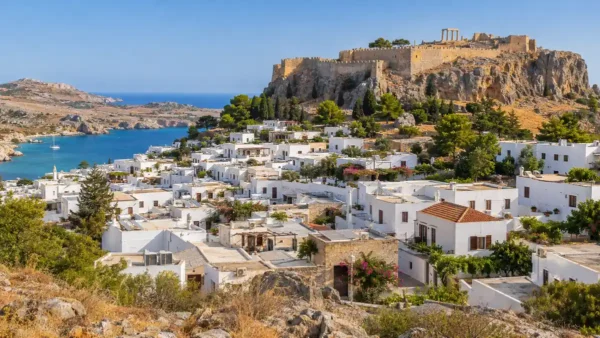
Rhodes pairs sea with history. Walking the medieval Old Town and climbing to the acropolis of Lindos above its bay make it the island for travelers who want both; see things to do in Rhodes. For a greener coast with a Venetian flavour, the Ionian Islands offer a softer, wooded version of the Greek sea.
Meteora and Samaria Gorge Are Greece’s Two Best Active Days
Meteora and the Samaria Gorge are the two mountain experiences most travelers can realistically fit into a Greece trip. Each deserves a full day. Meteora works for almost anyone, while Samaria suits fit walkers who are in Crete during the season when the gorge is open.
Both reward effort in a way the coast cannot. They also sit far apart, on the mainland and on Crete. Few trips do both.
Is Meteora worth visiting?
Meteora is worth visiting for nearly every traveler, including those with no interest in religious history. Its six active monasteries sit on top of rock pillars, and the landscape alone justifies the trip. The monasteries keep different weekly closing days, and all six are open on weekends.
- Day trip from Athens: suits travelers short on time who want to see Meteora at all. The cost is a long day on the road and time for only a couple of monasteries.
- Overnight in Kalambaka: the better choice for anyone who can spare the night. It adds an extra hotel move, repaid with evening and morning light and time to see more than two monasteries.
The overnight wins. An evening in Kalambaka turns Meteora from a coach-tour stop into two visits: the monasteries by day and the rock pillars in empty evening light. On a weekday, check which monastery is closed before planning the route.
Hiking Samaria Gorge: Who Should Do It
Samaria Gorge suits fit walkers who are comfortable with a long, mostly downhill day on rough ground. It sits inside a national park that opens seasonally, from late spring to autumn, and it can close for weather. Helmets are provided at the entrances.
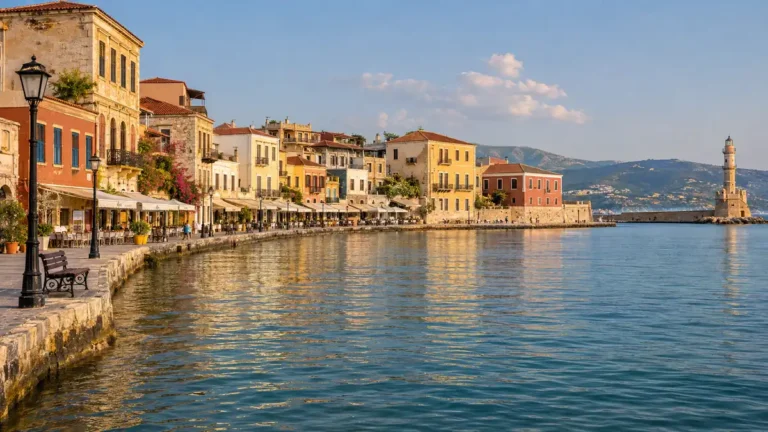
The descent is hard on the knees. It is a full-day commitment, and a poor fit for young children or anyone with joint trouble. For fit walkers, it is the most dramatic day hike on the island. Bases, transfers and the Old Town harbour evening after the walk are covered in our guide to what to do in Chania, and the wider island in things to do in Crete.
Travelers who want more mountain time can look at the Zagori villages and gorges in the north or Mount Olympus itself.
Greek Food Is an Experience, Not a Side Note
Eating in Greece is one of the trip’s defining experiences when done the local way. That means a long seaside taverna lunch, a morning market, a cooking class, or an assyrtiko tasting on Santorini. The right version comes down to whether the traveler wants to eat, to learn, or to taste.
- Taverna night or long lunch: fits every traveler and asks nothing beyond time; the meal is slow by design.
- Cooking class: suits travelers who want to take a skill home. It fills a half day that could go to a site or a beach.
- Wine tasting: for wine lovers, especially on Santorini, where assyrtiko grows in volcanic soil. Tastings cluster in the busiest island.
- Market morning: rewards curious eaters on a city stay. It is noisy, crowded and best early.
The best Greek food experience on most trips costs nothing to book: a long harbour-taverna lunch, ordered to share, at the late hour Greeks themselves eat. Coffee culture belongs here too. An iced coffee nursed for an hour in a square is a local habit worth adopting.
Athens is the easiest place to combine a market morning with a food walk; see things to do in Athens for the central market and neighbourhood food routes. For vineyard tastings on the caldera, see the Santorini experiences guide.
Festivals and Unique Experiences Worth Building a Trip Around
Greece’s living traditions are the experiences that set it apart from a sites-and-beaches trip. The strongest are Orthodox Easter in Corfu, a summer village panigiri, the Delos ruins by boat from Mykonos, and a harbour evening under the Mykonos windmills. Culture-first travelers should plan around them; for everyone else they are optional.
Orthodox Easter is the most important celebration of the Greek year. Corfu is known for marking it with processions and music across its old town. The date moves each year. Orthodox Easter often falls on a different Sunday from Western Easter, so check the Orthodox date before assuming a spring trip lines up. Our guide to things to do in Corfu covers the island, and the wider Ionian Islands guide covers its neighbours.
Panigiria are village feast days held for a saint, with food, music and dancing into the night. They cluster in summer. Finding one is often a matter of asking locally. When it works, it is the most memorable evening of a trip.
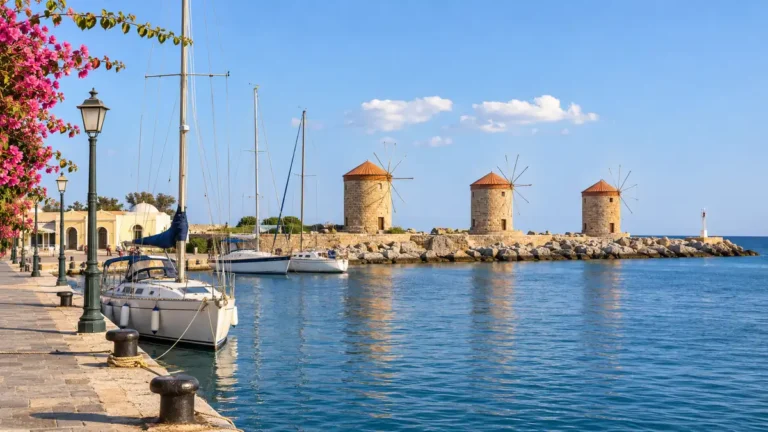
Mykonos is the island to do differently. The version that suits most travelers is a morning boat to the ruins of Delos and an evening walk around the old harbour and the windmills. Three ways to use it:
- Party Mykonos: suits travelers who came for the beach clubs and nightlife. This is the island’s most expensive, crowded version.
- Delos plus the old town: the version for history and culture travelers. One full day is enough.
- Skip it: the call for travelers who want quiet islands. You miss Delos, one of the finest ancient sites in the Aegean.
Delos, harbour evenings and the rest of the island are covered in things to do in Mykonos.
How to Pick Your Greece Experiences by Traveler Type
Choose Greek experiences by traveler type, not by fame. History-first travelers build around Athens, one ancient site and one island. Island-first travelers take the caldera and a ferry hop and skip most sites. Active travelers add Meteora or Samaria, and food-first travelers choose Crete or Athens over the photo islands.
History-first travelers build the trip around the Acropolis and its museum, then add Delphi, Knossos or the Peloponnese sites. One island at the end gives them rest. They can skip a second or third island that would cost a site day.
Island-first travelers weight the caldera, a two-island ferry hop and long sea days. The Acropolis still earns a morning. Most other ancient sites can go, since they will feel like obligations.
Active travelers add Meteora with an overnight, or Samaria when they are in Crete in season. The one to drop is the boat-day sampler, which trades walking for sitting.
Food-first travelers lean on Crete and Athens, where markets, tavernas and cooking classes are densest. They lose little by passing on the famous photo islands, where the view costs more than the food is worth.
| Experience | Worth it for | Skip if |
|---|---|---|
| Acropolis and museum | Every first-time visitor, ideally at opening time | You will not book tickets ahead or face crowds |
| Santorini caldera walk | Fit walkers who want the view without crowds | You only have a cruise stop at midday |
| Two-island ferry hop | Island-first travelers with a week or more | Your trip is too short to lose a travel day |
| Meteora overnight | Almost anyone, especially landscape and photography lovers | You cannot spare a night on the mainland |
| Samaria Gorge hike | Fit walkers in Crete during the open season | You have knee trouble or small children |
| Delos from Mykonos | Culture travelers doing Mykonos the quiet way | You came to Mykonos only for nightlife |
The skip list matters as much as the do list. The island-first traveler who drops Olympia gains a whole sea day. Once the experiences are chosen, match them to bases with our guide to the best places in Greece, then put them in order with the Greece itinerary.
The Logistics That Change the Visit
Advance tickets, seasonal opening, weekday closures and summer heat decide whether these experiences work on the day. Acropolis tickets are worth booking ahead, the Samaria Gorge opens only in season, the Meteora monasteries keep different weekly closing days, and ancient sites in summer are for early morning. Each one can cost a day.
- Acropolis: book tickets ahead through the Ministry of Culture’s official ticket site. Ticket detail is in things to do in Athens.
- Samaria Gorge: the national park opens in late spring and closes in autumn, and can close for weather. Helmets are provided at the entrances. Practicalities are in what to do in Chania.
- Meteora: the six active monasteries keep different weekly closing days, and all six are open on weekends. Check before a weekday visit.
- Midday heat: in summer, go to ancient sites at opening or in the late afternoon. Most offer little shade.
Which season suits hiking and ancient sites in Greece?
Spring and autumn suit ancient sites and hiking best, when the heat is lower and the crowds thinner. High summer belongs to sea days and swimming, with site visits pushed to opening time. The Samaria Gorge opens only from late spring to autumn, and Orthodox Easter moves each year, so check both before fixing dates.
Questions the Sections Leave Open
Should you choose Meteora or Delphi if you only have time for one?
Choose Meteora for spectacle and for travelers with little interest in ancient history; the monasteries on their rock pillars impress almost anyone. Choose Delphi if history comes first or your route already crosses the central mainland. Delphi rewards some background reading, while Meteora works on the landscape alone.
Can you combine Athens and the islands in one trip?
Yes, and it is the standard shape of a first Greece trip. Athens covers the Acropolis, its museum and the food scene, while the islands cover the sea days and island evenings. The main tradeoff is travel time between them, so fewer islands usually works better. The Greece itinerary shows how to order and pace the combination.
Who Vetted These Verdicts
This page weighs which experiences in Greece are worth doing, who each one suits and which version to book; it does not choose between islands or regions, lay out a day-by-day itinerary, or rank places to visit.
The keep-or-skip calls on this page were written with AI assistance and then weighed by Alex Perrut, working in tourism since 2015, for the Tripstou editorial team; the steps in between are on our editorial process page.
Official sources consulted: Visit Greece, Greek Ministry of Tourism.
Did this guide save you time or money? Tripstou is independent and reader-funded — if you'd like to give something back, you can support the site with a crypto contribution of any size.