Corsica is worth the trip for travelers who want mountains and sea on one island. A first visit works best built around a rental car, one base in each half of the island you plan to see (north and south) and a June or September window. A week shows one half of Corsica well; the whole island needs closer to two weeks.
Corsica is French, so the euro and French rules apply, and travel to Corsica means either a short flight or a ferry crossing from mainland France or Italy. Most long-haul visitors connect through a mainland hub and pick up a car on arrival. This guide walks the plan in the order you decide it: what the island is like, where things are, how to get there and around, where to sleep, how long to stay, when to go and how to hike.
In This Guide
Corsica Is a Mountain in the Sea, Not Just a Beach Island
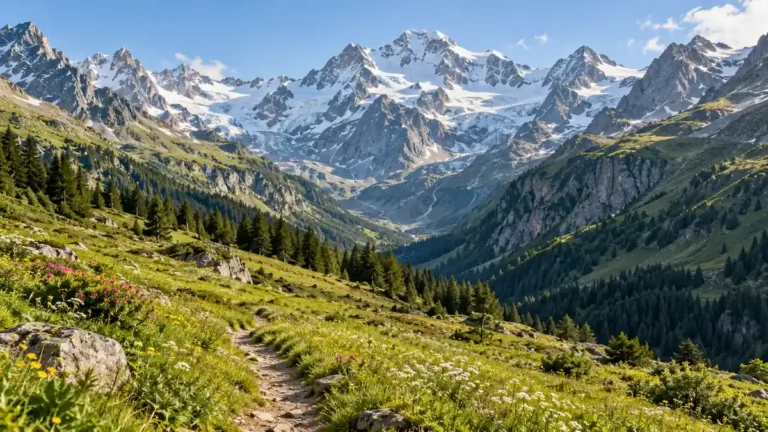
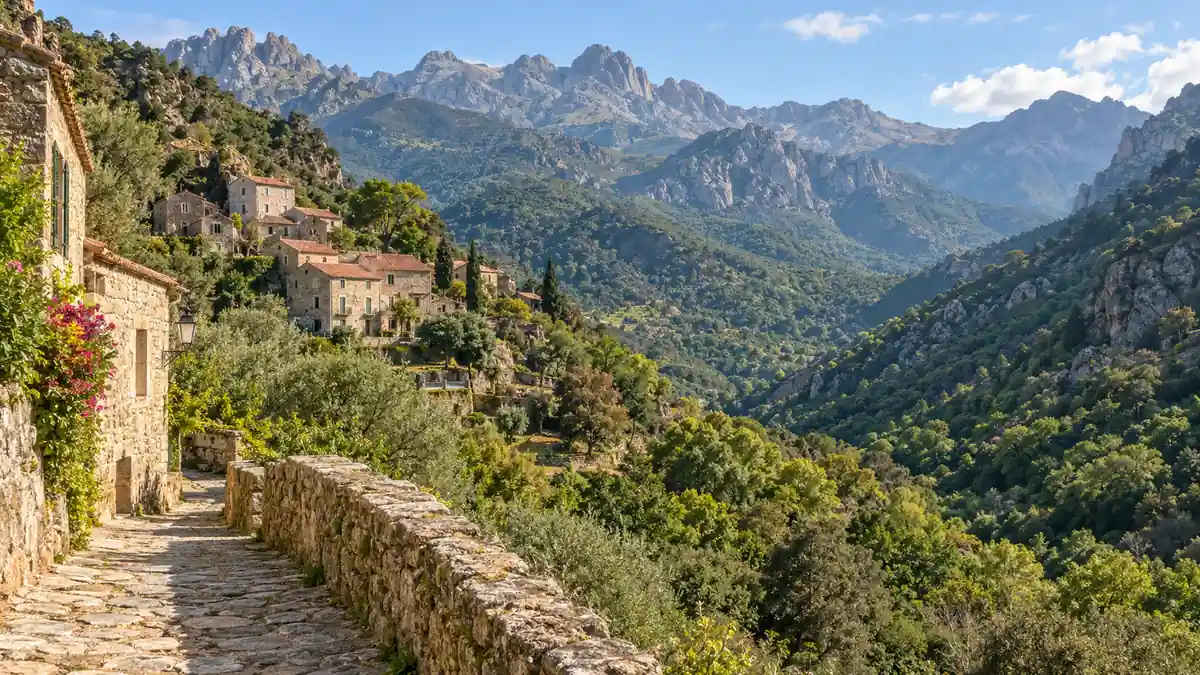
Corsica is a French island with a mountain spine running down its middle and coast on every side. It rewards anyone who wants beaches and serious mountains in the same trip and is happy to spend part of each day behind the wheel.
The island divides roughly into a north and a south. The north holds Bastia, Cap Corse, the Balagne and the dramatic west coast around Porto; the south holds Ajaccio’s gulf, Porto-Vecchio, Bonifacio and the Bavella massif. Between them sit the high interior and the old capital, Corte.
Corsica runs on the euro and French rules, yet it does not feel like the mainland. The culture leans Italian, and the island has its own language, Corsican, spoken alongside French. The food follows the same line: cured charcuterie, brocciu (a fresh cheese at the heart of Corsican cooking) and chestnut, which turns up as flour in breads and cakes. Our French food guide shows how this fits into the wider French table.
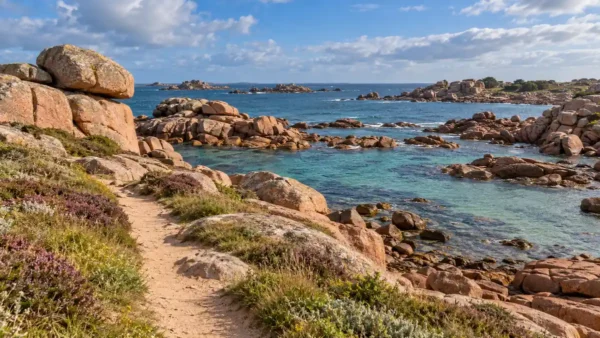
The island frustrates two kinds of traveler. Anyone who will not drive finds most of it out of reach, and anyone expecting quick hops between sights finds the roads slow. For rugged shoreline on the mainland, Brittany, France’s other wild coast, is the natural comparison.
Corsica works as a standalone holiday or as the island end of a longer mainland journey. If you are planning a wider trip to France, treat Corsica as its own block of several days, not a side trip. It holds its own against France’s best places to visit because no other French region puts this much mountain this close to this much sea.
Corsica’s Main Areas and What Each One Is For
Corsica splits into five travel areas, each with a different job: the north and Cap Corse for a port town and a wild peninsula, the Balagne for beach towns with hill villages behind, the west coast around Porto and Ajaccio for red cliffs and the island’s main town, the mountain interior for walking and villages, and the south for the island’s best-known beaches and Bonifacio.
Bastia, Cap Corse and the Agriates
Bastia is a working port city, the island’s main ferry gateway and home to one of its two largest airports. It makes a practical first or last night more than a holiday base. North of it, Cap Corse is a narrow peninsula of fishing harbours and old watchtowers, with a coast road that winds around the tip.
West of the cape, Saint-Florent sits on its gulf at the edge of the Agriates, an empty stretch of scrub and coves best reached by sea or on foot. That coast is easiest to see from the water: from Saint-Florent you can reserve a boat seat along the Cap Corse and Agriates shoreline.
Inland from Saint-Florent, the Patrimonio vineyards produce some of the island’s best-known wines, a small entry among France’s wine regions. Saint-Florent is the calmer base here if you want the north without a city.
The Balagne: Calvi and L’Île-Rousse
The Balagne pairs a beach town in the morning with a hill village by late afternoon, and it has an airport close by. Calvi, with its citadel above the bay, has the area’s airport; L’Île-Rousse has a ferry port and a compact old centre. Behind both, a ring of hill villages looks down over the coast. The railway’s Balagne branch also ends here, which makes it one of the few coastal areas reachable without a car.
The West Coast: Gulf of Porto and Ajaccio
The west coast holds Corsica’s most dramatic scenery. The Gulf of Porto is UNESCO-listed and takes in the red granite Calanche of Piana, the village of Girolata, which no road reaches, and the Scandola nature reserve on its northern shore.
Scandola and Girolata are seen from the water, and boats leave from the small harbours around the gulf. You can book a gulf cruise that takes in the Calanche and the reserve; the road above the Calanche is spectacular in its own right, and narrow.
Ajaccio, further south, is the island’s largest town and Napoleon’s birthplace, with an old quarter, a busy harbour and the Sanguinaires Islands lying off Parata point at the end of its gulf. It has one of the two largest airports and a ferry port, so it works as a first base for anyone flying in. The Ajaccio wine area sits on the hills behind the town.
Pick the west coast if scenery comes first and beaches second. For what to actually do between Porto and Ajaccio, see our guide to things to do in Corsica.
Corte and the Mountain Interior
Corte, the old capital, is the inland hub: a hill town under a citadel, on the railway line, with river valleys and walking country on its doorstep. The interior around it is a world of stone villages, chestnut woods and gorges, and it suits hikers and anyone who wants Corsica without a beach towel. Near Bocognano, the Richiusa canyon is a known canyoning spot. The quieter villages are covered in Corsica’s hidden gems.
The South: Porto-Vecchio, Bonifacio and Bavella
The south is where most first-time visitors spend the bulk of their beach days. Porto-Vecchio is the base for a coast of pale sand and clear water, and Figari airport sits between it and Bonifacio. The beach coasts here, along with those of the Balagne and the Agriates, feature in our look at the best beaches in France.
Bonifacio is the southern tip: an old town built on top of white limestone cliffs, with sea caves cut into the rock below. The cliffs and caves are best seen from the water, and you can book a harbour boat trip from the port below the town.
Offshore, the Lavezzi Islands form a protected archipelago of granite boulders and shallow coves between Corsica and Sardinia. A boat day from Bonifacio to the Lavezzi, with time to swim and snorkel, is one of the classic outings in the south. Inland, the Bavella needles rise as jagged rock towers above pine forest, a mountain detour from the beach coast.
The south asks for the least driving between beach, town and mountain, which is why it carries most one-base first trips.
Tours and activities
Book skip-the-line tickets, day trips and local tours with free cancellation on most activities.
You can also browse everything on getyourguide.com.
Tripstou may earn a commission if you book through this link, at no extra cost to you.
How to Get to Corsica: Fly In or Take the Ferry
Most long-haul travelers fly into one of Corsica’s four airports, connecting through mainland France or another European hub, and rent a car on arrival. The ferry makes sense when you bring your own car from the mainland or Italy.
Which airport to fly into
Pick the airport by where you plan to base:
- Ajaccio, one of the two largest, for the west coast and the Gulf of Ajaccio.
- Bastia, the other large airport, for Cap Corse, Saint-Florent and the north-east.
- Calvi, for the Balagne.
- Figari, for Porto-Vecchio, Bonifacio and the south.
Flying into one airport and out of another saves a day of backtracking on a whole-island trip, provided the car hire allows a one-way return. Check the entry rules that apply to your passport before booking.
Ferries from mainland France and Italy
Ferries reach Corsica from Marseille, Toulon, Nice and Italy, and the crossing gets shorter the further east you sail from.
| Departure | Operator(s) | Crossing | Makes sense if… |
|---|---|---|---|
| Marseille | Corsica Linea, La Méridionale | Longest, largely overnight | You want to sleep on board and arrive with a full day ahead |
| Toulon | Corsica Ferries | Shorter than Marseille | You drive in from western Provence |
| Nice | Corsica Ferries | Shorter than Marseille | You come by car from the Riviera |
| Italian ports | Corsica Ferries | Shortest | Corsica is part of an Italy road trip |
On the Corsican side, ferries arrive at Bastia, Ajaccio, L’Île-Rousse, Porto-Vecchio and Propriano. Choose the Corsican port nearest your first base, because a poorly chosen landing can cost you most of a day on mountain roads. Travelers without a car can reach Marseille or Nice by rail first; our France train itinerary shows how the mainland leg works.
Do You Need a Car in Corsica?
Yes, for almost every trip. Public transport is limited outside the Bastia–Corte–Ajaccio corridor, and the island’s best coast and mountain areas are reached by road.
Three ways to get around, and who each one fits:
- Rental car. The default for nearly everyone, and the only option that reaches the Calanche, Bavella, Cap Corse and most beaches on your own schedule. It asks for concentration: the roads are narrow and winding, and you will drive most days.
- The CFC train. Two lines meet at Ponte Leccia: one runs Bastia–Ajaccio via Corte, the other branches off to L’Île-Rousse and Calvi, so Bastia to Calvi means changing at Ponte Leccia. The ride is slow and scenic, seats cannot be reserved, and service is reduced outside summer. It suits a car-free traveler linking Bastia, Corte, Ajaccio and the Balagne, and nobody heading south.
- Buses. Limited and mostly tied to the same corridor. Workable for a town-to-town transfer, not for exploring.
Distances in Corsica are measured in hours, not kilometres. Mountain roads are slow, a short-looking line on the map can take far longer than expected, and the best scenery sits on the narrowest stretches. Plan roughly 2 to 2.5 hours of driving a day at most, so the day still has room for the place you drove to.
Rent a small car: it is easier on hairpins and in village streets. Book early for summer, when cars run short. Fill up before heading inland, where fuel stations are sparse. If Corsica is one leg of a longer drive, our France road trip guide covers the mainland side.
A car-free Corsica trip works only if you accept the rail corridor as your itinerary, which leaves out the whole south.
North or South: Where to Base Yourself in Corsica
With one week, base in one half of the island. To see both north and south, split the trip between two bases instead of moving every night.
One base means less driving and a deeper look at a single half. It suits families, beach-first trips and anyone who wants to unpack once; the south around Porto-Vecchio or Bonifacio is the usual choice, with the Balagne the northern equivalent.
Two bases are for the whole island in one trip. A north base in the Bastia, Saint-Florent, Calvi or L’Île-Rousse area pairs with a south base around Porto-Vecchio or Bonifacio. The cost is one long transfer day between them, and that day is best spent crossing the mountains, not rushing along the coast.
Two places break the north/south split. Corte is the interior base for hikers, central enough to reach both coasts for a day. Ajaccio works as a west-coast base that pairs naturally with a flight.
The strongest first-trip shape: fly in, pick up a car, sleep in two bases and loop through the mountains between them. Routed that way, the transfer day becomes one of the best days of the trip.
Hotels and places to stay
Compare hotels, apartments and stays for your dates in one search.
Search hotels and stays on hotels.com →
Tripstou may earn a commission if you book through this link, at no extra cost to you.
How Many Days in Corsica Is Enough?
One week is enough for one half of Corsica, or for a quick two-base taste of both. Ten to 14 days covers the island’s highlights, and two to three weeks allows an unhurried loop.
| Trip length | What it covers | Bases | Who it suits |
|---|---|---|---|
| 4–5 days | One area in depth | One | A long weekend from the mainland |
| One week | One half of the island, or both at speed | One, or two fast | First-timers who want beaches plus a mountain day |
| 10–14 days | The highlights, north and south | Two | Anyone seeing the whole island once |
| 2–3 weeks | A full loop, interior included | Several | Slow travelers and hikers |
Because driving time shapes the plan, each extra day on Corsica removes a long drive as much as it adds a place.
Corsica also works as the last leg of a mainland trip. A 7-day France itinerary leaves no room for the island, so add Corsica on top of it. A plan built around 10 days in France can end with a short stay in one Corsican area, and two weeks in France leaves room for a proper week on the island. For other shapes, browse our France itinerary ideas.
June and September Beat August in Corsica
June and September give warm sea and fewer people. August is the hottest and busiest month, and it needs early booking of cars and places to stay.
Spring and autumn suit hiking and the interior, when the heat is manageable. The GR20 refuges operate from late spring to early autumn, so long-distance walkers plan around that window.
Winter is quiet. Train service is reduced and many seasonal businesses close, so it suits a slow town-based visit, not a beach trip. For how Corsica’s seasons sit against the rest of the country, see the best time to visit France.
If you can pick only one month, take September: the sea has had all summer to warm, and the August crowds have gone home.
Hiking in Corsica, From Coastal Paths to the GR20
Corsica’s walking runs from easy coastal and village paths to the GR20, a demanding north–south trail from Calenzana to Conca on which every overnight stay, bivouac included, must be booked online in advance.
Most visitors walk the gentler end. Coastal paths run along Cap Corse, the Agriates and the shoreline around Bonifacio, and the Balagne villages are linked by old tracks. For mountain day walks, the valleys around Corte and the Bavella massif give big scenery without an overnight.
The GR20 is a different undertaking. The topoguide plans it at around 16 days. Booking is mandatory for refuges and for bivouac alike, and it is done online only. Bivouac is allowed only in designated zones, and wild camping is banned. Booking opens in winter.
The trail is steep, rocky and exposed in places, and it is no first long-distance hike. Arrive fit, with broken-in boots and kit for cold nights as well as hot days; our France packing list covers the basics to build on.
The GR20 booking rule changes the trip’s logic: on Corsica, the hike is planned in winter around refuge places, and the flights and car come after.
Corsica Planning at a Glance
- Long-haul travelers usually fly into Ajaccio, Bastia, Calvi or Figari and rent a car there, while the ferry earns its place when you bring your own car from mainland France or Italy.
- A rental car is the default on Corsica, because the CFC train links Bastia, Corte, Ajaccio and the Balagne but never reaches the south.
- Corsican distances are counted in hours, so a sensible day holds roughly 2 to 2.5 hours of driving at most.
- One week covers one half of the island from a single base, while the whole island needs 10 to 14 days split between a north base and a south base.
- June and September give warm sea without the August crowds, and September is the pick when you can choose only one month.
- A GR20 trek is planned in winter around refuge or bivouac bookings, which are mandatory and made online, before flights or a car.
Quick Questions About Corsica
Is Corsica expensive?
Corsica is at its most expensive in July and August, when demand for cars and rooms peaks, so the same trip costs less in June or September. A rental car is a fixed cost of almost every itinerary, and self-catering in an apartment or village house softens the daily spend. For budget figures, see what a France trip costs.
Is Corsica safe for travelers?
Yes, Corsica is generally safe for visitors, and the risk most travelers actually meet is the road: narrow, winding and shared with oncoming traffic on blind bends. Drive slowly and avoid long stretches after dark. For the wider picture, read up on common scams in France and our guide to solo female travel in France.
Do people speak English in Corsica?
In coastal towns and tourist businesses, usually yes; inland and in small villages, much less. French is the everyday language, and Corsican is spoken alongside it. A few French phrases for greetings, ordering and asking directions make village stops easier.
Sources and Review
This page lays out an island-wide plan for a first Corsica trip: how to arrive, whether to drive, where to base yourself, how long to stay and when to go. It is not a things-to-do list, a beach ranking, a day-by-day itinerary, a hotel guide or a budget breakdown.
Written with AI assistance, this Corsica plan was then read through by Alex Perrut, working in tourism since 2015, for the Tripstou editorial team. How that review works is set out in our editorial process.
Official sources consulted: French Hiking Federation (FFRandonnée).
Where to Go Next
- Things to do in Corsica: boat trips, villages, canyons and what to see area by area.
- Hidden gems in Corsica: quieter villages and coves beyond the main stops.
- Best beaches in France: where Corsica’s beach coasts sit among the country’s best.
- Best places to visit in France: to weigh Corsica against the rest of the country.
- France travel guide: the planning hub for a wider trip.
Did this guide save you time or money? Tripstou is independent and reader-funded — if you'd like to give something back, you can support the site with a crypto contribution of any size.