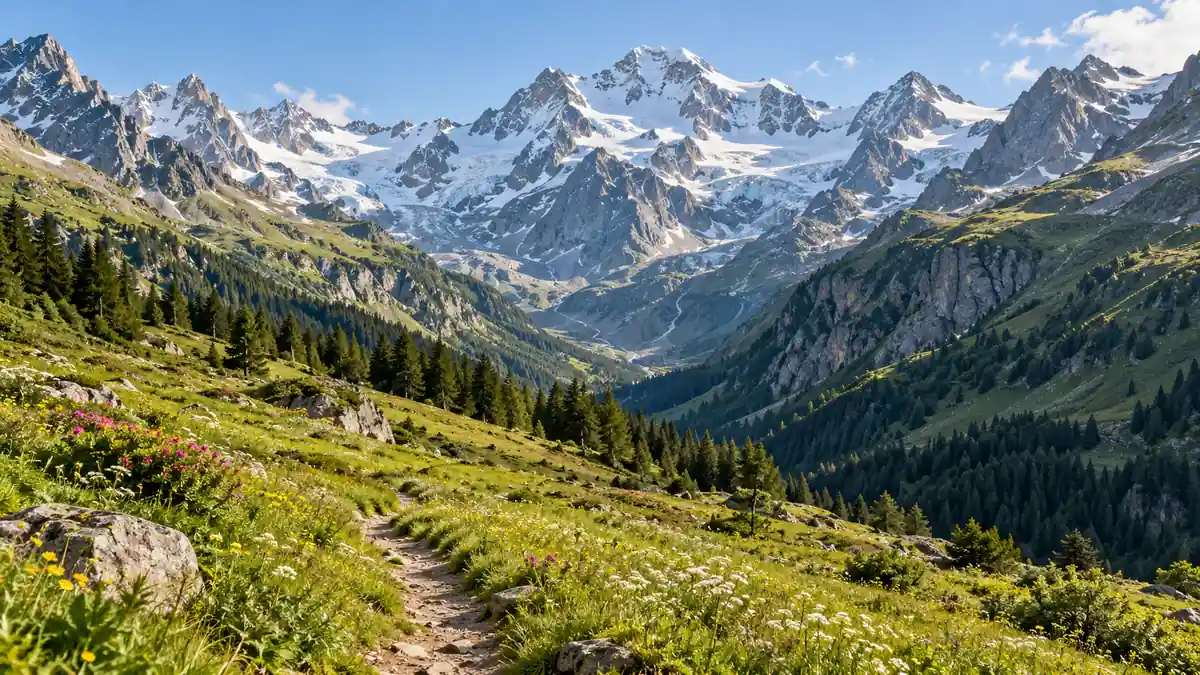
Travel to the French Alps is worth it for two different trips: high-mountain scenery around Mont Blanc and lake towns in summer, and skiing in winter. The season decides which trip you are taking, so the region works for non-skiers as well as skiers. For a first visit, plan about a week in summer, fly into Geneva, and split the stay between Annecy and Chamonix.
The French Alps run from the shores of Lake Geneva south toward Provence. Most first trips stay in the north, the departments of Savoie and Haute-Savoie that the region markets together as Savoie Mont Blanc. The southern Alps are quieter and depend on a car.
On This Page
Are the French Alps Worth Visiting, and for Whom?
Yes, the French Alps are worth visiting if you want big mountain views without climbing anything, lake towns to swim and stroll in during summer, or a ski week in winter. Cable cars do the hard work here: you can stand face to face with glaciers and still be back in a valley café by lunch. The region suits a beach-first trip less well, and it disappoints travelers who want museums and city culture every day.
The Alps are strongest at scenery you can reach easily. Valley walks, lakeside paths and high lifts give a non-climber the views that once took a full day of hiking. That access is the reason to come.
Non-skiers are not second-class visitors. Summer is arguably the better season for a first trip, because the lifts, trails and lakes all open together and nothing on the plan depends on snow conditions.
Skip the Alps, or keep them to a few days, if the trip is mainly about beaches, food cities or nightlife, or if you are travelling on a tight budget in peak ski season. In those cases one of the best places to visit in France elsewhere will give you more for your time.
Solo travelers find the valley towns easy and well-trodden. The general advice on solo female travel safety in France applies here as anywhere, with one mountain habit added: tell someone your route before a hike.
Where to Go in the French Alps, Area by Area
The northern pair of Chamonix–Mont Blanc and Lake Annecy is where most first trips should go: one gives you the high mountains, the other the lake. The Savoie resorts are a winter trip first. Grenoble and Chambéry are the cheaper city bases, and the southern Alps around Briançon suit a second visit or a driving trip.
| Area | Natural base | Best season | Anchor experience | Suits | Car needed? |
|---|---|---|---|---|---|
| Chamonix–Mont Blanc | Chamonix | Summer and winter | Aiguille du Midi cable car | High-mountain views, hikers | No |
| Lake Annecy | Annecy | Summer | Old town and lake swimming | Slower trips, couples, families | No |
| Savoie ski heartland | A single resort | Winter | Ski week | Skiers who stay put | Helpful |
| Grenoble and Chambéry | Grenoble or Chambéry | Year-round | City life with mountains close by | Budget and rail travelers | No |
| Briançon and the Southern Alps | Briançon | Summer | Fortified town and Écrins valleys | Drivers, repeat visitors | Yes |
Chamonix and the Mont Blanc Valley
Chamonix is the high-mountain valley built for people who do not climb. Mont Blanc fills the skyline, glaciers hang above the town, and lifts carry you into terrain that would otherwise belong to mountaineers.
The Aiguille du Midi cable car is the reason most people come. It rises from a valley station at 1,035 m to terraces at 3,842 m, which puts you among the summits of the Mont Blanc massif without a single step of climbing. Weather decides the day: a clear morning is worth rearranging the rest of the trip around. The Mer de Glace is the valley’s other famous name.
Chamonix itself is the natural base, with the whole valley within easy reach. It fits a traveler who wants the Alps at full height and is happy to plan around the forecast. For hiking, via ferrata and the rest of what the valley offers, see the guide to things to do in the French Alps.
A cloudy forecast turns the Aiguille du Midi into a wasted ride, so two or more nights in Chamonix are cheap insurance against weather, while a single day leaves you hostage to it.
Lake Annecy and the Haute-Savoie Lakes
Annecy suits the traveler who wants the Alps at a gentler pace. Its old town runs along canals, the lake is clear enough to swim in during summer, and the mountains frame the water instead of towering over you.
The town is the base, and it is easy to reach from Geneva; with only an afternoon to spare, you can book a half-day trip from the Swiss side, though a night or two shows the lake at its best.
The old town and the lake work as one visit: wander the canals, then get onto the water. Visitors short on time can reserve a walk and cruise that combines both. Évian, on the French shore of Lake Geneva, is a calmer lakeside aside for a longer stay.
The Savoie Ski Heartland
The Tarentaise valley and the Vanoise massif hold the big ski areas, and they are a winter trip first. Val Thorens and Tignes or Val d’Isère work as winter-first bases, where the resort is the whole holiday. Megève is the village-style alternative, with a centre that keeps its character off the slopes.
A ski week here means choosing one resort and staying put. Comparing resorts is a separate exercise from planning a first Alps trip, and the summer visitor can leave this area aside.
Grenoble and Chambéry
Grenoble and Chambéry are the city bases, cheaper than the resorts and lake towns and well connected by rail. Grenoble has the Bastille cable car rising from the centre to a viewpoint over the city, while Chambéry is the smaller, quieter old capital of Savoie; either suits a budget traveler who wants restaurants and evenings in town between mountain days.
Briançon and the Southern Alps
Briançon rewards the traveler who has already seen the northern Alps and wants emptier valleys. The town stands at 1,326 m and is described by the regional tourism board as the highest town in the European Union. Its Vauban fortifications are UNESCO-listed, and the walled upper town feels unlike anywhere further north.
Serre Chevalier, next door, sits at the gates of the Écrins National Park. The south is car country: the valleys spread out, and a road trip is how most people see them.
Beyond these areas, quieter valleys and villages reward a slower trip; the guide to hidden gems in the French Alps covers them.
Tours and activities
Book skip-the-line tickets, day trips and local tours with free cancellation on most activities.
You can also browse everything on getyourguide.com.
Tripstou may earn a commission if you book through this link, at no extra cost to you.
How Many Days Do You Need in the French Alps?
About a week covers the northern pair of Annecy and Chamonix well. A long weekend covers one base, and longer trips either add Grenoble, Chambéry or the south, or turn into a ski week. Distances look short on the map but run slow on mountain roads, which is why days add up faster than expected.
- Long weekend (3–4 days): one base, Chamonix for the high mountains or Annecy for the lake. It fits someone arriving through Geneva with limited time, and it means choosing one of the two.
- Around a week: Annecy and Chamonix together, with enough slack in Chamonix to wait out a cloudy day. This is the first-trip length that leaves little to regret.
- 10 days or more: add Grenoble or Chambéry for a city stretch, or drive south to Briançon and the Écrins. In winter, the same length is a full ski week in one resort plus travel days.
The Alps also slot into a wider France trip. Two or three nights in Chamonix or Annecy fit into a 7-day France itinerary only at the cost of other regions, while 10 days in France leaves room for a proper mountain leg. A two-week France itinerary can carry the full northern pair alongside Paris or Lyon.
Summer or Winter: Choosing Your Alpine Season
Summer is the better first trip for most travelers, because from roughly early summer to early autumn the high lifts, hiking trails and lake swimming all run at once. Winter is a ski trip first. The months in between are quieter and cheaper, but many lifts and mountain huts are closed.
Summer gives the widest trip. High-altitude cable cars run, valley and balcony trails are open, and Lake Annecy becomes a swimming lake. Adrenaline sports such as paragliding, canyoning and rafting fill the valleys for those who want them.
Winter turns the region into a ski destination. Resort villages fill with snow, and the trip shapes itself around the slopes; outside the snowy villages themselves, a non-skier finds less to do than in summer.
The shoulder seasons reward quiet over access. Expect a calm valley, but check which lifts are running before you build a day around one. Month-by-month detail sits in the guide to the best time to visit France.
Whatever the season, altitude changes the weather within one lift ride: a warm valley morning can mean cold wind at the top. Pack layers even in summer, as the France packing list explains.
Annecy and Chamonix Make the Best Two-Base Pair
On a first summer trip, split your stay between Annecy and Chamonix instead of day-tripping everything from one town. The two sit far enough apart that a single base wastes hours on the road, and the south or a ski resort needs a base of its own.
One base is enough on a short trip, for skiers who stay in their resort all week, and for anyone without a car who prefers to unpack once. In that case choose Chamonix for the mountains or Annecy for the lake, and accept that the other becomes a day out.
Geneva works as a base only for a rushed trip, since every mountain day starts with a transfer. Grenoble is the budget hub, with lower prices and good rail links, at the cost of sitting further from Mont Blanc.
Hotels and places to stay
Compare hotels, apartments and stays for your dates in one search.
Search hotels and stays on hotels.com →
Tripstou may earn a commission if you book through this link, at no extra cost to you.
Geneva Is the Easiest Way Into the Northern Alps
Fly into Geneva for Chamonix and Annecy: it is the usual international gateway for the northern French Alps. Lyon is the French-side alternative and the main rail hub, and from Paris the TGV runs to the Alps, usually with a change.
From Geneva, Chamonix is reached by coach transfer or by rail via Saint-Gervais, and Annecy by road. Starting in Lyon works well for rail travelers, since Lyon Part-Dieu is where many Alpine connections begin; the Lyon region guide covers the city itself.
From Paris, the rail route to Annecy or Chambéry is generally a TGV with a change, often at Lyon Part-Dieu. Time in the capital before or after is planned in the Paris region guide.
Can You Visit the French Alps Without a Car?
Yes for the main valley towns: rail and buses reach Annecy, Chambéry, Grenoble and Chamonix. A car is close to essential for high passes, side valleys and the southern Alps, where public transport thins out.
- Rail and local buses: suits the Annecy–Chamonix pair or a city base, and spares you mountain driving and parking. In the Chamonix valley the Mont-Blanc Express links Saint-Gervais-Le Fayet, Chamonix and Vallorcine. The limit is reach: side valleys and passes stay out of range. A route built around rail is laid out in France by train.
- Car: suits drivers heading south to Briançon and the Écrins or chasing passes and small valleys. The price is narrow mountain roads and, in winter, snow conditions; the France road trip covers a driving route.
- Mixed: take the train to a base, then hire a car locally for the days that need one, such as a loop into the south. Driving stays confined to the roads that justify it.
What the French Alps Cost, by Travel Style
A ski week in a big resort is the expensive way to see the French Alps. A summer trip around the lakes and valley towns sits in the middle, and bases in Grenoble or Chambéry are the cheapest. Lift tickets and resort lodging drive the bill more than anything else.
A tight budget works best from a city base: trains between towns, picnics from the market, and free valley walks and lakeside swimming. Grenoble and Chambéry make this style easy.
The comfortable middle is a summer trip split between Annecy and Chamonix, with one or two big lift days and the rest spent on foot. Eating follows the local pattern, and hearty Savoyard dishes built on mountain cheese are part of it; the French food guide covers them.
The high end means ski-in hotels and long lunches in mountain restaurants. Peak ski weeks and school holidays are when the Alps punish a budget hardest; trails and lakes are where they stay kind. The euro figures are in the France trip cost guide.
In Chamonix the big lift day is the cost to plan around, so the cheapest summer stay there saves it for one clear morning and spends the cloudy days walking the valley.
The Strongest First Trip: Annecy, Then Chamonix
In summer, fly into Geneva, start in Annecy and finish in Chamonix. The route works standalone in about a week, or as the mountain leg of a wider France trip.
The order matters. Annecy is the gentler start: canals, the lake, easy days to settle in. Chamonix then delivers the high mountains at the end, when you have the most flexibility to wait for a clear day. From Chamonix, Geneva is close for the flight home.
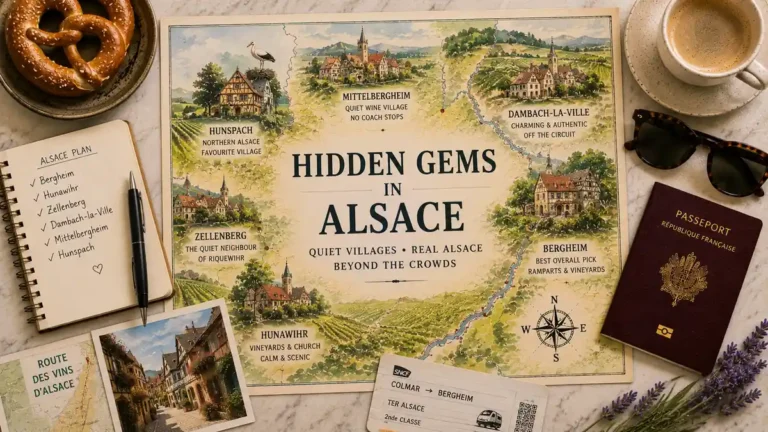
As an add-on, Lyon is the natural partner, linked by rail and close to the northern Alps. The Riviera pairs with the southern Alps by car, driving down from Briançon to the coast; the French Riviera guide covers that end. Alsace makes a longer combination for a trip with more time, and the Alsace guide shows what it adds. For fitting the Alps into a whole-country route, see the France itinerary.
The French Alps in Short
- The season decides the trip: summer brings high lifts, trails and lake swimming together, while winter turns the Alps into a ski week.
- For a first summer visit, about a week split between Annecy and Chamonix is the strongest shape, starting by the lake and finishing under Mont Blanc.
- Geneva is the practical gateway to the northern Alps, with Lyon as the French-side rail hub.
- Rail and buses reach the main valley towns, but the southern Alps, high passes and side valleys need a car.
- A ski week in a big resort is the expensive way to see the region, and Grenoble or Chambéry are the cheaper bases.
- Weather decides every high-mountain day, so leave at least two nights in Chamonix to catch one clear morning.
Sources and Review
This guide helps you plan the French Alps at a broad level: which area to pick, which season, how many days and where to stay. It is not a ski-resort ranking, an activity list, a day-by-day itinerary, a transport deep dive or a hotel guide.
Written with AI assistance, this regional plan was then gone over by Alex Perrut, working in tourism since 2015, for the Tripstou editorial team; our editorial process describes the checks.
Official sources consulted: Compagnie du Mont-Blanc, Provence-Alpes-Côte d’Azur Tourism.
Quick Questions Before You Book
Do you need to book the Aiguille du Midi in advance?
In busy periods, yes: booking online is the safer way to get the cable car on the day you want. Tickets are sold online, often released the day before, while the box office sells only what remains, and the operator advises arriving at opening. Children under three are not permitted and under-fives are not recommended; the ride is also not recommended for anyone with a severe cold or a heart condition.
Can you do Chamonix as a day trip from Geneva?
Yes, but it is a rushed day that bets everything on one forecast. Coach transfers and a rail route via Saint-Gervais make the trip possible, yet if the summits are in cloud that morning there is no second chance. Staying overnight turns the same journey into a far better trip.
Is Lake Annecy warm enough to swim?
Yes, in summer, which is the lake’s swimming season. In spring and autumn the lake suits a walk along the shore or a boat trip better than a swim, and winter is not a swimming season at all.
When is the cheapest time to visit the French Alps?
The shoulder seasons between summer and the ski season are the cheapest and quietest time to go, while peak ski weeks and school holidays cost the most. The tradeoff is access: many lifts and mountain huts close in between, so check what is running before you plan a day around it.
More France Planning
- Best places to visit in France: see how the Alps compare with France’s other regions.
- France travel guide: the national planning overview.
- Best beaches in France: if a beach leg tempts you after the mountains.
- France wine regions: pair the trip with wine country.
- Bordeaux region guide: a wine-and-Atlantic region for a longer France trip.
- Normandy guide: coast, history and cider country in the north.
- Scams in France: common tricks to know before travelling.
Did this guide save you time or money? Tripstou is independent and reader-funded — if you'd like to give something back, you can support the site with a crypto contribution of any size.