France gives you too many good options and never enough time to spend them on. Most people arrive at the planning stage already knowing they want Paris, then stall — because the country stretches from Atlantic cliffs to alpine valleys to Mediterranean coast, and every one of those makes a case for itself. The two failure modes are predictable. Some travelers never leave Paris and go home thinking France is a city. Others chase five regions, spend the trip in transit, and remember none of them.
This guide is a shortlist, not an inventory. Every place here earned its spot because it suits a specific kind of trip, and each one carries a single condition telling you when to pick it. The picks are grouped by trip style — cities, the south, village France, mountains and nature — so you can scan to the group that matches how you like to travel and ignore the rest. Match the destination to your trip, not to a feed.
Quick Answer
Paris is the best first pick in France, ideally paired with one region instead of three. The right pairing depends on trip style: big cities, the sunlit south, village-and-castle country, or mountains and islands. South-led travelers should pair Provence with the French Riviera; nature-led travelers should build the trip around the Alps or Corsica.
Trust Layer
Tripstou selection guide for travelers choosing between multiple places. Covers selection criteria, traveler fit, and trip value.
Produced with AI assistance and reviewed by Alex Perrut, working in tourism since 2015, for the Tripstou editorial team. See our editorial process for details.
Last factual review: August 4, 2026.
Official sources consulted: France.fr, Atout France.
Key Takeaways
- Paris is the strongest first pick in France, but a trip works best when it pairs the capital with one region.
- Choose the group first — cities, the south, village France, or mountains and nature — then choose the place inside it.
- The iconic picks trade solitude for certainty; the quieter regions trade travel time for space and stronger local character.
- Repeat visitors gain more by skipping Paris entirely and giving one region — Alsace, Brittany or Corsica — the whole trip.
- Corsica has to replace an existing itinerary; the Alps can slot into a plan that is already built.
Table of Contents
What Are the Best Places to Visit in France?
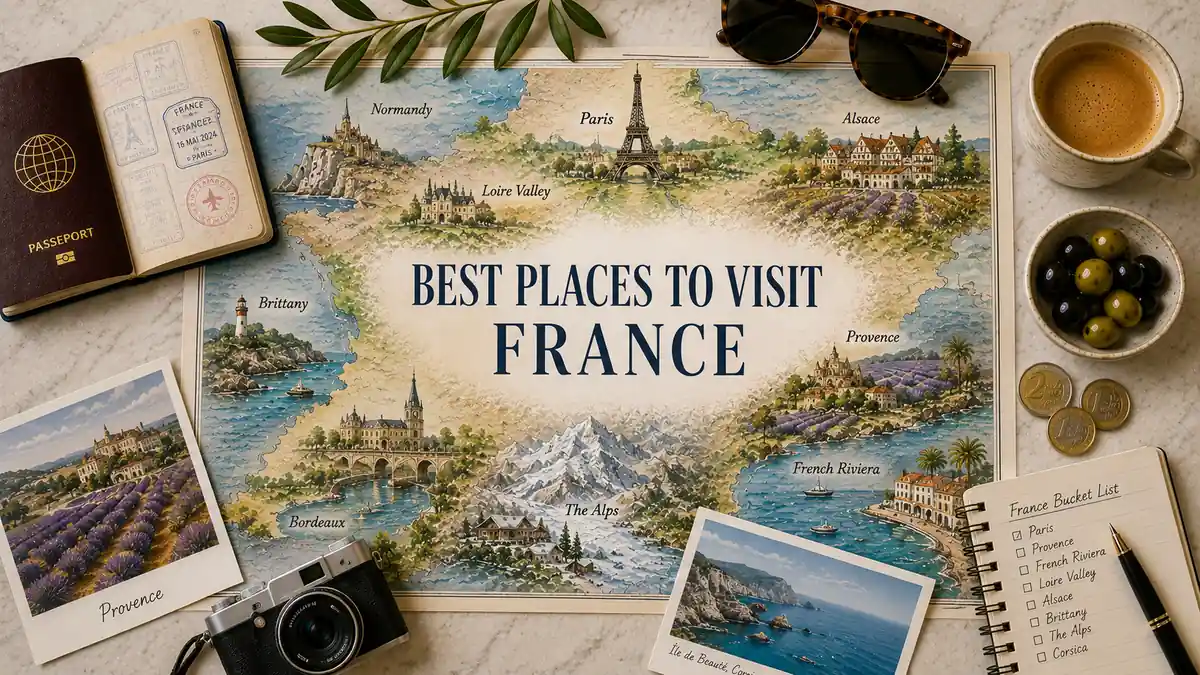
Paris is France’s best overall pick, and strong trips pair it with one region matched to your style. The thirteen places below are grouped into four trip styles — cities, the south, village France, mountains and nature — and each one is judged on who it suits, not on fame.
The list is short on purpose. Pages that stack thirty destinations hand you an inventory and leave the choosing to you. Every entry here had to pass the same test: is there a specific traveler for whom this is clearly the right answer? Places that only qualified as “also nice” did not make it, because a shortlist that includes everything solves nothing.
One tradeoff runs through the whole list. The most iconic parts of France — Paris, the Riviera, Mont-Saint-Michel, the Loire — are also the most visited, so you trade solitude for the certainty that the place delivers. The quieter picks — Brittany, Alsace, Corsica — give you space and character, and ask for more effort and more travel time in return. Neither side is better. Knowing which side you are on settles most of the shortlist before you look at a map.
| Trip style group | Picks in this group | Who it suits | Main tradeoff |
|---|---|---|---|
| Cities and urban trips | Paris, Lyon, Bordeaux, Marseille | Culture, food and nightlife travelers | Little landscape or village character |
| The south of France | Provence and the French Riviera | Sun, coastline and unhurried lunches | Popular, so quiet corners take effort |
| Villages and small towns | Loire, Alsace, Normandy, Brittany, Mont-Saint-Michel | Slow travel, châteaux and coastal towns | Slower to reach, quieter evenings |
| Mountains and nature | The French Alps and Corsica | Hiking, lakes and dramatic landscape | Works poorly as a short add-on |
Paris is the right first answer for most travelers and the wrong one for two groups: people who have already done it, and people whose ideal day involves a village market and a hillside instead of a museum queue. If that is you, skip the capital without guilt and give one region the whole trip. The list still works — you just start at a different group.
The trips people regret in France are almost never the ones with the wrong region; they are the ones with three regions and a suitcase that never fully unpacks. Paris plus one is the design that fixes it: one capital, one region, both given enough room to register.
Best Cities to Visit in France
Paris, Lyon, Bordeaux and Marseille are the four French cities worth building a trip around. Each earns its place on a different strength — capital-scale culture, food, wine-country elegance and raw Mediterranean energy — so the choice is about temperament, not ranking. Other French cities are worth visiting; these four are worth planning around.
Paris
Paris made the list because no other French city concentrates this much world-class culture, monument and neighborhood life into walkable distance. What separates it from the other three is versatility: it carries an entire trip on its own and still works as half of one. Its arrondissements behave like small towns stitched together, which is why travelers who dislike big cities often like Paris anyway. The surrounding Île-de-France adds palaces and gardens reachable from the same base, so a capital-led trip can include green days without changing hotels. Neighborhood choices, bases and priorities are resolved in the Paris guide and the Paris region guide.
Pick this if: it is your first trip to France and you want the headline sights delivered at full strength.
Lyon
Lyon is France’s gastronomic capital, and that alone earns it a place here. The food is the point. Bouchons, covered markets and a culinary culture the city treats as civic identity rather than tourism give it a reason to exist on any shortlist. What makes it distinct on this page is that it delivers a big-city trip at a manageable scale — Renaissance old town, two rivers, and a centre you cross on foot without feeling like you are commuting. It sits on the TGV network from Paris, which makes it the smoothest second city to add to a capital-led trip. Bases, districts and the wider region are covered in the Lyon guide and the Lyon region guide.
Pick this if: you organize trips around meals and want a city you can cross on foot.
Bordeaux
Bordeaux made the list as France’s most elegant mid-size city base, with wine country on its doorstep. Its centre is one long sweep of pale eighteenth-century stone along the Garonne, restored and largely pedestrian, which gives it a calmer register than Paris or Marseille. The wine is the fit reason, not the itinerary. If the presence of vineyards nearby is what sells you a city, this is the one — but the city stands up as a destination on its own, which is what separates it from a wine-tour base. It is also the natural gateway to France’s Atlantic southwest. Districts, bases and the surrounding region sit in the Bordeaux guide and the Bordeaux region guide.
Pick this if: you want a handsome, unhurried city base with vineyards in reach.
Marseille
Marseille earns its place as the Mediterranean without the polish. France’s oldest port city is loud, layered and unapologetically itself — a real working city that happens to sit on a spectacular coast. Judge it as a city break, not as Provence: the two are neighbors and nothing alike. Its case rests on the old port, the calanques cutting into its edge, a North African food culture no other French city matches, and street energy the prettier southern towns lack. It divides opinion more than anything else on this shortlist, which is exactly why it belongs on it. Districts, bases and the local coast are handled in the Marseille guide.
Pick this if: you like cities with edge and want a coastal base that is not a resort.
Best Places in the South of France
The south splits into two picks: Provence for countryside pace, the French Riviera for coast and glamour. They sit in the same corner of the country and run at completely different speeds. Choose Provence for villages, markets and slow days; choose the Riviera for sea, seafront towns and evening buzz.
Provence
Provence made the list as the strongest countryside-led destination in France. Hilltop villages, weekly markets, olive groves and the light that pulled painters here deliver the rural French postcard without feeling staged. What distinguishes it from the Riviera next door is pace: Provence is a place you settle into, with a day built around one market, one long lunch and one village. Lavender is the exception that runs on a short seasonal window, so travelers coming specifically for it should confirm bloom timing before locking dates. It rewards drivers, since the villages are scattered and the pleasure is in the wandering. Areas, bases and village clusters are covered in the Provence guide.
Pick this if: you want slow rural days and stone villages more than sea.
French Riviera (Nice)
The French Riviera earns its spot as France’s only coast-led destination with real urban weight behind it. The Côte d’Azur runs as a near-continuous string of seafront towns, delivering sea, promenades, evening life and a glamour the rest of the country does not attempt. It differs from Provence in what a day looks like: sea in the morning, town after dark, very little driving. Nice is the practical base. It is the coast’s one city with the size to give you variety without hopping between hotels, and the coast is at its most crowded in high summer, when much of France holidays here at once. Coastline detail and city-level depth live in the French Riviera guide and the Nice guide.
Pick this if: you want the sea outside the door and evenings that run late.
Travelers who try to cover Provence and the Riviera from one base usually end up commuting through their own holiday. They share a corner of the map and almost nothing else — pick the one whose daily rhythm you actually want, and treat the other as a taste.
France’s Most Beautiful Villages and Small-Town Regions
Loire Valley, Alsace, Normandy, Brittany and Mont-Saint-Michel are France’s strongest picks for village and small-town travel. They share one tradeoff: quieter and more atmospheric, but slower to reach than the headline cities. Expect châteaux, half-timbered streets, working coastline and villages that stay quiet after dark.
Loire Valley
The Loire Valley made the list for its châteaux, and nothing else in France concentrates this many grand castles and formal gardens along one river. Its central stretch is UNESCO-listed, which reflects the density of the thing as much as the beauty of any single site. What makes it distinct here is that its appeal is architectural rather than atmospheric — you come for the buildings, and the villages, vineyards and river scenery are the frame around them. It is also the easiest village-France pick to attach to a Paris-led trip, sitting directly south of the capital. Which châteaux deserve your attention and where to base are resolved in the Loire Valley guide.
Pick this if: castles and gardens are a genuine reason you are going to France.
Alsace (Strasbourg)
Alsace earns its place as the region that feels least like the rest of France. Centuries of shifting borders left it with half-timbered villages, a wine road, its own dialect and a food culture built on choucroute and tarte flambée — recognizably French, recognizably not. That cultural doubling is what separates it from every other pick on this page. Strasbourg is its main city and the natural base: cathedral, canals and a scale that stays manageable on foot. The villages along the wine road are the reason travelers extend their stay here. Bases, village routes and city depth sit in the Alsace guide and the Strasbourg guide.
Pick this if: you want a region with a culture visibly its own, not a softer version of Paris.
Normandy
Normandy made the list because the D-Day landing beaches give it a weight no other pick carries. Those WWII sites and their memorials remain the reason most travelers come, and they change the tone of a trip in a way scenery cannot. Beyond them the region runs to chalk cliffs, harbor towns, cider country and the seaside light that produced Impressionism. What sets it apart on this page is that combination of gravity and gentleness — it is the pick for people who want a destination to mean something, not just photograph well. Bases, beach sites and coastal towns are covered in the Normandy guide.
Pick this if: WWII history or working coastal towns are what pull you toward a region.
Mont-Saint-Michel
Mont-Saint-Michel is the only single site on this shortlist, and it earns the exception. The UNESCO-listed abbey island sits off the Norman-Breton border, and nothing else in France produces that silhouette. Its pull is architectural and geographic at once — a medieval abbey stacked on a rock in the middle of a bay — and it holds up in person as strongly as in photographs, which is rarer than it sounds. It is a place, not a region, which changes how you use it: it punctuates a Normandy or Brittany trip and cannot carry one alone. That is also why it is the pick most often wasted, reduced to a photo stop wedged between two other regions. Planning detail belongs in the Mont-Saint-Michel guide.
Pick this if: one extraordinary landmark is enough to bend your route toward the northwest coast.
Brittany
Brittany made the list as the wildest stretch of Atlantic France. Granite coastline, Celtic heritage, its own language and weather with moods make it the least manicured region here, and that is precisely the appeal. What separates it from Normandy next door is temperament: Normandy is history and pastoral calm, Brittany is rock, sea and a stubborn regional identity that predates France. Its coastal towns stay lived-in outside the visitor season, which anyone allergic to resort atmosphere notices within a day. Where to base along its coast and which stretches suit which travelers are covered in the Brittany guide.
Pick this if: you want raw coastline and a strong regional culture over polish.
Village France collapses when it is squeezed into a day out from Paris. These five picks reward being made the destination for a stretch of the trip, because their value is in the pace, and pace is the first thing a day trip removes.
Tours and activities
Book skip-the-line tickets, day trips and local tours with free cancellation on most activities.
You can also browse everything on getyourguide.com.
Tripstou may earn a commission if you book through this link, at no extra cost to you.
Best Places in France for Mountains, Lakes and Nature
The French Alps and Corsica are France’s two picks for a nature-first trip. Both work best as the trip itself, with landscape setting the pace and towns playing a supporting role. Choose the Alps for high mountains and lakes; choose Corsica for wild coast and mountain interior in one island.
French Alps
The French Alps made the list on vertical scale, which no other pick here offers. Mont Blanc anchors the range in France’s southeast, and glacial lakes, high valleys and mountain towns fill in around it. The landscape does the work. What distinguishes the Alps on this page is that the towns are staging posts for what sits above them, so the region suits both active travelers and people who simply want to stand in front of something enormous. Timing shapes what is possible here more than for any other pick, and the French Alps guide resolves that alongside base selection.
Pick this if: you want mountains to be the reason for the trip, not the backdrop.
Corsica
Corsica earns its place as the one destination in France that can absorb an entire trip on its own. It stacks mountains, forest and a dramatic Mediterranean coastline into a single island, with a fiercely independent culture — French administratively, Corsican in almost everything else. Its defining tradeoff is commitment: reaching it is a real decision, and the island refuses to work as a side trip appended to a mainland route. That is also its protection. Corsica stays less trampled than the mainland coast because casual visitors do not make the effort. Coast, interior and regional splits are covered in the Corsica guide.
Pick this if: you want one island to be the whole trip and treat remoteness as a feature.
Corsica is the pick on this page that punishes being added to an existing plan, while the Alps tolerate it. If your France itinerary is already built, the mountains can join it; the island needs to replace it.
Which Part of France Should You Visit First?
First-time visitors to France should pick Paris plus one region, not three. The right partner depends on whether the trip leans city, coast or countryside. Repeat visitors gain more by dropping Paris entirely and giving one region the whole trip. That single decision shapes everything else in the plan.
First trip: Paris plus one region
Choose the partner region by what you want your non-city days to feel like. City-led first-timers who want a second urban hit take Lyon or Bordeaux. Coast-led first-timers take the south, where Provence and the Riviera function as one area for this purpose. Countryside-led first-timers take the Loire Valley or Normandy, both of which sit naturally alongside a capital-led trip.
- Paris + Provence or the Riviera — sun, villages and coastline after the capital, for travelers who want a complete change of register.
- Paris + Loire Valley — châteaux and river countryside, the closest thing to postcard France without leaving the capital’s orbit.
- Paris + Normandy — WWII history and working coastal towns, for travelers who want their trip to carry some weight.
- Paris + Lyon — two cities, food-led, for travelers with no interest in countryside.
The pairing that fails is the one chosen because it looked convenient on a map. Pick the partner region from what you want your afternoons to feel like, and the logistics will arrange themselves around a decision worth making.
Second trip: skip Paris, go regional
Repeat visitors should drop Paris and give one region the entire trip. Paris rewards return visits, but it competes with the regions for the same trip, and a second visit gains more from depth in a place you have never seen than from another day in a city you already know. The gain is largest when the second trip changes the kind of place, not just the name.
- Alsace — the most culturally distinct region on this list, and the biggest departure from capital France.
- Brittany — the largest shift in landscape and temperament available without leaving the mainland.
- Lyon and its region — for travelers whose first trip left them wanting the food story told properly.
- Corsica — for travelers ready to give one island every day they have.
The reasoning here is fit, not obscurity. These are mainstream, well-served regions that simply lose out to Paris on a first visit, and they are the strongest use of a second one.
Second France trips underperform when travelers pick the region that pairs best with Paris. Those pairings exist to complement the capital; without it in the plan, they deliver less than a region chosen to stand alone.
Frequently Asked Questions
What is the most beautiful region of France?
Provence is the usual answer, and it earns it — hilltop villages, olive groves and the light painters chased. The strongest alternative is Alsace, whose half-timbered villages and vineyard slopes look like nowhere else in France. Beauty here is a matter of temperament: soft and sunlit, or storybook and green.
What is the difference between Provence and the French Riviera?
Provence is the inland countryside; the French Riviera is the coastal strip in front of it. Both sit in France’s southeast, which is why the names get used interchangeably. The distinction that matters is the terrain: Provence is hills, villages and vineyards, while the Riviera is seafront towns packed along one shoreline.
What is the most visited area in France?
Paris and the surrounding Île-de-France draw more visitors than anywhere else in France. The southern coast is the other magnet, filling up in summer when much of the country holidays there at once. Popularity is worth knowing, but it should not decide your pick — it signals reliability, not fit.
Which part of France is best with kids?
Normandy and Brittany suit families best, with beaches, harbor towns and a gentler pace than the big cities. The Loire Valley works well too, since castles hold children’s attention better than museums. Paris is manageable with kids but demands more patience and queuing than a coastal or countryside base.
Where do French people go on holiday in France?
French holidaymakers head mostly for the coast: the Mediterranean south, the Atlantic southwest, and the beaches of Brittany and Normandy. The mountains take the rest, in summer as well as winter. Domestic holidays in France gravitate toward coastline and countryside, and rarely toward other cities.
Can you visit several French regions without a car?
Yes. The TGV network links Paris to the major regional cities, so a multi-region city trip works entirely by train. A car earns its place in village France: Provence, Alsace’s wine road, inland Brittany and the Loire châteaux are scattered, and public transport thins out between them.
Related Guides
Once your shortlist is set, these guides turn it into an actual trip — the planning hub, the itineraries that pace your picks, the experiences behind them, and the packing brief for a multi-region route.
- France guide — the full planning hub for the country, covering everything outside destination selection.
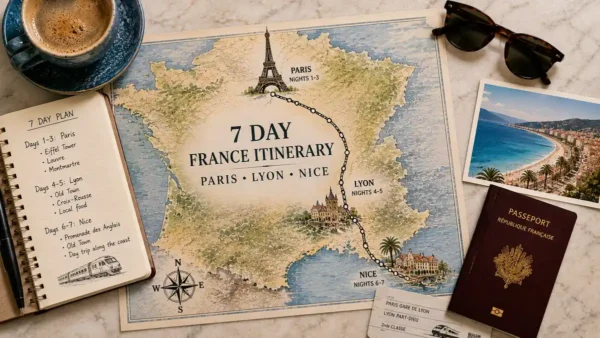
- 7-day France itinerary — how a Paris-plus-one shortlist becomes a week that works.
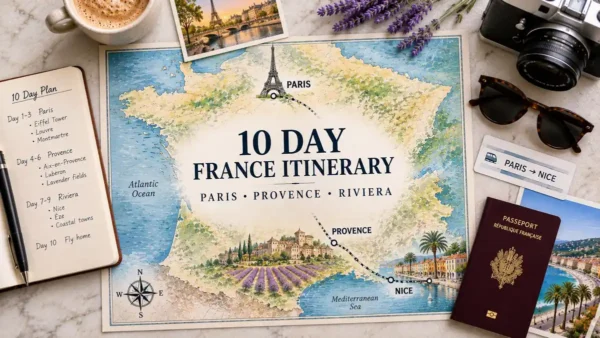
- 10-day France itinerary — pacing two regions properly instead of rushing both.
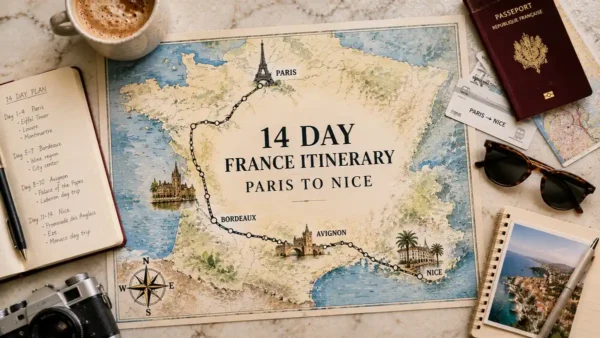
- 14-day France itinerary — combining three of these picks without living on trains.
- Things to do in France — the signature experiences behind each pick on this shortlist.
- France packing list — what a multi-region trip across cities, coast and countryside actually needs.
- France travel budget — what a French trip costs and which lines move the total.
- Best time to visit France — how season changes prices, crowds and what is open.
Did this guide save you time or money? Tripstou is independent and reader-funded — if you'd like to give something back, you can support the site with a crypto contribution of any size.