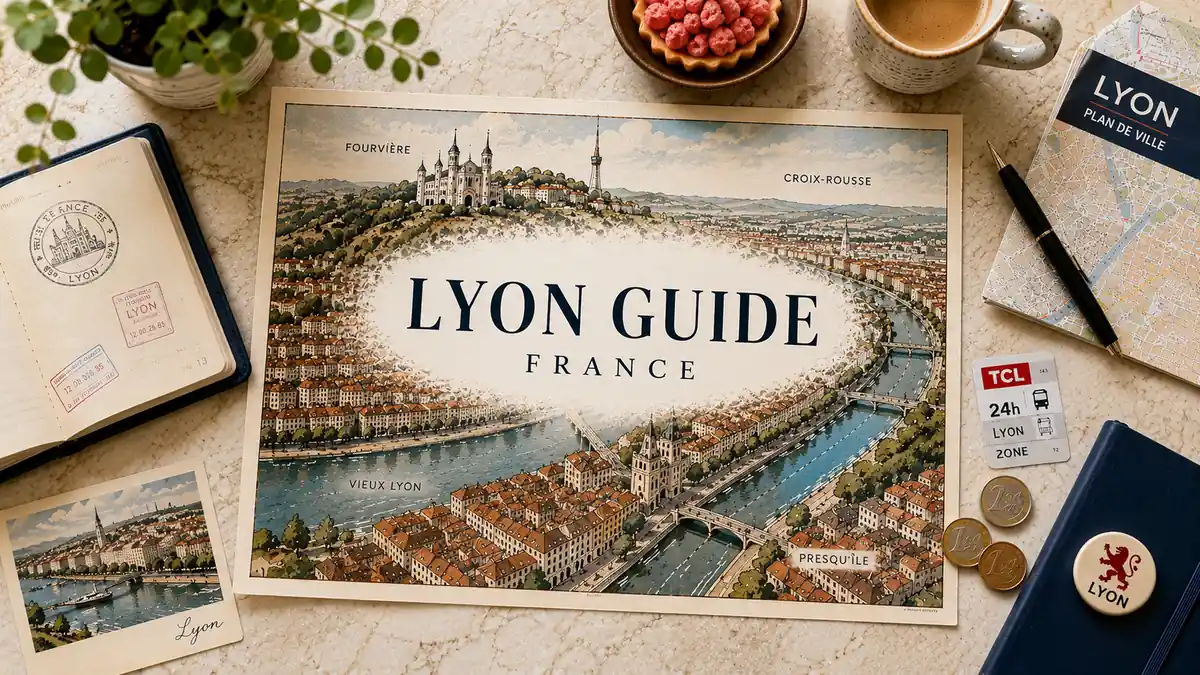
Lyon is France’s food capital, and that one fact decides most of the trip. Travelers arrive for the bouchons and the markets, then find a city that stacks Roman ruins, a UNESCO Renaissance quarter, and a river confluence into one walkable centre. The open questions are practical: whether Lyon justifies the detour, how long to stay, which season to book, what kind of area to sleep in, how to move around, and roughly what it all costs. This guide answers each at verdict level. It also handles the value question honestly — Lyon delivers a major French city experience for noticeably less than the capital, which is why so many France trips get built around it. Every deeper sub-decision routes to the page that owns it.
Quick Answer
Lyon is worth visiting as France’s gastronomic capital and one of its strongest-value city breaks. Two days covers the historic core and a proper long lunch; three to four days add the Fourvière hill, the museums, and slower eating. It suits food-led travelers, couples, and weekenders, ideally in shoulder season.
Trust Layer
Tripstou city guide for travelers planning a city trip. Covers trip length, stay style, season, cost, and mobility tradeoffs.
Produced with AI assistance and reviewed by Alex Perrut, working in tourism since 2015, for the Tripstou editorial team. See our editorial process for details.
Last factual review: August 10, 2026.
Official sources consulted: France.fr, Atout France.
Key Takeaways
- Lyon suits travelers who build trips around eating well and want a major French city without the capital’s pricing.
- Three days is the sweet spot: two covers the historic core, and the third turns eating from an event into the pace.
- Lock in the two restaurant tables you care about first, because Lyon’s dining calendar fills tighter than its hotel calendar.
- Shoulder season wins on weather, terraces, and table availability; the early-December festival week trades all three for spectacle.
- Choose your base by traveler type and favour flat ground on short trips — the centre is walkable and needs no car.
- Lyon costs meaningfully less than Paris on rooms and restaurants, which is why it works so well as a second city.
Table of Contents
Is Lyon Worth Visiting?
Yes — Lyon is worth visiting, especially for travelers who plan trips around eating well. France’s third-largest city pairs a Roman past with a UNESCO-listed Renaissance quarter, at a price the capital cannot match. The honest limit: this is a two-to-four-day city, not a week-long one.
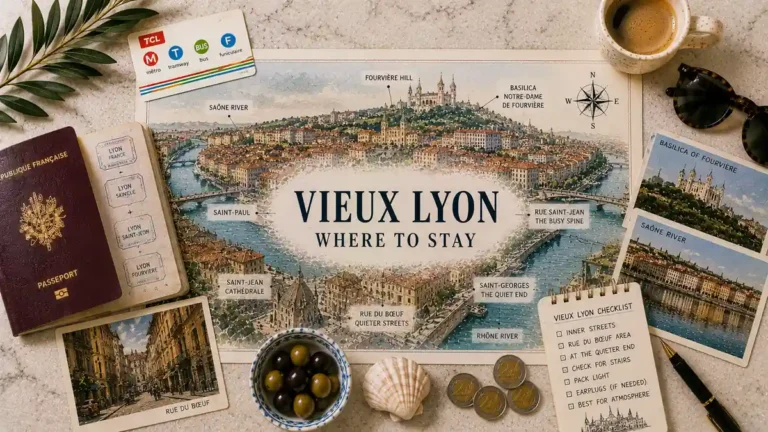
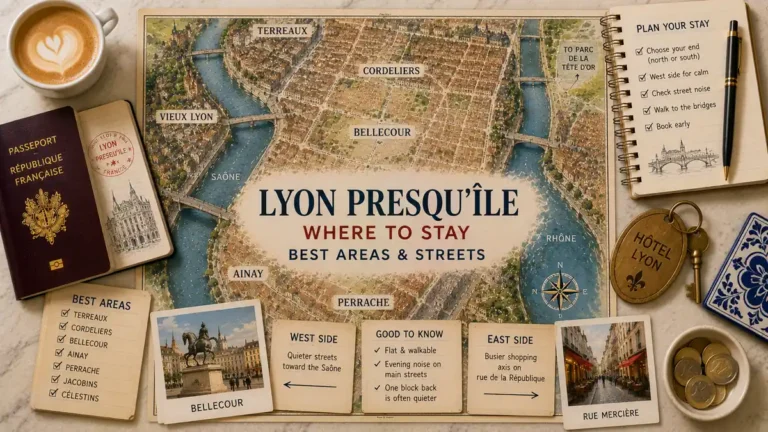
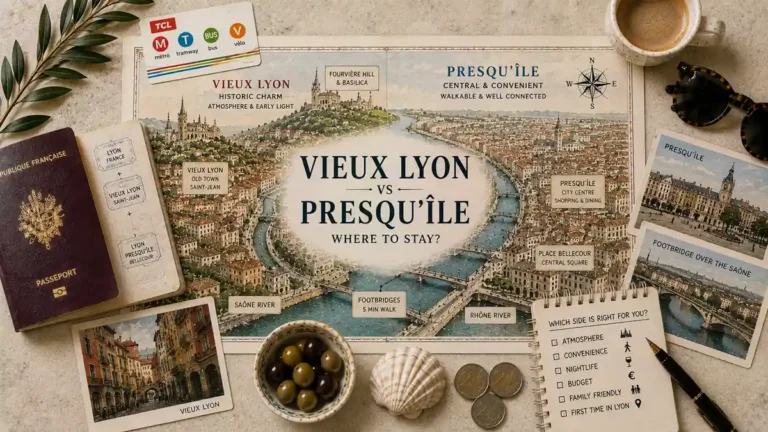
The case rests on three layers you can walk between in an afternoon. Fourvière hill holds the Roman ruins of Lugdunum and the Gallo-Roman museum, alongside the basilica that dominates the skyline. Below it, Vieux Lyon is a UNESCO-listed Renaissance quarter threaded with traboules — the covered passageways that cut between streets and interior courtyards. Across the Saône, the Presqu’île peninsula between the two rivers carries the modern centre: squares, shops, and most of the restaurant density.
That density is the point. Lyon sits at the confluence of the Rhône and the Saône, and its size gives it the museums, transport network, and dining depth of a capital without capital pricing. Travelers who want one headline monument and a photograph will find it thin. Travelers who want a city to move through slowly get more here than in almost any other French second city. The attraction shortlist itself belongs elsewhere — see things to do in Lyon for what to actually visit, and our France travel guide for where the city sits in the country’s wider picture.
Lyon’s three layers stack up one hillside instead of spreading across the map, which is why a genuinely large city reads as a small one on foot.
Lyon’s Food Scene Is the Reason to Come
Food is the trip motive in Lyon, and it shapes far more than dinner. The city is France’s recognised gastronomic capital, and bouchons — small, traditional dining rooms serving Lyonnais cooking — are its signature restaurant format. That identity changes planning: it decides when you eat, when you book, and how you pace each day.
Bouchons run on a rhythm most visitors miss. They are family-scaled rooms with few tables, and the well-regarded ones book out well ahead, especially for weekend dinner. Reserving is close to mandatory here, in a way it is not in larger tourist cities where walk-ins always find something.
Lunch is the underused move. Set midday menus at serious kitchens cost far less than the same room at dinner, so a food-led Lyon trip works best built around long lunches and lighter evenings. Markets follow the same clock: they trade in the morning and wind down by early afternoon, which puts a market visit at the start of a day, never the end.
Book the two meals you genuinely care about before you book anything else. In Lyon the restaurant calendar is tighter than the hotel calendar, and the rest of the trip bends around it comfortably.
This page stays at motive level. For what to order across the country, see the France food guide; for the vineyards that surround Lyon and supply its tables, see France’s wine regions.
Tours and activities
Book skip-the-line tickets, day trips and local tours with free cancellation on most activities.
You can also browse everything on getyourguide.com.
Tripstou may earn a commission if you book through this link, at no extra cost to you.
How Many Days You Need in Lyon
Three days is the right length for Lyon. Two days covers the historic core, the riverside centre, and one unhurried bouchon lunch. The third day buys the Fourvière hill, a museum, and the slower eating the city is built for. Four or more days only pays off for market-and-museum pacing.
Each length changes what kind of trip you are taking, not just how much you see.
| Trip length | What it buys | Who it fits | Main tradeoff |
|---|---|---|---|
| Two days | Old town, riverside centre, one long lunch | Weekenders and add-on stops from Paris | The hills and museums get skipped |
| Three days | Adds Fourvière hill, a museum, unhurried eating | First-timers treating Lyon as the trip | Little room for the surrounding region |
| Four or more days | Markets, second museum, time outside the city | Repeat visitors and slow travelers | Returns fade without regional excursions |
Two days is a real answer, not a compromise, because Lyon’s centre is compact enough to cross on foot. It works particularly well as a stop bolted onto a Paris trip. Three days is where the city stops feeling like a checklist: you get the Roman layer, one proper museum, and enough slack to sit through a two-hour lunch without watching the clock. Beyond four days, most travelers are better served using Lyon as a base and heading out.
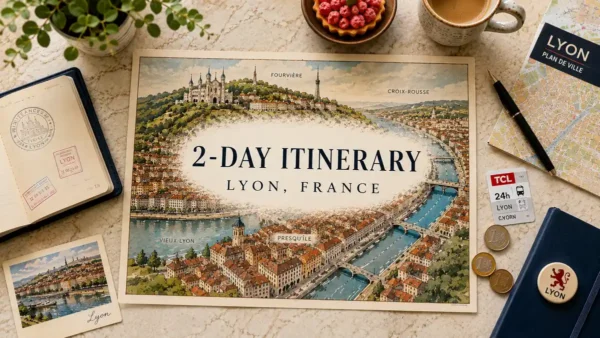
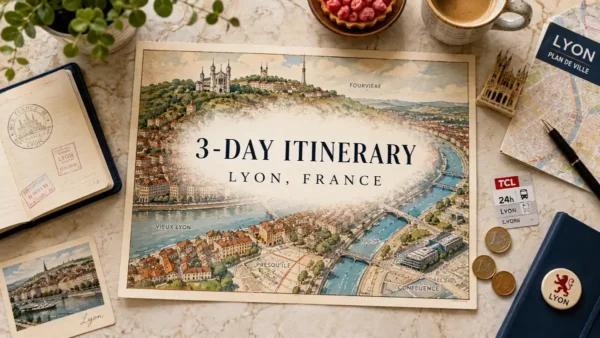
The third day is the only one that changes the trip’s character, because it moves eating from a scheduled event into the default pace of the day. Day-by-day execution lives on the pacing pages: see the 2-day Lyon itinerary or the 3-day Lyon itinerary for a route.
When to Visit Lyon
Shoulder season is the default answer for Lyon. Late spring and early autumn bring mild weather, working terraces, and calmer restaurant tables. Summer trades comfort for festival programming and a quieter city as residents leave. Early December is the exception worth planning around, and the one that fills the city fastest.
The season trade-offs break down cleanly:
- Late spring — the strongest all-round window: warm enough for riverbank terraces, before the summer emptying-out, with restaurants at full strength.
- Summer — hot, quieter, and heavy on outdoor events, but some family-run kitchens close for the holidays. Best for travelers who want festival programming over restaurant choice.
- Early autumn — the close second: comfortable walking weather, harvest energy in the surrounding wine country, and easier tables than spring.
- Winter — the cheapest and greyest stretch, with indoor eating as the main draw. The December festival week is the loud exception.
Weather choices for the wider country are covered in the best time to visit France, and what to bring across seasons is in our France packing list.
The Fête des Lumières Trade-Off
The Fête des Lumières is Lyon at its most spectacular and its most difficult. The festival runs over four evenings in early December, when light installations take over the facades, squares, and hillsides of the whole centre. It is the city’s defining event and draws crowds from across France and beyond.
The trade-off is sharp. Accommodation tightens hard and the centre gets genuinely dense at night, which is exactly when a food-led trip wants to be sitting down somewhere. Restaurant tables become the scarcest thing in the city that week.
Come for the festival only if the lights are the reason you are travelling. If Lyon’s kitchens are the reason, almost any other week gives you more of the city for less effort.
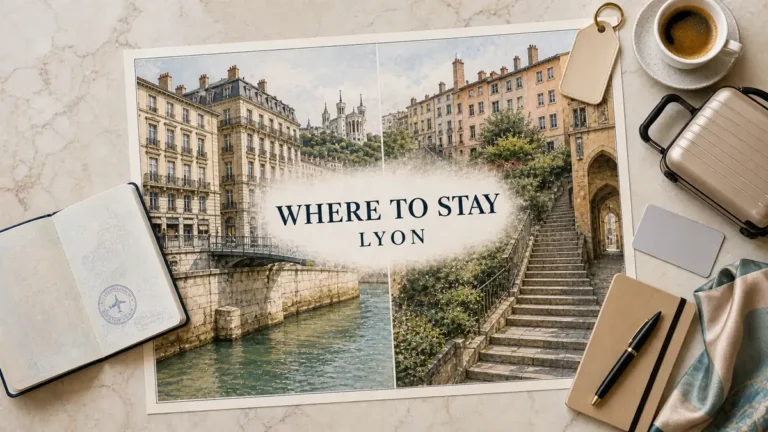
Where to Stay in Lyon
Base type follows traveler type in Lyon, and the city offers three broad styles. Historic-quarter character suits travelers who want cobbled streets and accept crowds. Central riverside convenience suits first-timers and short stays who want everything within walking distance. Hillside village atmosphere suits repeat visitors and slower trips willing to trade a little accessibility.
The full area resolution — which specific quarter, and why — is handled in our guide to where to stay in Lyon. At the level this page works, the choice tracks the traveler:
- First-time visitors — pick central and flat over atmospheric and steep; the walking savings compound across a short trip. See where to stay in Lyon for first-timers.
- Budget travelers — the city’s compactness means slightly outer bases stay usable, so cheaper beds do not cost you the trip. See budget areas to stay in Lyon.
- Couples — the historic quarters and riverbanks carry the evening atmosphere, at the cost of noise on the busiest streets. See where couples should stay in Lyon.
- Families — flat ground, park access, and lift-equipped buildings matter more than proximity to the old town. See family-friendly areas in Lyon.
- High-end stays — the top of the market clusters centrally, near the restaurants that justify the trip. See luxury areas in Lyon and our pick of boutique hotels in Lyon.
- Nightlife-first travelers — bar density is uneven across the city, so this is the one traveler type that should choose the area before the room. See where to stay in Lyon for nightlife.
One local factor outranks the map here: which side of a hill your bed sits on. A flat fifteen-minute walk home after a long dinner is easier than a short climb, and in Lyon that climb repeats every night of the trip.
Hotels and places to stay
Compare hotels, apartments and stays for your dates in one search.
Search hotels and stays on hotels.com →
Tripstou may earn a commission if you book through this link, at no extra cost to you.
How to Get Around Lyon
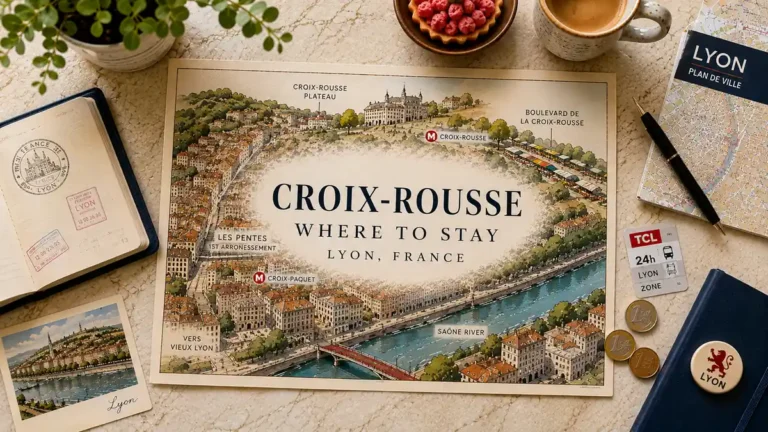
Lyon’s core is walkable, and no visitor needs a car. The Presqu’île peninsula and the old town sit within easy walking distance of each other across the Saône. The hills are the exception: Fourvière and the Croix-Rousse slope rise steeply, and funiculars handle the climb. Metro, tram, and bus cover everything else.
Most visitors walk the centre and ride the funicular twice. The two funicular lines climb from the old town up to Fourvière and the ridge above it, turning the steepest stretch of the trip into a few minutes seated. The metro is short and fast, and mostly earns its keep reaching the train stations and the eastern districts; trams and buses fill the remaining gaps. A car is a liability. Historic streets are narrow, parking is scarce, and nothing worth seeing is far enough away to justify one. Tickets, passes, and the Lyon City Card are covered in the Lyon transport guide, and arrival logistics are handled in our guide to getting from Lyon airport into the city.
How Much a Lyon Trip Costs
Lyon is strong value for a major French city, and spend style matters more than season here. A budget trip stays cheap because the walkable core removes transport costs and set lunches are the best-value meal in town. Mid-range and high-end trips buy comfort and booking flexibility rather than access.
What each spend style actually buys in Lyon:
- Budget — hostel or simple hotel slightly outside the core, market food and set lunch menus, everything on foot. Lyon is unusually kind to this style, because the cheapest meals are also the most local ones.
- Mid-range — a central three-star or apartment, one bouchon dinner plus daily lunches, occasional metro and funicular rides. This is where the city delivers its clearest advantage over the capital.
- High-end — design or boutique hotels in the centre, tasting menus and reserved tables, taxis at night. Lyon punishes this style least on rooms and most on the reservation calendar, which money does not shorten.
Line-item numbers belong with the page that maintains them: see the Lyon trip cost breakdown for daily bands, and the France travel budget guide for country-level planning.
Lyon’s real value lever is the time of day you eat. The same kitchens that charge full price at dinner run set midday menus for a fraction of it, so moving your main meal to lunch cuts the food line of the budget without cutting a single experience.
Is Lyon cheaper than Paris?
Yes, Lyon is meaningfully cheaper than Paris across the categories that dominate a city break. Accommodation carries the widest gap: a comparable central room costs clearly less, and availability holds up better outside festival week. Eating out follows the same pattern, because the set-lunch culture runs deeper and the tourist-price ceiling sits lower. Expect the difference to change what you can afford to book, not just what you spend at the margins.
Who Lyon Suits — and Who Should Skip It
Lyon suits food-led travelers, couples, weekenders, and second-city visitors who already know Paris. It rewards people who want a real French city at working pace, with museums and river walks between meals. It disappoints travelers chasing beaches, big nightlife, or a headline monument they can photograph and leave.
Strong fits:
- Food-led travelers — the city is organised around eating, and lunch pricing puts a serious eating trip within reach of an ordinary budget.
- Couples and weekenders — two nights genuinely works here, and the compact centre removes most of the logistics that eat short trips.
- First-time France visitors adding a second city — Lyon contrasts with Paris instead of repeating it, which is what a second stop should do.
- Slow and repeat travelers — markets, riverbanks, and hillside walks reward unstructured days more than checklists.
Weak fits:
- Beach-first trips — Lyon is inland, and the coast is a separate leg of the country with its own travel time.
- Nightlife-first travelers — the evening energy here is dinner-shaped, and club-led trips are better served by bigger or coastal cities.
- Monument hunters — Lyon’s appeal accumulates across days; one afternoon of sightseeing will underwhelm.
- Half-day stopovers — anything under a full day reduces the city to a station, a square, and a missed lunch.
The clearest test is what you want your evenings to look like. If dinner is the event, Lyon is close to ideal. If dinner is a refuelling stop before the night starts, the city will feel like it closes early.
Fitting Lyon Into a Wider France Trip
Lyon is easy to add to almost any France route: the high-speed train from Paris takes roughly two hours. That puts the city on the country’s main north–south rail spine, between the capital and the Mediterranean. It also works as a base for the surrounding region, instead of an overnight stop squeezed between bigger destinations.
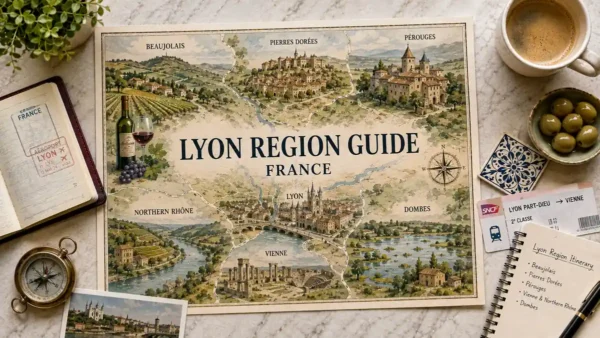
Used as a base, Lyon opens the wider Rhône corridor without requiring you to repack — that logic is covered in the Lyon region guide. Where it lands inside a route depends mostly on total trip length:
- One week — Lyon works as a two-night second city after Paris, and little more. See the 7-day France itinerary.
- Ten days — enough room for Lyon plus a southbound leg, with the city as the natural pivot point. See the 10-day France itinerary.
- Two weeks — Lyon becomes a regional base rather than a stopover, with days out into the surrounding countryside. See the 14-day France itinerary.
Rail is the obvious mode. Lyon is a national rail hub, and a train-based route reaches it without spending a day in transit — see our France train itinerary. Drivers should treat the city as a place to park the car and leave it, which the France road trip guide plans around. Because Lyon is inland, most longer trips pair it with a coastal leg elsewhere in the country; our guide to the best beaches in France covers where that leg is worth taking.
Lyon rewards being slotted into a route more than being flown to directly. Two nights inside a longer rail itinerary costs almost nothing in travel time, and that maths is why the city ends up on so many France trips.
Frequently Asked Questions
Is Lyon safe for tourists?
Yes, Lyon is generally safe for tourists, with the usual big-city caveats around crowded transport hubs, nightlife streets, and pickpocketing in busy tourist areas. Standard urban awareness is enough for most visitors. Our guide to safety in Lyon covers the specific areas, times, and situations worth knowing about.
Do you need to speak French in Lyon?
No, you do not need to speak French in Lyon, but a few basic phrases help. Hotels, museums, and most restaurants in the centre handle English comfortably. Smaller family-run bouchons and neighbourhood markets are where greetings and simple menu vocabulary make the difference between being served and being welcomed.
Is the Lyon City Card worth it?
The Lyon City Card pays off if you plan several museums and daily public transport, because it bundles both into one pass. For a short, walking-led food trip with one or two museums, paying separately usually works out cheaper. Museum count, not trip length, is the deciding variable here.
How do you get to Lyon from Paris?
The high-speed train is the obvious route: Paris to Lyon takes roughly two hours, centre to centre. Services run frequently through the day, so the leg rarely needs planning far ahead. Flying saves no realistic time once airport transfers and check-in are counted, and driving takes considerably longer.
Is Lyon good for a weekend trip?
Yes, Lyon is one of France’s better weekend cities. Two nights cover the old town, the riverside centre, and an unhurried lunch, and the compact layout means almost no time is lost in transit. Book weekend restaurant tables well ahead — those, not sights, are the real constraint.
Related Guides
These guides pick up where this one stops — building the wider route, and handling the practical side of the trip itself.
- France itinerary guide — build the full route Lyon slots into.
- Best places to visit in France — decide where else the trip should go.
- Lyon travel tips — practical local know-how for the days on the ground.
- Common scams in France — country-level street smarts before you arrive.
- Solo female travel safety in France — planning depth for solo trips.
Did this guide save you time or money? Tripstou is independent and reader-funded — if you'd like to give something back, you can support the site with a crypto contribution of any size.