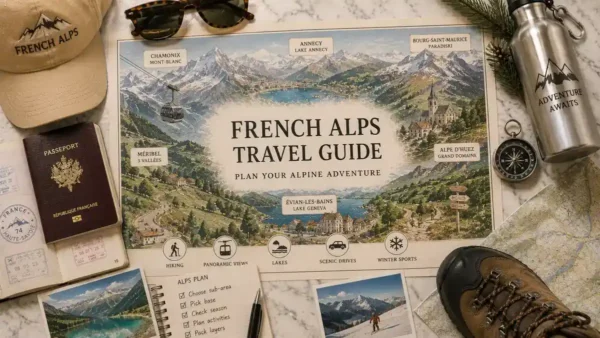
You have picked the French Alps, or you are close to it. The open question is which experiences deserve your limited days and your money, because the Alpine menu is long and the prices are not small. Some travelers arrive for the skiing. Others come for hiking, lakes and long light evenings. Both groups hit the same wall: nearly every guide to the region is written as if it were permanently summer, and nearly every guide answers with a list of towns when the question was what to do.
This page does the opposite. It sorts experiences by worth, and every recommendation here is gated by season — because the high lifts shut down for weeks in late autumn, the glacier ice cave closes in windows nobody warns you about, and half the summer menu simply does not exist in midwinter. What follows is a worth-it verdict on each of the region’s headline experiences, who each one suits, and the tradeoff you accept when you book it.
Quick Answer
The French Alps deliver world-class experiences year-round, and the high cable-car and glacier trips anchor any visit. Season decides the menu: hiking, lakes and flying in the warm months, skiing and non-ski alternatives in winter. Book the marquee cable car ahead, and avoid the shoulder weeks when lifts and the ice cave close.
Trust Layer
Tripstou attraction guide for travelers deciding whether an experience is worth doing and how to do it well. Covers value, booking versions, timing, access, and traveler fit.
Produced with AI assistance and reviewed by Alex Perrut, working in tourism since 2015, for the Tripstou editorial team. See our editorial process for details.
Last factual review: August 22, 2026.
Official sources consulted: France.fr, Atout France.
Key Takeaways
- The high cable car and the glacier train are the two experiences worth protecting if your Alpine time is short.
- Season decides your menu: hiking, lakes and tandem flights in the warm months, skiing and winter walking in the cold ones.
- Book the marquee cable car a few days out, late enough to read a forecast but early enough for a slot.
- A multi-lift pass only pays off from the second big excursion onward; below that, single tickets win.
- Shoulder weeks are the trap: lifts and the glacier ice cave close in separate multi-week windows that never align.
- The summit cable car bars children under three and is not recommended under five, because altitude arrives with no acclimatisation.
Table of Contents
Is the Aiguille du Midi Worth It?
Yes — the Aiguille du Midi is worth it for almost anyone who wants high-alpine scenery without earning it on foot. The cable car climbs from Chamonix to a 3,842 m (12,605 ft) summit terrace with genuine glacier views. Skip it in poor weather, and skip it if altitude troubles you.
The altitude is the honest catch. You go from valley floor to nearly 3,900 m in one ride, with no time to acclimatise, and a share of visitors feel it — headache, breathlessness, a queasy half hour on the terrace. The operator flags this openly: children under 3 are not permitted on the cable car at all, and under-5s are not recommended. Move slowly up there. If you feel bad, descend.
Step into the Void, the glass box cantilevered over the drop, is the summit’s signature act and behaves like one — it draws a queue that the surrounding terraces do not. Those terraces hold the same panorama with no wait, so the box earns a photograph and little more. The reason to come is standing at glacier level with no climbing skills at all.
The Panoramic Mont-Blanc gondola is a separate decision. It runs on from the summit toward Pointe Helbronner on the Italian side, operates only in the warm months, carries an extra charge, and is not included in the Mont Blanc MultiPass. It suits travelers who want the crossing itself to be the day’s event; anyone on a tight schedule can leave it and lose nothing essential.
Weather should choose your booking day here, ahead of the crowd calendar. A clear morning on the Aiguille du Midi is worth more than any time-slot strategy, because the summit either sells you the view or sells you cloud at the same price.
- Season: runs through most of the year, but closes for several weeks in late autumn for maintenance — confirm it is operating before you build a day around it.
- Cost band: expect roughly EUR 60–85 return for the full ride; fares shift with demand, age category and ticket version, so check the current price on the official site before booking.
- Worth it for: non-hikers who want a genuine high-mountain view, families with children over 5, and anyone with one clear day to spend.
- Booking: reserve ahead in peak weeks for a timed boarding slot, but book late enough to be reading a reliable forecast.
Which other cable-car rides are worth it?
Several are, and they split cleanly by what you want the view to be. Some lifts exist to put you level with glaciers and summits, delivering the same category of experience as the marquee ride for less money. Others stop at balcony height, where the payoff is the panorama across the valley to the Mont Blanc massif — lower, warmer, and far better for anyone who wants to walk on from the top station instead of turning around at it.
A multi-lift pass covering a valley’s main lifts exists and starts paying off once you take two big excursions; below that, single tickets usually win. Prices and validity change by season and version, so confirm with the operator before committing to the pass. The second lift is where the decision actually lives — one iconic ride is a highlight, three in a row is a week of looking down at things.
Tours and activities
Book skip-the-line tickets, day trips and local tours with free cancellation on most activities.
You can also browse everything on getyourguide.com.
Tripstou may earn a commission if you book through this link, at no extra cost to you.
How Do You Visit the Mer de Glace?
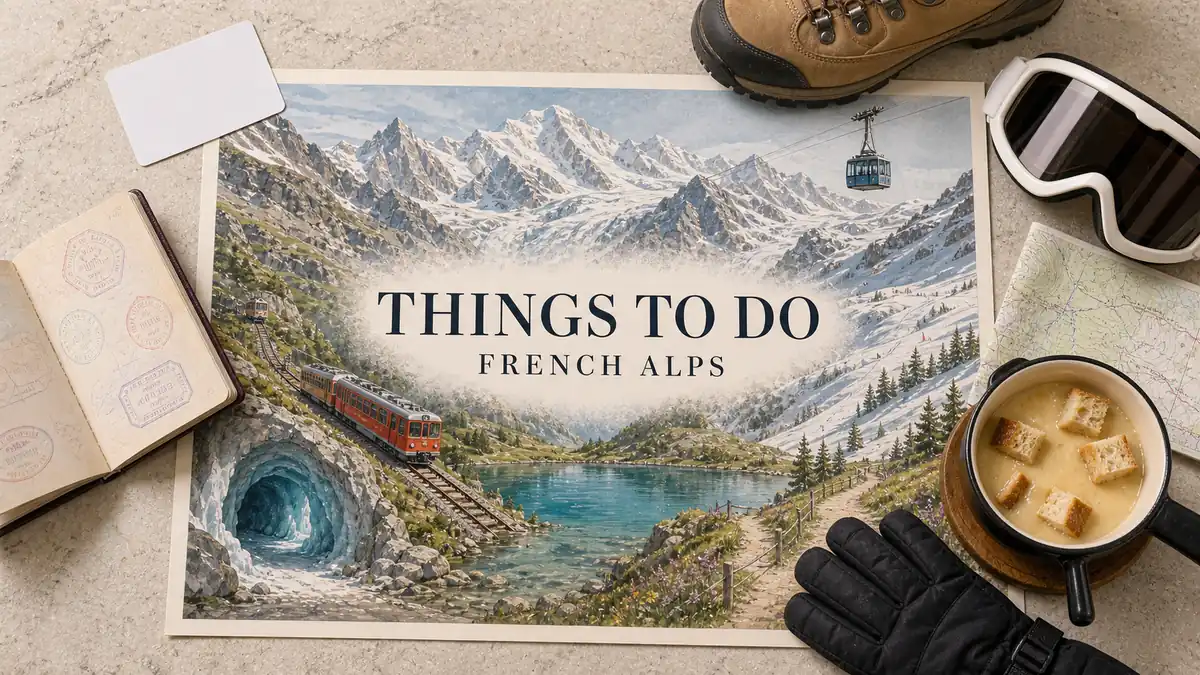
You ride the red Montenvers rack railway up from Chamonix, then a gondola down toward the ice cave. The combined Voyage Mer de Glace ticket bundles the train, the gondola and the cave into one purchase. Allow half a day, and take the combined version unless you only want the view.
The version choice is the whole booking decision, and it is a short ladder:
- Train only — the rack railway up and back to the viewpoint above the glacier. Suits travelers short on time or energy who want the vantage point and the historic ride. Tradeoff: you look at the largest glacier in France from above and never reach it.
- Combined Voyage Mer de Glace ticket — train, gondola and entry to the ice cave carved into the glacier. Suits first-time visitors who want to stand inside the ice. Tradeoff: more time on your feet, and the cave is the part most likely to be closed.
Fares sit in the EUR 30 range for the train-only ticket and the EUR 50 range for the combined one, moving with season and age category — treat those as bands and confirm on the operator’s site. The glacier has visibly retreated, and the arrangements for reaching the ice cave change as it does. The descent from the gondola station has grown over the years, and the operator adjusts the route and the cave between seasons. Check current access conditions before you go, especially if anyone in your group has knee, mobility or stamina limits.
- The ice cave and the gondola each close for multi-week windows during the year for maintenance and glacier work.
- The train can be running while the cave is shut, so verify the cave’s status the week you plan to travel.
- The viewpoint at the railway terminus works regardless — a closed cave changes the trip, it does not cancel it.
- Worth it for: travelers who want to reach a glacier’s edge and accept a landscape mid-change.
If the cave is closed on your dates, buy the train-only ticket and keep the difference. People pay for the combined version out of habit, then find out at the gondola station that the ice they paid for is sealed.
When Each Experience Actually Runs: Summer, Shoulder and Winter
Season decides the Alpine menu more than any other planning choice. Summer opens hiking, lakes, flying and bike parks. Winter opens skiing plus a full non-ski programme. The shoulder weeks, in late spring and late autumn, quietly close lifts, cable cars and the glacier cave while everything still looks open online.
Availability patterns, not fixed dates — operators set their own opening windows and confirm them season by season.
| Experience | Summer | Shoulder weeks | Winter |
|---|---|---|---|
| High cable-car rides | Running daily, clearest on early mornings | Closed for several weeks in late autumn | Running when weather allows, shorter daylight |
| Glacier train and ice cave | Both operating, and busiest of the year | Cave often shut in maintenance windows | Train may run while the cave stays closed |
| Day hiking above the valleys | Full trail network open, lift-assisted starts available | Snow lingers high; lower trails stay walkable | Snowshoe and winter-walking routes replace summer trails |
| Lake swimming and boating | Swimming, boat hire and cycle paths all operating | Water cold, boat hire and lakeside cafes winding down | Shoreline walks only, no swimming or hire |
| Paragliding and white water | Tandem flights and rafting run most days | Operators cut hours or close for the season | Largely off, with a few flight sites continuing |
| Skiing and winter walking | Unavailable outside a few glacier exceptions | Unavailable, lifts between operating seasons | Full programme, including lessons and non-ski options |
The shoulder-season trap catches travelers who book on price. Lift systems in the high valleys shut down for several weeks in late autumn for maintenance, and again for a shorter stretch once the ski season ends; the glacier ice cave closes in its own separate multi-week windows that do not line up with the lifts. Nothing about a cheap late-autumn week looks wrong until you arrive and find the cable car dark, the cave sealed and the trails under fresh snow. That is the closure pattern, and it repeats every year even though the exact dates never do.
Summer is the widest menu: high lifts, the full trail network, lake days, tandem flights, white water and lift-served bike parks, all running at once. Winter narrows the outdoor list but replaces it with a complete parallel programme covered further down, and the high scenery rides that survive the cold are arguably better once the snow line drops to the valley. Overall best time to visit, where to base yourself and how to reach the valleys are the parent guide’s job — the French Alps guide resolves all three.
With only a day or two in any season, the picking rule is simple: one high cable car plus one season-matched experience. A lake or a balcony hike in the warm months, a ski lesson or a winter walk in the cold ones. Two headline experiences land better than four rushed ones, and the mountain weather will eat one of your slots anyway.
The Hikes Worth Building a Trip Around
The balcony trails repay the effort best. These are the high traverses that run along a valley wall at altitude, holding the big glacier and summit views for hours instead of delivering one payoff at the end. Lake-viewpoint hikes come second. Neither needs booking, and both need a forecast.
What “easy” means changes at altitude. A trail signed as easy at 2,000 m can still involve loose rock, exposed sections and an hour of climbing that would not register at sea level, because thinner air makes an average gradient feel like a hard one. Alpine grading assumes mountain walkers. Add an hour to whatever time estimate you are given if you are not one, and turn back earlier than feels necessary — afternoon storms build fast in the warm months.
The lift ticket is the real difficulty dial on an Alpine day hike. Riding up and walking down converts a punishing route into a moderate one without changing a single view, which is why the best-value hiking days often start with a gondola fare. Moderate hikers should plan this way by default. Strong hikers can walk both directions and treat the lift as the bad-weather escape.
Should you attempt the Tour du Mont Blanc?
Only if you already hike multi-day routes and enjoy the format. The Tour du Mont Blanc is a hut-to-hut circuit crossing France, Italy and Switzerland, walked over consecutive days of sustained ascent and descent with your gear on your back. It rewards committed walkers and quietly punishes people who signed up for the name.
- Attempt it if: you walk long days back to back, you have booked huts far in advance, and you accept walking in rain without it ruining the trip.
- Walk a section instead if: your Alpine time is short, your group’s fitness is mixed, or the Alps are one stop inside a longer French trip — the finest stretches work perfectly as day walks.
- Skip it if: you want the Alps as scenery, food and evenings instead of a daily objective with a deadline.
Hut bookings are the real gate. Fitness is the second one. Beds on the popular stages go months ahead, and an unbooked circuit becomes an improvised one. Where a trek or a shorter Alpine block sits inside a wider trip, and how many days to hand it before you move on, belongs to the France itinerary planning rather than to this page.
Alpine Lakes Are the Gentle Half of a Summer Trip
Alpine lakes give you a full summer day with no altitude and no climbing. Swimming, boat rental and flat shoreline cycle paths sit at valley level — the reliable option for families, non-hikers and anyone recovering from a hard mountain day. The season is the limit: warm months only, and the water stays cold.
The lake day is one experience with three interchangeable halves, and most travelers do two of them:
- Swim from a public beach — grassy or pebbled entries with shallow water, on lakes clean enough to swim in without thinking about it. Suits families and genuinely low-effort days. Tradeoff: the best stretches fill early in peak weeks.
- Rent a small boat for a few hours — the only way to reach the quiet water and see the mountains rise straight out of the lake. Suits couples and small groups. Tradeoff: the good afternoon slots go to whoever books first.
- Ride the shoreline cycle path — flat, largely traffic-free routes running along the water, rideable on a hire bike by almost anyone. Suits mixed-ability groups. Tradeoff: shared with walkers and busy on summer weekends.
Put the lake day after the mountain day. A lake afternoon rescues tired legs and sunburnt tempers, while a lake morning tends to consume the clear weather window you needed for a summit or a balcony trail — and clear mornings are scarcer here than warm afternoons. Which Alpine towns and lakeside bases deserve your nights, as destinations in their own right, is settled on the best places to visit in France page.
Paragliding, White Water and Via Ferrata: The Adrenaline Menu
Tandem paragliding is the highest payoff for a first-timer, because it needs no skill and no fitness. Rafting and canyoning come next, both guided and both forgiving of beginners. Via ferrata demands the most: a real head for heights, real arm strength, and comfort on exposed rock. Bike parks sit apart: easier to enter, harder to master.
- Tandem paragliding — a qualified pilot does everything; you run a few steps off a slope and sit down. Suits anyone curious about flight, including nervous first-timers and older travelers. Tradeoff: warm-season, weather-dependent and entirely operator-scheduled, making it the activity most likely to be moved on you.
- White-water rafting — a guided descent in a group boat with no experience required. Suits groups and families with older children who want adrenaline under supervision. Tradeoff: water levels drive the grade, so the river you get is not always the river you booked.
- Canyoning — descending a gorge by scrambling, sliding and jumping, in wetsuits with a guide. Suits travelers happy to be cold, wet and slightly out of control. Tradeoff: the jumps are optional, but the group pressure to take them is not.
- Via ferrata — a fixed-cable route up rock with rungs, ladders and suspension bridges, done in a harness. Suits confident, reasonably fit travelers with no fear of exposure. Tradeoff: the hardest one to abandon halfway, so grade honestly at the start.
- Lift-served bike parks — gondola up, graded descent trails down, all day. Suits riders with existing off-road control. Tradeoff: “beginner” here means beginner mountain biker, not beginner cyclist.
Everything on this list runs on operator-set slots and weather calls you do not control. Flights are grounded for wind, rafting shifts with water levels, and via ferrata routes close when rock is wet. Book your first clear morning and keep a spare day behind it, because cancellations get rebooked into later slots — a trip with no slack is how people go home having paid for a flight they never took.
How to Spend Winter: Learn to Ski or Skip Skiing Entirely
Winter works whether or not you ski. First-time skiers get one of the world’s deepest teaching infrastructures and gentle learning areas attached to big terrain. Non-skiers get winter walking, sledging, thermal spas, high-lift scenery rides and mountain restaurants. The one thing winter takes away is the summer trail network.
Are the French Alps a good place to learn to ski?
Yes, and few places compete. Beginner areas here sit inside resorts that also hold serious terrain, so you progress from a nursery slope to real skiing without changing destination or paying twice. Lessons are the deciding factor — the region’s instructor network is large, standardised and used to absolute beginners, including adults who have never seen snow.
- Group lessons — the default for children and most adults starting from zero. Tradeoff: you move at the group’s pace, which can be slower or faster than yours.
- Private lessons — the fix for nervous adults, short trips and anyone stuck on a plateau. Tradeoff: the highest hourly cost of the whole week.
- Teaching yourself — cheap, and a false economy. Tradeoff: you build habits an instructor then has to undo, usually on day four.
Lift passes start in the mid-double-digit euros per day and climb with the size of the linked ski area. What makes a ski week expensive is the stack — pass, rental and lessons together — not any one line of it. Beginners rarely need the largest pass. A restricted beginner-area pass covers the terrain you can actually use in the first few days, and upgrading mid-week is usually possible.
What can non-skiers actually do in winter?
Plenty, and it fills a week without ever clipping into a binding. Prepared winter-walking and snowshoe routes run through the same valleys and forests the summer trails use, groomed and signed, and they need no technique beyond walking. Sledging runs give families the speed without the lessons. Thermal spas turn a grey day into the point of the day.
The scenery lifts are the strongest non-ski card. Several of the high cable cars keep operating through winter, weather permitting, and the view improves when the snow line drops to the valley floor. Mountain restaurants reachable by lift complete the pattern: ride up, eat slowly, ride down, and you have had a full mountain day at altitude in boots you never had to rent.
Not every lift sells a foot-passenger ticket, and that detail shapes a non-skier’s week more than the activity list does. Check pedestrian access and pedestrian fares before you count on a scenery ride, especially for the lifts inside ski areas — the marquee cable cars almost always carry walkers, while the mid-mountain gondolas serving pistes often do not.
Alpine Food Is an Experience, Not a Side Note
Mountain food is the only Alpine experience with no seasonal gate. Fondue, raclette and tartiflette are served year-round, and a long lunch at an altitude restaurant is a legitimate way to spend a day when weather closes everything else. Book ahead in peak weeks — the good tables go first.
The three headline dishes are not interchangeable, and knowing which is which saves an argument at the table. Fondue is a shared pot of melted cheese for dipping bread, best with a group and a slow evening. Raclette is cheese melted and scraped over potatoes and charcuterie, usually assembled at your own table, which suits people who want to control their own pace. Tartiflette arrives as a single baked plate of potatoes, bacon, onion and reblochon — the practical order after a hard day, when nobody wants to operate equipment at dinner.
Altitude restaurants are the version worth planning around. Reached by lift or on foot, they turn a meal into an outing with a view, and they run in both summer and winter. In peak weeks they book out days ahead, especially for lunch on clear days, when everyone on the mountain arrives at once. Reserve, and eat early or late. Beyond the mountains, the country-wide menu of experiences sits on the things to do in France page.
Frequently Asked Questions
Do you need to book Aiguille du Midi tickets in advance?
Yes, in practice. The operator strongly recommends reserving online, and boarding runs on numbered slots, not a free-for-all queue. Book a few days out, once the forecast is readable — fresh tickets are released close to the date, so a sold-out screen weeks ahead is rarely the final word.
How many days do you need in the French Alps?
Three to four days covers the headline experiences without rushing them. That buys one high cable-car day, one glacier or hiking day, and a gentle day for a lake, a spa or a long mountain lunch. A week lets weather ruin a day without ruining the trip.
Can you visit the French Alps without skiing?
Yes, in both halves of the year. Summer involves no skis at all, and winter carries a complete non-ski programme that fills a week on its own. The one real limit is the summer trail network, which vanishes under snow and has no like-for-like winter replacement.
Is the Mer de Glace still worth seeing?
Yes, with expectations managed. It is the largest glacier in France and you can still reach its edge, but it has visibly retreated and the walk down to the ice keeps changing. Come for the rack railway, the scale and the ice cave when open, not for a pristine glacier.
Are the French Alps good for families with kids?
Yes, especially in summer. Lakes give shallow swimming, flat cycle paths and boat hire that suit mixed ages, and winter ski schools take absolute beginners. The one hard rule is the summit cable car: children under three are barred, and under-fives are not recommended because of the altitude.
What closes in the French Alps during shoulder season?
Lifts, high cable cars and the glacier ice cave — each on its own calendar. Late autumn takes the biggest bite, with high lifts down for maintenance for several weeks and the cave shut in separate windows. Check the operator’s page for every experience you plan, individually.
Related Guides
- French Alps guide — where to base yourself, how to reach the valleys, and the overall best time to visit the region.
- Best places to visit in France — which Alpine towns and lakeside bases earn your nights, alongside the rest of the country.
- France itinerary — how to fit an Alpine block into a wider French trip and order the days around it.
- Things to do in France — the country-wide experience menu, from coast and cities to châteaux and food regions.
Did this guide save you time or money? Tripstou is independent and reader-funded — if you'd like to give something back, you can support the site with a crypto contribution of any size.