Marseille is France’s oldest city and its most argued-about. Travelers come back converted or unconvinced, and the split is rarely about the sights. It is a loud, layered Mediterranean port that never learned to perform for visitors, sitting beside a national park of white limestone inlets most cities would envy.
This guide settles what decides whether Marseille goes in your plan: whether it is worth visiting and for whom, how many days it takes, when to go, which part of the city to base in, how to move around, what it costs in broad terms, whether it is safe, and whether it works as a base for the Calanques and wider Provence. If you are weighing Marseille against Nice or Aix for a southern base, that comparison runs underneath every section.
Quick Answer
Marseille is worth visiting for travelers who want a real, unpolished port city with the Calanques next door. It is not postcard Provence. Two to three days covers the city; a third or fourth day unlocks the Calanques. Base near the Old Port on a first visit, where the city is most walkable.
Trust Layer
Tripstou city guide for travelers planning a city trip. Covers trip length, stay style, season, cost, and mobility tradeoffs.
Produced with AI assistance and reviewed by Alex Perrut, working in tourism since 2015, for the Tripstou editorial team. See our editorial process for details.
Last factual review: August 14, 2026.
Official sources consulted: France.fr, Atout France.
Key Takeaways
- Marseille rewards travelers who want a working Mediterranean port with wild coastline attached, and disappoints anyone expecting tidy postcard Provence.
- Two days covers the city; a third day is what buys you a full Calanques day.
- June and September beat high summer here, keeping the sea swimmable while thinning the heat, the crowds and access restrictions.
- Base at harbour level for a first visit, walk the centre, and leave driving out of the city plan.
- Normal big-city pickpocket awareness covers Marseille; the city’s reputation rests on districts visitors have no reason to enter.
- Summer Calanques access is managed, so check booking and fire-closure rules before you commit a day to the coves.
Table of Contents
Is Marseille Worth Visiting?
Marseille is worth visiting if you want France’s most alive, least curated big city with wild coastline attached. It rewards travelers who like texture over polish. It disappoints anyone expecting tidy postcard Provence: the city is loud, weathered, and unapologetically working-class in places tourism has not smoothed over.
The case for Marseille is character, coastline, and food, and the price of admission is grit. This is a city with graffiti on beautiful buildings, a harbour that still smells of the sea, and neighbourhoods where tourism is an afterthought. The Calanques — limestone cliffs and swimmable coves inside the city’s own boundaries — give it a natural asset no other major French city can match. Add a food culture built by North African, Corsican, Italian and Provençal arrivals, and you get a place that feels genuinely unlike anywhere else on a standard France route.
Travelers who dislike Marseille almost always arrived expecting Provence and found a port. The mismatch is about expectations, not about the city.
Right for you if:
- You want a big city that feels lived-in, not arranged for visitors.
- Swimming, cliffs and boats matter to you as much as museums do.
- You eat your way through a place and want more than classic French cooking.
- You are comfortable somewhere that looks rough before it looks beautiful.
Wrong for you if:
- You are picturing lavender fields, stone villages and tidy market squares.
- You want a compact, uniformly pretty historic centre.
- You prefer a resort rhythm where the trip is arranged around you.
- Noise, graffiti and visible poverty would spoil the days for you.
Where Marseille lands in a wider trip depends on what else you are seeing. Our France travel guide sets the national picture, and our roundup of the best places to visit in France shows how the city compares with the rest of the shortlist.
What Makes Marseille Different from the Rest of France
Marseille is France’s oldest city and its second-largest, and it faces the Mediterranean more than it faces Paris. Twenty-six centuries of port trade built a place shaped by arrivals instead of by court architecture. It works for a living. It does not perform for visitors.
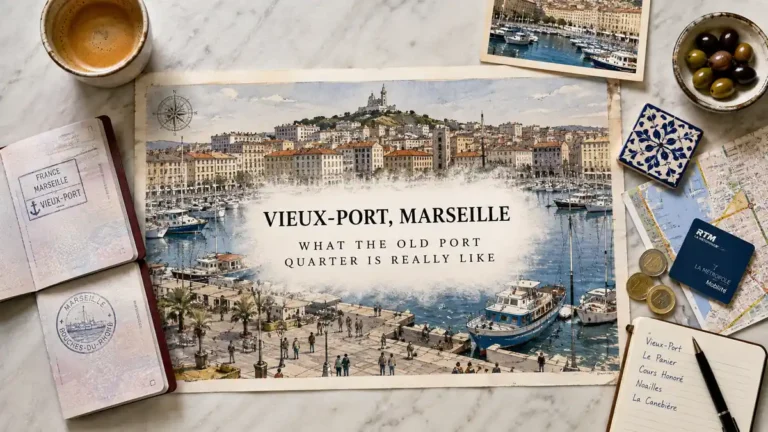
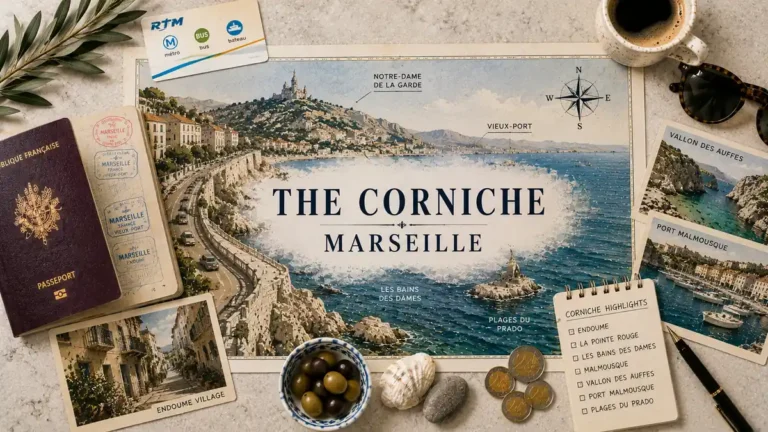
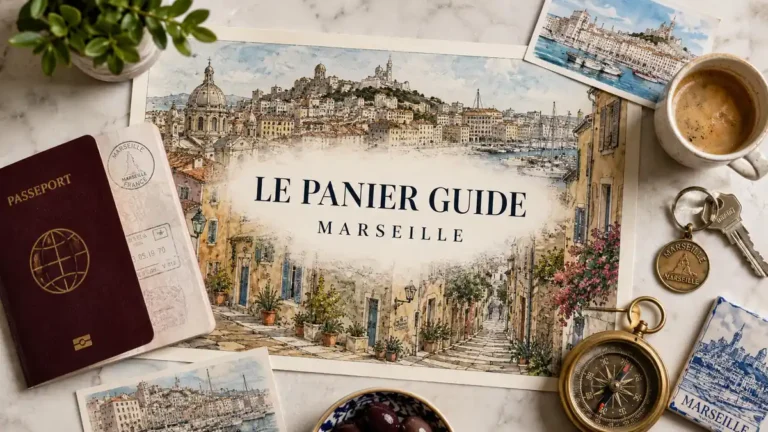
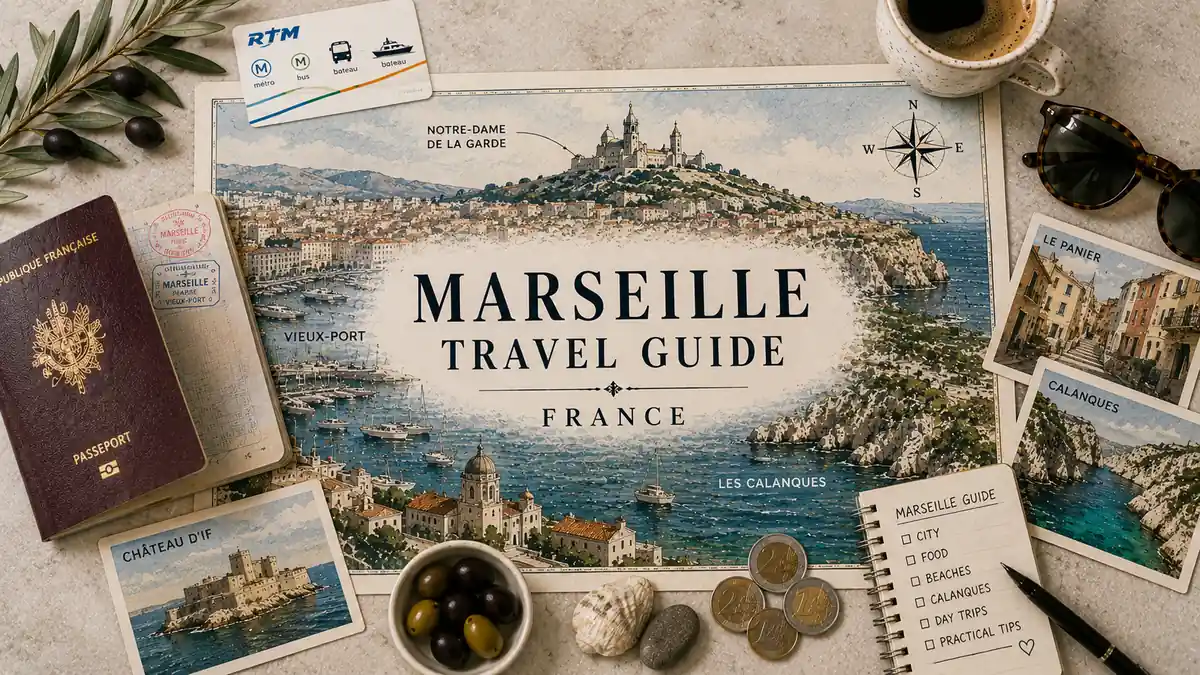
Four places do the orienting work. The Vieux-Port is the city’s living room, a working harbour ringed by cafés where the day opens with fish sold straight off the quay. Le Panier, the old town on the hill above it, is the oldest quarter — narrow, steep, stubbornly residential, and partly gentrified. Notre-Dame de la Garde crowns the highest point and hands you the view that explains the city’s geography in a single glance. La Corniche is the coast road south, the stretch where the city becomes a seafront.
The contrast with its neighbours is a contrast of temperament. Nice is polished, resort-shaped, built around visitors. Aix-en-Provence is elegant, bourgeois and small. Marseille is bigger, rougher and busier than both, and it is the only one of the three where you feel you are standing in a major city rather than a destination.
Food is where the difference hits a visitor fastest. The port’s kitchen is Mediterranean before it is French — bouillabaisse, North African pastries, Corsican charcuterie, Provençal vegetables — and reading it alongside our guide to French food and regional specialities shows how far it sits from the classic French canon.
The city’s reputation for being difficult and its reputation for being interesting come from the same source: it was never rebuilt for tourism, so it kept its own logic.
How Many Days You Need in Marseille
Two full days covers Marseille itself. Three is the number when the Calanques are in the plan, and four or more only makes sense when you use the city as a Provence base. One day is a stopover, not a visit. Most first trips land on three.
What each extra day buys is straightforward, and the jump that matters most is from two days to three.
| Trip length | What it realistically buys | Who it fits |
|---|---|---|
| One day | The Old Port, Le Panier and one long meal | Cruise arrivals and rail stopovers only |
| Two days | The full city core, plus the basilica and Corniche | Travelers slotting Marseille into a wider France route |
| Three days | Everything above, plus a full Calanques day | Most first-time visitors; the default recommendation |
| Four or more days | Day trips into Provence and slower coastal time | Travelers using the city as a regional base |
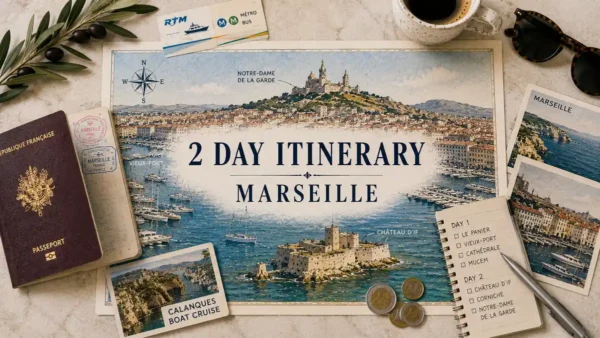
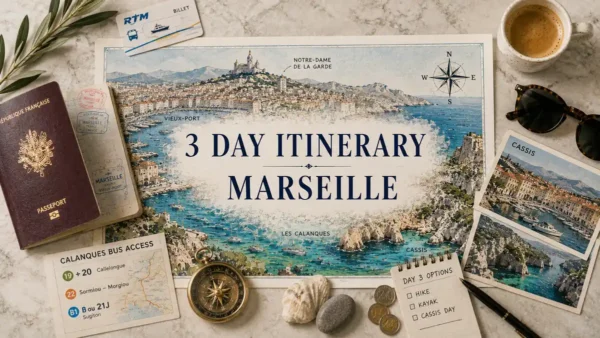
One day forces a choice between the city and the coast, and neither side wins. Two days gives you the Old Port, Le Panier, Notre-Dame de la Garde and a proper meal without rushing — the shape laid out in our 2-day Marseille itinerary. Three days is where the Calanques fit without cutting the city short, which is why the 3-day Marseille itinerary is the version most first visits should copy. Beyond that, the extra days stop being about Marseille and start being about Provence.
Pace matters more here than in flatter cities. Marseille is hilly, spread out, and hot through much of the visiting season, and first-timers routinely plan a day the terrain will not allow. Our Marseille travel tips cover the practical habits that keep a short trip from unravelling.
When to Visit Marseille
Late spring through early autumn is Marseille’s working window, and June and September are the best of it. Both keep the sea warm enough to swim while dodging the worst of the August heat and crowds. July and August still work, but you pay in temperature and queues.
The seasonal tradeoff has four moving parts: heat, crowds, wind, and the swim window. Heat and crowds peak together in high summer, when the city is at its hottest, busiest and most expensive, and when access to the Calanques is at its most managed. June and September thin both problems while the sea stays swimmable, which is why they are the standard advice for a first visit.
The mistral is the local variable that catches people out. It is a cold, dry northerly wind, strongest outside high summer, and it can arrive under a completely cloudless sky. A bright spring day with the mistral running needs a jacket that the same date in Nice would not. It also cancels boats, which matters if the Calanques are on your list.
Late autumn and winter are quiet and mild by northern European standards, though the swim window closes and some seasonal services thin out. High summer brings the opposite constraint: on high fire-risk days, parts of the massif can close, sometimes to walkers as well as to vehicles. Neither pattern should push you away from a shoulder-season trip. For how this fits the wider country, see our guide to the best time to visit France.
Where to Stay in Marseille
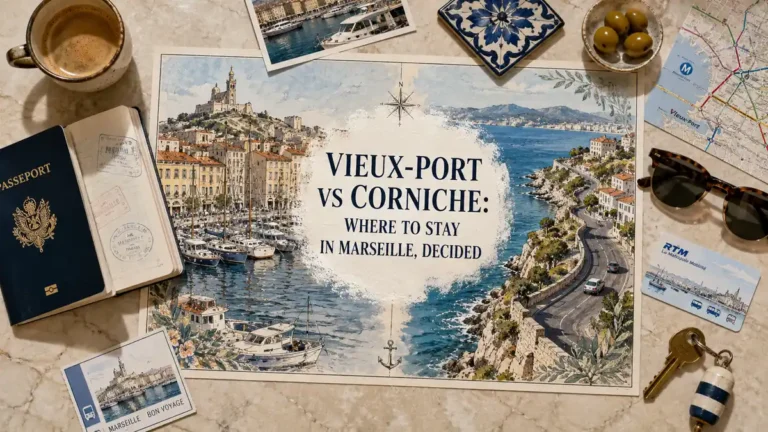
First-timers should base at harbour level, within walking distance of the Old Port. That is where the city is most walkable and where transport, food, and boat departures converge. Coastal areas trade that convenience for calm and sea views; the old town delivers character with more noise.
The stay decision here resolves into three broad styles, and choosing the wrong one costs you time, not money.
Harbour level — the Old Port and the streets climbing away from it — is the default for a first visit. Everything you would want to walk to is walkable, the metro is at hand, and boats leave from the water in front of you. The tradeoff is evening noise and a stretch of tourist-facing sameness at street level.
Coastal areas south along the Corniche trade convenience for calm. You get sea air, quiet, and a residential rhythm, and you pay in a bus ride every time dinner is in the centre. This suits repeat visitors and travelers for whom the water is the point.
Old-town character in Le Panier and the lanes behind it gives you the most atmospheric address in the city. It is steep, it is loud late, and luggage hates it.
Full neighbourhood resolution — which specific area, and why — is the job of our guide to where to stay in Marseille. Start there, then narrow by traveler type:
- First-time visitors — pick walkability over atmosphere; the minutes saved compound across a short trip. See the best areas in Marseille for first-timers.
- Couples — the old town and the harbour edge carry the evening character, at the cost of noise on the busiest streets. See where couples should stay in Marseille.
- Families — flat ground, lifts, and easy beach access outrank proximity to the old town. See family-friendly areas in Marseille.
- Budget travelers — the metro makes slightly outer bases genuinely usable, so a cheaper bed does not cost you the trip. See budget areas to stay in Marseille.
- Nightlife-first travelers — bar density is uneven across the city, so this is the traveler type that should choose the area before the room. See where to stay in Marseille for nightlife.
- High-end stays — the top of the market splits between the harbour and the coast road, and the two feel nothing alike. See luxury areas in Marseille and our pick of luxury hotels in Marseille.
Altitude decides more than the map does. Marseille climbs steeply away from the water, and a bed three streets uphill turns every walk home into a hill you have to want.
Hotels and places to stay
Compare hotels, apartments and stays for your dates in one search.
Search hotels and stays on hotels.com →
Tripstou may earn a commission if you book through this link, at no extra cost to you.
How to Get Around Marseille
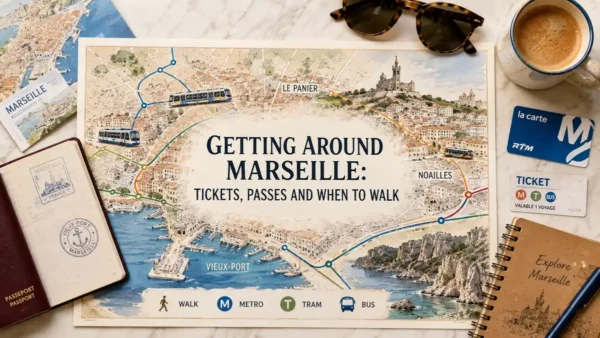
Walk the centre, take the metro for distance, and do not drive in the core. Marseille’s visitor spine — the Old Port, Le Panier, the museum quarter — is compact enough to cross on foot, and the metro covers the longer hops the hills make unpleasant. Parking is the punishment for ignoring this.
The metro is small but fast, and it covers the axes that matter to a visitor. Buses do the work the metro cannot, including the routes towards the Calanques side of the city, and trams fill the remaining gaps. None of it is complicated. Fares, passes and validation rules do change, so check the current setup in our Marseille transport guide before buying anything.
Driving inside the city is the wrong default. The old centre is a knot of one-way streets and residents-only bays, parking near the water is scarce and expensive, and nothing you want to reach in town justifies a car. Renting for a day trip into Provence is a separate question and a defensible one.
Arriving from the airport does not require a taxi. Options, timings and the current fare picture are maintained in our guide to getting from Marseille airport into the city.
How Much a Marseille Trip Costs
Marseille costs less than Paris or Nice for the same standard of trip. Spend style sets the bill more than the city does. Stay type and eating pattern move the total most. The city rewards travelers who eat where locals eat and punishes resort-style habits.
What each spend style actually buys here:
- Budget — a hostel or simple hotel a few streets back from the water, market food and bakery lunches, everything on foot or by metro. Marseille is unusually kind to this style, because some of the best eating in the city is also the cheapest.
- Mid-range — a comfortable hotel or apartment within walking distance of the Old Port, one sit-down meal a day, the occasional taxi at night. This is where the city delivers the clearest advantage over the Riviera.
- High-end — design hotels, seafront addresses, boat charters and tasting menus. Marseille can absolutely take your money, but it carries fewer high-end options than Nice, and the gap between very good and very expensive is narrower here.
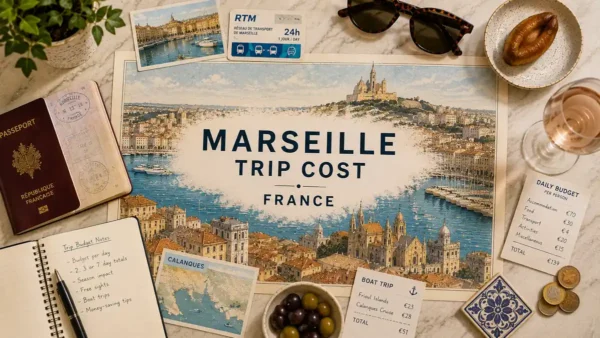
Timing moves accommodation more than anything else you control: high summer and event weekends push rates up, and shoulder months bring them back down. Treat any figures you find as ranges and verify before booking. Current bands for the city are in our Marseille trip cost guide, and the country-level baseline sits in our France travel budget guide.
Marseille’s real cost lever is the coast. Sea days, boat trips and beach time are the parts of a trip that scale with money, while the city itself — walking, markets, the harbour, the basilica — barely charges you at all.
Is Marseille Safe for Tourists?
Marseille is safe for visitors who use normal big-city awareness. The reputation comes from specific problems in residential districts well outside the areas travelers actually use. Petty theft in crowded places is the realistic risk, and it is the same risk carried by every large European city.
The honest version is that gritty and dangerous are not the same reading. Marseille looks rougher than it treats you, and travelers who judge it by streetscape misjudge it. The realistic precaution is pickpocket-level: bag closed on a crowded metro, phone away on the harbour front on a busy evening, nothing loose in a back pocket around the main station at night. That is the whole condition.
For the fuller picture, including which parts of the city a visitor has no reason to go near, see our Marseille safety guide. The street tricks worth recognising before you land are covered in our guide to common scams in France, and solo female travelers will find condition-specific planning in our solo female travel safety guide for France.
Marseille as a Base for the Calanques and Provence
Marseille is one of the best urban bases in France for wild coastline, and a workable base for wider Provence. Calanques National Park borders the city and is reachable by public bus or by boat from the Old Port. Inland Provence is close, though other towns sit more centrally.
The Calanques are a planning problem before they are scenery. The park bordering the city sounds like pure convenience, and mostly it is, but summer access is managed: booking requirements apply on the most popular approaches, road access to some inlets is restricted seasonally, and on high fire-risk days the massif can close outright, including to walkers. None of that is a reason to skip them. It is a reason to check before you commit a day to it. Access mechanics, current rules, and the realistic ways in — bus, boat, or on foot — are covered in our guide to things to do in Marseille.
The Calanques are the one part of a Marseille trip you cannot improvise in high summer. File the access check next to the hotel booking, not next to the packing list.
Boats from the Old Port are the low-effort route: you see more coastline in a morning than a walker covers in a day, without the heat or the navigation. Going in on foot gives you the coves themselves and a hard climb back out. For how this coastline compares with the rest of the country, see our guide to the best beaches in France.
As a Provence base, Marseille is workable and honest about its limits. Aix, Cassis and the near coast are easy days out; the deeper inland circuit is better served from a smaller, more central base. If you want the region as the trip rather than the city as the trip, read our Provence travel guide first. For where Marseille sits inside a longer national route, our France itinerary guide lays out the standard shapes.
Tours and activities
Book skip-the-line tickets, day trips and local tours with free cancellation on most activities.
You can also browse everything on getyourguide.com.
Tripstou may earn a commission if you book through this link, at no extra cost to you.
Who Marseille Suits — and Who Should Skip It
Marseille suits curious first-timers, couples, and travelers who rank food and coastline above polish. It is the hardest sell for anyone wanting quiet, a resort rhythm, or a tidy historic centre with no rough edges. The city gives more to travelers who explore than to travelers who are hosted.
Strong fits:
- Curious first-time visitors — Marseille contrasts with everywhere else on a France route instead of repeating it, which is exactly what a second or third city should do.
- Couples — the harbour at night and the coast road by day carry a trip easily, provided neither of you needs the streets to be pretty.
- Food travelers — the Mediterranean kitchen here reaches further than French cooking does, and the best of it is rarely the most expensive.
- Outdoor and swimming travelers — no other major French city puts cliffs, coves and open water this close to a metro station.
- Families with older children — boats, forts, islands and beaches do the entertaining, and the city is cheap enough to absorb four people.
- Solo travelers — it is easy to eat alone here and easy to fill days, with normal city awareness applied after dark.
Weak fits:
- Postcard-Provence travelers — the lavender-and-stone-village image belongs to the countryside inland, and Marseille will read as a betrayal of it.
- Quiet-first trips — this is a loud, busy port, and the noise does not switch off at the hotel door.
- Resort travelers — nothing here is arranged for you, and the city expects you to work out your own days.
- Families with toddlers — the hills, the distances and the traffic make pushchair days harder than they need to be.
The clearest test is what you want a city to feel like. If you want to be surprised, Marseille delivers constantly. If you want to be reassured, choose Aix or Nice and keep Marseille as a day trip.
Frequently Asked Questions
Should you visit Marseille or Nice?
Marseille wins if food, coastline and city energy drive your trip; Nice wins if you want beaches with less effort. Many travelers do both, since the two sit close by rail. With room for only one southern base, let your appetite for a big, busy city decide.
Do you need to book the Calanques in advance?
In high summer, yes — the most popular calanque runs on free advance booking, so reserve before you travel out there. Outside the peak season, most access is open. Boats from the Old Port sidestep the booking question entirely, which makes them the easier option on a short trip.
Do you need to speak French in Marseille?
No, but a little goes further here than in Paris. English is common in hotels, museums and tourist-facing restaurants around the Old Port, and thinner in neighbourhood bars and markets. A greeting in French before you switch to English changes how you are treated more than fluency ever does.
What food is Marseille known for?
Bouillabaisse is the signature dish: a fisherman’s stew served in two courses, broth first, fish after. Beyond it, Marseille eats Mediterranean more than classically French, drawing on North African, Corsican, Italian and Provençal cooking. Seafood leads, and a good plate of it costs less here than on the Riviera.
Will the mistral wind ruin your trip?
No, it will not ruin your trip, though it can rearrange a day. The mistral is a cold, dry northerly wind that blows under a clear sky, drops the feels-like temperature, and cancels boats. Keep a windproof layer and a flexible plan for the coast, and it stays an inconvenience.
Can you swim at Marseille’s beaches?
Yes — Marseille has swimmable city beaches along the southern coast, plus the rockier coves of the Calanques. The comfortable swim window runs from late spring into early autumn; outside it the water is bracing. City beaches fill up in high summer, so the coves reward an early start.
Related Guides
These guides pick up where this one stops. They cover building the wider France route that Marseille slots into, choosing the mode you travel the country by, and handling the practical side of the trip once the city itself is settled and the dates are on the calendar.
- 7-day France itinerary — where a short route can realistically fit Marseille.
- 10-day France itinerary — the length at which the south stops feeling rushed.
- 14-day France itinerary — enough room to base in Marseille and explore Provence properly.
- France train itinerary — reaching Marseille by rail, which is how most trips should arrive.
- France road trip guide — planning the driving legs around a city where you should park the car.
- France’s wine regions — the Provençal vineyards within reach of a Marseille base.
- France packing list — what the mistral, the heat and the hills actually require.
Did this guide save you time or money? Tripstou is independent and reader-funded — if you'd like to give something back, you can support the site with a crypto contribution of any size.