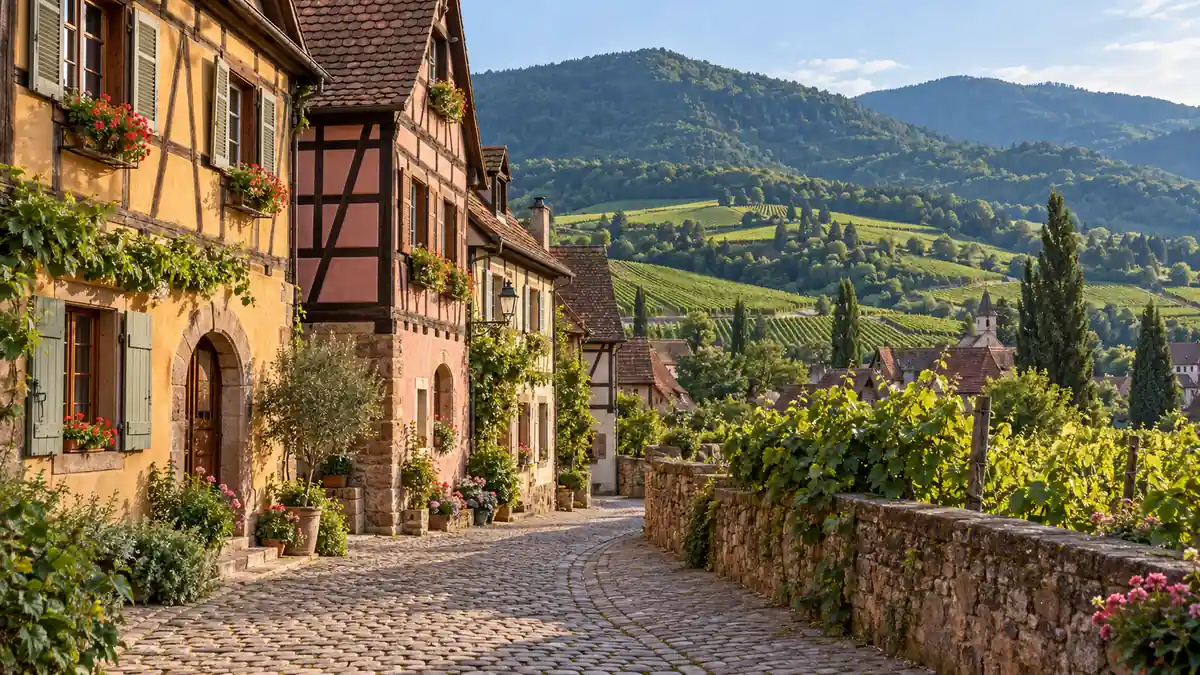
Travel to Alsace, France is worth it for a first-timer who wants half-timbered wine villages, a French region with a strong German accent, and some of the country’s most distinctive food and wine. The shape that works best is a few days split between Strasbourg, where you arrive, and Colmar, the natural base for the Wine Route. The one variable is a car. The villages sit on the Vosges foothills, off the railway, so without one you visit Alsace at a slower pace and see fewer villages per day.
Most people who visit Alsace come in on the TGV from Paris or fit it into a longer France trip. This page settles the planning layer: how long to stay, which town to sleep in, and how to reach villages the trains never touch.
Decide These Before You Book
- Four to five days suits most first trips, while two to three buys Strasbourg plus one village day and six to seven adds the northern route and the Vosges heights.
- Colmar is the better base for the wine villages because the village buses leave from there, while Strasbourg is the arrival city and works best for a night or two.
- Alsace works without a car if you base in Colmar, but infrequent buses mean fewer villages per day and a close eye on the last return.
- Late spring to early summer and the autumn harvest are the easiest windows, while the weeks before Christmas trade peak atmosphere for peak crowds and climbing room prices.
- The direct TGV from Paris Gare de l’Est makes Alsace an easy add-on for Paris first-timers and a standalone trip for wine, food and village travelers.
On This Page
Is Alsace, France Worth Visiting?
Alsace is worth visiting for travelers who want wine villages, rich regional cooking and a Franco-German border culture packed into one compact region. It suits beach seekers poorly, since there is no coast. Anyone chasing big-city nightlife will find little of it beyond Strasbourg.
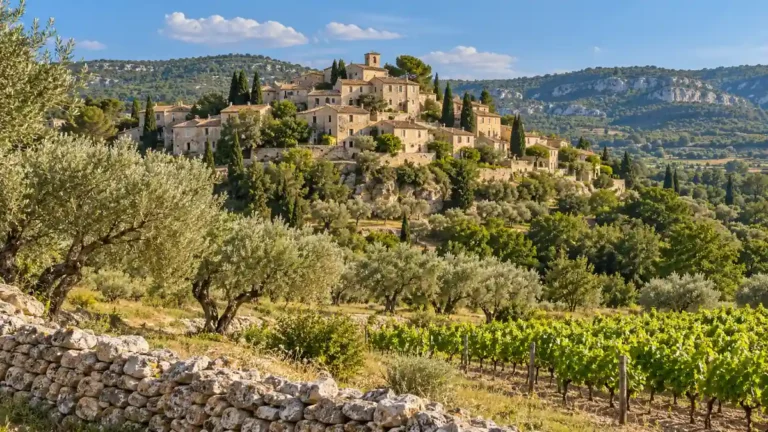
The region is known first for its villages: timber-framed houses painted in strong colours, flower boxes, cobbled lanes and vineyards climbing straight out of the back streets. It is Riesling and Gewurztraminer country, and the cooking matches the wine. Tarte flambée, choucroute-style sauerkraut dishes and slow-cooked winstub classics are the local signatures, and our guide to French food by region places them alongside the rest of the country’s cooking. Add Strasbourg’s cathedral city and a Christmas season that draws crowds from across Europe, and the reasons to come are clear.
The villages carry real national weight. Bergheim, Kaysersberg and Eguisheim have each been voted “Village préféré des Français”, the French public’s favourite village. That concentration of postcard villages along one road is why Alsace sits among France’s standout places to visit.
What makes Alsace efficient for a first trip is distance, not variety: the famous villages sit a few kilometres apart on the same road, so a day here goes on villages, not transfers.
The Alsace Wine Route Runs About 170 km From Marlenheim to Thann
The Alsace Wine Route, or Route des Vins d’Alsace, is a road of about 170 km that runs north to south along the Vosges foothills, from Marlenheim near Strasbourg to Thann near Mulhouse. It threads together the wine villages, so it works as the spine of any trip: wherever you base, you are planning days along this one line.
Three grapes are worth knowing before you arrive: Riesling, Gewurztraminer and Sylvaner. Family estates along the road pour them in their own cellars, and a guided cellar visit is the easiest way in if you would prefer not to knock on doors alone; you can book a cellar tasting ahead.
Alsace has 51 Grands Crus, the named hillside vineyards with the region’s top classification. For a first-timer they are orientation more than homework. You will see their names on signposts and labels as you drive or ride between villages.
The best-known villages cluster in the central stretch of the route, within easy reach of Colmar. That is also the stretch Colmar’s village buses serve. To see how Alsace stacks up against Bordeaux, Burgundy and the rest, our comparison of France’s wine regions sets them side by side.
The northern and southern ends of the route are quieter. Fewer coaches stop there, and the villages feel lived-in more than staged. Our guide to quieter villages off the main Alsace stops covers them.
Tours and activities
Book skip-the-line tickets, day trips and local tours with free cancellation on most activities.
You can also browse everything on getyourguide.com.
Tripstou may earn a commission if you book through this link, at no extra cost to you.
Alsace’s Main Areas and What Each One Is For
Alsace splits into five travel choices: Strasbourg as the gateway city, Colmar as the Wine Route base, the central wine villages, the northern route around Obernai and Mont Sainte-Odile, and the Vosges heights with Haut-Koenigsbourg. Most first trips need only the first three; the last two reward a car and a longer stay.
| Area | Character | Anchor experience | Natural base | Who it fits |
|---|---|---|---|---|
| Strasbourg | Cathedral city, lively and urban | Cathedral and Petite France | Strasbourg | Arrivals, short trips, city lovers |
| Colmar | Canal-side old town, compact | Petite Venise | Colmar | Non-drivers planning village days |
| Central wine villages | Timber-framed, vineyard-edged, busy | Riquewihr and Kaysersberg lanes | Colmar or a village | First-timers here for the postcard Alsace |
| Northern route | Quieter towns, wooded hills | Obernai and Mont Sainte-Odile | Obernai or Strasbourg | Drivers adding a slower day |
| Vosges heights | Uplands, castles, open views | Haut-Koenigsbourg and the Route des Crêtes | A car from Colmar | Hikers and repeat visitors |
Strasbourg, the gateway city
Strasbourg is where most Alsace trips begin. The TGV from Paris arrives here, and the city gives a first evening its anchors: the cathedral and the canals and timbered houses of Petite France. It is also the only place in the region with a true big-city feel.
Treat it as a stop of a night or two, not the whole trip. Our Strasbourg city guide covers what to see and where to stay there.
Colmar, the Wine Route base
Colmar is the base that makes a Wine Route trip work, because the village buses start here. It is small, walkable and pretty in its own right.
Petite Venise, the quarter where a canal runs between pastel-fronted houses, gives the town its postcard look. A short boat trip along the canal is the gentlest way to see it, and in busy months it is worth planning: you can reserve a canal ride before you go.
Choco-Story, the chocolate museum, is the town’s rainy-day standby. For the rest of what Colmar and the region offer, see our list of things to do in Alsace.
Riquewihr, Ribeauvillé, Kaysersberg and Eguisheim
These four villages are the Alsace most travelers picture, and they are why most people make the trip: timber-framed lanes, painted façades and vineyards running up to the last houses.
All four sit within a short drive of Colmar, and the village buses from Colmar reach Riquewihr, Ribeauvillé and Eguisheim, so they work as day trips. Two of them make a comfortable day; trying to fit all four into one without a car means a lot of waiting at stops. A guided tour solves that, and you can book a village tour from Colmar.
They are also at their busiest in the middle of the day. Arrive early or stay into the evening, and the lanes empty out.
Obernai, Mont Sainte-Odile and the Vosges heights
The rest of Alsace is the car-led side of the region. To the north, Obernai is a lively market town on the route, with the hilltop sanctuary of Mont Sainte-Odile above it. Further south, Haut-Koenigsbourg castle stands high over the plain, and the Route des Crêtes runs along the Vosges uplands with wide views. These suit drivers and repeat visitors with a spare day.
How Many Days Do You Need in Alsace?
Four to five days suits most first trips to Alsace. Two to three days covers Strasbourg plus one good Wine Route day. Six to seven days adds the northern route, the Vosges heights and slower time in the villages.
- Two to three days: Strasbourg for a night, then a day in the central villages from Colmar. It works for Paris visitors adding a taste of the region, but it leaves Colmar itself rushed.
- Four to five days: a night or two in Strasbourg, then Colmar as a base for two or three village days. This is enough to see the famous villages at an unhurried pace without a car.
- Six to seven days: the standard trip plus the northern route around Obernai, Haut-Koenigsbourg and the heights. It pays off for drivers, wine lovers and anyone who wants evenings in a village after the day-trippers leave.
Alsace also slots into a longer France plan. In a week in France, it usually replaces another region, since two or three days is all it can claim. With ten days in France, a four-day Alsace leg fits beside Paris. Over two weeks in France, the longer version becomes realistic.
Colmar or Strasbourg: Where to Base Yourself
Colmar is the better single base for a trip centred on the Wine Route, because the village buses leave from there and the central villages are close. Strasbourg suits arrival, city culture and short trips. For four days or more, the strongest option is a two-base split: Strasbourg first, then Colmar.
The split works because each town does one job well. Strasbourg gives you the city evening and the cathedral without a day trip. Colmar then puts every village day on your doorstep. Basing only in Strasbourg turns each village day into a train-and-bus relay, which is the main cost of staying put.
A village base is the third option. It suits drivers who want quiet evenings among the vineyards after the coaches leave. For non-drivers it is a trap: once the last bus has gone, you are going nowhere.
Hotels and places to stay
Compare hotels, apartments and stays for your dates in one search.
Search hotels and stays on hotels.com →
Tripstou may earn a commission if you book through this link, at no extra cost to you.
Getting to Alsace From Paris, and Whether to Add It On
The TGV from Paris Gare de l’Est runs direct to Strasbourg, which makes Alsace easy to reach either as a trip of its own or as an add-on to Paris. From Strasbourg, a direct TER continues south to Colmar.
Alsace earns a standalone trip from wine, food and village travelers, and from repeat France visitors who already know Paris. For a first-timer in Paris, it works better as an add-on: a few days that trade the capital’s scale for small towns and vineyards. Our guide to building a rail trip around France shows how it fits a train-only route, and our Paris region guide covers the other half of that pairing.
The border is part of the appeal. Alsace sits against Germany and Switzerland, with Basel and the Black Forest next door, and the Fluo bus line 68R026 runs from Colmar to Breisach in Germany.
For a longer loop, Alsace pairs naturally with regions to the south and east. Continue to Lyon and its region for food, or to the French Alps for mountains.
Can You Visit Alsace Without a Car?
Yes, you can visit Alsace without a car, if you base yourself in Colmar and accept fewer villages per day. Trains link the towns on the plain, and a handful of named buses reach the main wine villages. A car is still the easiest way to string villages together and to reach the heights.
- Car: the most flexible choice, and the only practical way to cover the northern route, the Route des Crêtes and several villages in one day. The catch is parking in the busiest villages.
- Train and bus: the no-car default for travelers based in Colmar. It reaches the famous villages, but timetables shape your day.
- Bike: a strong choice for fit riders based in a village, with a dedicated cycling itinerary through the vineyards.
- Day tour from Strasbourg or Colmar: fills the no-car gap with no planning, at the cost of time on your own. A day out from Strasbourg can pair Haut-Koenigsbourg castle with Riquewihr and Kaysersberg, covering the castle and two of the best-known villages in one go — a combination that is hard to piece together by public transport in a single day.
The village buses all fan out from Colmar. That is why a no-car trip depends on the base: from Strasbourg, every village day starts with a train before the first bus.
Train and bus: the lines that matter
The TER line Strasbourg–Sélestat–Colmar–Mulhouse is the backbone, with a direct TER between Strasbourg and Colmar. Two other TER lines leave from Colmar: Colmar–Munster–Metzeral and Colmar–Sélestat–Ste-Marie-aux-Mines.
The wine villages themselves are reached by the Fluo 68 buses from Colmar:
- 68R016 Colmar–Riquewihr–Ribeauvillé
- 68R030 Colmar–Eguisheim–Rouffach
- 68R013 Colmar–Le Bonhomme
These buses are infrequent, so check the timetable on fluo.grandest.fr before you plan the day and note the last return.
Driving the route
A car pays off once you want more than two villages a day, the northern route or the heights. It also lets you stop at a cellar or a viewpoint on a whim. Parking is the friction: in the central villages, car parks fill up at peak times, so arrive early or late. Alsace also works as one leg of a longer drive, and our France road trip guide shows how to link it to other regions.
Spring and Harvest Season Are the Easiest Times to Visit Alsace
Late spring to early summer and the autumn harvest are the easiest times to visit Alsace. They give the best mix of mild weather, open wineries and manageable crowds. The weeks before Christmas are the most atmospheric and the most crowded. January is quiet and calm on the wallet, but grey.
The Christmas season is a trade-off to choose deliberately. The markets turn Strasbourg, Colmar and the villages into the image on every postcard, but crowds peak, accommodation prices climb, and the best-placed rooms go first. Book early if you want that season. Our guide to France’s Christmas markets covers the markets themselves.
Summer brings warm days and long evenings, but the central villages fill with day-trippers from late morning onwards. Staying overnight in or near them lets you see the lanes before and after the coaches. For how Alsace’s seasons fit the wider picture, see the best time to visit France.
What a Trip to Alsace Costs, by Travel Style
Alsace sits in France’s middle range for cost. Accommodation is cheaper than in Paris, but the central villages and the Christmas weeks push prices up.
On a tight budget, Alsace is kind if you base in Colmar or Strasbourg, eat a hearty winstub lunch as the day’s main meal, and move by train and bus. In the comfortable middle, a characterful hotel in Colmar, a cellar tasting or two and the odd day tour or short car hire cover the region well. A high-end trip buys a village stay among the vineyards, gastronomic dinners and a car for the whole stay. The region punishes budgets in one place above all: a village room in December, when demand outstrips the small supply.
For actual budget figures, see our breakdown of what a trip to France costs.
The Strongest First Trip: Strasbourg In, Colmar Base, Villages by Day
The shape that works for most first-timers is simple. Arrive in Strasbourg by TGV and spend a night or two there. Then move to Colmar and day-trip the central villages by bus, tour or car. It keeps packing and unpacking to one move and puts every village day close to your bed.
With a car, the same shape stretches easily. Add a day for the northern route around Obernai and Mont Sainte-Odile, and another for Haut-Koenigsbourg and the heights.
As an add-on from Paris, compress it: a short Strasbourg-plus-Colmar run with one village day still captures the region’s character. To see where Alsace fits in a full plan, our France itinerary guide lays out the options.
Alsace Questions First-Timers Ask
Is Alsace French or German?
Alsace is French: it is a region of France, part of Grand Est, on the border with Germany and Switzerland. The German influence is what makes it feel different from the rest of the country. You hear it in the local dialect, see it in the timber-framed architecture and taste it in dishes such as sauerkraut.
Can you cycle the Alsace Wine Route?
Yes. The Véloroute du Vignoble is a 131 km cycling itinerary through the Alsace vineyards. Most visitors ride it in sections from a base in Colmar or a wine village, not end to end, and pair a stretch of road with a village stop or a cellar.
How do you get to Haut-Koenigsbourg without a car?
Take the train to Sélestat, then the Haut-Koenigsbourg Shuttle, bus line 500, from Sélestat station to the castle. Check its operating days and timetable on fluo.grandest.fr before you go; shuttle passengers also get a preferential entry rate. A day tour from Strasbourg or Colmar that includes the castle is the other no-car route.
How We Checked This Guide
This is a broad planner for Alsace: whether to go, how long to stay, Colmar or Strasbourg as a base, and how to move between the Wine Route villages with or without a car. It is not a Strasbourg city guide, a day-by-day route, a village ranking or a bus timetable.
This planner was written with AI assistance, then read through by Alex Perrut, working in tourism since 2015, for the Tripstou editorial team. How that works is set out in our editorial process.
Official sources consulted: Visit Alsace, Colmar Tourist Office, Sélestat Haut-Koenigsbourg Tourist Office.
Plan the Rest of France
- France’s wine regions compared: where Alsace sits among the country’s vineyards.
- France travel guide: the country-level planner this region belongs to.
- Bordeaux region guide: the other great wine trip, on the Atlantic side.
- Normandy guide: coast, cider and history north-west of Paris.
- French Riviera guide: the Mediterranean contrast to inland Alsace.
- Best beaches in France: for the seaside that Alsace cannot offer.
- France packing list: what to bring for village lanes and changeable weather.
- Common scams in France: what to watch for in busy tourist spots.
- Solo female travel safety in France: practical safety advice for travelling alone.
Did this guide save you time or money? Tripstou is independent and reader-funded — if you'd like to give something back, you can support the site with a crypto contribution of any size.