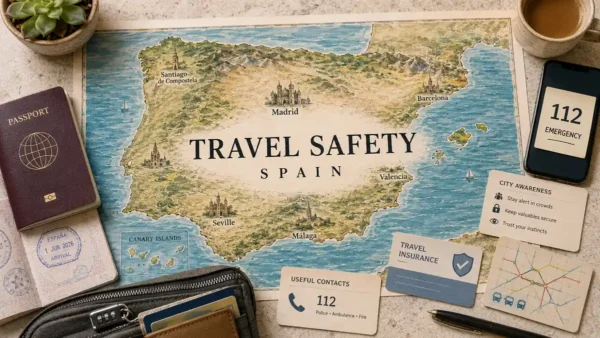
Traveling Spain is straightforward, but a handful of local habits catch first-time visitors off guard. Meals run late, the afternoon slows down, tipping works differently than back home, and big-city pickpockets target distracted tourists. None of it is hard to handle once you know what to expect. This guide covers the practical things that actually shape your day: when people eat, how to pay, the etiquette and language basics that earn goodwill, and how to stay safe in crowds. It also walks through what to sort out before departure, from documents to connectivity, and points you to dedicated guides for visas, costs, timing, and regional depth. Read it as a quick pre-trip briefing, not a sightseeing itinerary, so you arrive ready to travel smoothly from day one.
Quick Answer
Spain is easy and safe to travel, with late meal times, modest tipping, and 112 for emergencies. Habits shift by region and city: dining runs late, several regions have co-official languages, and pickpocketing peaks in big cities. Sort documents, connectivity, and insurance before you go, and book popular sights ahead.
Trust Layer
Tripstou planning guide for travelers resolving one travel decision. Covers the main variable, traveler context, and practical tradeoffs.
Produced with AI assistance and reviewed by Alex Perrut, working in tourism since 2015, for the Tripstou editorial team. See our editorial process for details.
Last factual review: June 16, 2026.
Official sources consulted: European Union, Travel Europe, and ETIAS entry requirements.
Key Takeaways
- Spanish meals run late, with lunch around 2 to 4 pm and dinner from 9 pm, so adjust your daily rhythm.
- Tipping is modest and optional; round up or leave a euro or two, and carry some cash for small spots.
- Tap water is safe almost everywhere, so refill a reusable bottle instead of buying bottled water.
- Pickpocketing in crowded cities is the main risk, so keep valuables close and dial 112 for any emergency.
- Sort your visa status, connectivity, and travel insurance before departure to avoid last-minute stress and arrive ready.
- Book popular sights ahead, and travel in spring or autumn for milder weather and thinner crowds.
Table of Contents
What are the must-know basics for visiting Spain?
Spain’s must-know basics are the euro, Type C/F plugs at 230 volts, and emergency number 112. Spanish is the official language, with co-official languages in several regions. Tap water is safe to drink across almost the entire country, so you rarely need to buy bottled.
These essentials cover most of what trips up new arrivals. Cards are accepted almost everywhere, but a small amount of cash is still useful, and a standard EU plug adapter handles charging without a voltage converter. English is common in tourist areas, less so in smaller towns.
A quick reference for the locked essentials before you arrive.
| Essential | Standard in Spain | Traveler note |
|---|---|---|
| Money and currency | Euro (EUR) is used everywhere | Cards accepted widely; carry some cash |
| Plugs and voltage | Type C and F plugs, 230 volts | Bring an EU adapter and check voltage |
| Emergency services | Dial 112 from any phone | Works without a local SIM card |
| Official language | Spanish, plus regional co-official languages | English is common in tourist areas |
| Drinking tap water | Safe to drink in almost all towns | Refill a reusable bottle to save money |
How do meal times and daily schedules work in Spain?
Spanish meals run later than most travelers expect, with lunch as the main meal and dinner starting late. Lunch is typically eaten between 2 and 4 pm, while dinner often begins around 9 pm or later. Many shops and businesses slow down in the afternoon, so plan errands around the midday break.
Adjusting your rhythm makes the day far smoother. A few patterns to expect:
- Breakfast is light, often just coffee with toast or pastry.
- Lunch is the largest meal and the slowest part of the day.
- Many kitchens close mid-afternoon and reopen for dinner.
- Bars and tapas spots fill up late into the evening.
If you want to eat earlier, tourist-area restaurants and tapas bars serve throughout the day. For where to eat, regional specialties, and dining customs in depth, see our Spain food guide.
How does tipping and paying work in Spain?
Tipping in Spain is modest and optional, cards are accepted almost everywhere, but carrying some cash is smart. Locals rarely tip more than rounding up or leaving a euro or two for good service. Small bars, markets, and rural spots may prefer cash, so keep a little on hand.
Payment habits are easy to follow once you know the norms:
- Round up or leave small change at cafes and casual meals.
- Leave a few euros for attentive service at sit-down restaurants.
- Service is not automatically added, and large percentage tips are uncommon.
- Contactless and mobile payments are widely accepted in cities.
Cash remains handy for small purchases, transport top-ups, and tipping, even though card coverage is excellent across the country.
What etiquette and language basics should you know?
A few courtesy norms and Spanish phrases go a long way, and several regions speak co-official languages. Greet with “hola” or “buenos días”, and a relaxed, unhurried pace is the social default. Catalan, Basque, Galician, and Valencian sit alongside Spanish in their home regions.
You do not need to be fluent, but small gestures earn goodwill. Learn basic greetings, “por favor” and “gracias”, and expect meals and conversations to take their time. A friendly attempt at the local language is always welcomed, even when people switch to Spanish or English.
Regional languages shape daily life and signage in parts of the country. For context on each area’s language and culture, see our Catalonia guide, Basque Country guide, northern Spain guide, and Valencia region guide.
Is Spain safe, and how do you avoid pickpockets?
Spain is broadly safe, and the main risk is pickpocketing in crowded tourist areas, not violent crime. Pickpockets work busy metros, train stations, and packed plazas in big cities like Barcelona and Madrid. Keep valuables zipped and close, stay alert in crowds, and dial 112 for any emergency.
Simple awareness prevents most incidents. Carry only what you need, keep bags in front in dense crowds, and stay watchful around distractions and staged commotions. For full safety guidance, common scams, and solo-travel advice, see our Spain safety guide, common scams in Spain, and solo female travel safety.
Risk concentrates in the busiest urban hubs, so city-specific tips help most. Read our local guides for Barcelona tips, Madrid tips, Seville tips, Malaga tips, Granada tips, and Valencia tips.
What should you sort out before you go?
Before departure, confirm your entry and document status, line up connectivity, and consider travel insurance. These three steps prevent most last-minute stress and let you focus on the trip itself. Check passport validity, decide how you will get online, and weigh coverage for your plans.
Handle each item once and you are set. The essentials, with depth on dedicated pages:
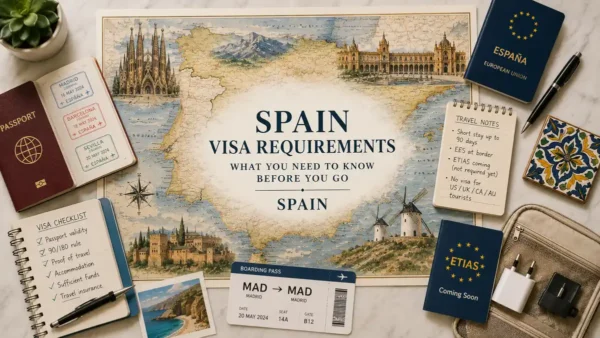
- Entry and documents: confirm your visa or entry status in our Spain visa requirements guide.
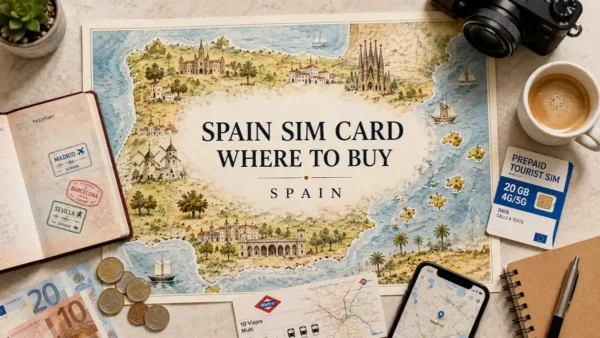
- Staying connected: compare a local Spain SIM card or the best eSIM for Spain.
- Peace of mind: review options in our Spain travel insurance guide.
Sorting these before you leave means you arrive online, covered, and free of paperwork worries.
Get online the moment you land
An eSIM installs before you fly — no SIM swap, no roaming bill, no queue at an airport kiosk. Two options, depending on how you travel:
Holafly — unlimited-data plans, so nothing counts against a
cap. Best for longer stays, remote work, and heavy map and video use.
Code TRIPSTOU applies automatically: 5% off any travel eSIM,
reusable on every order, or 10% off Holafly Plans.
Get a Holafly eSIM →
Airalo — pay for the data you need, across 200+ destinations,
trusted by 20M+ travelers. Best for short trips and light use.
Use code NEWTOAIRALO15 for 15% off your first order:
Get an Airalo eSIM →
Tripstou may earn a commission if you purchase through these links, at no extra cost to you.
When should you visit and what will it cost?
The best time to visit and your budget both depend on region and travel style. Spring and autumn suit most travelers with mild weather and thinner crowds than peak summer. Costs swing widely between budget and comfort trips, so set priorities before you plan in detail.
Both decisions deserve their own research rather than a quick rule of thumb. Timing shapes weather, crowds, and prices, while your budget depends on cities, accommodation, and pace. For the full picture, see our guide to the best time to visit Spain and our breakdown of Spain trip costs.
Frequently Asked Questions
Do you need to speak Spanish to travel in Spain?
No, you do not need to speak Spanish to travel comfortably, especially in tourist areas where English is common. Learning a few phrases like “hola”, “por favor”, and “gracias” earns goodwill, and a friendly attempt at the local language is always welcomed, even when people reply in English.
Can you drink tap water in Spain?
Yes, tap water is safe to drink in almost every Spanish town and city. The quality is reliable across the mainland, so you can refill a reusable bottle to save money and reduce plastic waste. Taste varies slightly by region, but it remains perfectly safe for everyday drinking.
What is the emergency number in Spain?
The emergency number in Spain is 112, which connects you to police, ambulance, and fire services. It works from any phone, including mobiles without a local SIM card, and operators often speak English. Save it before you travel so you can reach help quickly in any urgent situation.
Is it rude not to tip in Spain?
No, it is not rude to skip tipping in Spain, since tipping is modest and entirely optional. Locals usually round up the bill or leave a euro or two for good service rather than a fixed percentage. Service is not automatically added, so any tip is a genuine gesture.
What kind of plug adapter do you need in Spain?
Spain uses Type C and Type F plugs running on 230 volts, the standard across most of continental Europe. Travelers from outside Europe need a plug adapter, and visitors from the UK or US should check whether their devices support 230 volts before plugging in to avoid damage.
Are credit cards accepted everywhere in Spain?
Cards are accepted almost everywhere in Spain, including contactless and mobile payments in cities and most restaurants. However, small bars, local markets, and rural businesses may prefer or only take cash, so carry a small amount for those situations. You rarely need large sums, but some cash helps.
Related Guides
Use these guides to plan the rest of your trip, from the big picture to specific regions, islands, and routes.
Explore Spain
Regions
Islands and Coast
- Best beaches in Spain
- Spain islands guide
- Balearic Islands guide
- Canary Islands guide
- Costa Brava guide
- Costa del Sol guide
Get Around
Did this guide save you time or money? Tripstou is independent and reader-funded — if you'd like to give something back, you can support the site with a crypto contribution of any size.