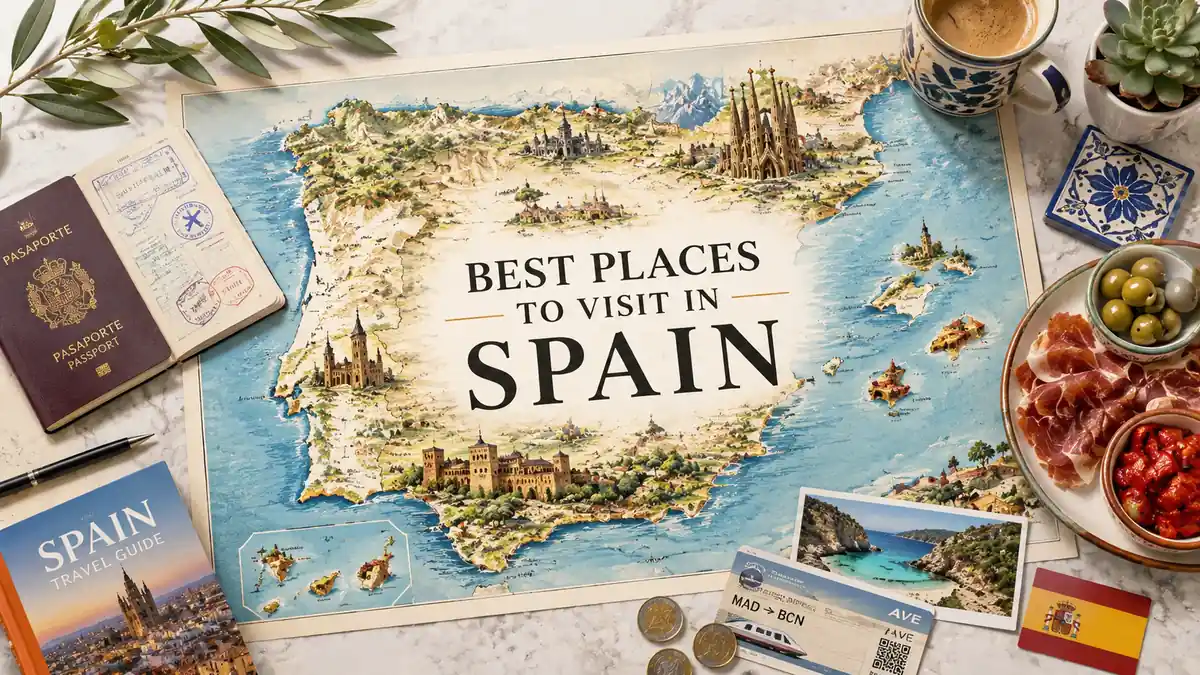
The best places to visit in Spain start with Barcelona, Madrid, Seville, and Granada, the four marquee cities most trips are built around. From there, group your picks by trip style: culture, beaches, food, or slow travel. Food-led travelers should add the Basque Country; beach-led travelers should add the Balearic or Canary Islands.
Spain has more than sixteen guide-worthy destinations, and no single trip can cover them all. The hard part is not finding good places — it is choosing the few that fit your trip. This page solves that by matching Spanish destinations to trip style and trip length, instead of ranking them by popularity. Each pick comes with who it suits and its main tradeoff, then routes you down to region, city, and itinerary depth once your shortlist is set. Read it to leave with a focused selection instead of a generic top-ten list.
Which Spanish destinations make the shortlist?
Spain’s core shortlist is Barcelona, Madrid, Seville, and Granada, anchored by three key regions: Andalusia, Catalonia, and central Madrid. These four cities carry the most signature draws, while the regions add depth for longer trips. Choose cities for a first visit and add regions as your trip lengthens.
The shortlist works as a tiered selection, not a flat ranking. The four marquee cities are the default backbone of almost any first Spain trip: they concentrate the country’s biggest sights, best transport links, and widest range of food and nightlife. They are the safe, high-return choices when you only have a week or two.
The regions are where you go deeper or slower. Andalusia in the south delivers Moorish heritage and white villages, Catalonia pairs Barcelona with coast and mountains, and the Madrid region adds historic day-trip towns around the capital. Add a region when you want texture beyond the headline cities, or when your trip runs past ten days.
For whole-trip orientation — logistics, costs, and how the pieces fit together — start from the Spain travel hub and use this page purely to decide where to go.
What is the best place to visit in Spain for a first trip?
Barcelona is the best place for a first trip to Spain, combining iconic Gaudí landmarks, beaches, and great food in one walkable city. Pair it with Madrid or Seville for a classic introduction. First-timers get the country’s biggest sights with the easiest transport and the widest range of things to do.
Is Barcelona or Madrid better to start a Spain trip?
Barcelona is usually the better starting city for a first Spain trip, thanks to its coastline, Gaudí architecture, and compact layout. Madrid suits travelers who prioritize world-class art museums and central rail connections to the rest of the country. Choose Barcelona for variety, Madrid for culture and onward access.
Where to go for culture, history, and iconic landmarks
For culture and landmarks, head to Granada, Barcelona, Madrid, and Seville first. Each carries one unmissable signature: Granada’s Alhambra, Barcelona’s Sagrada Família, Madrid’s Prado, and Seville’s Moorish old town. These four cover Spain’s strongest historic and artistic highlights in a single, walkable selection of cities.
Each city leads with a different kind of culture, so your pick depends on what you want to see most. Granada is the choice for Moorish architecture, crowned by the Alhambra and its hillside Albaicín quarter. Seville doubles down on Andalusian heritage with its cathedral, Alcázar, and flamenco roots.
Madrid is the art capital, home to the Prado and a dense cluster of world-class museums, while Barcelona blends Gothic streets with Gaudí’s modernist landmarks. The tradeoff at this level is crowds: these are Spain’s most visited cultural cities, so they reward early starts and shoulder-season timing over peak summer. They suit first-timers and culture-led travelers who want maximum signature sights with minimal planning.
Tours and activities
Book skip-the-line tickets, day trips and local tours with free cancellation on most activities.
You can also browse everything on getyourguide.com.
Tripstou may earn a commission if you book through this link, at no extra cost to you.
Best places for beaches and island escapes
For beaches and islands, choose the Costa del Sol, the Costa Brava, the Balearic Islands, or the Canary Islands. The mainland coasts suit easy add-ons to a city trip, while the islands reward travelers building a trip around the sea. Pick mainland for convenience, islands for a dedicated beach escape.
The mainland coasts are the low-effort choice. The Costa del Sol in the south pairs reliable warmth with easy access from Málaga, making it a simple beach extension to an Andalusia trip. The Costa Brava north of Barcelona trades resort sprawl for rugged coves and is the natural seaside add-on to a Catalonia visit.
The islands suit travelers who want the beach to be the trip, not a side trip. The Balearic Islands mix party energy with quiet coves, while the Canary Islands offer year-round warmth and volcanic landscapes far off the mainland. Getting there takes a flight or ferry and a more committed plan, so they fit beach-led travelers over those squeezing in a quick coastal day. For deeper coast and island planning, treat these as selection-level picks and go one level down when you commit.
Best places for food, wine, and nightlife
For food, wine, and nightlife, the Basque Country, Valencia, Madrid, and Barcelona lead. The Basque Country is Spain’s pintxos capital, Valencia is the home of paella, and Madrid and Barcelona run the country’s biggest nightlife scenes. Choose the north for eating, the big cities for going out late.
The Basque Country is the strongest single pick for food-led travelers. San Sebastián and Bilbao built their reputation on pintxos bars and high-end kitchens, making the north a destination you visit primarily to eat. It is the smart alternative for travelers who would rather plan a trip around meals than monuments.
Further south, the Valencia region is paella’s birthplace, and the city of Valencia pairs that food heritage with beaches and a relaxed pace. For nightlife, Madrid and Barcelona stay in a class of their own, with late dinners rolling into bars and clubs that run until dawn. Timing is the catch: the best eating and going-out culture rewards travelers who adopt the late Spanish schedule rather than fight it.
Best regions for slow travel and lesser-known Spain
For slow travel and a quieter Spain, base yourself in Northern Spain and smaller inland towns. These regions trade marquee landmarks for green landscapes, local rhythm, and far thinner crowds. The tradeoff is fewer headline sights and more travel time, so they suit return visitors or anyone prioritizing atmosphere over checklist sightseeing.
Northern Spain is the headline choice for slow travel. The green, Atlantic-facing regions reward unhurried road trips, coastal villages, and long meals over a tight sightseeing schedule. This is where Spain feels least like its postcard image and most like a lived-in country.
Smaller inland towns across the interior offer the same quieter rhythm without a long detour. They suit travelers who have already seen the marquee cities, or who simply prefer depth in one area over ticking off multiple icons. Reach is the honest limit: lesser-known Spain often means more time between places and fewer must-see sights, which is exactly the point for slow travelers and a poor fit for a first, sight-packed visit.
How to match destinations to your trip style and length
Match destinations to your trip by choosing one style first, then sizing the list to your days. Pick your lead theme (culture, beaches, food, or slow travel), then add destinations within it. Short trips suit one or two cities; longer trips add a region or a second style.
Start with style, because it does the heavy filtering. A culture-led traveler builds around Granada, Seville, Madrid, or Barcelona; a food-led traveler anchors on the Basque Country; a beach-led traveler leads with the islands or a southern coast; a slow traveler bases in the north. Choosing one theme first prevents the most common Spain mistake — trying to do everything and rushing all of it.
Then size the shortlist to your days. As a rough rule, a short trip works best with one or two nearby cities, a medium trip adds a region or a contrasting second city, and a longer trip can combine two styles or fold in slower, lesser-known Spain. Most travelers should visit one or two places on a short Spain trip, three on a medium trip, and up to four on a longer one, since adding more usually means rushing and long transfers. The table below maps each style to a starting pick and a longer-trip add-on.
| Trip style | Best starting picks | Add for a longer trip | Best suited to |
|---|---|---|---|
| Culture and landmarks | Granada, Seville, Madrid, Barcelona | Andalusia or Madrid-region day trips | First-timers and history lovers |
| Beaches and islands | Costa del Sol or Costa Brava | Balearic or Canary Islands | Sun and sea-focused travelers |
| Food and wine | Basque Country, Valencia region | Add a marquee city for contrast | Travelers planning around meals |
| Nightlife | Madrid and Barcelona | Coastal nightlife in the Balearics | Late-night and social travelers |
| Slow travel | Northern Spain, small inland towns | Second quiet region or coast | Return visitors seeking calm |
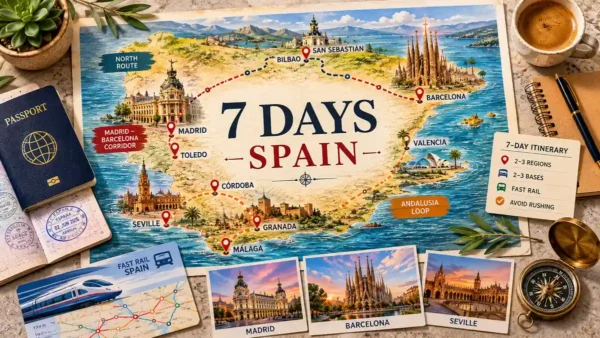
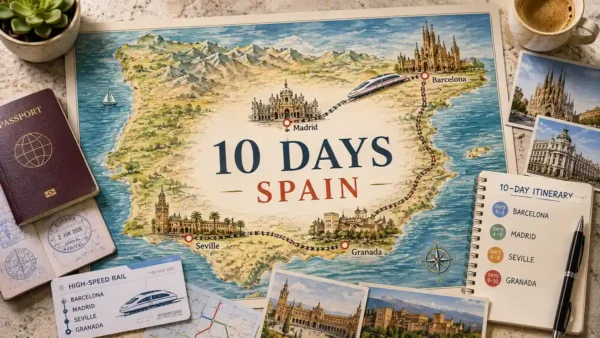
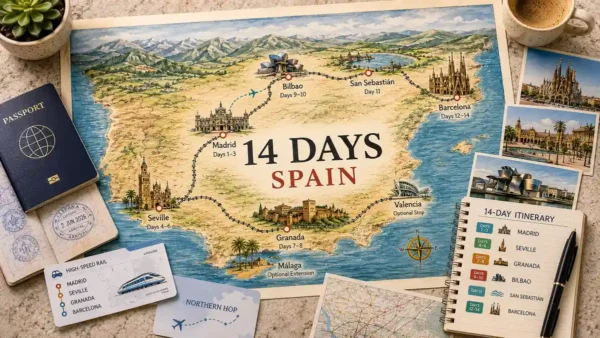
Once your destinations are set, route the sequencing elsewhere — this page selects places, it does not build day-by-day plans. For ready-made structures, see the 7-day Spain itinerary, the 10-day Spain itinerary, or the 14-day Spain itinerary. To see what fills those days, the guide to things to do in Spain covers the experiences worth your time. When the list is locked and the dates are chosen, finish with the Spain packing list.
About This Shortlist
This is a curated selection among Spain’s marquee cities, regions, coasts and islands, grouped by trip style and trip length; it is not a full Spain travel guide, a day-by-day itinerary, or a catch-all list of Spanish travel inspiration.
Review: Alex Perrut, working in tourism since 2015, for the Tripstou editorial team. Produced with AI assistance under our editorial process.
Last factual review: June 20, 2026.
Official sources consulted: travel-europe.europa.eu, european-union.europa.eu.
Did this guide save you time or money? Tripstou is independent and reader-funded — if you'd like to give something back, you can support the site with a crypto contribution of any size.