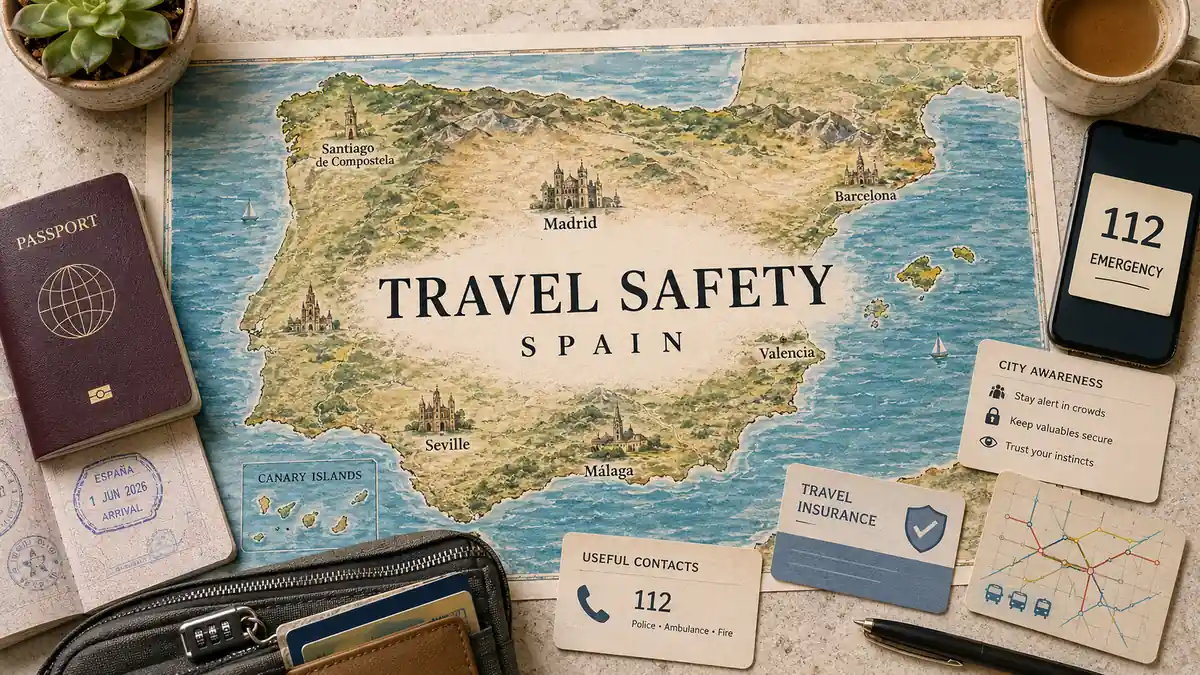
Spain is generally very safe for travelers and ranks among Europe’s safer destinations. The real risk is petty theft and scams in tourist-dense hubs, not violent crime, which stays rare. Stay alert in crowds, keep valuables secured, and save 112 as the universal emergency number for any urgent help.
Headlines about protests, pickpockets, and crowded tourist hotspots can make the decision feel heavier than it should. The sections below back that verdict, then separate the risks that genuinely matter from the fears that rarely materialise. You will see where petty theft actually happens, which simple habits prevent most problems, and who to call if something goes wrong. The goal is a confident booking and calm, well-prepared travel, not a checklist of things to fear.
How This Safety Advice Was Checked
This page settles one planning question for Spain: whether it is safe to visit and how to handle the risks that are real there. It is not a destination guide or an itinerary, and it leaves city-by-city safety, scam playbooks, solo female travel and entry rules to their own pages.
Review: Alex Perrut, working in tourism since 2015, for the Tripstou editorial team. Produced with AI assistance and checked against our editorial process.
Last factual review: June 1, 2026.
Official sources consulted: travel-europe.europa.eu, european-union.europa.eu.
Is Spain safe to visit?
Spain is generally very safe and sits in Europe’s safest tier for travelers. Violent crime is rare, the tourist infrastructure is well developed, and visitors move freely through cities and regions with little concern. The one genuine caveat is petty theft, which concentrates in crowds and busy transit hubs.
In practical terms, Spain carries the same low baseline risk as countries like France and Germany under EU and government travel safety tiers. Millions of visitors arrive each year and the overwhelming majority have an uneventful trip from a safety standpoint. Police presence in tourist areas is strong, healthcare is reliable, and English is widely understood in places travelers frequent.
The risk that does exist is opportunistic, not violent. Pickpockets and bag-snatchers work crowded squares, packed metro cars, and popular promenades because that is where distraction is easiest. This is a problem you manage with awareness and habit, not one that should change your decision to visit. Spain remains a confident, easy choice for first-time and repeat travelers alike.
What are the real risks for travelers in Spain?
The real risks in Spain are petty theft, scams, occasional crowd or protest disruption, and seasonal natural hazards. Violent crime and terrorism are not the practical concern for visitors. Almost every genuine problem a traveler faces is opportunistic and preventable, centred on distraction in busy tourist zones rather than personal danger.
Petty theft is the dominant risk by a wide margin. Pickpocketing and bag-snatching happen most in dense tourist hubs, on public transport, and around major landmarks where crowds make distraction easy. Scams follow a similar logic, targeting tourists with staged distractions, fake petitions, and overfriendly strangers in high-traffic areas. We cover their mechanics separately in our guide to common scams in Spain, so you can learn the setups before you go.
Crowd-related disruption and seasonal hazards round out the realistic list. Large events, demonstrations, and peak-season congestion can affect comfort and movement more than personal safety. Summer heat and occasional flash-flood events are the natural hazards to plan around. Travel insurance is a sensible backstop for theft, medical issues, or trip disruption, and you can compare options in our overview of travel insurance for Spain.
Solo female travelers face the same core risks, not a different category of danger, with a few situational nuances worth reviewing in our dedicated guide to solo female travel safety in Spain. For most visitors, naming these real risks honestly is reassuring: they are manageable, predictable, and far less dramatic than the fears that headlines tend to amplify.
Travel medical insurance
SafetyWing Nomad Insurance provides travel medical coverage designed for travelers and digital nomads, with flexible Monthly and Annual plans.
Check Nomad Insurance coverage and current pricing →
New Nomad Insurance Essential members can get 8 weeks of electronic theft coverage free with reward code TRIPSTOU8.
Apply the reward before creating your SafetyWing account by looking for the pink camera icon on the Nomad Insurance page.
Tripstou may earn a commission if you purchase through this link, at no extra cost to you.
How serious are protests and overtourism in Spain?
Protests in Spain are generally awareness-driven, non-violent, and not aimed at tourists. Overtourism affects comfort and crowding far more than personal safety. Demonstrations are part of normal civic life and rarely pose any danger to visitors who simply give large gatherings space and continue with their plans.
The practical impact of protests is usually disruption rather than risk. Marches can temporarily close streets, slow transport, or crowd central areas, so the sensible response is to stay aware of local news and route around any large gathering. Demonstrations connected to tourism pressures express frustration with crowding and housing, not hostility toward individual travelers.
Overtourism is best understood as a comfort issue you can plan away. Peak-season crowds in the most popular hubs raise prices, fill landmarks, and strain transport without making destinations unsafe. The simplest fixes are timing and choice of destination: travel in shoulder seasons using our guide to the best time to visit Spain, and consider quieter alternatives among the best places to visit in Spain.
Natural hazards and seasonal safety in Spain
The seasonal hazards worth planning around are summer heat and occasional flash-flood events. Neither should deter a trip, but both reward simple preparation. The evergreen response is to hydrate, seek shade during the hottest hours, and heed local weather warnings whenever authorities issue them.
Summer heat is the most common seasonal concern, especially inland and in the south. The practical habits are straightforward: drink water steadily, plan demanding activities for mornings and evenings, use sun protection, and slow down during the peak afternoon hours. Travelers sensitive to heat may prefer cooler months, which our guide to the best time to visit Spain helps you choose.
Flash flooding is far rarer but deserves respect when warnings appear. Heavy seasonal rain can occasionally affect certain regions, so follow official advisories and avoid flood-prone roads and riverbeds during alerts. This matters most for travelers covering distance, whether by car on a Spain road trip or by rail on a Spain train itinerary, where checking conditions before you set out keeps seasonal travel smooth.
Which areas of Spain need more caution?
Tourist-dense hubs and busy transport corridors warrant more awareness than quieter regions and islands. The pattern is consistent: petty theft concentrates where crowds and visitors are thickest, so the biggest cities and their landmark areas call for the most attention, while smaller towns and rural regions feel notably relaxed.
The major cities deserve standard urban awareness, especially around crowded squares, transit, and nightlife zones. For city-specific guidance, see our dedicated safety guides for Barcelona, Madrid, Seville, Valencia, Malaga, and Granada. Each covers local hotspots and neighbourhood nuance that a national overview cannot.
Regions and coastlines vary mostly in pace, not danger. Quieter destinations across the country let you relax your guard considerably, while still applying common-sense habits. For regional orientation, explore our guides to Andalusia, Catalonia, the Basque Country, northern Spain, the Madrid region, and the Valencia region, plus coastal hubs like the Costa Brava and Costa del Sol.
The islands and standout destinations follow the same low-risk logic. The Balearic Islands and Canary Islands are generally calm beyond party-zone nightlife, and our overview of Spain’s islands helps you compare them. To plan around the most rewarding and often quieter spots, browse our picks for the best places to visit in Spain and the best beaches in Spain.
Is it safe to walk around Spanish cities at night?
Walking around Spanish cities at night is generally safe, as nightlife runs late and central areas stay busy and well lit. Apply standard urban awareness: stick to populated streets, avoid isolated areas, and watch belongings in crowded nightlife zones, where distraction-based theft is most likely.
How to stay safe in Spain: practical precautions
The single most effective habit in Spain is staying situationally aware and keeping valuables secured in crowds. Almost all petty theft depends on distraction, so simple, consistent precautions prevent the overwhelming majority of incidents. None of this requires anxiety, just a few routines that quickly become second nature in busy areas.
Apply these evergreen precautions wherever crowds gather:
- Carry bags in front of you and zipped in dense crowds, on the metro, and at transport hubs.
- Keep phones, wallets, and valuables off restaurant tables and out of open back pockets.
- Raise your awareness at known hotspots like Puerta del Sol, Las Ramblas, and packed metro platforms.
- Split your cash and cards so a single loss never strands you.
- Stay alert during staged distractions, and be wary of strangers who crowd your personal space.
Two practical extras strengthen the basics. Staying contactable matters if something goes wrong, so arranging a local connection is worth doing early, as covered in our guide to getting a Spain SIM card. And because scams rely on the same distraction tactics as theft, recognising the common setups in advance is one of the best defences. For broader on-the-ground etiquette and practical habits that make travel smoother, see our Spain travel tips.
Emergency numbers and who to call in Spain
The one number to remember is 112, the universal emergency line across Spain. It is free, available 24/7, multilingual, and connects you to police, ambulance, or fire services from any phone. Save it before you travel so help is one call away in any urgent situation, anywhere in the country.
Beyond 112, a few contacts and services are useful to know for non-life-threatening situations such as theft reporting:
| Contact | What it is for | When to use it |
|---|---|---|
| 112 | Universal emergency line, free and multilingual | Any urgent police, medical, or fire emergency |
| SATE | Foreign tourist crime-reporting assistance service | Reporting theft or crime as a visitor |
| AlertCops | Official national police reporting app | Reporting incidents quietly from your phone |
| National and local police | Policía Nacional, Guardia Civil, and Local police | In-person help and formal crime reports |
SATE provides multilingual assistance specifically for foreign tourists who need to report a crime, and AlertCops lets you contact police directly through your phone. To use these services smoothly you need to stay reachable, which is another reason to sort out connectivity early with a local SIM card for Spain. If your trip also involves checking entry requirements, those rules sit outside safety planning and are covered separately in our guide to Spain visa and entry requirements.
Plan the Rest of Your Spain Trip
Once safety is settled, these guides pick up the planning questions this page leaves aside:
- Spain travel guide — the complete country hub for planning your whole trip.
- Spain trip cost — budget planning and what to expect to spend.
- Spain food guide — what and where to eat across the country.
Did this guide save you time or money? Tripstou is independent and reader-funded — if you'd like to give something back, you can support the site with a crypto contribution of any size.