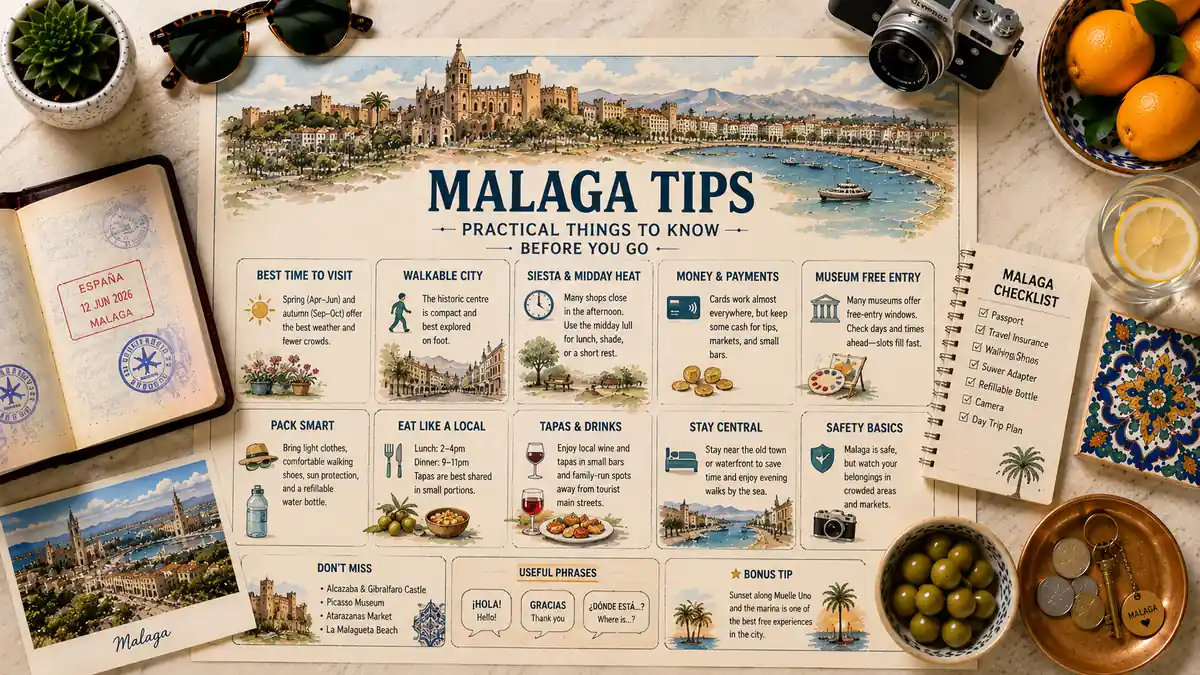
Malaga is one of Spain’s easiest cities to enjoy, but a handful of small habits decide whether your first visit feels effortless or frustrating. The weather, the daily rhythm, the way the centre is laid out, and how you pay all shape your trip more than any single attraction. None of it is complicated, yet first-time visitors who ignore the timing, the midday heat, or the cash-versus-card balance often waste time and energy they could have spent enjoying the city.
This guide collects the practical things worth knowing before you arrive: when to come, how to move around, how the day flows, money habits, free-sightseeing windows, what to pack, and the local eating rhythm. Each section below is a fast, scannable rule you can act on, ending with the most common mistakes first-timers make.
Quick Answer
Malaga is a compact, walkable coastal city best visited in spring or autumn shoulder season. Heat is the main variable: peak-summer midday slows the whole day and empties the streets for hours. Walk the historic centre, carry a little cash for small purchases, and pace activity around the midday lull.
Trust Layer
Tripstou planning guide for travelers resolving one travel decision. Covers the main variable, traveler context, and practical tradeoffs.
Produced with AI assistance and reviewed by Alex Perrut, working in tourism since 2015, for the Tripstou editorial team. See our editorial process for details.
Last factual review: June 12, 2026.
Official sources consulted: travel-europe.europa.eu, european-union.europa.eu.
Key Takeaways
- Visit in spring or autumn shoulder season for mild weather and thinner crowds, keeping summer beach days as a bonus.
- Skip the car and base yourself centrally, since Malaga’s compact historic centre is best explored entirely on foot.
- Plan demanding sightseeing for mornings and late afternoons, reserving the hot, quieter midday for lunch, shade, or rest.
- Pay by contactless card almost everywhere, but carry small cash for tips, market stalls, and tiny bars.
- Time museum visits around free-entry windows to cut sightseeing costs, but check current days since slots fill fast.
- Pack broken-in walking shoes and sun protection, and eat later to match Malaga’s local lunch and dinner rhythm.
Table of Contents
When is the best time to visit Malaga?
Malaga is best visited in spring or autumn, when the weather is mild and crowds are thinner. Shoulder season delivers warm, comfortable days without the peak-summer heat or the high-season crush. Treat seasonal temperatures as guidance rather than fixed numbers, but expect the most balanced conditions outside July and August.
- Spring and autumn bring warm, walkable days and the lightest crowds.
- July and August are hottest and busiest, especially around the midday peak.
- Winter stays mild and quiet, ideal if you prefer empty streets to beach weather.
If your dates are flexible, aim for the shoulder months and keep beach swimming as a bonus rather than the main plan. Heat-lovers can still visit in summer, but they should expect to structure each day around the hottest hours.
Is Malaga walkable, and how do you get around?
Yes, Malaga’s historic centre is small and best explored on foot. The old town packs its main sights, squares, and tapas streets into a tight, pedestrian-friendly core where walking beats driving. You will rarely need transport once you are central, so prioritise comfortable shoes over working out routes.
Once you arrive, you will mostly travel on foot. The airport connects to the centre by train, bus, and metro, but the detailed routing and fares belong on a dedicated page rather than here. For the full breakdown of getting around Malaga, including airport transfers, follow the transport guide.
- The historic centre is flat, dense, and easy to cross on foot.
- You rarely need taxis or transit for day-to-day sightseeing downtown.
- A central base removes most transport questions before they start.
Because walking is the default, where you sleep matters more than how you commute. See where to stay in Malaga to choose a base that keeps the main sights within walking distance.
How do siesta hours and midday heat shape your day?
Expect a quieter midday in Malaga and plan your day around it. Some smaller shops close for a few hours and the heat peaks, so the rhythm naturally slows. Treat siesta timing as a loose rule of thumb rather than fixed hours, and save demanding activity for morning or late afternoon.
- Use mornings for sightseeing, walking, and anything outdoors.
- Reserve the hottest midday hours for lunch, shade, or a rest.
- Return to museums, streets, and terraces as the afternoon cools.
This natural rhythm is easy to build into a short trip. A structured plan like 2 days in Malaga shows how to sequence a day around the midday lull without missing the highlights.
Should you use cash or card in Malaga?
Cards work almost everywhere in Malaga, but keep a little cash on hand. Contactless payment is the norm in restaurants, shops, and attractions across the city. Small bars, markets, and tips are where coins and notes still help, so carry a modest amount for those everyday moments.
- Restaurants, shops, and attractions almost always take contactless cards.
- Keep small notes and coins for tips, market stalls, and tiny bars.
- Withdraw modest amounts rather than carrying large sums of cash.
The same card-friendly habits apply across the country, so the balance you strike here works elsewhere too. For the wider payment and practical norms, see our Spain travel tips.
Spending money abroad
A Wise account converts your money at the mid-market exchange rate and shows every fee upfront, with a card you can spend in the local currency.
Check Wise’s rates and fees for your currency →
Tripstou may earn a commission if you sign up through this link, at no extra cost to you.
How can you visit Malaga’s museums and sights for free?
Several Malaga museums offer free entry on set days or during set hours. Planning your visits around these free windows can meaningfully cut your sightseeing spend. Treat the exact days and cutoff times as variable rather than fixed, and check ahead, since free slots can be busy and time-limited.
- Many museums open free entry on specific days or in set time windows.
- Free slots fill quickly, so arrive early and keep plans flexible.
- Some sights and viewpoints cost nothing to enjoy at any time.
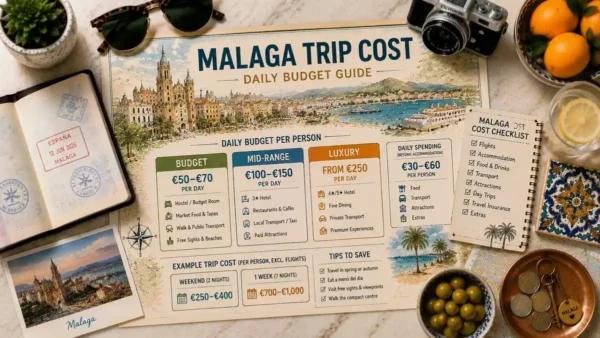
Free-entry timing changes, so confirm current days and cutoffs before you build a route around them. For how these windows affect your overall spend, see the full Malaga trip cost breakdown.
What should you pack for Malaga?
Pack comfortable walking shoes and sun protection above everything else. The cobbled centre and warm climate make both non-negotiable for a smooth visit. Add light, breathable layers for warm days and cooler evenings, plus a refillable water bottle, so you stay comfortable while covering the old town on foot.
- Comfortable, broken-in shoes for cobbled, uneven streets.
- Sun protection: hat, sunglasses, and high-factor sunscreen.
- Light layers for warm days and slightly cooler evenings.
- A refillable water bottle to stay hydrated while walking.
Staying connected is the other easy win, since maps and free-entry checks rely on data. Sorting a plan for staying connected with an eSIM for Spain before you fly saves hunting for signal on arrival.

When do people eat, and how does dining timing work?
Locals in Malaga eat lunch and dinner later than most visitors expect. Lunch runs into the early afternoon and dinner starts well into the evening, so arriving too early often means empty restaurants. Shift your meal times later to eat when kitchens are busy and the atmosphere is at its best.
- Lunch peaks in the early afternoon, not at noon.
- Dinner gets going in the evening, later than many visitors expect.
- Tapas bars stay flexible, bridging the gap between set meal times.
If you prefer eating earlier, head to tapas bars and casual spots rather than full restaurants, which often open their kitchens later. Matching local timing also means livelier rooms and fresher service.
First-Timer Mistakes to Avoid in Malaga
The biggest first-timer mistakes are fighting the midday heat and over-relying on a car. Most visitors lose time and comfort by ignoring the city’s natural rhythm and central, walkable layout. Avoiding a handful of common missteps keeps your trip smoother than any single sightseeing decision.
- Renting a car for a city-only trip you will mostly walk.
- Scheduling demanding sightseeing for the hottest midday hours.
- Carrying no cash at all for tips, markets, and small bars.
- Basing yourself far from the centre and commuting in daily.
Staying alert in busy tourist spots is the other easy habit. For how to handle crowded areas and common scams, see our guide to Malaga safety.
Frequently Asked Questions
Do you need a car in Malaga?
No, you do not need a car in Malaga itself. The historic centre is compact and walkable, and central sights, tapas streets, and the beach are reachable on foot. A car only helps for day trips beyond the city, such as Ronda or the surrounding Andalusian countryside.
Is Malaga an expensive city to visit?
Malaga is generally affordable compared with major Western European cities. Tapas, local wine, public beaches, and many viewpoints cost little, and several museums offer free-entry windows. Your biggest variables are accommodation and season, with peak summer pushing prices higher than the quieter shoulder months.
How many days do you need in Malaga?
Two to three days is enough to enjoy Malaga comfortably. That gives you time for the historic centre, the Alcazaba and cathedral, a museum or two, and a relaxed beach afternoon without rushing. Add extra days if you plan day trips into the wider Andalusian region.
Do people speak English in Malaga?
Yes, English is widely spoken in Malaga’s tourist areas. Staff in hotels, restaurants, and major attractions generally communicate comfortably in English, especially in the centre. Learning a few Spanish phrases is still appreciated and helps in smaller bars, local markets, and neighbourhoods away from the main tourist core.
Is Malaga safe for tourists?
Malaga is considered a safe city for tourists, including solo and first-time visitors. Violent crime is rare, and the main concern is opportunistic pickpocketing in crowded areas, busy markets, and transport hubs. Keep valuables secure and stay aware in tourist hotspots, and most trips pass without incident.
What is the hottest month to avoid in Malaga?
July and August are the hottest months in Malaga and the ones heat-sensitive travelers may want to avoid. Midday temperatures climb sharply and the streets empty during the early afternoon. If you visit then, plan outdoor activity for mornings and evenings and keep midday for shade or rest.
Related Guides
Keep planning with the core pages in the Malaga cluster:
- Malaga travel guide — the full hub for planning your trip.
- Getting around Malaga — airport transfers and city transport.
- Where to stay in Malaga — choosing the right base.
- Malaga trip cost — budgeting and free-day economics.
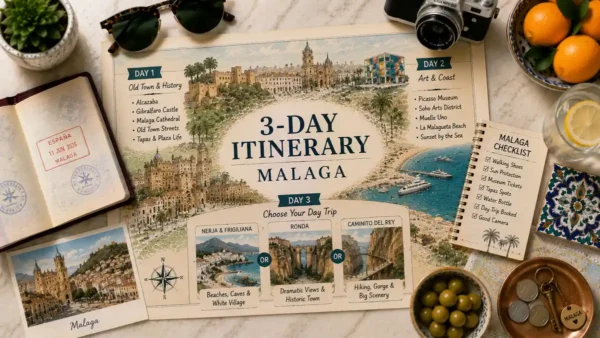
- 3 days in Malaga — a day-by-day route.
- Spain travel tips — country-wide practical advice.
Did this guide save you time or money? Tripstou is independent and reader-funded — if you'd like to give something back, you can support the site with a crypto contribution of any size.