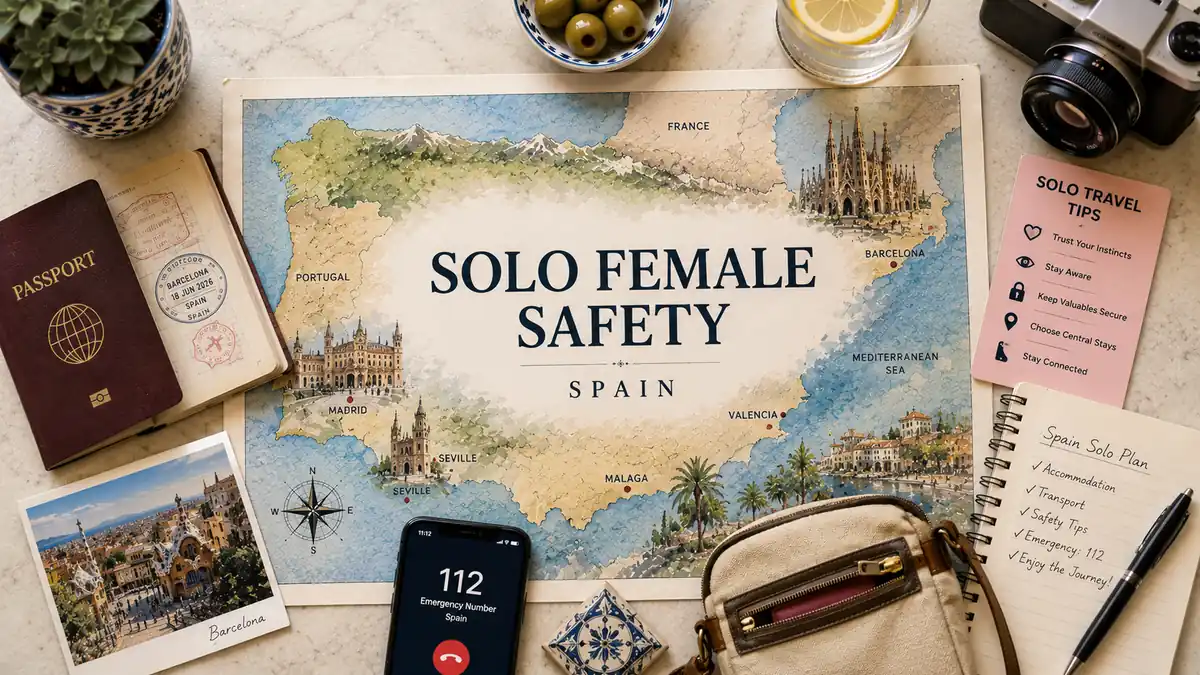
Deciding whether to travel Spain alone as a woman comes down to one honest question: is it safe enough to go without a companion? It is a fair worry, and one worth answering clearly rather than glossing over. Spain has long been a favorite for solo female travelers, drawn by its walkable cities, warm social culture, and easy pace, yet first-timers still arrive carrying louder fears than the reality deserves. This guide gives you the verdict first, then the practical playbook that makes it work: how to read real risk against overblown fear, how to move safely on transport and at night, how to pick a base and protect your belongings, and how to trust the instincts that keep you out of trouble in the first place.
Quick Answer
Spain is one of the safest countries in the world for solo female travelers. The real risk is petty theft and pickpocketing in tourist-dense areas, not personal-safety threats. Basic street-smart habits — minding your valuables, choosing central stays, and trusting your instincts — make traveling alone comfortable and rewarding.
Trust Layer
Tripstou planning guide for travelers resolving one travel decision. Covers the main variable, traveler context, and practical tradeoffs.
Produced with AI assistance and reviewed by Alex Perrut, working in tourism since 2015, for the Tripstou editorial team. See our editorial process for details.
Last factual review: June 18, 2026.
Official sources consulted: travel-europe.europa.eu, european-union.europa.eu.
Key Takeaways
- Spain ranks among the world’s safest countries for solo female travelers, so the go-or-not question deserves a confident yes.
- The one real risk is your belongings, not your personal safety, so guard valuables rather than fearing the country.
- Carry phones and wallets in zipped front pockets or a cross-body bag, especially in crowded, distraction-heavy tourist areas.
- Choose central, well-reviewed accommodation with secure entry, since a good base shapes how safe the whole trip feels.
- Raise your guard in tourist-dense spots like Barcelona’s La Rambla and central Madrid, but avoid nowhere outright.
- Trust your instincts and act on discomfort early — leaving a situation that feels wrong is always justified.
Table of Contents
Is Spain safe for solo female travelers?
Yes, Spain is one of the safest countries in the world for women traveling alone. Violent crime against tourists is rare, locals are generally helpful, and solo female travelers move freely day and night across most cities, towns, and coastal regions with confidence.
That reassurance is grounded in how Spain actually feels on the ground. Public life runs late and stays busy, so streets in city centers rarely empty out, and being a woman on your own draws little attention beyond ordinary friendliness. Hostels, tour operators, and accommodation hosts deal with solo female guests constantly, which means the infrastructure for traveling alone is normal here, not exceptional.
Spain suits a wide range of solo travelers, from first-timers nervous about going abroad alone to seasoned women adding another country to their list. The tradeoff is that “safe” does not mean “switched off” — the same crowded, sociable environment that makes Spain comfortable is exactly where opportunistic theft thrives, so confidence works best paired with everyday awareness. If you are still weighing the wider trip, our broader guide to planning a trip to Spain sets the destination context this safety decision sits inside.
What are the real risks versus overblown fears?
The real risk in Spain is your belongings, not your personal safety. Pickpocketing and bag theft happen in crowded tourist areas, while serious threats to solo women remain uncommon. Most fears travelers carry about Spain are far larger in imagination than in everyday reality.
Calibrating this honestly is the most useful thing you can do before the trip. The fears that tend to be overblown are the dramatic ones — being targeted for violence, kidnapping, or harm simply for being a woman alone. The risk that is genuinely worth respecting is mundane by comparison: a phone lifted from a back pocket, a bag opened on a packed metro, a wallet gone in a moment of distraction. One costs you a story; the other costs you peace of mind for the rest of the day.
- Overblown: being singled out for violence as a solo woman, or unsafe streets across whole cities.
- Real but manageable: petty theft in crowds, distraction tactics, and losing track of valuables in busy moments.
- Worth noting: unwanted attention exists, as it does anywhere, and is usually defused by a firm, unbothered response.
Keeping the lens solo-female is what makes this page useful; for the wider picture across all travelers, our general Spain safety guide covers the broader overview. A modest safety net also helps you treat theft as an inconvenience rather than a crisis — travel insurance for Spain covers lost phones and stolen valuables so a bad moment does not derail the trip.
Travel medical insurance
SafetyWing Nomad Insurance provides travel medical coverage designed for travelers and digital nomads, with flexible Monthly and Annual plans.
Check Nomad Insurance coverage and current pricing →
New Nomad Insurance Essential members can get 8 weeks of electronic theft coverage free with reward code TRIPSTOU8.
Apply the reward before creating your SafetyWing account by looking for the pink camera icon on the Nomad Insurance page.
Tripstou may earn a commission if you purchase through this link, at no extra cost to you.
Staying safe on buses, metros, and trains
Spanish public transport is generally safe for solo women, and awareness matters most in crowds. Buses, metros, and intercity trains are reliable and well used, so the main concern is petty theft during busy hours rather than any threat to your personal safety.
The practical conduct that keeps you comfortable is simple and consistent across the network. Crowded carriages and platforms are where bags get opened, so the goal is to stay aware exactly when everyone else is distracted.
- Keep your bag in front of you and zipped during rush hours and on packed metro lines.
- Sit near other passengers or within sight of the driver on quieter late routes.
- Stay off your phone in dense crowds, where a visible screen is an easy target.
- For late-night returns, favor well-lit stops and busier carriages over isolated ones.
This suits any solo traveler relying on public transport rather than taxis, which is most women on a normal budget. The tradeoff is small: a little extra attention during peak and late hours buys you the freedom to use the whole network confidently, day or night.
How to choose safe accommodation as a solo woman
Choose central, well-reviewed stays with secure entry over the cheapest available option. A safe base sits in a walkable area, has strong recent reviews from other travelers, and offers a secure front door or staffed reception, which matters far more than saving a little on the nightly rate.
Where you sleep shapes how the whole trip feels, because a good base means short, well-lit walks home and somewhere staffed to turn to if something goes wrong. When you scan listings, weigh location and recent feedback ahead of price.
- Location: central and walkable, so you are not navigating long, empty routes after dark.
- Reviews: recent, specific feedback — solo women often flag safety, lighting, and how welcome they felt.
- Entry: secure front door, staffed reception, or female-only dorms where hostels offer them.
- Reachability: a host or desk you can actually contact if a key, a lock, or a late arrival becomes a problem.
This logic fits both hostel travelers wanting social, secure dorms and women preferring a private room with a front desk. The tradeoff is honest: the safest, most central, well-run options rarely sit at the very bottom of the price range, and that small premium is usually worth paying.
Hotels and places to stay
Compare hotels, apartments and stays for your dates in one search.
Search hotels and stays on hotels.com →
Tripstou may earn a commission if you book through this link, at no extra cost to you.
Going out at night safely as a solo traveler
Spain’s nightlife is solo-friendly, so plan your route home and stay aware. Spanish evenings run late and public spaces stay lively well past midnight, which makes going out alone enjoyable when you know how you are getting back and keep a clear head along the way.
Spain genuinely rewards the solo evening — dinner is late, plazas stay full, and being out alone is unremarkable. The aim is to enjoy that freely while removing the two things that turn a good night sour: an unplanned journey home and losing your own awareness.
- Decide your route home before you go out, so the end of the night needs no improvising.
- Moderate your drinking enough to stay alert and in control of your decisions.
- Never leave a drink unattended, and stay aware of who is around you.
- Keep your phone charged and let someone know roughly where you are headed.
This works for everyone from women wanting a relaxed late dinner to those heading into Spain’s bar and club scene. The tradeoff is minimal: a few minutes of planning at the start of the evening lets you stay out as late as you like without the journey home becoming the risky part.
Keeping your valuables safe from pickpockets
Pickpocketing is Spain’s main real risk, and simple habits remove most of it. Thieves work fast in crowded, distraction-heavy spots, targeting phones, wallets, and open bags rather than confronting anyone, so how you carry your valuables decides whether you become an easy mark or a hard one.
The good news is that defeating pickpockets is almost entirely about being a slightly harder target than the person beside you. A few carrying habits do nearly all the work in the busy areas where it matters.
- Carry your phone and wallet in zipped, front pockets or a bag worn across your chest.
- Leave your passport and spare cash in your accommodation; carry only what the day needs.
- Stay alert when someone crowds you, bumps you, or creates a sudden distraction.
- Keep bags closed and in front of you in markets, transport, and tourist crush points.
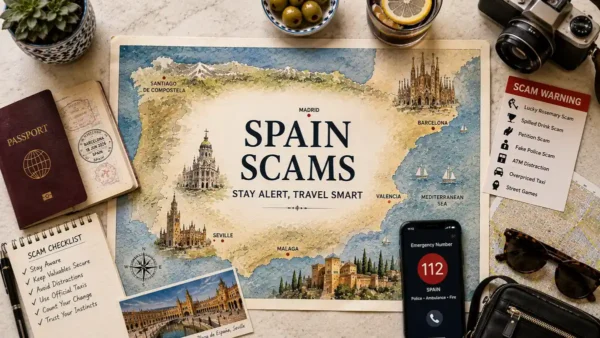
Many of these thefts rely on a setup rather than pure stealth, which is why recognizing the patterns helps — our guide to common scams in Spain breaks down the distraction tactics in detail so you can spot them coming. Treating belongings as the one thing that genuinely needs guarding, rather than fearing the country itself, keeps your trip relaxed.
Trusting your instincts and meeting other travelers
Your instincts are your best safety tool, so act on discomfort early. If a situation, a person, or a street feels wrong, you do not owe anyone politeness or an explanation, and leaving promptly is almost always the right call when something feels off.
Traveling alone sharpens the very instincts that keep you safe, and the women who travel most comfortably are the ones who give themselves permission to act on a bad feeling without second-guessing it. Setting boundaries — declining an invitation, ending a conversation, changing your route — is a skill worth using freely rather than overriding to be agreeable.
The flip side of solo travel is connection, and Spain makes it easy to find. Hostels, group tours, walking tours, and day trips are natural places to meet other travelers and locals, giving you company when you want it and an extra set of eyes when you do not. Building these light connections is part of the safety picture, not separate from it. For broader habits that complement this mindset, our practical Spain travel tips round out the everyday know-how that makes solo travel here smoother.
Where to be extra cautious: city caution patterns
A few tourist-dense spots warrant extra awareness, not avoidance. Places like Barcelona’s La Rambla, central Madrid, and busy parts of Seville draw crowds that pickpockets favor, so you simply raise your guard there rather than crossing these landmark areas off your itinerary.
This is about texture, not danger verdicts — no neighborhood here is off-limits to a solo woman, and these are some of the best places Spain has to offer. The pattern is consistent: wherever tourists cluster densely, opportunistic theft follows the crowd.
- Barcelona’s La Rambla: heavy foot traffic and distraction make it a classic pickpocket zone.
- Central Madrid: busy plazas, transport hubs, and tourist sights reward keeping valuables close.
- Seville’s tourist core: packed lanes and landmarks call for the same simple awareness.
The takeaway is to enjoy these places fully while quietly raising your guard in the densest moments — secure your bag, keep your phone away, and stay aware of crowding. That single adjustment, rather than avoidance, is all these caution spots actually require.
Frequently Asked Questions
Do I need to speak Spanish to travel safely as a solo woman?
No, you do not need to speak Spanish to stay safe traveling alone in Spain. English is widely understood in tourist areas, transport hubs, and accommodation. Learning a few basic phrases — for directions, help, or politeness — smooths interactions and builds confidence, but it is never a safety prerequisite.
Are taxis and rideshares safe for solo female travelers in Spain?
Yes, licensed taxis and established rideshare apps are safe and widely used by solo women in Spain. Stick to official taxi ranks or app-booked rides rather than unmarked cars, sit where you feel comfortable, and check the plate matches your booking. For late nights, they are often the easiest way home.
What is the emergency number in Spain?
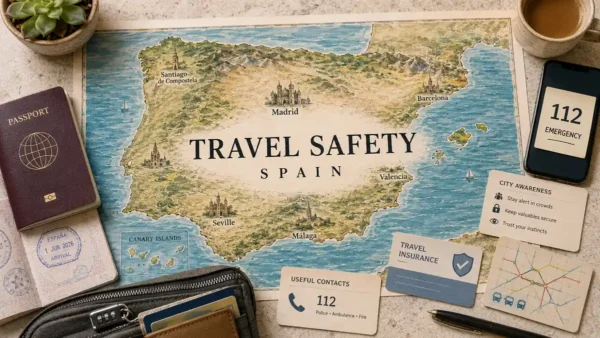
Spain uses 112 as its single emergency number for police, ambulance, and fire, reachable free from any phone. Operators typically handle calls in several languages, including English. Save it before you travel, and do not hesitate to call if you ever feel genuinely threatened or need urgent help.
Is solo female travel in Spain safe for first-timers?
Yes, Spain is one of the best places for a first solo trip as a woman. Its walkable cities, busy public life, and traveler-friendly infrastructure lower the learning curve, while widespread English and frequent solo guests make asking for help easy. First-timers usually find their nerves fade within the first day or two.
Are female-only dorms common in Spanish hostels?
Yes, many Spanish hostels offer female-only dorms, especially in larger cities and popular backpacker hubs. They give solo women added privacy and peace of mind without the cost of a private room. Availability varies by property, so book early in peak season and check recent reviews to confirm the option.
How does Spain compare to other European countries for solo female safety?
Spain ranks among Europe’s safest countries for solo female travelers, comparable to Portugal and well ahead of many global destinations. Personal-safety risks are low across the continent’s western edge, and Spain’s main concern — petty theft in tourist crowds — mirrors that of other major European cities like Rome and Paris rather than being unique to Spain.
Related Guides
These guides pick up where this one leaves off, from the broader safety picture to the practical planning around it.
- General Spain safety guide — the all-traveler overview this solo-female page sits beneath.
- Common scams in Spain — the distraction and pickpocket tactics worth recognizing.
- Travel insurance for Spain — the safety net that turns lost or stolen valuables into an inconvenience.
- Practical Spain travel tips — everyday know-how that makes traveling here smoother.
- Planning a trip to Spain — the destination context for the wider trip.
Did this guide save you time or money? Tripstou is independent and reader-funded — if you'd like to give something back, you can support the site with a crypto contribution of any size.