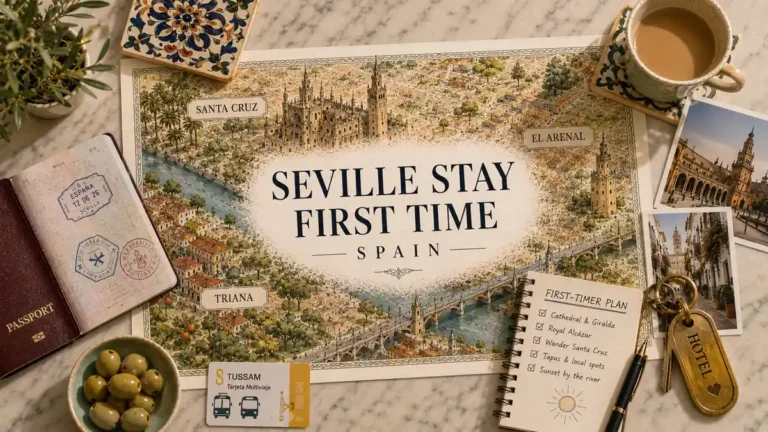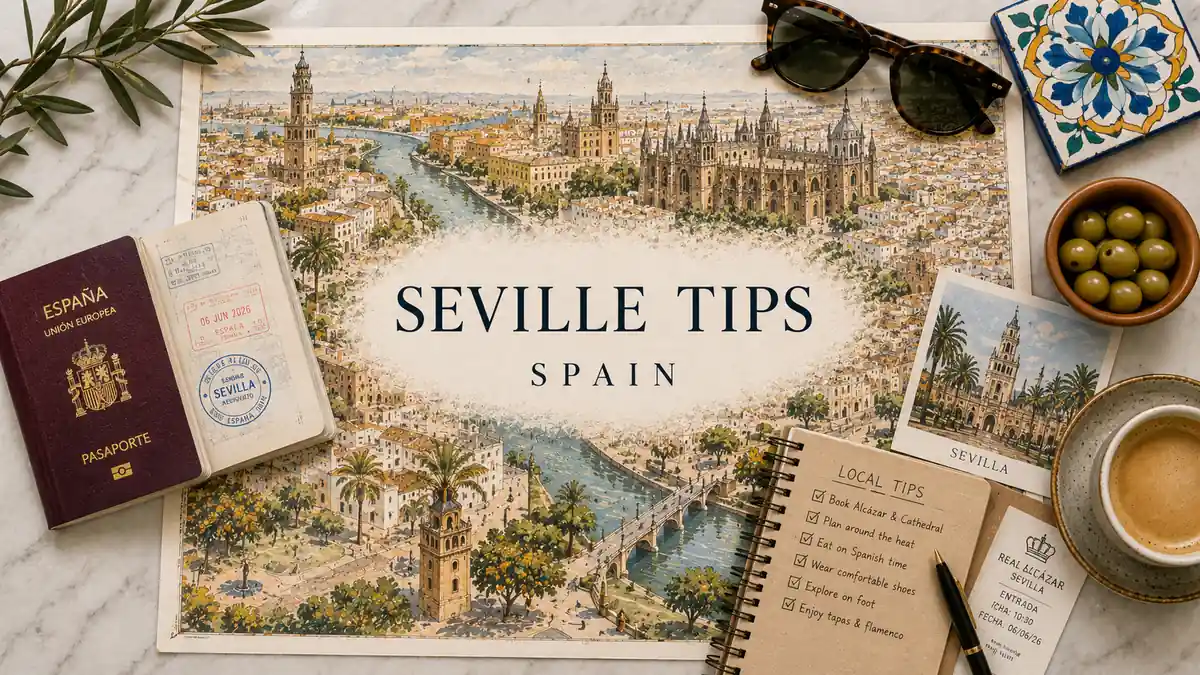
Seville rewards travelers who arrive prepared, and a handful of local habits make the difference between a smooth trip and a frustrating one. First-timers usually hit the same surprises: the heat is fiercer than expected, meals run far later than back home, the headline sights sell out, and the medieval centre is a beautiful maze that scrambles your sense of direction. None of this is hard to manage once you know the rules of the city. The tips below cover the planning decisions that actually matter before you go: timing your visit, pacing around the heat, booking the right sights ahead, eating on Spanish time, navigating on foot, and reading festivals as a trade-off. Treat them as a tight, scannable checklist for arriving ready.
Quick Answer
Book the Real Alcázar and Cathedral ahead, plan around the heat, and eat on Spanish time. The season shapes everything in Seville, dictating your pacing, your daily timing, and what you pack. For most first-timers, comfortable shoes, a flexible heat-aware rhythm, and pre-booked tickets cover the essentials.
Trust Layer
Tripstou planning guide for travelers resolving one travel decision. Covers the main variable, traveler context, and practical tradeoffs.
Produced with AI assistance and reviewed by Alex Perrut, working in tourism since 2015, for the Tripstou editorial team. See our editorial process for details.
Last factual review: June 6, 2026.
Official sources consulted: travel-europe.europa.eu, european-union.europa.eu.
Key Takeaways
- Plan your day around the heat: sightsee in the morning and evening, and rest through the hottest afternoon hours.
- Pre-book the Real Alcázar and the Cathedral with the Giralda, since same-day tickets regularly sell out.
- Eat on Spanish time, with lunch as the main meal and dinner often starting late, around 9 to 10pm.
- Expect to get lost in the walkable medieval centre, so wear comfortable, broken-in shoes for the cobbled lanes.
- Treat Semana Santa and the Feria de Abril as a trade-off, since they bring crowds, higher prices, and early sell-outs.
- Plan two to three days based in central Santa Cruz to cover the headline sights without rushing.
Table of Contents
When is the best time to visit Seville?
Spring and autumn are the best times to visit Seville. The weather is warm but comfortable, summer is intensely hot, and winter is mild but quiet. The heat is the deciding factor: it shapes how much you can do outdoors, so most travelers find the shoulder seasons the easiest fit.
Each season suits a different kind of traveler, and the trade-off is mostly heat versus crowds:
- Spring — warm days and long evenings, but it overlaps with the city’s big festivals, so it is the busiest and priciest stretch.
- Autumn — similarly comfortable temperatures with thinner crowds, often the sweet spot for first-timers.
- Summer — long daylight and a quieter, slower city, but the midday heat is punishing and dictates an early-and-late rhythm.
- Winter — mild, cheap, and calm, with shorter days and the occasional rainy spell.
If you have flexibility, aim for the shoulder seasons. If your dates are fixed for summer, the city is still very visitable; you simply plan the day around the heat rather than fighting it. For broader orientation before you choose dates, see our Seville travel guide.
How do you handle the Seville heat?
Handle the Seville heat by front-loading your day, resting through the afternoon, and going back out in the evening. Mornings and evenings are for sightseeing and walking; the hottest hours are for shade, lunch, and a slower pace. Hydration and sun protection do the rest.
The local rhythm exists for a reason, and copying it is the simplest strategy. A few habits keep the heat manageable:
- Start sightseeing early, before the sun climbs and before the queues build.
- Treat the early afternoon as downtime — a long lunch, a rest, or an indoor sight echoes the local siesta rhythm.
- Carry water and refill often; the dry heat dehydrates faster than it feels.
- Stick to the shaded side of the street, use a hat and sunscreen, and lean on the city’s orange-tree-lined lanes for cover.
- Save outdoor highlights and dinner for the evening, when the city comes alive and the temperature drops.
The mindset matters more than any single tactic: in Seville you work with the heat, not against it. Pushing through the midday sun on a packed schedule is the fastest way to burn out a trip.
Which Seville sights should you book in advance?
Book the Real Alcázar and the Seville Cathedral with the Giralda in advance. These are the city’s most-visited sights, and same-day tickets regularly sell out or come with long queues. Reserving a timed slot online before you arrive is the single most important booking decision for a Seville trip.
Advance booking saves you the two things that most damage a hot-weather visit: queueing in the sun and missing out entirely. A few points to plan around:
- Real Alcázar — the royal palace and gardens are a headline attraction and the most likely to sell out; book a morning slot to beat both crowds and heat.
- Cathedral and Giralda — the cathedral and its bell-tower climb draw steady queues; a pre-booked entry skips the line.
- Plaza de España — free to enter and open to wander, so no ticket needed; it is simply a place to time well for light and temperature.
This page stays out of pricing on purpose; for ticket costs and how they fit a daily budget, see our Seville trip cost breakdown.
Tours and activities
Book skip-the-line tickets, day trips and local tours with free cancellation on most activities.
You can also browse everything on getyourguide.com.
Tripstou may earn a commission if you book through this link, at no extra cost to you.
Eating in Seville: meal times and tapas habits
In Seville, meals run late and tapas is the social default. Lunch is the main meal and lands in the early-to-mid afternoon, while dinner often starts late, around 9 to 10pm. Kitchens that look closed in the early evening are usually just running on local time.
Adjusting to the schedule is half the experience, and tapas culture makes it easy. A few habits to expect:
- Late dinners — if you are hungry at 7pm, you are early; many places open their kitchens later, so plan a snack or an early tapa to bridge the gap.
- Tapas as default — ordering several small plates to share is the normal way to eat, especially in the evening, and it suits grazing across a few bars.
- Lunch is the big meal — a longer, heavier midday meal pairs naturally with the afternoon heat break.
- Standing and bar-hopping — eating at the bar or moving between spots is common and often cheaper than a sit-down table.
Leaning into the local clock, instead of forcing your home schedule, gets you better food, livelier rooms, and the city at its most sociable.
Getting around Seville’s walkable centre
Seville’s historic centre is compact, medieval, and best explored on foot. The core sights sit within an easy walk of each other, and the tangle of narrow lanes is part of the charm. Expect to get pleasantly lost, wear comfortable shoes, and treat wandering as the point, not a problem.
The old centre was never built for straight lines or cars, which is exactly why walking works so well:
- Cobbled, uneven streets reward sturdy, broken-in footwear over anything new or flimsy.
- Maps struggle with the maze, so allow extra time and let the detours happen.
- Most landmarks cluster close together, so you rarely need transport between them.
- The shade of the narrow lanes is a heat advantage on foot that wheels do not give you.
For trips to and from the airport, the wider districts, or anything beyond the walkable core, the mechanics live in our dedicated guide to getting around Seville.
What to know about Seville’s festivals
Seville’s two big festivals, Semana Santa and the Feria de Abril, are spectacular but come with a clear trade-off. They fill the city with atmosphere and tradition, but they also bring heavy crowds, higher prices, and rooms that book out far ahead. Decide deliberately whether to visit during them or around them.
Whether the festivals are a highlight or an obstacle depends on what you want from the trip:
- Visit during them if the spectacle is the reason you are coming — but book accommodation and key sights very far in advance and accept the crowds and cost.
- Visit around them if you want quieter streets, easier bookings, and lower prices; the city is just as rewarding outside festival weeks.
- Either way, dense festival crowds attract pickpockets, so keep valuables secure; our Seville safety tips cover the crowd precautions in more detail.
The key is to know which camp your trip falls into before you book, since festival timing changes availability, budget, and the whole feel of the visit.
Local etiquette and what to pack for Seville
The etiquette in Seville is relaxed, with one firm rule: dress modestly for churches. Cover shoulders and knees to enter the Cathedral and other religious sites. Beyond that, pack light, breathable clothing and serious sun protection, and keep tipping simple and small.
A short list of norms and packing essentials covers most of what a first-timer needs:
- Church dress — carry a light layer to cover shoulders and knees so you are never turned away at a religious site.
- Tipping — rounding up or leaving a little spare change is plenty; tipping is appreciated, not obligatory. For how this fits the wider budget, see our Seville trip cost guide.
- Sun kit — hat, sunglasses, sunscreen, and a refillable water bottle earn their place year-round.
- Clothing — breathable fabrics and comfortable walking shoes beat anything heavy or fashion-first.
- Staying connected — sorting data before you land saves hassle; an eSIM for Spain is the easiest option.
For etiquette and prep that applies across the whole country rather than just Seville, our Spain travel tips cover the national basics, and our Seville safety tips round out the practical precautions.
Get online the moment you land
An eSIM installs before you fly — no SIM swap, no roaming bill, no queue at an airport kiosk. Two options, depending on how you travel:
Holafly — unlimited-data plans, so nothing counts against a
cap. Best for longer stays, remote work, and heavy map and video use.
Code TRIPSTOU applies automatically: 5% off any travel eSIM,
reusable on every order, or 10% off Holafly Plans.
Get a Holafly eSIM →
Airalo — pay for the data you need, across 200+ destinations,
trusted by 20M+ travelers. Best for short trips and light use.
Use code NEWTOAIRALO15 for 15% off your first order:
Get an Airalo eSIM →
Tripstou may earn a commission if you purchase through these links, at no extra cost to you.
How long to stay and where to base yourself
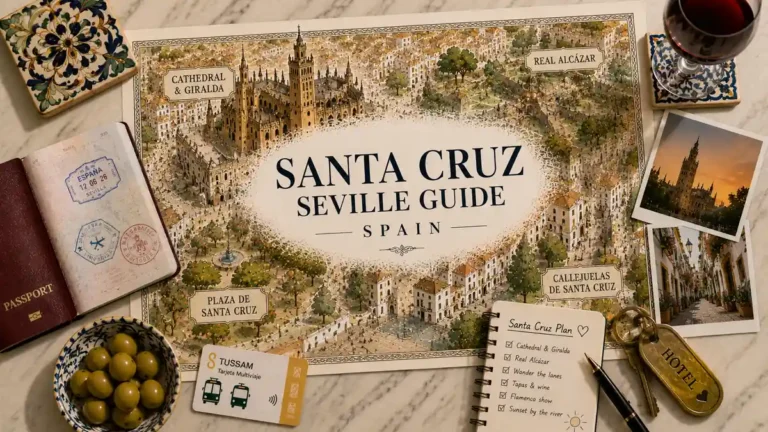
Two to three days suits most first-timers in Seville, and the Santa Cruz quarter is the easiest first base. That window covers the headline sights without rushing, and the central old town keeps you walking distance from almost everything. Longer stays simply add day trips and a slower pace.
The right length and base depend on your trip shape, and the sibling guides handle the detail:
- Two days works for a focused first visit hitting the essentials — see our 2-day Seville itinerary for the routing.
- Three days adds breathing room for tapas evenings, a slower heat-aware pace, or a half-day trip — our 3-day Seville itinerary lays it out.
- Where to base — Santa Cruz is the classic central pick for first-timers; for a fuller comparison, see where to stay in Seville.
Keep the decision simple: pick the nights that match your pace, base yourself centrally, and let the itinerary and accommodation guides handle the sequencing and neighborhood choice.
Hotels and places to stay
Compare hotels, apartments and stays for your dates in one search.
Search hotels and stays on hotels.com →
Tripstou may earn a commission if you book through this link, at no extra cost to you.
Frequently Asked Questions
Do you need to book Seville Cathedral and the Alcázar in advance?
Yes, you should book the Seville Cathedral and the Real Alcázar in advance. Both are among the city’s busiest sights, and same-day tickets often sell out or come with long queues in the sun. Reserving a timed online slot before you arrive secures entry and saves waiting time.
Is Seville too hot to visit in summer?
No, Seville is not too hot to visit in summer, but the midday heat is intense and shapes your day. Most travelers sightsee early and late, rest indoors through the hottest hours, and stay hydrated. With that rhythm, a summer visit is comfortable and the city is noticeably quieter.
What time do people eat dinner in Seville?
People in Seville usually eat dinner late, often from around 9 to 10pm. Lunch is the main meal of the day and lands in the early-to-mid afternoon. Kitchens that look closed at 7pm are simply running on local time, so plan a tapa to bridge the gap.
Is the Seville city centre easy to walk?
Yes, Seville’s historic centre is compact and easy to walk, with the main sights close together. The medieval lanes are narrow and maze-like, so expect to get pleasantly lost and wear comfortable, broken-in shoes. The shaded streets also make walking the coolest way to move around.
Should you visit Seville during Semana Santa or Feria de Abril?
Visit during Semana Santa or the Feria de Abril only if the spectacle is your main reason for going. Both festivals are atmospheric but bring heavy crowds, higher prices, and accommodation that books out far ahead. Outside these weeks, the city is just as rewarding and far easier to navigate.
How many days do you need in Seville?
You need about two to three days in Seville to see the headline sights without rushing. Two days suits a focused first visit, while three days adds room for tapas evenings, a slower heat-aware pace, or a half-day trip. Longer stays mainly add day trips beyond the city.
Related Guides
Keep planning your trip with these companion guides across the Seville cluster:
- Seville travel guide — the hub for orienting your whole visit.
- 2-day Seville itinerary — a focused route for a short first trip.
- 3-day Seville itinerary — a slower-paced plan with room for day trips.
- where to stay in Seville — neighborhoods and bases compared.
- getting around Seville — airport transfers and city transport mechanics.
- Seville safety tips — crowd precautions and pickpocketing advice.
- Seville trip cost — budgeting, ticket prices, and tipping.
- eSIM for Spain — sorting mobile data before you arrive.
- Spain travel tips — national prep that applies beyond Seville.
Did this guide save you time or money? Tripstou is independent and reader-funded — if you'd like to give something back, you can support the site with a crypto contribution of any size.