Tourists in Spain are far more likely to be scammed than seriously harmed, and almost every scam follows the same script: someone manufactures a distraction so an accomplice can reach your pockets or bag. Violent crime against visitors is rare; opportunistic theft built around misdirection is not. The good news is that these scams are predictable once you know the patterns. A spilled drink, a clipboard petition, a “free” sprig of rosemary, a staged argument, or a stranger offering unsolicited help at an ATM are all variations on the same trick. This guide names the scams that target tourists in Spain, explains the warning signs that give each one away, lists the habits that prevent them, and walks through exactly what to do if you are caught out. Read it once and you will recognise nearly every common setup before it reaches your wallet.
Quick Answer
The most common scams in Spain are pickpocketing and distraction teams, concentrated in crowded tourist areas. Nearly all rely on distraction — a spill, a petition, a free sprig, a staged commotion — to pull attention off your belongings. Keep valuables secured, stay alert in crowds, and report any theft at a police station to get a denuncia.
Trust Layer
Tripstou planning guide for travelers resolving one travel decision. Covers the main variable, traveler context, and practical tradeoffs.
Produced with AI assistance and reviewed by Alex Perrut, working in tourism since 2015, for the Tripstou editorial team. See our editorial process for details.
Last factual review: June 18, 2026.
Official sources consulted: Travel in Europe, the European Union portal.
Key Takeaways
- Pickpocketing and distraction teams are Spain’s most common tourist scams, far outnumbering any violent crime against visitors.
- Nearly every scam relies on distraction, so treat any spill, petition, or sudden commotion as a cue to check your belongings.
- Scams concentrate in crowded zones — major landmarks, busy pedestrian streets, metro lines, and transit hubs where tourists gather.
- Securing valuables in front pockets or a crossbody bag worn in front prevents most thefts without any special gadget.
- If targeted, block your cards immediately and report the theft at a police station to obtain a denuncia for insurance.
Table of Contents
What are the most common tourist scams in Spain?
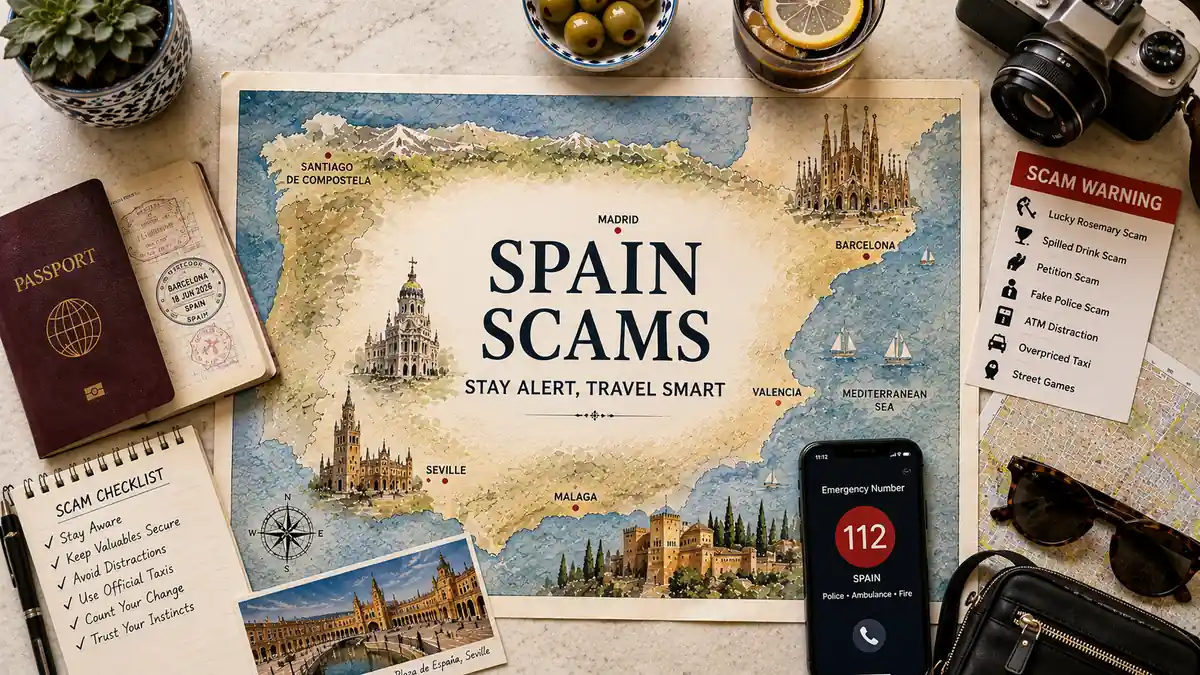
The most common tourist scams in Spain are pickpocketing, distraction teams, fake petitions, and the lucky rosemary sprig. Other frequent ones include the shell game and fake-police checks. Each relies on misdirection — a friendly approach or staged commotion pulls your attention away while the theft happens in seconds.
Once you see the shared logic, the individual scams become easy to spot. The table below pairs each common scam with the signal that gives it away and the safest response.
| Scam | Warning sign | What to do |
|---|---|---|
| Pickpocketing | Sudden crowding or bumping in busy areas | Keep valuables in front pockets and stay alert |
| Distraction team | A spill, question, or staged commotion nearby | Step back and check your bag and pockets |
| Lucky rosemary sprig | A stranger presses a herb sprig into your hand | Refuse politely and keep walking without stopping |
| Fake petition | A clipboard signature request crowds around you | Decline, hold your bag, and move away quickly |
| Shell game | A street betting game with a sure winner | Never play and never stop to watch |
| Fake-police check | An “officer” asks to inspect your wallet or ID | Refuse and ask to verify at a station |
How do pickpockets and distraction teams operate?
Pickpockets in Spain usually work in teams, using a distraction to lift wallets and phones in seconds. One member creates the diversion — bumping you, asking directions, or pointing at a stain on your clothes — while a second takes your belongings and passes them to a third. Any sudden contact or commotion should prompt you to check your valuables.
The teams are practised and fast, which is why the scam succeeds even on alert travellers. Recognition matters more than speed of reaction, so learn the recurring cues:
- Someone bumps into you or blocks a doorway, escalator, or metro entrance.
- A stranger points at a stain on your clothing and offers to help clean it.
- A group crowds you suddenly on public transport, especially as doors open.
- A friendly approach — directions, a photo, a survey — that holds both your hands or full attention.
The unifying principle is simple: whenever your attention is pulled away, immediately put a hand on your valuables. Distraction is the tell, and treating every interruption as a prompt to check your pockets defeats almost the entire category.
How do fake police and payment scams work?
Fake police in Spain ask to “check” your wallet or ID — real officers never do this. Their goal is to glimpse your PIN, pocket cash, or photograph your cards. Payment scams share a pattern: ATM “helpers,” taxis that skip the meter, and restaurants that add items you never ordered. The common warning sign is pressure to act fast.
With fake-police approaches, the safest move is to stay calm and refuse on the spot. Genuine officers do not inspect tourists’ cash or count their money in the street, and they will not object if you ask to continue the conversation at a police station.
Payment scams are easier to avoid with a few stable habits:
- Use ATMs inside banks where possible, cover the keypad, and decline anyone offering to “help.”
- Choose official taxi ranks or a booking app, and confirm the meter is running or the fare is agreed.
- Check restaurant bills for items, cover charges, or “specials” you never ordered before paying.
In every case the lever is urgency. If someone is rushing you to decide, hand over a card, or sign quickly, treat that pressure itself as the warning sign and slow down.
Where are tourist scams most common in Spain?
Scams in Spain cluster where tourists crowd — major landmarks, busy pedestrian streets, metro lines, and transit hubs. The pattern is consistent: density plus distraction equals opportunity. Crowds let thieves get close without notice, and confused or photo-focused visitors are easy marks. Airports, train stations, and the routes between them rank among the highest-risk settings anywhere in the country.
The specific hotspots are predictable because they concentrate the largest numbers of distracted visitors:
- Major landmarks and their immediate surroundings, such as the area around the Sagrada Família.
- Busy pedestrian streets like Las Ramblas and the Gothic Quarter in Barcelona.
- Central plazas and shopping arteries such as Sol and Gran Vía in Madrid.
- Metro lines and stations serving the airport and the main attractions.
- Train stations, bus terminals, and crowded transfer points.
City-level patterns differ in their detail, so check our Barcelona safety and Madrid safety guides for neighbourhood-specific hotspots before you arrive. Treating these crowded zones as “raise your awareness” cues, rather than no-go areas, is the practical takeaway.
How can you avoid getting scammed in Spain?
Avoid most scams in Spain by securing your valuables, staying alert in crowds, and refusing strangers’ distractions. The core habits are simple: carry cash and cards in front pockets or a crossbody bag worn in front, never leave a phone on a café table, and keep one hand on your bag in crowds. Awareness beats any anti-theft gadget.
A short set of habits prevents the overwhelming majority of incidents:
- Split your money — carry a day’s cash and one card, leaving spares at your accommodation.
- Wear bags across the body and in front, and zip them fully in crowded areas.
- Keep your phone in a secured pocket, not on tables, armrests, or back pockets.
- Decline unsolicited approaches firmly, whether it is a petition, a sprig, or “help” at an ATM.
- Treat any sudden distraction as a cue to immediately check your belongings.
None of this requires special equipment — consistent behaviour matters far more than gear. For the wider picture, read our Spain safety overview, and travellers planning a trip alone can consult our guide to solo female safety in Spain.
What should you do if you get scammed in Spain?
If you are scammed or robbed in Spain, block your cards immediately and report it at a police station. Filing a report produces a denuncia — the official document insurers and embassies require to process theft claims or replace stolen passports. Acting fast limits fraudulent charges and creates the paper trail you will need for any claim.
Work through the response in order so nothing is missed:
- Block your bank cards first, by calling your bank or freezing them in its app.
- Report the theft at the nearest police station (comisaría) and request a denuncia.
- Replace stolen ID or a passport through your embassy or consulate, using the denuncia.
- Keep copies of the denuncia and your card-blocking confirmation for insurance.
For minor thefts, some areas let you begin the report by phone or online, though you usually have to sign it in person; serious incidents are always handled at the station. The denuncia is the document that unlocks insurance payouts and replacement papers, so prioritise getting it over chasing the lost items themselves.
Travel medical insurance
SafetyWing Nomad Insurance provides travel medical coverage designed for travelers and digital nomads, with flexible Monthly and Annual plans.
Check Nomad Insurance coverage and current pricing →
New Nomad Insurance Essential members can get 8 weeks of electronic theft coverage free with reward code TRIPSTOU8.
Apply the reward before creating your SafetyWing account by looking for the pink camera icon on the Nomad Insurance page.
Tripstou may earn a commission if you purchase through this link, at no extra cost to you.
Frequently Asked Questions
Is Spain safe for tourists despite common scams?
Yes, Spain is a very safe destination for tourists, with violent crime against visitors rare. The main risk is opportunistic, non-violent theft built around distraction. Staying alert in crowds and securing your valuables reduces this risk dramatically, so scams should inform your habits rather than deter your trip.
What is the lucky rosemary scam in Spain?
The lucky rosemary scam involves a stranger, often near landmarks, pressing a sprig of rosemary into your hand as a “gift.” Once you take it, they demand payment and may grab your hand to read your palm while an accomplice picks your pocket. Refuse, keep your hands free, and walk on.
What is the bird-dropping or mustard scam in Spain?
In the bird-dropping or mustard scam, a thief secretly squirts a stain onto your clothes, then a “helpful” stranger points it out and offers to clean it. While you are distracted by the mess, they or an accomplice steal your bag, wallet, or phone. Decline help and keep walking.
Does travel insurance cover scams and theft in Spain?
Most travel insurance policies cover theft, but they typically require a police report — the denuncia — filed within a set time. Coverage limits and excluded items vary by policy, so check your terms before travelling. Without a denuncia, insurers and embassies usually cannot process a claim or replace stolen documents.
When are tourist scams most common in Spain?
Tourist scams in Spain peak during the busy travel season, when crowds at landmarks, beaches, and transit hubs give thieves cover and targets. Higher footfall means more distraction opportunities, so awareness matters most in peak months and during major events. The scams themselves stay the same year-round; only the volume shifts.
Should you carry a money belt to avoid scams in Spain?
A money belt can help, but it is not essential — consistent habits matter more than gear. A crossbody bag worn in front, splitting cash and cards, and keeping valuables off café tables prevent most thefts. If you use a money belt, keep it under clothing and avoid opening it in public.
Related Guides
These guides cover the decisions that sit closest to scam avoidance — broader safety, city-level risk, the solo-traveller angle, and overall trip planning.
- Spain safety — the wider safety picture this scam guide sits under.
- Barcelona safety — neighbourhood-level scam and theft hotspots.
- Madrid safety — city-specific risks and safe-area guidance.
- Solo female safety in Spain — the solo-traveller safety angle in depth.
- Spain travel guide — plan the rest of your trip in context.
Did this guide save you time or money? Tripstou is independent and reader-funded — if you'd like to give something back, you can support the site with a crypto contribution of any size.