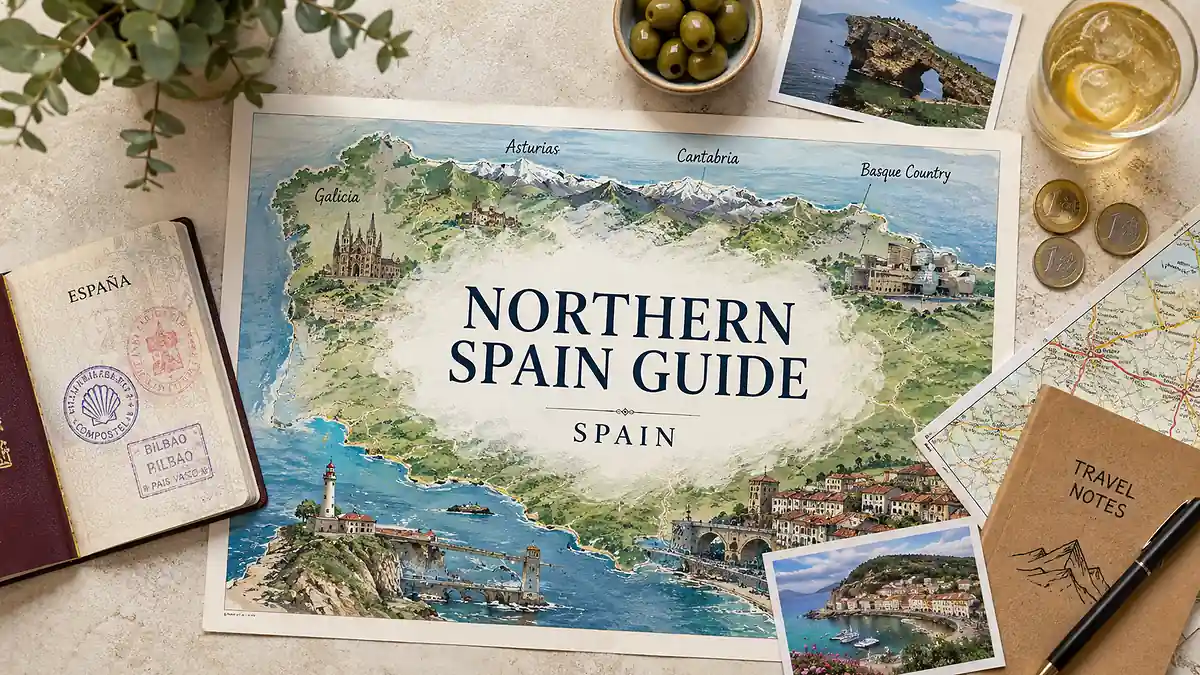
Northern Spain is the cooler, greener, Atlantic-facing side of the country, and it works as a deliberate alternative to the sun-baked Mediterranean coast. Instead of beach resorts and reliable heat, it offers misty mountains, dramatic shorelines, and some of Europe’s most respected food. This guide orients you across its four regions, explains how the north differs from the south, and shows how to think about a trip without locking you into a fixed route.
Quick Answer
Northern Spain is worth visiting for cooler weather, a dramatic Atlantic coast, and outstanding food across four green regions. How you structure it matters most: pick one base for a short or food-focused break, or combine regions across a longer trip. It suits food lovers, hikers, and travelers avoiding crowds and heat.
Trust Layer
Tripstou region guide for travelers planning a regional trip. Covers sub-areas, trip shape, base strategy, timing, and mobility tradeoffs.
Produced with AI assistance and reviewed by Alex Perrut, working in tourism since 2015, for the Tripstou editorial team. See our editorial process for details.
Last factual review: June 3, 2026.
Official sources consulted: European Union, Travel Europe, ETIAS.
Key Takeaways
- Northern Spain covers four green regions — Galicia, Asturias, Cantabria, and the Basque Country — along one Atlantic coast.
- The north trades the south’s guaranteed sun and beaches for cooler weather, dramatic scenery, fewer crowds, and standout food.
- Spring and autumn balance milder weather with thinner crowds, but the region stays green and wetter than the south year-round.
- Pick one base for short or food-focused breaks; combine regions along the coast for longer first trips that want variety.
- It suits food lovers, hikers, and crowd-avoiders far more than travelers whose priority is reliable beach-resort heat.
Table of Contents
What Is Northern Spain (and What “Green Spain” Means)
Northern Spain spans four Atlantic-facing regions: Galicia, Asturias, Cantabria, and the Basque Country. They are called “Green Spain” because their wet, oceanic climate keeps the landscape lush year-round. This is the cool, rainy, mountainous edge of the country, climatically and culturally distinct from the dry Mediterranean interior and south.
The label is geographic and climatic rather than administrative. A band of mountains traps Atlantic moisture against the coast, producing the green hills, frequent cloud, and steady rainfall that give the region its identity. The result is a landscape closer to Ireland or the Pacific Northwest than to the stereotype of arid, sun-drenched Spain.
Each region keeps a strong local identity. Galicia has Celtic roots and a famous pilgrimage tradition, the Basque Country carries its own ancient language and culinary prestige, and Asturias and Cantabria sit between them with rugged coast and high mountains. Together they form a continuous coastal arc, which is why travelers often treat them as one trip rather than four separate destinations.
Northern Spain vs the Mediterranean South
Northern Spain is cooler, greener, wetter, and far less crowded than the Mediterranean south, and its food culture is the main draw, not its beaches. The south delivers hotter, drier weather, big-name beach resorts, and heavier summer tourism. The north trades guaranteed sun for dramatic landscapes and a slower, less commercial feel.
The core trade-off is weather and crowds versus scenery and food. Southern Spain rewards travelers who want reliable heat and beach time; the north rewards those who prefer mild temperatures, green mountains, and a coast you can often have largely to yourself outside peak weeks. Rain is a genuine factor in the north and rarely a concern in the south.
If you are choosing between regions of the country, the broader Spain travel guide sets the national picture, and the best places in Spain overview compares the north against the south, the islands, and the major cities so you can decide where the north fits in your plans.
The Four Regions and What Each Offers
Each of the four regions has a distinct character: the Basque Country leads on food and Bilbao’s Guggenheim, Cantabria pairs a quiet coast with the Altamira caves, Asturias delivers the Picos de Europa and cider country, and Galicia anchors Santiago de Compostela, the Rías Baixas, and Atlantic seafood. This is survey-depth orientation, not a deep dive.
A quick orientation to help you decide which regions match your trip.
| Region | Signature draw | Best for |
|---|---|---|
| Basque Country | Pintxos bars, Bilbao Guggenheim, San Sebastián | Food lovers and culture-first city travelers |
| Cantabria | Coastline, Altamira cave art, Santander | Coast and history with fewer crowds |
| Asturias | Picos de Europa, cider houses, wild coast | Hikers and dramatic-landscape seekers |
| Galicia | Santiago de Compostela, Rías Baixas, seafood | Pilgrims, seafood fans, slow-coast travelers |
Basque Country
The Basque Country is Northern Spain’s culinary heartland, built around pintxos bars, San Sebastián’s beaches, and Bilbao’s Guggenheim Museum. It blends industrial-turned-cultural cities with a fiercely distinct language and identity. For full city-level planning, see the dedicated Basque Country guide; here it earns one stop in a wider northern loop.
Cantabria
Cantabria offers a quieter coast, the prehistoric cave art of Altamira, and the seaside city of Santander. It often serves as the calm middle stretch of a northern trip, linking the Basque Country to Asturias with green valleys and uncrowded beaches. The best beaches in Spain roundup covers how the north’s coves compare with the warmer south.
Asturias
Asturias is the region for mountains and cider, dominated by the Picos de Europa and a rugged, cliff-lined coast. Hikers and landscape travelers find the most dramatic scenery here, paired with a strong food tradition of cider houses and mountain cheeses. It rewards a slower pace and a car more than a city-hopping mindset.
Galicia
Galicia anchors the northwest, with Santiago de Compostela and its Camino pilgrimage, the wine-and-seafood inlets of the Rías Baixas, and a wild Atlantic edge. Seafood here is a destination in itself. The Spain food guide covers the pintxos, cider, and seafood traditions of the north in far more depth than this survey can.
If your trip will also touch other parts of the country, the national-context region guides help you weigh the north against alternatives: Andalusia, Catalonia, the Madrid region, the Valencia region, and the Spanish islands.
When to Visit Northern Spain
Spring and autumn are the sweet spot for Northern Spain, balancing milder weather with thinner crowds. The north stays green and wetter than the south all year, so no season guarantees dry skies. Summer is warmest and busiest; winter is cool, damp, and quiet, suiting travelers who prioritize atmosphere over sun.
Because the region’s appeal is scenery and food, not beach weather, rain is part of the experience, not a deal-breaker. Pack for changeable conditions whatever the month. For a fuller breakdown of seasons, temperatures, and regional timing across the whole country, see the dedicated best time to visit Spain guide.
How to Combine the Regions Into a Trip
Most travelers combine the regions by following the coast in one direction, either west-to-east toward the Basque Country or east-to-west toward Galicia. The four regions form a continuous arc, which makes a linear route natural. The main choice is whether to anchor one base or move along the coast in stages.
A single base suits short trips and food-focused travelers who want depth in one area; a multi-base route suits longer trips that aim to taste the contrast between the regions. A coastal road trip gives the most flexibility for reaching mountains and small towns, while rail links the main cities more comfortably. For route execution and pacing, hand off to the itinerary pages instead of planning days here.
Use the Spain road trip guide for driving routes and the Spain train itinerary for rail-based planning. For day-by-day structure, the Spain itinerary hub branches into fixed-length plans: 7 days, 10 days, and 14 days.
Should You Pick One Region or Tour Several?
Tour several regions if this is your first northern trip and you have the time, since the four regions are distinct and close enough to combine along one coast. Pick a single region instead for short breaks or food-focused trips where depth beats breadth. The tradeoff is travel time and transitions versus richer variety.
Touring several regions means more packing, more transfers, and less time in any one place, but it captures the contrast between Basque food cities, Asturian mountains, and Galician coast that makes the north distinctive. Staying put rewards you with deeper local knowledge and a slower rhythm. Budget naturally shifts with the number of bases and transfers, so for a sense of what a northern trip costs, see the Spain trip cost guide instead of relying on rough figures here.
Who Northern Spain Suits Best
Northern Spain suits food lovers, hikers, and travelers drawn to green landscapes and a dramatic coast, especially those who want to avoid crowds and heat. It is a weaker pick for travelers whose priority is guaranteed sun and beach-resort days. The region rewards curiosity over a checklist and atmosphere over reliable weather.
It is an excellent fit for travelers who plan around meals, who want serious hiking in the Picos de Europa, or who prefer mild, uncrowded destinations to packed Mediterranean resorts. If beaches are central to your trip, the best beaches in Spain guide weighs the north’s coves against the warmer south, and the Spain food guide goes deeper on the regional cooking that defines the north. Because the weather is changeable, the Spain packing list helps you prepare for rain and cooler days.
Frequently Asked Questions
Is Northern Spain worth visiting?
Yes, Northern Spain is well worth visiting for travelers who value scenery, food, and calm over guaranteed sun. Its four green regions deliver dramatic Atlantic coast, mountain hiking, and some of Europe’s most celebrated cooking, with far thinner crowds than the Mediterranean south. It suits food lovers, hikers, and those avoiding beach-resort heat.
How many days do you need in Northern Spain?
Plan around four to five days for one region and roughly ten to fourteen days to combine several along the coast. Shorter trips reward staying put in one base, while longer trips let you taste the contrast between Basque, Asturian, and Galician character. For day-by-day pacing, follow the dedicated Spain itinerary plans.
Do you need a car in Northern Spain?
A car is the most flexible way to explore Northern Spain, especially for the Picos de Europa, coastal villages, and small towns off the rail network. Trains and buses link the main cities comfortably, so a car is optional for city-focused trips. Compare driving and rail options in the Spain road trip guide.
What is Northern Spain known for?
Northern Spain is known for its lush “Green Spain” landscape, dramatic Atlantic coast, and outstanding food, from Basque pintxos to Galician seafood and Asturian cider. Marquee draws include Bilbao’s Guggenheim, the Picos de Europa, Santiago de Compostela, and the Altamira cave art. It is a region defined by scenery, culture, and cuisine.
Is Northern Spain safe for solo female travelers?
Northern Spain is generally a safe, welcoming destination for solo female travelers, with low crime in its cities and small towns. Standard precautions against petty theft in busy areas still apply. For detailed guidance, see the Spain solo female safety guide and the Spain scams guide before you travel.
Which region of Northern Spain is best for first-time visitors?
The Basque Country is the easiest first-time entry point, pairing San Sebastián’s beaches and food with Bilbao’s culture and good transport links. Galicia suits pilgrims and seafood fans, while Asturias rewards hikers. First-timers with limited time often start Basque and add a neighboring region along the coast as days allow.
Related Guides
- Spain Travel Guide — the national overview that frames where the north fits.
- Best Places in Spain — compare the north against the south, islands, and cities.
- Spain Road Trip — driving routes for combining the northern regions.
- Basque Country Guide — deeper planning for the north’s food capital.
- Spain Food Guide — pintxos, cider, and seafood in depth.
- Best Time to Visit Spain — seasons and timing across the country.
- Spain Trip Cost — budgeting a northern trip realistically.
- Things to Do in Northern Spain — the experiences worth your time.
- Hidden Gems in Northern Spain — underrated places beyond the usual list.
Did this guide save you time or money? Tripstou is independent and reader-funded — if you'd like to give something back, you can support the site with a crypto contribution of any size.