A first trip to Barcelona goes smoother when you know the few non-obvious habits that separate a relaxed visitor from a frustrated one. This guide skips the generic destination overview and the rookie mistakes. Instead, it groups the local, mistake-avoiding advice that actually changes your day: how to handle your belongings, when to eat, how the city moves, what cultural cues to respect, and what to book before you arrive. The aim is practical and Barcelona-specific. Settle the deeper questions about safety, transport, costs, and where to base yourself in the dedicated guides, and use this page to avoid the small missteps that trip up nearly every first-timer.
Quick Answer
The smartest first-time visitors guard their phones in crowds, eat on Barcelona’s late schedule, book major Gaudí sights ahead, and respect Catalan identity. The difference is behavioral, not logistical: Barcelona rewards local rhythm and street-smarts over complex planning. Stay central, plan light, and route safety, transport, and cost questions to dedicated guides.
Trust Layer
Tripstou planning guide for travelers resolving one travel decision. Covers the main variable, traveler context, and practical tradeoffs.
Produced with AI assistance and reviewed by Alex Perrut, working in tourism since 2015, for the Tripstou editorial team. See our editorial process for details.
Last factual review: June 3, 2026.
Official sources consulted: travel-europe.europa.eu, european-union.europa.eu.
Key Takeaways
- Keep your phone and wallet out of sight on La Rambla, the metro, and the beach to deter opportunistic theft.
- Eat on Barcelona’s late schedule, since lunch and dinner run later than most first-time visitors expect.
- Respect Catalan identity by treating Barcelona as Catalonia, not generic Spain, and learning a few local words.
- Book major Gaudí sights like Sagrada Família and Park Güell ahead to avoid long waits or no entry.
- Stay central near a metro stop and walk the old town, since Barcelona rewards local rhythm over heavy planning.
- Sort your mobile data and pick a base before arrival so your first hours go to exploring, not troubleshooting.
Table of Contents
What should first-time visitors know about Barcelona culture?
Respect Catalan identity: Barcelona is the capital of Catalonia, with its own language, history, and strong sense of pride. Catalan and Spanish are both spoken here, and locals appreciate visitors who recognize the distinction. Treating the city as simply “Spain” is the most common first-timer misstep.
A few cultural facts help you avoid clichés. Bullfighting is outlawed in Catalonia, so don’t go looking for it here. Flamenco is an Andalusian tradition from southern Spain, not a local Catalan one, although you’ll find shows aimed at tourists. Catalonia has its own music, festivals, and traditions worth noticing instead.
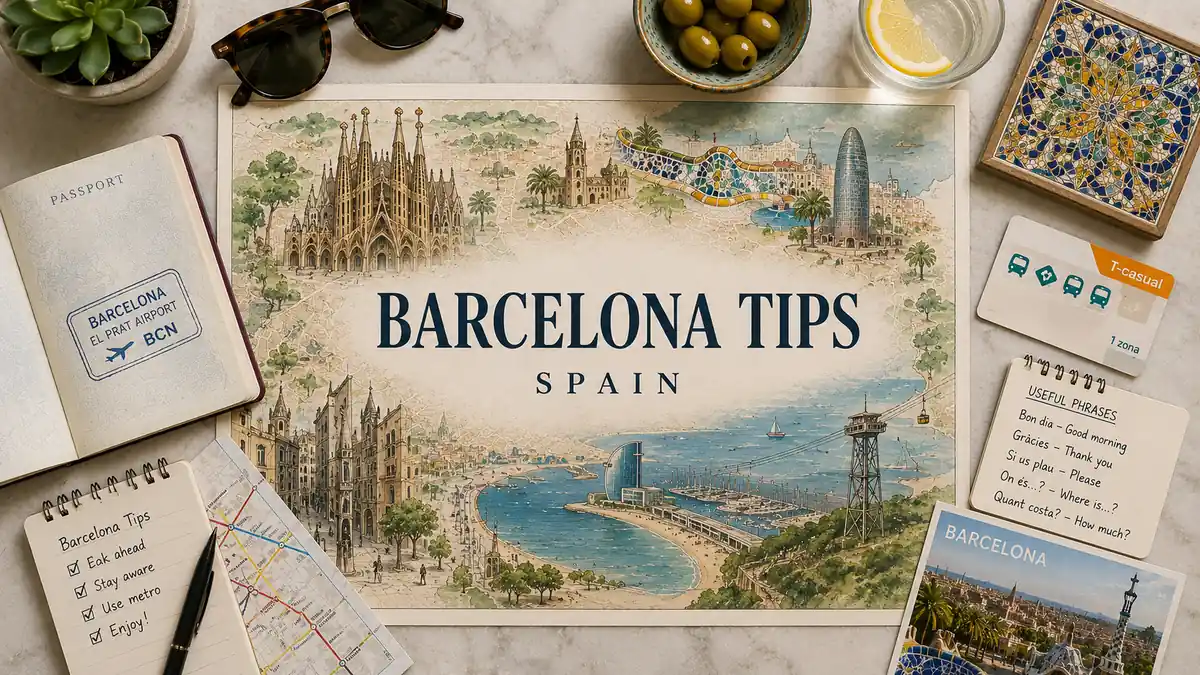
You don’t need to be fluent to show respect. Learning a couple of Catalan words goes a long way:
- Hola and adéu — hello and goodbye in everyday use.
- Si us plau and gràcies — please and thank you.
- Bon dia — a friendly good morning that locals notice.
English is widely understood in tourist areas, so you won’t be stuck, but small gestures of respect matter more here than memorizing phrases. For etiquette that applies across the rest of the country rather than just Barcelona, see our wider Spain travel tips.
How do you avoid pickpockets in Barcelona?
Keep your phone and wallet out of sight on La Rambla, the metro, and the beach. Barcelona’s petty theft is opportunistic and non-violent, targeting distracted tourists who flash valuables. Awareness, not anxiety, is what keeps you safe. The city is welcoming; you simply don’t hand thieves an easy opportunity.
A handful of simple habits remove most of the risk:
- Don’t leave your phone on a restaurant or café table, especially on terraces facing the street.
- Carry your bag in front of you and zipped on the metro and in crowds.
- Stay alert on La Rambla and around major sights, where crowds make distraction easy.
- Never leave belongings unattended on the beach while you swim.
That’s the whole behavioral rulebook for everyday awareness. For a fuller look at scams, neighborhood safety, and what to do if something happens, read our dedicated Barcelona safety guide.
When do locals eat, and how does it change your day?
Barcelona eats late, and matching that rhythm changes your whole day. Lunch and dinner run noticeably later than most visitors expect, and many kitchens close between meals. Show up early and you’ll find quiet restaurants, tourist-only crowds, or a kitchen that hasn’t opened yet.
The practical impact is about pacing, not precise hours. If you eat a big late lunch like locals do, you naturally shift dinner later and your afternoons stretch out. Plan sightseeing around the gap when kitchens pause, and you’ll avoid the frustration of hunting for a meal at the wrong time.
A few habits help you eat well:
- Don’t expect an early dinner — aim later and you’ll dine alongside locals, not just tourists.
- Use the mid-afternoon kitchen lull for sightseeing or a coffee, then eat after.
- Where you can, reserve popular spots, since the best places fill at peak local hours.
How should you get around Barcelona?
Walk the center and take the metro for everything else. Barcelona’s old town and main sights are compact and best explored on foot, while the metro connects neighborhoods quickly and cheaply. A multi-trip travel card is the easy default, and you should always validate before traveling.
You don’t need a car, and you rarely need taxis for sightseeing. The metro is simple to learn, and walking the old town is half the experience. Get a multi-trip card instead of buying single tickets each time, and keep it handy at the gates.
For ticket products, fares, and route-by-route detail, see our Barcelona transport guide. If you’re working out how to reach the city from the airport on arrival, our Barcelona airport transport guide covers the options.
What money and tipping habits should you know?
Tipping in Barcelona is modest and optional, and cards are widely accepted. Rounding up a bill or leaving small change for good service is plenty — there’s no expectation of large percentage tips. You’ll rarely need much cash, though carrying a little for small purchases is sensible.
The etiquette is relaxed compared with some countries. Service is not built around tips, so a small gesture is appreciated rather than required. Contactless cards work almost everywhere, including transport and most cafés, so you don’t need to manage large amounts of cash.
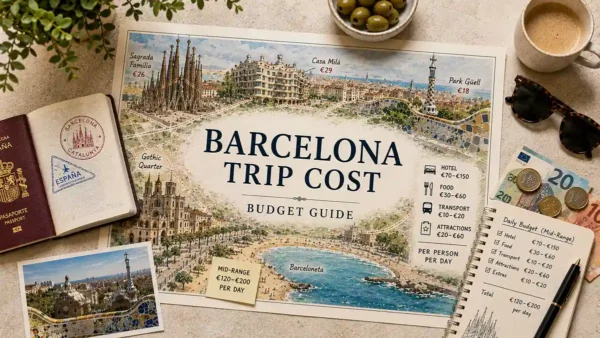
For how these habits add up across a trip — daily budgets, what costs more, and how to plan spending — see our Barcelona trip cost guide.
Which mistakes should you book around before you go?
Reserve the major Gaudí sights ahead and check museum free-entry windows before you arrive. Turning up to Sagrada Família or Park Güell without a timed ticket often means long waits or no entry on the day. Booking ahead is the single discipline that saves first-timers the most time.
Treat advance booking as non-negotiable for the headline landmarks. Their timed-entry systems fill, especially in high season, and winging it costs you hours or a missed visit. Buy your slots before the trip and build your days around them, not the reverse.
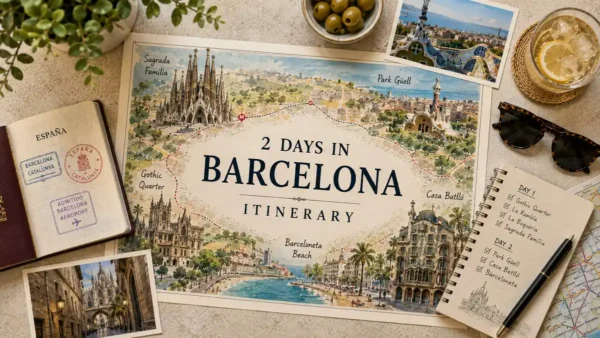
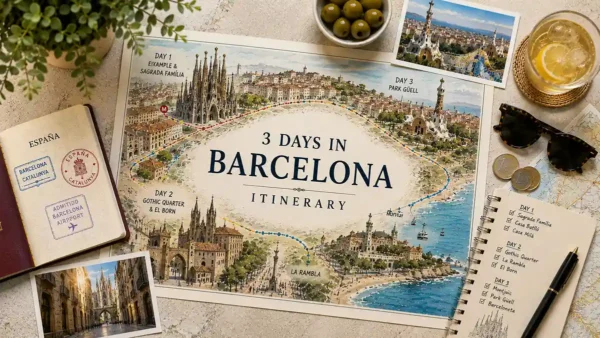
Free entry is worth planning around too, but check it as a habit instead of relying on a fixed list. Some museums offer free-entry windows on certain days, and these change, so confirm current details directly before you go. To decide how much you can realistically fit and in what order, see our 2-day Barcelona itinerary and 3-day Barcelona itinerary.
Tours and activities
Book skip-the-line tickets, day trips and local tours with free cancellation on most activities.
You can also browse everything on getyourguide.com.
Tripstou may earn a commission if you book through this link, at no extra cost to you.
What should you sort before you arrive in Barcelona?
Stay central near a metro stop, sort your connectivity, and decide which deeper questions to settle first. Getting your base and your phone connection right before arrival removes most early-trip friction, so you spend your first hours exploring instead of troubleshooting. The rest is choosing which dedicated guide to read next.
Two pre-trip decisions carry the most weight. A central location near a metro stop keeps walking and transit easy, and reliable mobile data makes maps, tickets, and translation painless from the moment you land. Sort both early and the trip starts smoothly.
Use these guides to settle the bigger questions before you go:
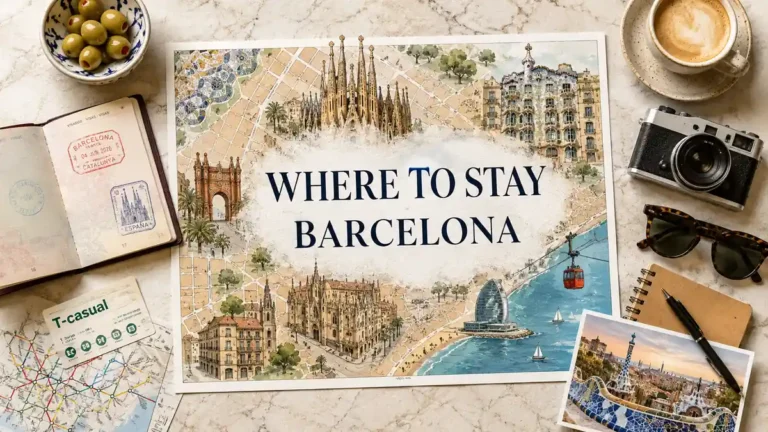
- Pick your base in our where to stay in Barcelona guide.
- Set up data ahead with the best eSIM for Spain.
- See how every part of your trip fits together in the Barcelona travel guide.
Get online the moment you land
An eSIM installs before you fly — no SIM swap, no roaming bill, no queue at an airport kiosk. Two options, depending on how you travel:
Holafly — unlimited-data plans, so nothing counts against a
cap. Best for longer stays, remote work, and heavy map and video use.
Code TRIPSTOU applies automatically: 5% off any travel eSIM,
reusable on every order, or 10% off Holafly Plans.
Get a Holafly eSIM →
Airalo — pay for the data you need, across 200+ destinations,
trusted by 20M+ travelers. Best for short trips and light use.
Use code NEWTOAIRALO15 for 15% off your first order:
Get an Airalo eSIM →
Tripstou may earn a commission if you purchase through these links, at no extra cost to you.
Frequently Asked Questions
Is Barcelona safe for tourists?
Yes, Barcelona is broadly safe for tourists, with the main concern being petty theft, not violence. Pickpockets target distracted visitors on La Rambla, the metro, and the beach, so awareness usually keeps you fine. For scams, neighborhood safety, and what to do if something happens, read our Barcelona safety guide.
Do people speak English in Barcelona?
Yes, English is widely understood across Barcelona’s tourist areas, restaurants, and major attractions, so you won’t get stuck. Locals here speak both Catalan and Spanish, and small gestures of respect matter more than fluency. Learning a couple of Catalan greetings, like “bon dia” or “gràcies,” is genuinely appreciated by the people you meet.
Is Barcelona expensive to visit?
Barcelona sits in the mid-to-upper range for European city breaks, and your daily spend depends heavily on choices. Where you stay, how you eat, and which paid sights you book drive the total far more than small daily costs. For realistic daily budgets and what costs more, see our Barcelona trip cost guide.
How many days do you need in Barcelona?
Most first-time visitors find two to three days enough to cover the headline sights without rushing. Two days suit a focused trip, while three give breathing room for Gaudí landmarks, neighborhoods, and the beach. To plan the order and pacing, follow our 2-day and 3-day Barcelona itineraries for ready-made routes.
Do you need to book Sagrada Família and Park Güell in advance?
Yes, you should book Sagrada Família and Park Güell with timed tickets before you arrive. Both use timed-entry systems that fill quickly, especially in high season, so turning up without a slot often means long waits or no entry that day. Treat advance booking as non-negotiable for these landmarks.
Should you tip in Barcelona?
Tipping in Barcelona is modest and optional, not the obligation it is in some countries. Rounding up the bill or leaving small change for good service is plenty, and staff aren’t paid to rely on tips. Cards are accepted almost everywhere, so you rarely need to carry much cash for this.
Related Guides
Continue planning your trip with the cluster’s core Barcelona guides:
- Barcelona travel guide — the full hub tying every part of your trip together.
- Where to stay in Barcelona — choose the right neighborhood and base.
- Barcelona safety guide — scams, theft, and staying street-smart in depth.
- Barcelona transport guide — metro, travel cards, and getting around.
- Barcelona trip cost guide — budgets and what to expect to spend.
- 3-day Barcelona itinerary — a ready-made plan for a first visit.
Did this guide save you time or money? Tripstou is independent and reader-funded — if you'd like to give something back, you can support the site with a crypto contribution of any size.