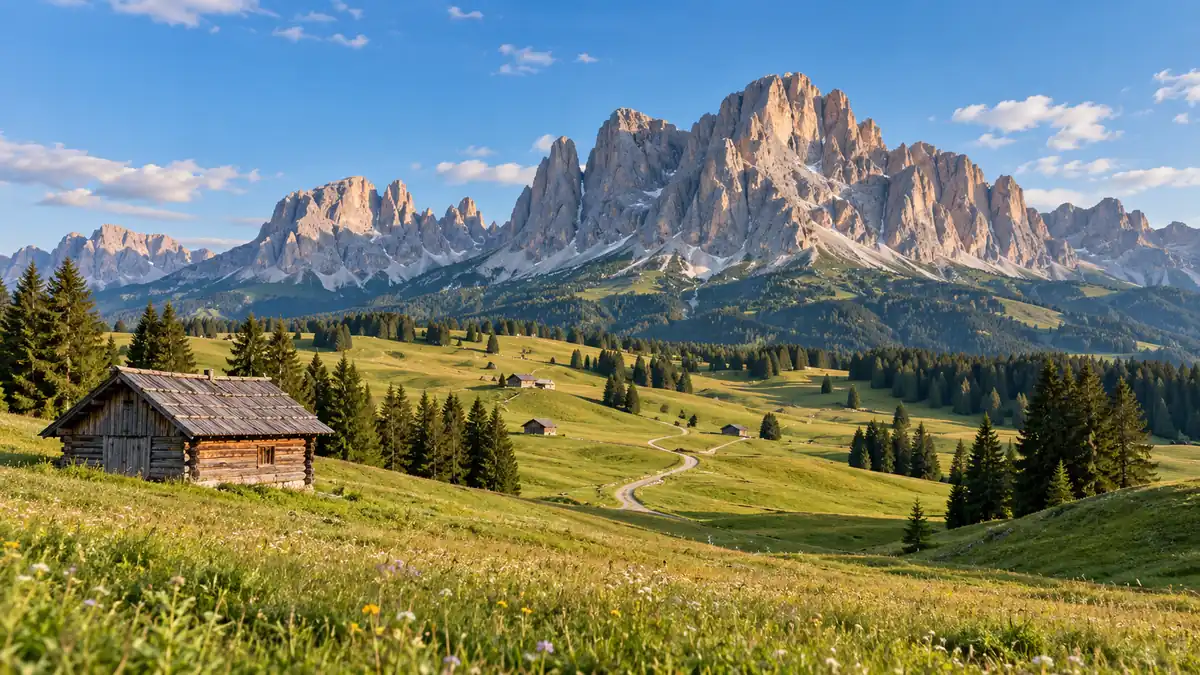
Travel to the Dolomites, Italy is worth it for some of Europe’s most dramatic mountain scenery, reached on foot and by cable car in summer and on skis in winter. The range is spread out, so the valley you base in decides the trip. For a first visit, plan around five to seven summer nights split between Ortisei in Val Gardena on the western side and Cortina d’Ampezzo in the east. With only two or three nights, stay in one base.
This guide works through the choices in the order they matter: which side of the range, which valley, how many nights and bases, which season, and whether you need a car.
How We Checked This Guide
This is a planning guide to the Dolomites: which side and valley to sleep in, how many nights to give them, whether to drive or ride buses, and which season fits your trip. It is not a hiking guide, a list of sights, a day-by-day itinerary, a transport timetable or a hotel guide.
Alex Perrut, working in tourism since 2015, read through the valley advice and access rules on this page for the Tripstou editorial team. Produced with AI assistance, it follows our editorial process.
Official sources consulted: Italia.it, Dolomiti UNESCO Foundation, South Tyrol Tourism, Seiser Alm Tourism.
In This Guide
Are the Dolomites Worth It, and Who Are They For?
Yes, the Dolomites are worth it for travelers who want big mountain scenery they can reach on foot and by cable car in summer, and for skiers in winter. They suit car-free travelers less in the shoulder months, when much of the lift network stops. They are the wrong pick for a trip built around beaches or city sightseeing.
Hiking is the main reason to come. Trails run from easy meadow walks to hut-to-hut routes, and cable cars lift you onto the high ground, so even a modest walker gets summit-level views. The best hikes in the Dolomites are covered trail by trail in their own guide.
The rest of the appeal is scenery and pace. Pass roads cross high saddles between the valleys, which makes the drive part of the day. Lunch at a rifugio, a mountain hut serving hot food on the trail, is a fixture of summer. In winter the same valleys become one of Europe’s best-known ski regions.
Walkers of any level, families with children old enough for a cable-car day, and photographers all get a lot from a week here. Travelers who need nightlife, museums or a beach day will find a few nights enough, and should weigh the range against the best places to visit in Italy before committing more.
What you are paying for in the Dolomites is time on the high ground, and every hour spent on a pass road comes out of it. That is why the base matters more here than in most mountain regions.
Where the Dolomites Are and How the Range Divides
The Dolomites sit in northeast Italy, in the Eastern Alps, spread across Trentino-Alto Adige, Veneto and Friuli-Venezia Giulia. There is no central town. For planning, the range splits into a western group of South Tyrol and Trentino valleys (Val Gardena, Alta Badia, Val di Fassa) and an eastern side around Cortina d’Ampezzo.
UNESCO lists the Dolomites as a World Heritage Site made up of nine separate mountain systems, and that is the key to how they work on the ground. Massifs stand between the valleys. Roads climb over passes on long runs of hairpins, so two villages that look close on a map can be half a day apart. A “quick hop” from west to east is rarely quick.
Place names come doubled. South Tyrol is German-speaking as well as Italian, so Ortisei is also St. Ulrich and the Seiser Alm is also the Alpe di Siusi; some valleys add Ladin, a third local language. Signs show both names, and the questions at the end cover what you will hear.
Val Gardena, Alta Badia, Cortina or Val di Fassa: What Each Valley Is For
Val Gardena is the all-rounder and the best base without a car. Cortina is the base for the eastern icons and the easiest to reach from Venice. Alta Badia is the quieter, food-led option on the Sella circuit, and Val di Fassa is the western base under the Marmolada.
| Valley (side) | Natural base | Anchor experience | Suits | Without a car? |
|---|---|---|---|---|
| Val Gardena (west, South Tyrol) | Ortisei | Seiser Alm meadow | First-timers, car-free trips | Yes, in summer |
| Cortina d’Ampezzo (east, Veneto) | Cortina | Tre Cime di Lavaredo | Arrivals from Venice | Harder |
| Alta Badia (west, South Tyrol) | Corvara | Sella circuit | Return visitors, slow trips | Workable in summer |
| Val di Fassa (west, Trentino) | Canazei or Vigo di Fassa | Marmolada | Drivers touring the passes | Easier with a car |
Val Gardena and the Seiser Alm
Val Gardena is the valley for a first trip or a trip without a car. Ortisei, its main village and the natural base, has the widest spread of lodging, lifts straight up from the village and the best bus links in the range.
The anchor is the Seiser Alm, or Alpe di Siusi, a vast high meadow above the valley. It is the gentlest big landscape in the Dolomites: easy walking for families and non-hikers, with rock walls on every horizon. Its access road is restricted in season, covered in the car section below.
Val Gardena also sits on the side of the range served by rail through Bolzano, so arrivals from Verona or Innsbruck reach it first. Its weak point is the east. Tre Cime and Lago di Braies are a long day away.
Sleep in Ortisei and the Seiser Alm is on your doorstep by lift; sleep anywhere else and it turns into a planning job around the road rule.
Cortina d’Ampezzo and the Eastern Dolomites
Tre Cime di Lavaredo, the three rock towers counted among the most photographed points in the Dolomites, is the reason most people base in Cortina d’Ampezzo. Cortina is the hub of the eastern side, and its icons cluster around it. Lake Misurina sits on the road from Cortina toward Tre Cime and is the easiest of the eastern lakes to reach. Lago di Braies, further north in the Prags valley, is the postcard lake, with summer access rules covered below.
Cortina and Lake Misurina are also the classic pairing for anyone coming up from Venice with only a day. The town’s centre sits under a ring of peaks, and the lake lies a short drive beyond it, so the two together show the eastern side at its most concentrated.
Cortina is livelier and pricier than the western villages, with smarter shops and a busier evening. It lies in Veneto, in the province of Belluno, which matters for buses. Arrivals from Venice and anyone whose list starts with Tre Cime belong here. The eastern sights are covered in detail among the things to do in the Dolomites.
Alta Badia
Alta Badia is the quieter, food-led option, with Corvara as its natural base and smaller villages strung down the valley. This is Ladin country, where the local language and traditions are most visible, and mountain cooking runs from hut lunches to fine dining. In winter it sits on the Sella ski circuit, part of Dolomiti Superski, which Italia.it describes as Italy’s largest ski area. It suits return visitors and anyone who would trade a famous view for a slower village.
Val di Fassa and the Marmolada
Val di Fassa is the western base under the Marmolada, the highest peak in the Dolomites. Canazei is the busiest village, and Vigo di Fassa is a calmer alternative down the valley. It lies in Trentino and opens onto the high western passes, which makes it the base for drivers who want to tour them.
Two more names complete the map. Kronplatz, or Plan de Corones, above Val Pusteria, is a further base toward the east of South Tyrol, known more for activities than for a classic village stay, and quieter valleys such as Val di Funes appear among the hidden gems in the Dolomites. Bolzano is the gateway city where many trips start, not a mountain base.
Tours and activities
Book skip-the-line tickets, day trips and local tours with free cancellation on most activities.
You can also browse everything on getyourguide.com.
Tripstou may earn a commission if you book through this link, at no extra cost to you.
Ortisei or Cortina? Let Your Arrival Point Decide
Arriving from Venice, base in Cortina; arriving from Verona, Bolzano or Innsbruck, or travelling without a car, base in Ortisei. There is no airport in the range, so the last leg is always by road, and the shorter that leg, the sooner the mountains start.
Venice is the gateway to the eastern side. Verona and Bolzano sit on the Brenner rail line to the west, and Bolzano is the main rail gateway to the range. Innsbruck serves arrivals from the north. From any of them, the final stretch is by car or bus.
Ortisei puts the Seiser Alm, Val Gardena’s lifts, Alta Badia and the Sella passes within easy reach. The South Tyrol bus network makes a car optional there in summer. The village feels Tyrolean, quieter after dark, and it gives better value at the same level of comfort.
Cortina puts Tre Cime, Misurina and Braies within easy reach, and it is the closer base for anyone driving up from Venice. It is livelier and pricier. Its buses sit outside the South Tyrol system, so a car counts for more there.
Whichever village you choose, the other side of the range becomes a long day trip. Pick the side whose icons you would most mind missing.
Hotels and places to stay
Compare hotels, apartments and stays for your dates in one search.
Search hotels and stays on hotels.com →
Tripstou may earn a commission if you book through this link, at no extra cost to you.
How Many Days in the Dolomites, and How Many Bases?
Two to three nights is the realistic minimum and works from one base. Five to seven nights is the sweet spot, split between one western and one eastern base. A week or more can add a third base or a night or two in mountain huts.
| Trip length | Bases | What it realistically covers | Who it fits |
|---|---|---|---|
| 2–3 nights | One | One valley’s lifts, a meadow walk, one pass drive | Add-ons to Venice or Verona |
| 5–7 nights | Two, west and east | Both sides’ icons without long return drives | First-timers with a week |
| 8+ nights | Two or three, or hut nights | Longer hikes, a third valley, spare weather days | Keen hikers, return visitors |
For most first trips, two bases over about six nights is the plan that works. Each move costs around half a day of packing and pass driving, and peak-season minimum stays at many lodgings push you toward fewer, longer stays anyway. A third base only pays off past a week. Weather is the quiet argument for an extra night: one cloudy day on a short trip can erase the view you came for, while a spare day lets you move the big cable-car outing to the clear one.
Lifts and Huts Set the Calendar, Not the Weather
The Dolomites run on two seasons: summer, when lifts, huts and trails are open, and winter, the ski season. In spring and late autumn most lifts and many huts close, so a May or late-October trip sees the scenery with far less access to it.
Summer is the season for walking, cable-car viewpoints and hut lunches, with the whole network of lifts and trails working. It is also the busiest and dearest time, and the best lodging goes early.
Winter belongs to skiers. The linked ski areas join valley to valley, and the villages look their best under snow. Non-skiers get the scenery but fewer ways up into it.
Travelling between the two seasons trades access for quiet:
- Lifts and cable cars are closed or running reduced schedules.
- Many rifugi shut, which limits how far you can walk without carrying food.
- Some pass roads and bus services are reduced.
- Villages are quieter, and lodging that stays open is cheaper.
Each valley sets its own opening calendar, so check the valley’s lift operator before booking shoulder dates. For May or late October, read that calendar before the forecast: a clear day with the cable car shut still leaves the high ground out of reach. Month-by-month detail sits in the guide to the best time to visit Italy.
Do You Need a Car in the Dolomites, or Will Buses Do?
A car makes the Dolomites easier and is close to essential for crossing between east and west. Without one, a summer trip based in Val Gardena or elsewhere in South Tyrol works well on buses. Cortina is the harder base to do car-free.
Going without a car works on these terms:
- The South Tyrol Guest Pass, given by participating accommodation, covers public transport across South Tyrol.
- Without a Guest Pass, the Mobilcard covers regional trains and buses for 1, 3 or 7 consecutive days.
- Long-distance trains are not included, and some shuttles and private lifts sit outside both.
- Cortina lies in Veneto, on a separate bus network outside the South Tyrol system, so the South Tyrol passes stop helping once you cross over.
Ask whether a South Tyrol hotel takes part in the Guest Pass scheme before you book it. If it does, buses become part of the room rate, and a car-free week costs far less to run.
Driving means pass roads: steep, slow, hairpin after hairpin, with heavy summer traffic near the famous viewpoints. Two access rules shape the day more than the driving itself.
Private cars are barred from the Seiser Alm access road during the day in season. Ride the cable car up from Seis (Siusi) or take a bus instead, and check seiseralm.it, the meadow’s official site, for the current rules before you drive up.
Lago di Braies has a summer daytime restriction on its access road, and parking there has to be booked in advance. Check the Prags valley’s official site before you go, or let a guided trip handle the access and book a Braies day trip.
Are the Dolomites Expensive?
Yes, the Dolomites are expensive in peak summer and in ski weeks, mainly because of lodging. They are not a budget destination. Still, how you spend changes the bill more than which valley you pick.
A tight budget works best just outside the peak weeks while the lifts still run: guesthouses in less famous villages, buses on the Guest Pass, and hut lunches in place of restaurant dinners. The trails cost nothing, and that is where the Dolomites are kindest to this style.
A comfortable middle trip means two bases in summer, mid-range hotels or apartments, a few lift days and a mix of hut and restaurant meals. Lift tickets are what creep up here, because single rides add up fast over several days.
The high end centres on Cortina or Alta Badia, with upscale hotels, ski weeks and fine dining. Peak-season minimum stays and Cortina prices punish late booking at every level, most of all here. The figures for each style are in the Italy trip cost guide.
A First Trip Works Best as a West-to-East Crossing
In summer, the strongest first trip crosses the range: arrive on the western side through Verona or Bolzano, base in Val Gardena, then drive over the passes to Cortina and leave toward Venice, or run the same route in reverse. It stands alone at around a week, or it slots between Venice, Verona and the lakes as the mountain leg of a wider Italy trip.
The crossing beats a single base because each side’s icons sit near the bed you are sleeping in. The Seiser Alm and Val Gardena’s lifts come first. Tre Cime and the eastern lakes come last. Nobody drives the length of the range twice.
As an add-on, the Dolomites fit between Lake Garda or Verona on one side and Venice on the other, since the crossing starts near one and ends near the other. The Italy itinerary shows how that mountain leg fits a longer route, and the Italy travel guide covers the national planning around it.
Short trips should stay simple: one base on the side nearest your gateway, which means Cortina from Venice and Ortisei from Verona or Bolzano. With only a free day in Verona, a guided outing still reaches Ortisei and the western passes, and you can reserve a spot on one.
Before You Book a Valley
- Decide between the western and eastern side before anything else, because pass roads put villages that look close on a map half a day apart.
- Ortisei in Val Gardena suits car-free trips and the Seiser Alm, while Cortina suits arrivals from Venice and anyone set on Tre Cime or Lago di Braies.
- Two or three nights work from one base, and a first trip of five to seven nights is best split between a western and an eastern base.
- Outside summer and the ski season most lifts and many huts close, so check the valley’s lift operator before booking May or late-October dates.
- A car makes crossing the range far easier, but a summer stay in South Tyrol works on buses, especially with a Guest Pass from your accommodation.
- Peak-season lodging is what makes the Dolomites expensive, and minimum stays in summer and ski weeks reward booking early.
Questions People Ask Before Going
Can you do the Dolomites as a day trip from Venice?
Yes, on an organised tour, but it is a long, rushed day that only reaches the eastern side: Cortina, Lake Misurina and, on some routes, Lago di Braies. Much of the day goes on the road, and the western valleys stay out of reach. Two or three nights in Cortina turn the same sights into an unhurried trip.
Do people speak German or Italian in the Dolomites?
Both. German is widely spoken in South Tyrol, including Val Gardena and Alta Badia, while Italian dominates in Trentino and around Cortina. Ladin, a third local language, survives in some valleys. Most places carry two names, so the Alpe di Siusi is also the Seiser Alm, and English is common in hotels, lift stations and huts that serve visitors.
Can you visit the Dolomites without hiking?
Yes. Cable cars lift you to viewpoints that would otherwise take a hard climb, the pass roads are scenery in themselves, and lakes such as Misurina sit right by the road. Village stays and hut lunches reached by lift fill out a summer trip, and winter adds skiing. The catch is timing: non-hikers depend on the lifts more than anyone, so avoid spring and late autumn, when most of them stop.
Did this guide save you time or money? Tripstou is independent and reader-funded — if you'd like to give something back, you can support the site with a crypto contribution of any size.