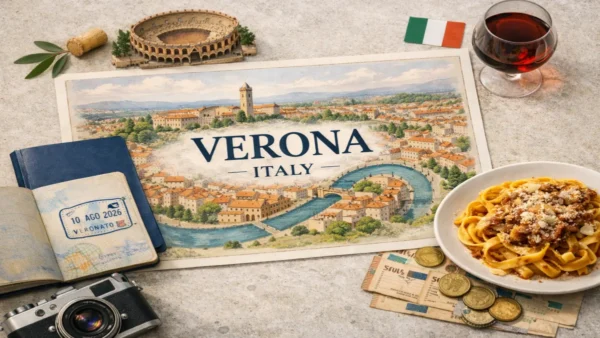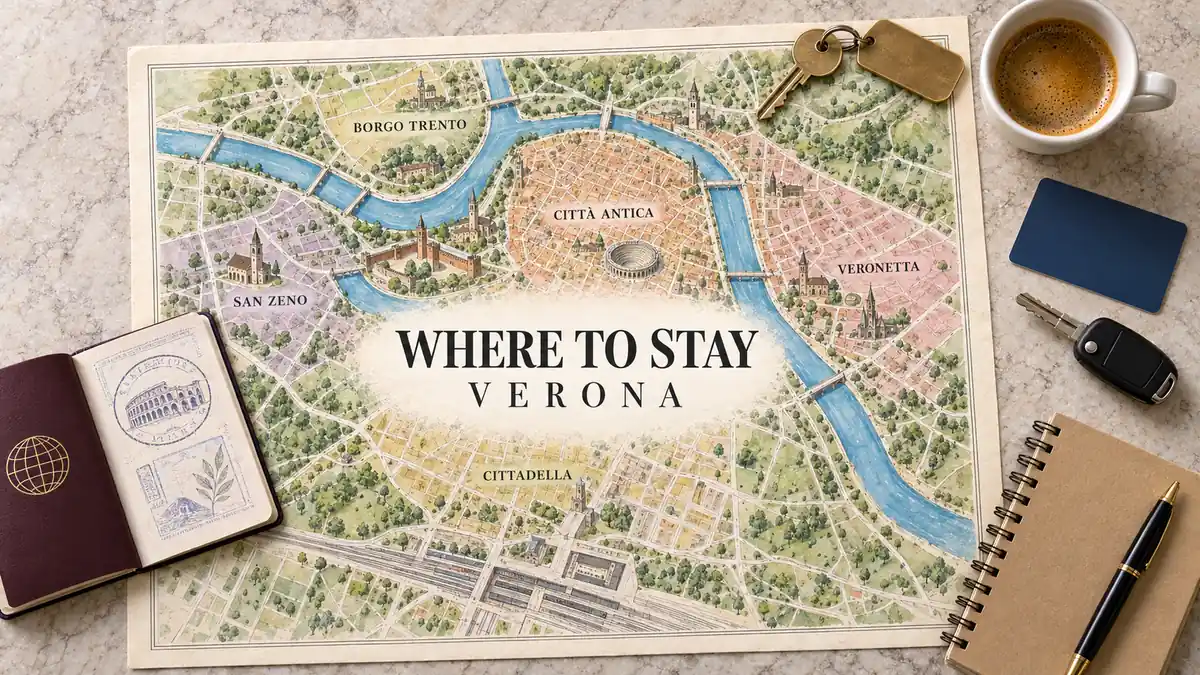
Verona is small enough that almost every area worth booking keeps the centre within walking range. So the stay decision is less about distance and more about atmosphere, noise, car access and price. That changes the question you should be asking: what kind of evening, what kind of night’s sleep and what kind of arrival do you want?
Two traps catch first-time bookers. Drivers discover that the historic centre is a restricted traffic zone enforced by cameras, so a hotel inside it is only reachable by car when the hotel has arranged access. Train travelers book “near the station” and find the old town a longer walk than the map suggested.
This guide settles both. It names one best area, profiles four real alternatives with a clear verdict for each, maps every common traveler type to an area, and says plainly where not to book.
Quick Answer
Città Antica, the historic centre, is the best area in Verona for most first-time visitors. Everything is walkable, but it costs the most, gets noisiest around Piazza Bra in the summer opera season, and is closed to visitors’ cars unless the hotel registers your plate. Budget travelers get better value in Veronetta, across the river.
Trust Layer
Tripstou stay guide for travelers choosing where to base. Covers area atmosphere, budget, convenience, noise, and traveler fit.
Produced with AI assistance and reviewed by Alex Perrut, working in tourism since 2015, for the Tripstou editorial team. See our editorial process for details.
Last factual review: September 18, 2026.
Official sources consulted: Italia.it, ENIT, Comune di Verona.
Key Takeaways
- Città Antica is the best base for a first visit because every sight is walkable, but it is the priciest area in town.
- Veronetta, across the Adige, gives budget travelers lower prices while keeping the centre a short walk over one of several bridges.
- Light sleepers and families do best in Borgo Trento, a residential district that goes quiet after dark but keeps the centre within walking range.
- Streets facing Piazza Bra stay loud on summer opera nights, so opera-goers should book a few lanes back and still walk home.
- Drivers should book outside Verona’s ZTL or get written confirmation that the hotel registers their plate, since cameras enforce the historic centre.
- The streets right beside Verona’s Porta Nuova station suit a one-night train stop; for a longer stay, Cittadella is the practical station-side base.
Table of Contents
Best Areas in Verona by Traveler Type
Book Città Antica for a first visit, Veronetta for value, Borgo Trento for quiet and Cittadella for trains. San Zeno is the fifth option, for travelers who want a neighbourhood feel close to the centre. Each choice trades something: price, noise, evening life or car access. Match the trade to your trip.
Price level is relative to Verona, not to Italy overall.
| Area | Vibe | Best for | Tradeoff | Price level |
|---|---|---|---|---|
| Città Antica | Arena, piazzas and busy historic lanes | First-time visitors who want every sight on foot | Opera-night noise, top prices, restricted car access | High-end, the priciest area in town |
| Veronetta | University district with bars across the Adige | Budget travelers who want a lively local district | Lively streets at night, a bridge crossing home | Budget to mid-range for the city |
| Borgo Trento | Residential streets, cafés and everyday local life | Families and light sleepers who still want to walk | Little evening life and fewer places to stay | Mid-range, steady value for the calm |
| San Zeno | Village-like quarter around the San Zeno basilica | Couples and repeat visitors after a neighbourhood feel | Fewer stays, further from the Veronetta-side sights | Mid-range for a walkable local quarter |
| Cittadella | Ordinary modern streets between station and centre | Train day-trippers and drivers who want easy comings and goings | Little old-town charm or evening character | Budget to mid-range, practical over pretty |
Every common traveler type maps to one area. Pick your line and book.
- First-timers: Città Antica, because every sight is on foot and a short first stay loses no time to transport.
- Couples: San Zeno, for a local square and trattorie with the Arena still a short walk away.
- Budget travelers: Veronetta, where lower prices cost only a bridge crossing in access.
- Families: Borgo Trento, with calm residential streets and the centre still walkable.
- Quiet sleepers: Borgo Trento, or Valdonega above it if a daily walk down is acceptable.
- Drivers: a base just outside the historic centre, after confirming ZTL access and parking with the hotel.
- Train day-trippers: Cittadella, with Porta Nuova station in one direction and Piazza Bra in the other.
- Opera-goers: the quieter lanes of Città Antica, close enough to walk home after a late finish.
Hotels and places to stay
Compare hotels, apartments and stays for your dates in one search.
Search hotels and stays on hotels.com →
Tripstou may earn a commission if you book through this link, at no extra cost to you.
Città Antica Is the Best Overall Pick for First-Timers
Città Antica is the best place to stay in Verona for a first visit. Everything inside the old walls is walkable, from the Arena to Piazza delle Erbe, so short stays lose no time to transport. It suits first-timers, opera-goers who want to walk home and anyone staying a night or two.
The historic centre runs at two speeds. The core around the Arena, Piazza Bra and Piazza delle Erbe is busy from morning until late, with café terraces and a steady flow of visitors. Walk towards Ponte Pietra and the lanes quieten. Same district, different night.
Convenience is the reason to pay the premium here. The main orientation anchors sit a few streets apart, and no sight in the old town needs a bus. Our guide to things to do in Verona covers what to see from this base.
Expect high-end prices. This is the most expensive part of town, and demand peaks in the summer opera season.
Two tradeoffs come with the address. Streets facing Piazza Bra stay loud on opera nights, when crowds leave the Arena late. The centre is also a camera-controlled ZTL, so arriving by car only works if the hotel registers your plate in advance; the car section below sets out the options.
In Città Antica the street matters more than the district: a room two lanes back from Piazza Bra keeps the walk home and loses most of the opera-night noise.
Best for: First-time visitors who want every sight on foot
Veronetta Is the Best-Value Base Across the River
Veronetta is the best value area in Verona, just across the Adige from the centre. It suits budget travelers and couples who want a local, university-district feel a short walk from the sights. Prices sit lower than in Città Antica, and the access you give up is one bridge crossing.
Day to day, Veronetta feels like a student and residential quarter. Evenings bring bar terraces and a younger crowd. It is a place to live for a few days, and the sightseeing happens mostly on the other bank.
The river is less of a barrier than it looks. Several bridges link the district to the old town, and the Roman Theatre and Castel San Pietro sit on this side as orientation anchors. Most of the centre is a short walk once you cross.
Rooms run from budget to mid-range, which makes Veronetta the strongest answer for budget travelers who still want to walk everywhere. The tradeoff is noise in places: some streets stay lively at night, and every evening in the centre ends with a walk back over the river.
The closer a Veronetta stay sits to the river, the less of the discount you give back in walking.
Best for: Budget travelers who want a lively local district
Borgo Trento Is the Quietest Base Within Walking Range
Borgo Trento is the quietest area to stay in Verona that still keeps the centre on foot. It lies north across the Adige, residential and calm after dark, which makes it the pick for families and light sleepers. The walk into the old town takes roughly a quarter-hour.
Staying here feels like living in Verona. Residential streets, neighbourhood cafés and local daily routines set the tone, with few visitors after the evening walk home. Nights are quiet.
Getting into town depends on the bridges. Ponte Garibaldi and Ponte Vittoria lead straight into the centre, so the daily walk doubles as a first look at the river. Families get calmer streets for children and a base that winds down early.
Borgo Trento is a mid-range area. The tradeoff is choice and nightlife: there is little evening life on the doorstep, and fewer places to stay than in the centre or Veronetta, so good options go early.
Borgo Trento rewards travelers who eat dinner in the centre and sleep out of it; anyone who wants evening life outside the door will feel the quiet as a cost.
Best for: Families and light sleepers who still want to walk
San Zeno Keeps the Centre Close Without the Crowds
San Zeno is the local-feeling area to stay in Verona closest to the centre. It sits west of Castelvecchio around the basilica, a village-like neighbourhood with its own square, still a short walk from the Arena. Couples and repeat visitors gain calm and character without crossing the river.
The atmosphere is neighbourhood first. A square in front of the basilica, trattorie and a market-day bustle give it a village rhythm that the tourist core lost long ago. Evenings are relaxed.
For a quiet area, access is strong. The walk to Piazza Bra follows the river past Castelvecchio on the same bank as the old town, so no bridge is needed. Veronetta-side sights, such as the Roman Theatre, sit further away.
Prices are mid-range, and the main tradeoff is supply: San Zeno has fewer places to stay than the centre, and the best-placed ones fill early.
San Zeno is the quiet option that needs no bridge, which is why travelers who stayed in the centre on a first trip often switch here on the second.
Best for: Couples and repeat visitors after a neighbourhood feel
Cittadella Suits Trains and Drivers; the Station Streets Do Not
Stay in Cittadella, not beside the station, if you want Porta Nuova within reach. The district sits between the station and Piazza Bra, so trains and the old town are both manageable on foot. It suits train day-trippers and drivers, while the streets right by the station suit a one-night stop only.
Cittadella is ordinary modern city. Wide streets, offices and everyday shops replace the old-town lanes, and the evening character is thin. Nobody books it for charm.
Convenience is the whole case. Porta Nuova, Verona’s main railway station, lies to the south, and Piazza Bra lies to the north, so each day starts with the choice of direction. From the platforms, the old town is a longer walk than it sounds, and Cittadella shortens it. Arrival options and getting around are covered in our Verona city guide.
Drivers like Cittadella because it keeps them clear of the narrow old-town lanes. Whether a given street falls inside the ZTL is a question to put to the hotel before booking.
Prices run from budget to mid-range; what you give up is atmosphere, by day and after dinner.
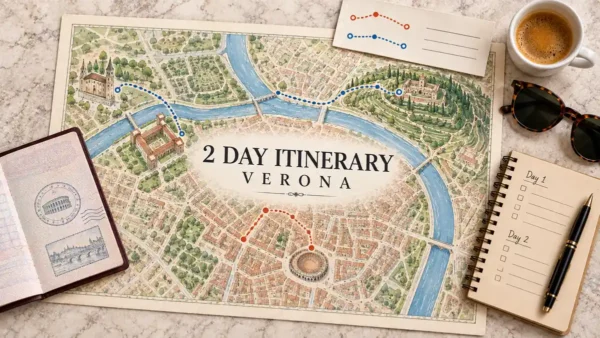
The streets right beside Porta Nuova are functional and transit-shaped. Book there for a late arrival and an early train. A real base of two nights or more belongs closer in, as our two-day Verona itinerary shows.
In Verona, “near the station” and “near the centre” are opposite ends of the same walk, and Cittadella is the midpoint.
Best for: Train day-trippers and drivers who want easy comings and goings
Where to Stay in Verona with a Car
Drivers should book outside Verona’s ZTL, or confirm in writing that the hotel registers their plate. The historic centre is a camera-controlled limited traffic zone. A hotel inside it can register your plate in advance, and without that the centre is closed to non-resident cars. Settle parking in the same email, before you pay.
The mechanism is simple. Cameras record plates entering the zone. Guests of accommodation inside it may drive in when the hotel or host has registered the plate ahead of arrival; other visitors’ cars stay out. That leaves three workable options:
- Hotel inside the ZTL with plate registration: suits drivers who want the car at the door on arrival and departure. It works only if the hotel acts before you arrive, so get registration and parking confirmed in writing.
- Stay just outside the centre and walk in: suits most drivers. Borgo Trento, Veronetta and Cittadella are the natural candidates; ask the hotel whether its street falls inside the zone before you book.
- Park and walk, with no car access at all: suits drivers passing through who treat Verona as a walking city. The cost is carrying luggage in on foot.
Drivers whose trip is really about wine can look at the Valpolicella countryside instead, covered in the other-areas section below.
A Verona booking confirmation that mentions parking but says nothing about plate registration covers only half the problem.
Is Staying Central in Verona Worth It?
Staying central is worth it in Verona for short stays and opera nights; quiet and value live just outside. The city is small and the centre is the experience, so a night or two there costs little in logistics. Drivers, light sleepers and value-first travelers lose almost nothing by staying just outside it.
What you gain in Città Antica is the evening. You walk home from dinner, from a late drink, or from the Arena. You wake up in the setting you came to see.
What you pay is price, noise and car access. The centre is the most expensive area, its busiest squares stay loud in the summer opera season, and cars need hotel plate registration. Getting around barely enters the equation, because every main area on this page keeps the centre within walking range.
The more of your stay falls after dark, the more the centre is worth. Daytime sightseeing works from any of the five main areas; evenings in the old town are what the premium actually buys.
Where Should You Stay for an Opera Night at the Arena?
Stay within walking distance of the Arena, but off Piazza Bra itself if you want to sleep. The quieter lanes of Città Antica are the first choice, since they keep the walk home short after a late finish. San Zeno and Cittadella also sit within walking range and stay calmer on performance nights. In the summer opera season, rooms near the Arena go first.
Other Areas Worth Knowing in Verona
Borgo Venezia, Valdonega and the Valpolicella countryside suit specific trips, not a first visit. Each solves one problem well: a cheaper residential stay, a quiet hillside base, or a wine-country stay for drivers. None keeps the centre as easy to reach as the five main areas, which is why none gets a full profile.
- Borgo Venezia: residential and cheaper, further east beyond Veronetta. The centre is a longer walk or a bus ride away, so it suits longer, budget-first stays.
- Valdonega: the quiet hillside north-east of Borgo Trento, with views over the city. Every outing starts with a walk down and ends with a climb back.
- Valpolicella countryside: wine-country stays for drivers on a wine-focused trip. It works as a rural base, not as a city base.
Frequently Asked Questions
Which areas of Verona should you avoid staying in?
In Verona, avoid three specific bookings, not whole districts. The streets right beside Porta Nuova station suit one night, not a multi-night base. Rooms facing Piazza Bra are loud on summer opera nights. And a hotel inside the ZTL is a poor pick for drivers unless it registers your plate.
Is it better to stay near the Arena or Piazza delle Erbe?
Neither wins outright, because both sit inside Città Antica a few streets apart and keep every sight on foot. The difference is the night. Piazza delle Erbe is livelier into the evening, while the Arena side is where opera crowds spill out late in summer. Light sleepers should book a lane back from either square.
Should you stay in Verona or at Lake Garda?
Stay in Verona if the trip is about the city, the opera or onward trains. The old town is walkable and Porta Nuova is Verona’s main railway station. Choose Lake Garda for a lake holiday, with Verona as a day trip. Without a car, the city is the simpler base.
Can you stay in the Valpolicella countryside instead of Verona city?
Yes, if you are driving and the trip is about wine. The Valpolicella countryside works as a rural base, with the vineyards on the doorstep. It fails as a city base: evenings in Verona mean driving back, and the historic centre’s ZTL still applies. For a first visit on foot, stay in the city.
Which side of the Adige should you stay on in Verona?
Stay on the old-town side of the Adige, the bank shared by Città Antica, San Zeno and Cittadella, if you want no bridge between you and most sights. Cross the river for a different trade: east to Veronetta for value, north to Borgo Trento for quiet. Either adds a bridge to every walk home.
Can you walk to the centre of Verona from every area?
Yes, from all five main areas: Città Antica, Veronetta, Borgo Trento, San Zeno and Cittadella all keep Piazza Bra within walking range, from a short walk to roughly a quarter-hour. The exceptions are Borgo Venezia (a longer walk or a bus ride), Valdonega (a climb back uphill) and the Valpolicella countryside (car only).
Related Guides
Continue planning with the guides that go one level deeper than this page.
- Verona travel guide: arrival, getting around and planning
- Verona itinerary for 2 days
- Best things to do in Verona
- Venice day trips and the wider region
- Italy trip cost: what to budget
- Italy travel guide: planning a first trip
Did this guide save you time or money? Tripstou is independent and reader-funded — if you'd like to give something back, you can support the site with a crypto contribution of any size.