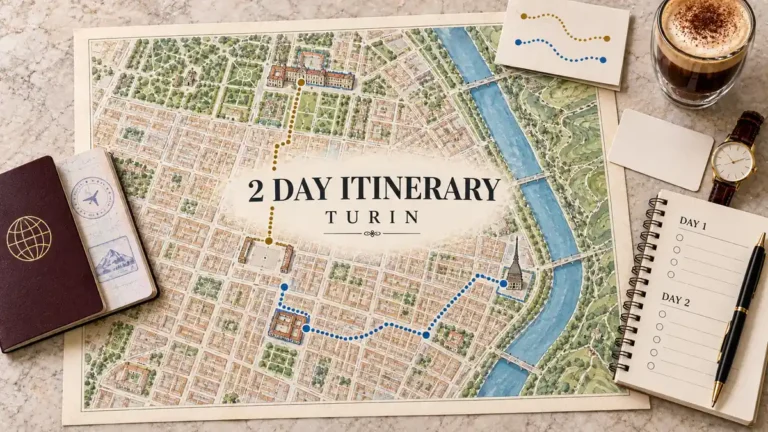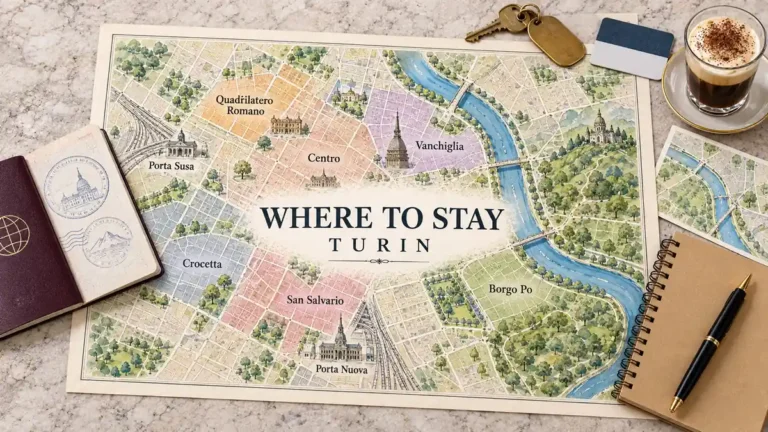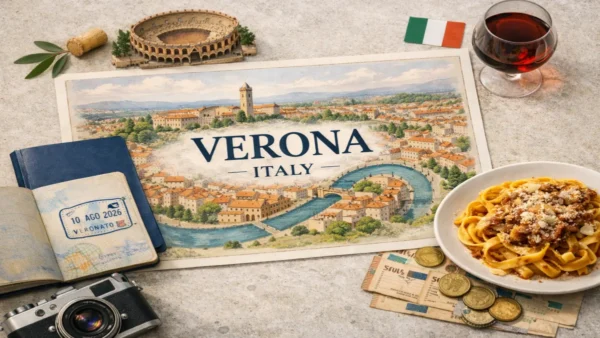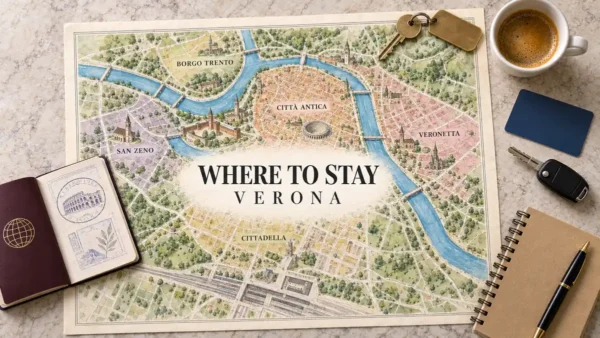
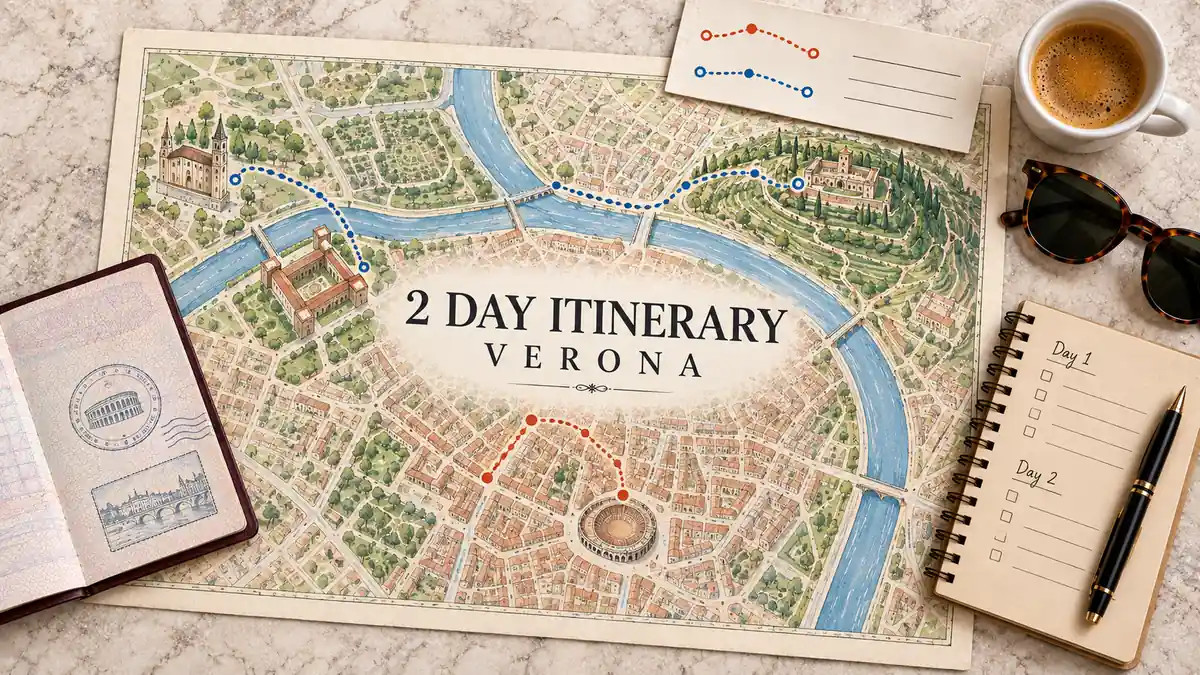
You have 48 hours in Verona and a room in the centre, and you need an order that sees the Roman, medieval and riverside city without backtracking. Hold one shape in your head: the core first, the river second. Day 1 stays inside the bend of the Adige, from the Arena through the medieval squares. Day 2 heads west to Castelvecchio and San Zeno, then crosses Ponte Pietra to the hill on the far bank.
Two fixed points shape everything else. Juliet’s House is a booked slot, not a queue, so the afternoon of Day 1 is built around it. The Arena belongs on a morning that is not a Monday. Below you get both days block by block, where meals fall on the route, the bookings that matter, and how to adapt the plan for a Monday, rain or a late arrival.
Quick Answer
Two days covers Verona’s centre: the Roman and medieval core first, Castelvecchio and the river viewpoints second. The route hinges on two fixed points — a pre-booked Juliet’s House slot and the Arena on a non-Monday morning. It suits first-timers based centrally, ending each day with Arena opera in season or sunset at Castel San Pietro.
Trust Layer
Tripstou itinerary guide for travelers planning a route. Covers pacing, stop count, stop order, base logic, and trip length.
Produced with AI assistance and reviewed by Alex Perrut, working in tourism since 2015, for the Tripstou editorial team. See our editorial process for details.
Last factual review: September 18, 2026.
Official sources consulted: Italia.it official tourism portal, ENIT Italian National Tourist Board, Visit Verona on Juliet’s House, Visit Verona on the Arena.
Key Takeaways
- Put the Roman and medieval core on Day 1, and the western sights plus the far-bank viewpoints on Day 2, all on foot.
- Two days is enough for Verona’s compact historic centre, but Lake Garda and the Valpolicella each need a day the plan cannot spare.
- Book Juliet’s House online as a timed slot entered through Teatro Nuovo; a reservation is required even with a VeronaCard.
- Visit the Arena first thing on a non-Monday morning, because it closes on Mondays and shortens its hours on opera days.
- With an opera ticket, the Castel San Pietro sunset moves to Day 2; without one, take it on Day 1.
- Base in the Città Antica or near Piazza Bra so every leg starts and ends a short walk from your room.
Table of Contents
Verona in 2 Days at a Glance: Day 1 and Day 2
Day 1 covers the Roman and medieval core inside the Adige bend; Day 2 goes west, then across the river. The first day runs from the Arena through the medieval squares to Juliet’s House. The second reaches Castelvecchio and San Zeno, then crosses Ponte Pietra for the Roman Theatre and Castel San Pietro.
- Day 1 morning: Arena and Piazza Bra — the Roman opener
- Day 1 midday: Erbe, Lamberti, Signori — the medieval squares
- Day 1 afternoon: Sant’Anastasia and Juliet’s House — booked slot
- Day 1 evening: opera in season or Castel San Pietro sunset
- Day 2 morning: Castelvecchio, Ponte Scaligero, San Zeno — the west side
- Day 2 afternoon: San Fermo, Duomo, Ponte Pietra — back to the river
- Day 2 evening: Roman Theatre, Castel San Pietro or Giardino Giusti — the viewpoints
Every leg is on foot. Each one ends a short walk from the start of the next, and both days finish at a viewpoint or a performance.
Is 2 Days Enough in Verona?
Yes, two days is enough for Verona’s centre. The sights sit inside a compact, UNESCO-listed historic centre on a bend of the Adige, so two days on foot covers the Roman, medieval and riverside city without a bus. The clock runs out only when you add anything beyond the centre.
Two days works here because the river does the planning. The Adige loops around the old centre, so a route that follows its bend cannot sprawl.
The plan suits first-timers who want the Arena, the medieval squares and the river viewpoints in one visit. It assumes a single base. Sleeping in the Città Antica or near Piazza Bra keeps every leg walkable, and the guide to where to stay in Verona compares the areas.
The tradeoff is everything outside the centre. Lake Garda and the Valpolicella wine country each need a day of their own, and 48 hours leaves none spare. If Verona is one stop on a longer trip, see the Italy itinerary for fitting Verona into a longer Italy route.
Day 1: The Roman and Medieval Core, Arena to Juliet’s House
Day 1 stays inside the old centre, from the Arena at opening to a booked Juliet’s House slot. The morning is Roman, midday is medieval, and the afternoon is built around the timed entry. The evening is one choice: opera at the Arena in season, or sunset at Castel San Pietro.
Morning: Arena and Piazza Bra before the crowds
You start in Piazza Bra, the wide square at the edge of the old centre where the Arena stands. This leg is the Roman opener, and it goes first for two reasons: the stands are quietest early, and on opera days the Arena keeps shorter hours.
- Arena: the Roman amphitheatre, walked while it is still quiet.
- Piazza Bra: the walk-off, with the amphitheatre’s outer wall in full view.
Onward: walk up Via Mazzini, the pedestrian street that links Piazza Bra to Piazza delle Erbe. It is a short walk.
Midday: Piazza delle Erbe, Torre dei Lamberti and the Scaliger Tombs
You are now in the medieval heart of Verona, where the squares sit a few steps apart. This leg is one cluster, not three separate visits, and the tower climb is the moment the whole route makes sense from above.
- Piazza delle Erbe: the old market square and the busiest crossroads of the centre.
- Torre dei Lamberti: the climb for orientation — both days of the route spread out below.
- Piazza dei Signori and the Scaliger Tombs: the civic square next door and the Gothic tombs of the Scaliger lords.
Lunch goes here, on or just off the squares (see the meals section below). Onward: walk a few streets north-east to Sant’Anastasia.
Afternoon: Sant’Anastasia and a booked Juliet’s House slot
You are at the river side of the medieval core. This leg pairs the great Gothic church of the day with the one stop on the route that runs to a fixed time.
- Sant’Anastasia: the Gothic church that closes the medieval half of the day.
- Juliet’s House: a timed slot, entered through Teatro Nuovo in Piazzetta Navona and booked online before you arrive. Walk to the slot; do not plan to queue.
Onward: from Juliet’s House, Piazza Bra is a short walk south, which matters if the evening is opera. For each sight’s verdict, tickets and tours, see the full list of things to do in Verona.
Evening: opera at the Arena or sunset at Castel San Pietro
You end Day 1 either back at the Arena or up on the far bank. Opera at the Arena is a summer, open-air, evening event, so it needs a ticket booked ahead and it takes the whole night.
- Opera night: the Arena, summer evenings only, booked ahead.
- No opera: cross Ponte Pietra and climb to Castel San Pietro for sunset over the rooftops.
Opera and the hilltop sunset compete for the same Day 1 evening. Without a ticket, take the hill tonight — Day 2 then inherits Giardino Giusti for its own evening. Onward: walk back over the river to your base.
Tours and activities
Book skip-the-line tickets, day trips and local tours with free cancellation on most activities.
You can also browse everything on getyourguide.com.
Tripstou may earn a commission if you book through this link, at no extra cost to you.
Day 2: Castelvecchio, San Zeno and Across the River
Day 2 starts west at Castelvecchio and San Zeno, then turns back east through the centre. The return leg takes in San Fermo, then the Duomo, close to Ponte Pietra and the crossing to the far bank. The day ends there, at the Roman Theatre and the viewpoints above it, as the light drops.
Morning: Castelvecchio, Ponte Scaligero and San Zeno
You leave the centre heading west along Corso Cavour to Castelvecchio. This leg is the west side of the route, and it goes first because San Zeno is the furthest point of the two days.
- Castelvecchio: the Scaliger castle and its museum.
- Ponte Scaligero: the castle’s fortified bridge — walk out over the Adige and back.
- San Zeno: the Romanesque basilica at the western end of the walk.
San Zeno is the one stop you would never walk back out to. Leave it for the afternoon and it becomes the first thing a tired traveler drops. Onward: walk back east into the centre, toward San Fermo.
Afternoon: San Fermo, the Duomo and Ponte Pietra
You are back inside the old centre, now covering the churches Day 1 skipped. This leg runs south to north through the centre, so it finishes at the river crossing that sets up the evening without doubling back.
- San Fermo: the church by the river on the southern edge of the centre, the first stop back from the west.
- Duomo: Verona’s cathedral, at the northern tip of the river bend and a short walk from the bridge.
- Ponte Pietra: the bridge of Roman origin and your way across the Adige.
Lunch lands near Castelvecchio before you leave the west, or around Piazza delle Erbe on the walk north from San Fermo to the Duomo. Onward: cross Ponte Pietra to the far bank.
Evening: Roman Theatre, Castel San Pietro and Giardino Giusti
You are on the far bank, where the city climbs the hill. This leg is the viewpoint finale, and Castel San Pietro earns the sunset slot because the river bend and the rooftops of the old centre spread out below its terrace.
- Roman Theatre: the theatre set into the hillside just over the bridge.
- Castel San Pietro: the terrace above it, reached on foot by the steps or by the funicular.
- Giardino Giusti: the Renaissance garden along the same bank, with its own hillside view — the swap if the castle sunset already went to Day 1.
Onward: walk back over Ponte Pietra to the centre for dinner.
Where Meals Fall on the Route
Meals follow the route, never the other way round. Day 1’s lunch lands on or near the medieval squares, Day 2’s near Castelvecchio or Piazza delle Erbe, and aperitivo goes on Erbe or by the river. Dinner follows the evening choice: early before opera, later after a sunset on the hill.
Eat where the route already is. A detour for a meal costs a leg.
Two local plates are worth ordering. Risotto all’Amarone is cooked with the Valpolicella’s big red wine. Bollito con pearà pairs boiled meats with a peppery bread sauce. On an opera night the Arena is where the evening ends, so an early dinner around Piazza Bra keeps the walk to your seat short.
Book Juliet’s House and Put the Arena on a Non-Monday Morning
Two bookings and one closure shape this whole route. Juliet’s House is a timed online slot entered from Teatro Nuovo, with a reservation required even for VeronaCard holders. The Arena closes on Mondays and shortens its hours on opera days, so it goes first thing on a non-Monday morning.
- Juliet’s House: tickets are sold online only, entry is by timed slot, and the courtyard and house are entered through Teatro Nuovo in Piazzetta Navona. A reservation is mandatory even for anyone entitled to free entry. The courtyard is ticketed, with a higher ticket that includes the house.
- Arena: closed on Mondays; hours shorten on opera days, so visit early on the day you choose.
- Opera: a summer, open-air, evening event — book it ahead if you want it on Day 1.
- VeronaCard: timed from first use (24 or 48 hours), it covers the Arena, Juliet’s House, Castelvecchio, the Roman Theatre and the main churches. A 48-hour card starts paying off if you enter the paid sights on both days, and the Verona guide settles whether the VeronaCard is worth it for your trip.
The Juliet’s House slot is the only fixed time in these two days. Book it before anything else, pick a mid-afternoon entry, and let the Day 1 squares stretch or shrink around it.
How to Adapt This Route for a Monday, Rain or a Late Arrival
The route survives a Monday by swapping the days, keeping the Arena on the non-Monday. Rain moves the museums and churches to the front and the viewpoints to the end. A midday arrival cuts San Zeno first, then Giardino Giusti, and keeps Ponte Pietra and Castel San Pietro.
- Monday in the window: swap the days so the Arena falls on the other one. Juliet’s House opens only in the afternoon on Mondays, so keep the slot in the afternoon if it lands that day.
- Opera night: eat dinner early, drop the Day 1 sunset, and give Day 2’s evening to Castel San Pietro.
- Rain: put Castelvecchio, the churches and the Roman Theatre’s museum first; move the viewpoints last, or drop them.
- Midday arrival or less time: cut San Zeno first, then Giardino Giusti. Keep Ponte Pietra and Castel San Pietro.
- More time: slow Day 2 down and keep Giardino Giusti. Lake Garda and the Valpolicella do not fit 48 hours; the Verona guide covers day trips from Verona for a longer stay.
Rain costs this route less than it looks. Day 2 is mostly under a roof — a castle museum, three churches and the theatre’s museum — so only the viewpoints are at risk.
Frequently Asked Questions
Is Verona walkable, or do you need buses for this route?
Yes, the whole route is walkable, and no leg needs a bus. The furthest point is San Zeno at the western end, and the only real climb is the hill to Castel San Pietro. If San Zeno feels far after the castle museum, the VeronaCard also includes the city’s ATV buses.
Is the Arena di Verona open on Mondays?
No, the Arena is closed on Mondays, and on opera days it closes earlier than usual. If your two days are Sunday and Monday, see it on Sunday morning. If they are Monday and Tuesday, swap the plan so Day 1 falls on Tuesday and the Arena still opens the route.
Is Juliet’s courtyard free to enter?
No, the courtyard is ticketed. Entry to both the courtyard and the house is through Teatro Nuovo in Piazzetta Navona, by timed slot, with tickets sold online only. A higher ticket adds the house itself. Guides describing a courtyard you can simply walk into from the street are out of date.
How do you get up to Castel San Pietro: walk or funicular?
Both work. From Ponte Pietra, the steps climb the hillside beside the Roman Theatre to the terrace, and the funicular covers the same rise for anyone who would rather not climb. A good split is to ride up before sunset and walk down the steps afterwards, back toward the bridge.
Can you do Lake Garda in 2 days in Verona?
No, not without losing half the route. A Lake Garda trip takes a full day, so it would replace Day 2 entirely: Castelvecchio, San Zeno, the Roman Theatre and the Castel San Pietro viewpoint all drop out. If the lake matters, add a third day and keep both Verona days intact.
Related Guides
- Verona travel guide — the VeronaCard, day trips and how to plan a first visit.
- Things to do in Verona — each sight’s verdict, tickets and tours.
- Where to stay in Verona — the areas that keep this route on foot.
- Italy itinerary — how Verona fits into a longer Italy route.
- Venice day trips and the wider region — what lies within reach east of the city.
- Best time to visit Italy — which months suit a route walked end to end on foot.
Did this guide save you time or money? Tripstou is independent and reader-funded — if you'd like to give something back, you can support the site with a crypto contribution of any size.