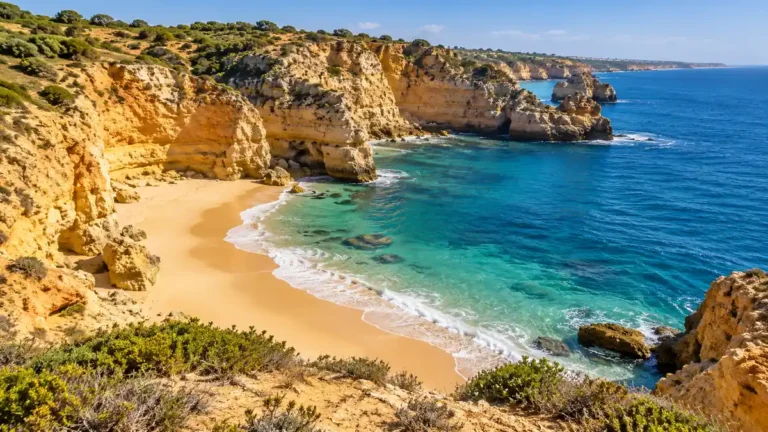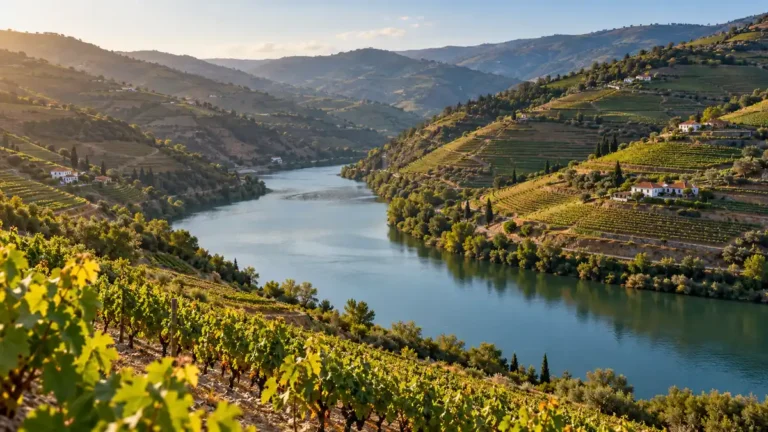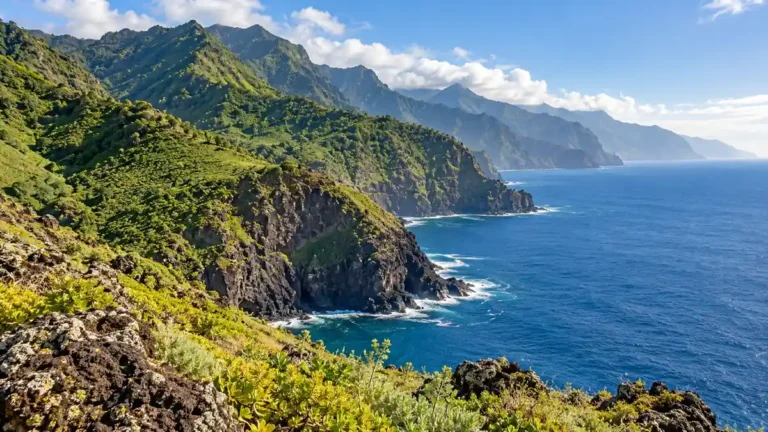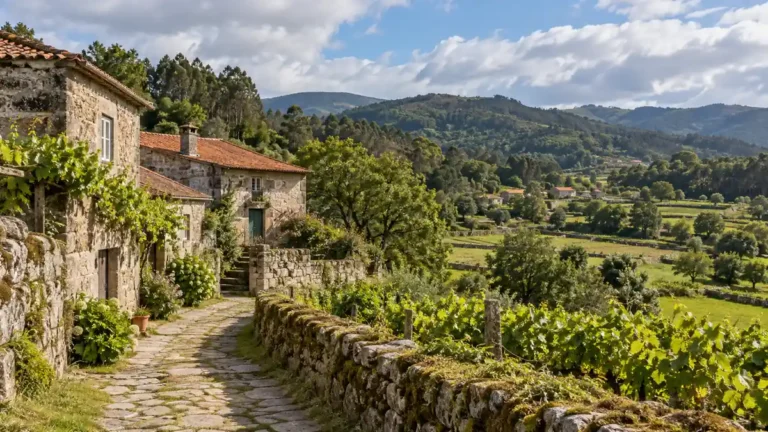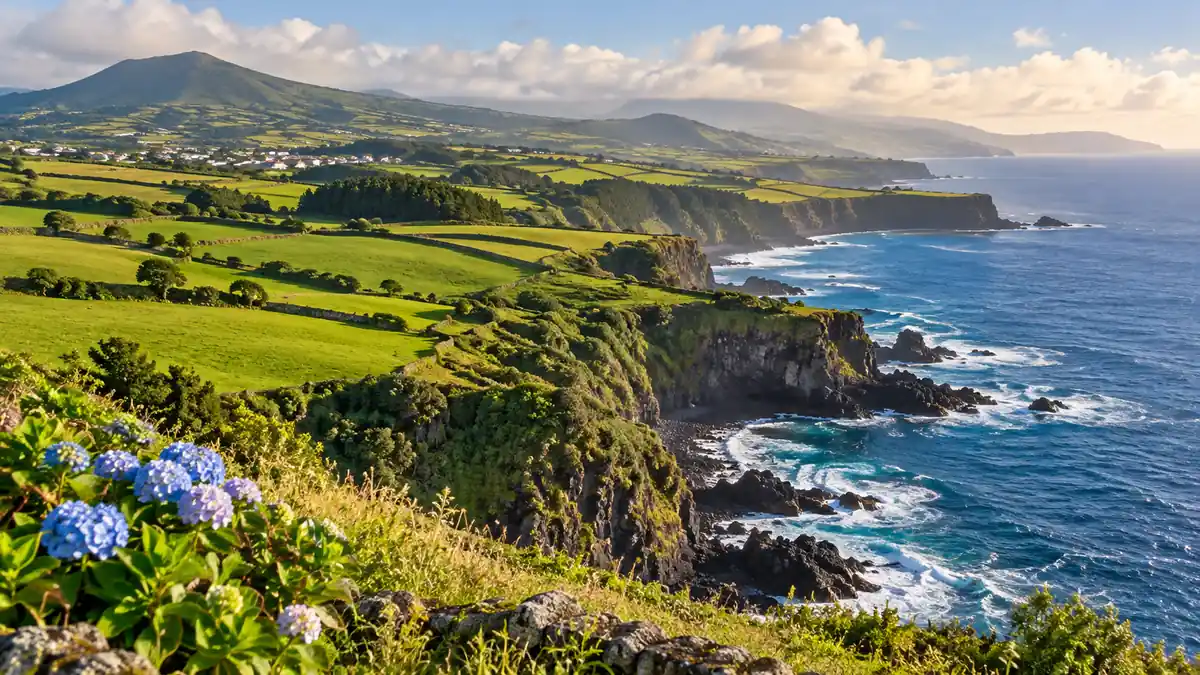
The Azores are Portugal’s mid-Atlantic archipelago of nine volcanic islands, about two hours’ flight from Lisbon or Porto. They reward nature-led travelers — crater lakes, hiking, whales and slow green landscapes — and disappoint anyone who came for beaches or nightlife. Start with São Miguel and add other islands only when you have days to spare, because moving between the island groups means flying. A short trip stays on São Miguel.
This guide helps you decide which island group fits your trip, how many days to give it, and how you move between islands once you land.
Where are the Azores, and how do you get there?
The Azores sit in the open Atlantic, far west of the Portuguese mainland, and form an autonomous region of Portugal. You reach them by plane: the flight takes about two hours from Lisbon or Porto, and less than six hours from the USA.
Distance matters less than flight time here. Direct flights leave from Lisbon and Porto, and some routes also come in from elsewhere in Europe and from North America. Most first trips land on São Miguel, at Ponta Delgada, because that is where most connections go.
Arriving in “the Azores” really means arriving on one island. The nine islands are strung out across a long stretch of ocean, so every other island is a second journey from wherever you land.
Are the Azores worth visiting, and who are they for?
The Azores are worth visiting for travelers who want volcanic landscapes, walking, whale watching and a slow pace. They are the wrong pick for a beach-first holiday, a nightlife trip or anyone who needs guaranteed sun.
Hikers and nature lovers get crater lakes, green ridges and coastal paths within a short drive of each other. Whale watchers can head out by boat from the main harbour towns, so a sea trip fits into an ordinary sightseeing day. Slow travelers and road-trippers do best of all, because one island explored properly by car is the trip the Azores are built for. Among Portugal’s headline destinations, the islands sit at the wild end of the list; the mainland picks are in our roundup of the best places to visit in Portugal.
Skip the Azores, or keep the visit short, if weather would ruin your trip. Skies change within hours, sand beaches are scarce, and evenings are quiet outside Ponta Delgada. If your real choice is between Portugal’s two archipelagos, the parent page on Madeira or the Azores settles it.
The three Azores island groups and what each one is for
The nine islands fall into three official groups — Eastern (São Miguel, Santa Maria), Central (Terceira, Graciosa, São Jorge, Pico, Faial) and Western (Flores, Corvo) — and each group is a different kind of trip. The Eastern Group is the easy first visit, the Central Group is for walking and island hopping, and the Western Group is the remote end of the archipelago.
| Group | Islands | Character | Natural base | Best for | Reached from São Miguel by |
|---|---|---|---|---|---|
| Eastern | São Miguel, Santa Maria | Crater lakes, thermal valley, the one sandy island | Ponta Delgada | First trips and short stays | São Miguel is the usual arrival; Santa Maria by regional flight |
| Central | Terceira, Graciosa, São Jorge, Pico, Faial | World Heritage town, mountain, vineyards, fajãs | Angra do Heroísmo, Horta or Madalena | History, hiking and ferry hopping | Regional flight; within the Triangle, ferries link Faial, Pico and São Jorge |
| Western | Flores, Corvo | Waterfalls, crater lakes, birdlife | Santa Cruz das Flores | Second or third trips | Regional flight; Corvo also by boat from Flores (not daily) |
Eastern Group: São Miguel and Santa Maria
São Miguel, the largest island, holds the landscapes most people picture when they think of the Azores. The Sete Cidades and Fogo lagoons sit inside volcanic craters, and Sete Cidades is the viewpoint most first trips plan a day around. If you would sooner not drive there yourself, you can reserve a guided trip from Ponta Delgada.
Furnas is the island’s thermal valley: geysers, hot springs and cozido das Furnas, a stew cooked slowly in the volcanic ground. It is a full day from Ponta Delgada once you add the east coast. Without a car, you can book a day tour that covers Furnas and the island’s east.
Whale and dolphin watching from Ponta Delgada is the boat trip most São Miguel visitors book. The harbour sits in the island’s main town, so it slots into even a short stay. The Azores lie within one of the world’s largest whale sanctuaries, and sea conditions decide whether boats sail, so plan it early in your stay to leave room for a second try. The wider list of experiences, island by island, is in our guide to things to do in the Azores.
Santa Maria is the exception to the archipelago’s dark volcanic shoreline: the one island known for warm white-sand beaches, with terraced vineyards above the coast. It suits a slow add-on with beach days the other islands cannot give you. São Miguel, by contrast, suits nearly every first-time visitor.
Central Group: Terceira and the Triangle
Terceira is the history-and-town-life island. Its capital, Angra do Heroísmo, has a historic centre on the UNESCO World Heritage list, and it is the Central Group’s most lived-in base.
The Triangle — Faial, Pico and São Jorge — is the one corner of the Azores where you can hop between islands by ferry and spend your days walking and climbing. Faial brings Horta’s marina, hydrangea-lined lanes and the Capelinhos volcano. Pico is the mountain island, and its lava-field vineyards are a UNESCO World Heritage landscape. São Jorge is known for its fajãs, the flat coastal strips below its cliffs, and for its cheese; with Pico’s wine, it belongs in any Portuguese food guide. Whale and dolphin watching runs in these waters too.
Graciosa, the quiet one of the group, is a Biosphere Reserve known for its windmills; it features among our hidden gems in the Azores.
Western Group: Flores and Corvo
Flores and Corvo are the furthest islands out, and they make most sense on a second or third trip. Flores is the island of waterfalls and crater lakes. Corvo is a single crater with rich birdlife, reached by boat from Flores on days when the crossing runs; you can book the boat trip from Santa Cruz das Flores. Both islands are UNESCO Biosphere Reserves.
Tours and activities
Book skip-the-line tickets, day trips and local tours with free cancellation on most activities.
You can also browse everything on getyourguide.com.
Tripstou may earn a commission if you book through this link, at no extra cost to you.
São Miguel is the right first island for most trips
Start on São Miguel. It has the most flight connections, the widest spread of sights within a drive, and the most places to stay and eat, so a first trip works from a single base without a second flight.
On a short trip, São Miguel is enough on its own. Crater lakes, thermal waters, whale watching and the coast all sit within day-drive range of Ponta Delgada, so a single base and a hire car cover the island.
Start elsewhere if this is a return visit, or if Pico’s mountain and vineyards or a Triangle walking trip is the reason you are going. You still reach those islands by a flight, so the decision is about where you spend your days, not where you land.
São Miguel’s pull has a cost. It is the busiest island, and the quieter, wilder character of the Azores lives on the others. A first trip that loves São Miguel is the best argument for coming back to the Central Group.
How many days do you need in the Azores?
A few days covers São Miguel alone; about a week gives you São Miguel plus one more island or the Triangle; ten days or more is what a multi-island trip needs. Every extra island costs a travel day, which is why the numbers climb faster than the island count.
- A long weekend to about five days: São Miguel only, from one base. It fits a first visit, a stopover from Lisbon or a trip built around whale watching and the crater lakes.
- About a week: São Miguel plus Terceira, or São Miguel plus the Triangle. Terceira suits travelers who want a historic town; the Triangle suits walkers who want to use the ferries.
- Ten days or more: two or three groups. São Miguel, the Triangle and Flores is the shape for committed island-hoppers willing to trade sightseeing hours for flights.
Plan one base per island and move base when you change island; never try to day-trip between groups. The Triangle is the exception: from Horta or Madalena, one base can cover a ferry day to the neighbouring island. Each island you add also needs a spare day for weather, because a cancelled flight or sailing eats into the next stop.
Getting around the Azores: a car on each island, a plane between groups
Between island groups, you fly on short regional flights. Ferries are useful only inside the Triangle (Faial, Pico, São Jorge) and between Flores and Corvo. On each island, a hire car is the realistic way to see it.
Because neither São Miguel nor Santa Maria has a ferry port, the island most first trips start on is one you can only leave by air.
Between island groups, you fly
Short regional flights are how you cross from one group to another. Non-residents arriving from outside the Azores can buy the Azores Air Pass, which allows three stops over 24 hours plus unlimited stops under 24 hours; it is sold through the SATA call centre and stores. Inter-island fares include one checked bag up to 23 kg.
Where the ferries actually help
You cannot island-hop the whole Azores by ferry. There is no ferry port on São Miguel or Santa Maria, so this is not a Greek-style ferry trip, and boats only make sense inside two clusters.
The Triangle is the main one. Horta to Madalena, between Faial and Pico, is a 30-minute crossing with several sailings a day, and Faial to São Jorge takes about two hours. In the west, Flores to Corvo takes about 40 minutes and does not sail every day.
Weather and operational disruption can cancel both flights and sailings. Leave buffer days, and check the operator’s timetable before you plan a day around a crossing.
On each island, hire a car
You need a car to see an island properly. Viewpoints, crater rims and trailheads sit away from the towns, and buses thin out quickly outside the main centres. Book early for summer, when demand runs high. There are no trains on the islands, so the choice is between driving yourself, taxis and guided trips.
Renting a car
DiscoverCars searches local and international rental companies at once and shows each supplier’s rating, fuel policy and deposit before you book.
Compare rental cars on DiscoverCars →
Tripstou may earn a commission if you book through this link, at no extra cost to you.
Summer is the steadiest time to go, but plan for weather days
High summer is the driest and warmest stretch of the Azores year and the easiest time for hiking and boat trips. Autumn and winter are wetter. In any season the weather changes within a day, and cloud or fog on high ground can hide the crater lakes you drove up to see.
Spring and early autumn trade some of summer’s reliability for quieter roads and trails. Whatever the month, keep one flexible day per island for viewpoints and boat trips, and pack layers and rain gear; our Portugal packing list covers both. Month-by-month detail is on the page about the best time to visit Portugal.
Are the Azores expensive to visit?
The Azores are not a cheap island trip by default. Three things drive the cost: getting there, car hire, and how many islands you add, because each extra island means another flight and another base.
A tight trip stays on one island, sleeps in simple guesthouses or self-catering flats, eats in local tascas and splits a car. A comfortable middle covers one or two islands with a hire car, mixed dining and a boat trip or two. A high-end trip strings several islands together with boutique stays and guided boats and hikes. The islands are kind to every style on food and on nature, since lakes, trails and viewpoints cost nothing to see. They punish in summer, when car hire is in demand, and every island you add multiplies the transport bill. The figures by travel style are on our Portugal trip cost page.
Adding the Azores to a Lisbon or Porto trip
The Azores work as their own trip or as a leg flown from Lisbon or Porto. As an add-on, they need enough days to justify the flights, so they fit the longer mainland plans far better than the short ones.
- One week in Portugal: Lisbon, a day in Sintra and São Miguel is tight; most travelers are better off choosing either the mainland or the island. The 7-day Portugal itinerary shows what the mainland week holds.
- Ten days: enough for the mainland plus São Miguel from a single base. Build it on the 10-day Portugal itinerary and give the island a long weekend to about five of those days.
- Two weeks: room for the mainland, São Miguel and one more island. The two-week Portugal itinerary is the plan with space for that second flight.
Rail and road-trip plans stay on the mainland: there are no trains on the islands, and each island is driven on its own. A Portugal road trip or Portugal by train route can end in Lisbon or Porto with the flight out to the Azores. For other trip lengths, start with the full Portugal itinerary options, and for everything beyond the islands, the Portugal travel guide.
The Azores Plan in Brief
- Start on São Miguel: it has the most flight connections, and its crater lakes, thermal valley and coast fill a short trip from one base.
- Every island you add costs a travel day plus a spare day for weather, so about a week buys one extra island or the Triangle, and a multi-island trip needs ten days or more.
- Between island groups you fly, because São Miguel and Santa Maria have no ferry port and boats only help inside the Triangle and between Flores and Corvo.
- A hire car on each island is the realistic way to reach viewpoints and trailheads, and in summer it needs booking early.
- Cloud and fog can hide the crater lakes in any month, so one flexible day per island protects the viewpoints and boat trips you came for.
- As a leg flown from Lisbon or Porto, the Azores fit a ten-day or two-week Portugal trip far better than a single week.
How We Checked This
This is a planning guide to the Azores as a whole: which island group suits which trip, how long to stay, and how you get there and between the islands. It is not a guide to any one town, a day-by-day itinerary, an inter-island timetable or a hotel guide.
Written with AI assistance, this guide then went to Alex Perrut, working in tourism since 2015, who checked the island facts and the ferry and flight rules against the sources below for the Tripstou editorial team. Our editorial process sets out how.
Official sources consulted: Atlânticoline, Azores Airlines (SATA), Visit Azores, VisitPortugal.
Quick Questions Before You Go
What language do they speak in the Azores?
Portuguese is the language of the Azores, as on the mainland. English is common in hotels, restaurants and tour businesses in the main towns, less so in small villages, so a few words of Portuguese help once you drive out into the countryside.
Is there a time difference between the Azores and Lisbon?
Yes. The Azores run one hour behind mainland Portugal. Flight times are shown in local time at each end, so allow for the hour when you plan a same-day connection through Lisbon or Porto.
Are there good beaches in the Azores?
Not for a beach-first holiday. Most of the shoreline is dark volcanic rock, sand beaches are few, and Santa Maria is the one island known for warm white sand. If beaches are the reason for the trip, the mainland coast is the better fit; our guide to the best beaches in Portugal picks the strongest stretches.
Are the Azores safe to visit?
For most visitors the hazards to plan for are natural ones: weather that turns fast on high ground, slippery or exposed trails, and rough sea. Check conditions before a hike or a swim, and turn back when cloud closes in. For everyday precautions in towns, see our guide to common scams in Portugal, and for women traveling alone, our page on solo female travel in Portugal.
Where to Go Next
- Madeira or the Azores: how Portugal’s two archipelagos compare, and which one fits your trip.
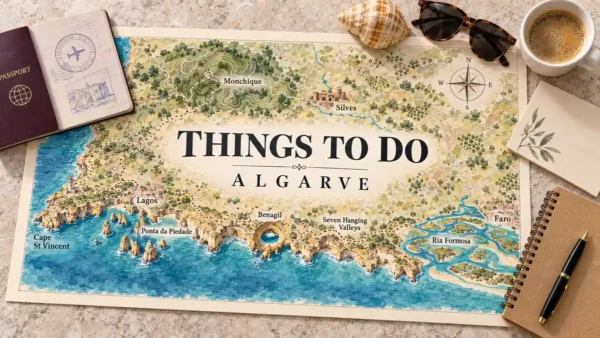
- Things to do in the Azores: the experiences, island by island.
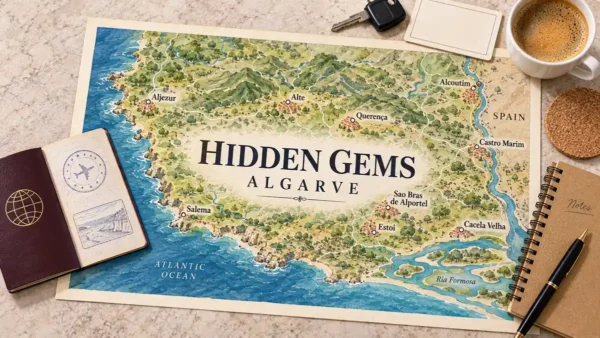
- Hidden gems in the Azores: the quieter islands and corners for a return visit.
- Portugal travel guide: planning the rest of Portugal around the islands.
Did this guide save you time or money? Tripstou is independent and reader-funded — if you'd like to give something back, you can support the site with a crypto contribution of any size.