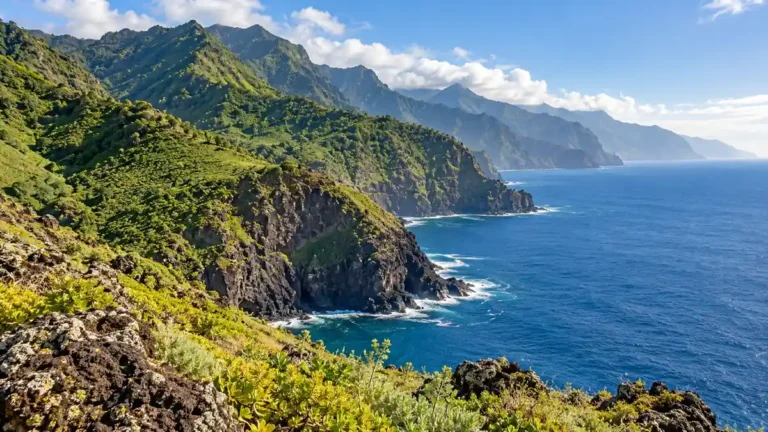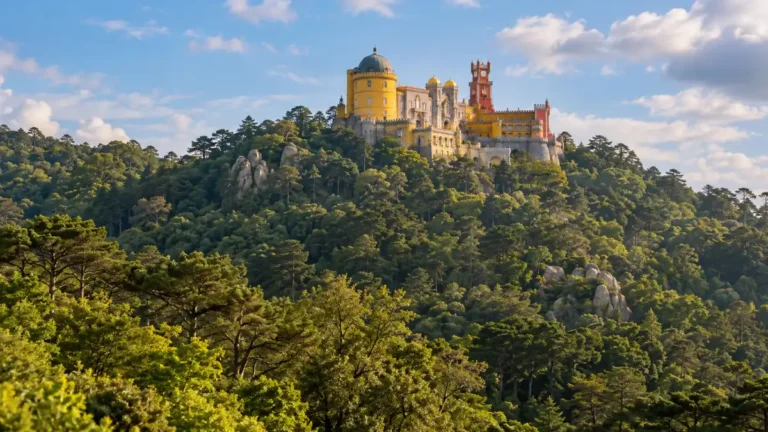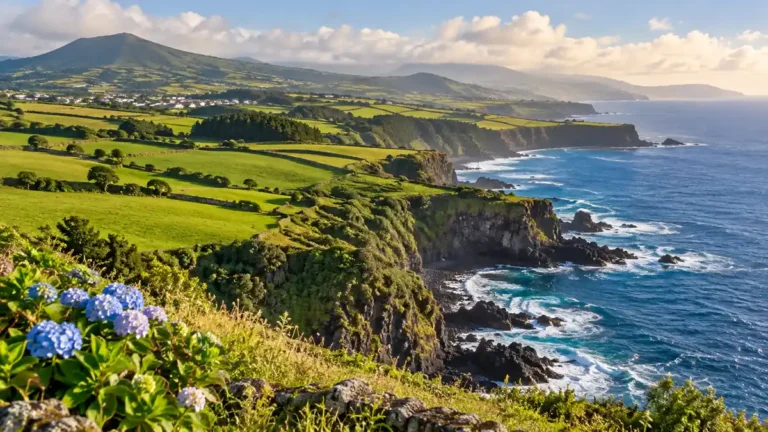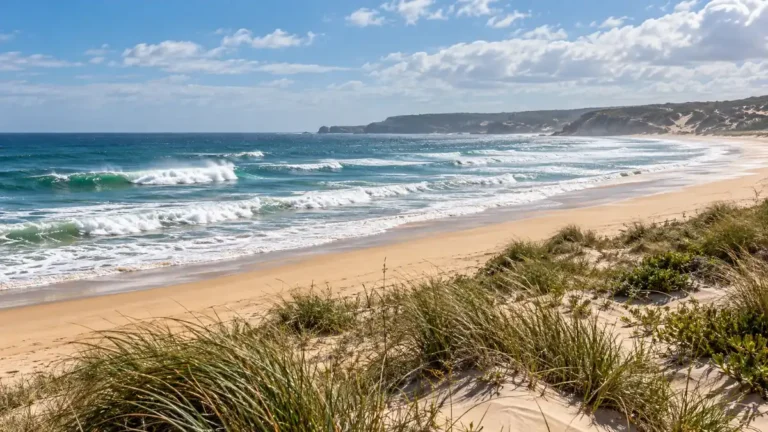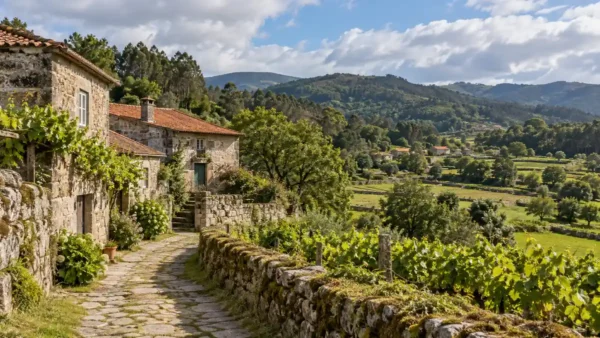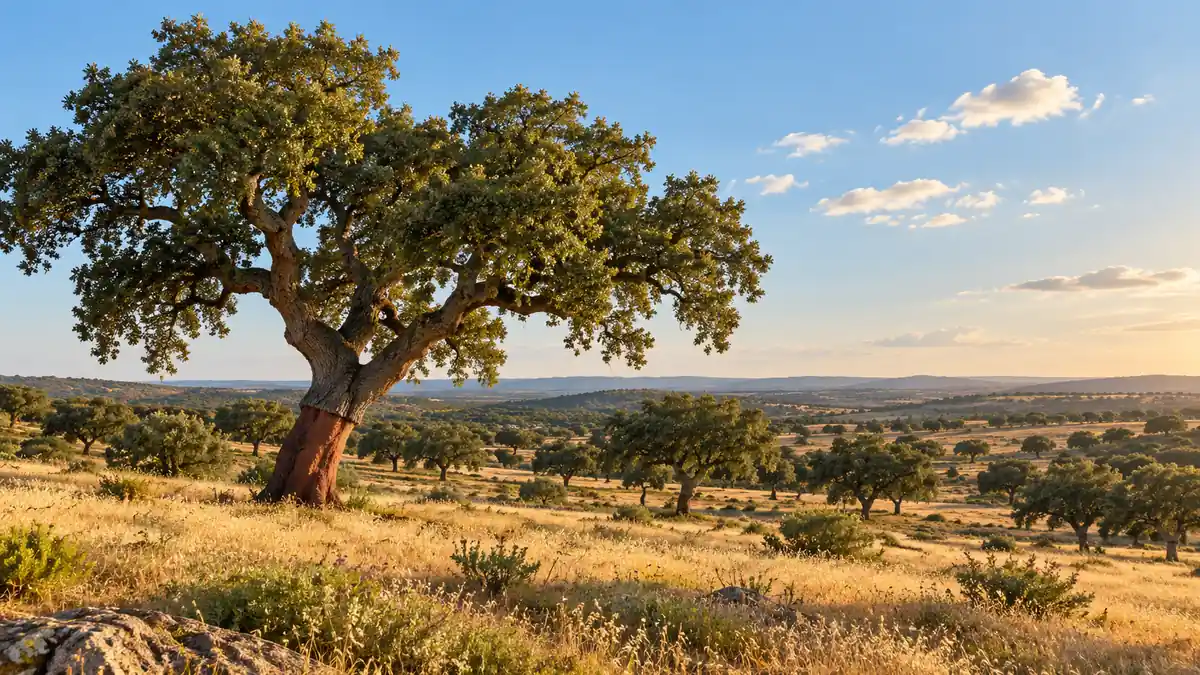
The Alentejo is worth the trip for travelers who want to slow down: wine estates, walled hill towns, megaliths and Roman Évora, wide empty landscapes and a wild Atlantic coast, all at a quieter pace than Lisbon or the Algarve. What you get depends on which part you pick, and a car is what makes the region work. For a first trip, base yourself in Évora and come in spring or autumn.
This guide follows the order you will decide things in: which part of the region, then where to sleep, then how many days, followed by transport, seasons, cost and how the Alentejo fits a wider Portugal route.
In This Guide
Is the Alentejo worth visiting?
Yes, if you want space, food and history more than nightlife and resort beaches. The Alentejo is known for Roman and medieval Évora, prehistoric megaliths, wine, walled hill villages, dark skies over the Alqueva lake and a coast that has stayed largely wild. It rewards travelers who are happy to drive between small places and linger in each.
The region fills southern Portugal between the Tagus and the Algarve, running from the Spanish border in the east to the Atlantic in the west. It covers about a third of the country, yet it is mostly rural and thinly populated: cork oaks, olive groves and long stretches of open plain between towns.
Its heritage is unusually dense for somewhere so quiet. The historic centre of Évora is a UNESCO World Heritage Site. So are the star-shaped fortifications, forts and Amoreira aqueduct of Elvas, near the border. Cante Alentejano, the region’s traditional group singing, is on UNESCO’s Intangible Cultural Heritage list. For a sight-by-sight shortlist, see the things to do in the Alentejo.
Food and wine are a reason to come in their own right. More than 250 producers make wine here, and the vinho de talha tradition of amphora wine is still alive. Look for Antão Vaz, Arinto and Roupeiro among the whites, Alicante Bouschet, Aragonez and Trincadeira among the reds. The Portuguese food guide covers what to eat alongside them.
The Alentejo suits slow travelers, wine and food lovers, history readers, walkers and stargazers. Skip it if you want lively nights out, or if you plan to hop between many villages without a car. If you are still choosing a region, compare it with the other best places to visit in Portugal.
The Alentejo splits into four very different trips
The Alentejo is four distinct trips: Évora and the central plains for history and wine, Alqueva and Monsaraz for the lake and the night sky, the north for castle villages and cooler hills, and the coast for wild beaches and walking. Most first trips pick one or two of them, not all four.
| Sub-area | Character | Natural base | Best for |
|---|---|---|---|
| Évora and the central plains | Walled historic city, megaliths, wine estates | Évora | First-timers, history and wine |
| Alqueva and Monsaraz | Walled hill village above a vast lake, dark skies | Monsaraz or Reguengos de Monsaraz | Couples, stargazers |
| Northern Alentejo | Castle villages in the São Mamede hills, border fortress town | Marvão or Castelo de Vide | Hill walkers, castle lovers |
| Alentejo coast | Rugged coast, coves, surf and coastal walking | Vila Nova de Milfontes (Comporta as the pricier north) | Beaches and hiking |
Évora and the central plains: the default first stop
Évora is where most first trips should begin. Its walled historic centre is compact and walkable, with Roman and medieval layers side by side and the Chapel of Bones among the sights inside the walls. Just outside town, the Almendres Cromlech stands among cork oaks, and the drive out through the plain is part of the visit; you can book a guided visit that pairs the stone circle with the Zambujeiro dolmen.
Wine estates ring the city, and the towns of Arraiolos and Estremoz are close enough for an easy outing. This is the part for first-timers and anyone who travels for history: everything else in the region is easier once you have Évora as an anchor.
Alqueva and Monsaraz for lake views and dark skies
Monsaraz is a tiny walled village on a hilltop above the Alqueva lake. The area around it is Dark Sky Alqueva, a certified Starlight Tourism Destination, so the night is part of the attraction. The wine country around Reguengos de Monsaraz sits just below.
Go here if your ideal evening is a quiet terrace, a glass of local red and a sky full of stars; it is the most romantic corner of the region.
Northern Alentejo: Marvão, Castelo de Vide and Elvas
The north is greener and hillier than the plains. Marvão and Castelo de Vide sit in the São Mamede hills, inside a natural park, and both are walled hilltop villages; Castelo de Vide adds its former Jewish quarter. Toward the Spanish border, Elvas carries its UNESCO-listed fortifications.
The north works for travelers who want cooler hills, hiking and a border detour, and who do not mind a separate overnight to do it justice. It is the part of the Alentejo that most short trips leave out, which is exactly why it feels so empty.
The Alentejo coast: wild beaches instead of resorts
The Alentejo coast is the Atlantic without the resort strip. Porto Covo, Vila Nova de Milfontes and Zambujeira do Mar sit along a rugged shoreline broken by sheltered coves, many of them good for surfing. The Rota Vicentina links much of it on foot: the Historical Way runs inland, and the Fishermen’s Trail follows the clifftops. Further north, the Comporta area is the pricey exception, with design hotels and a more polished crowd.
Coast or inland comes down to what the trip is for. The coast wins in summer and for walking; inland wins for culture and for the cooler seasons. Walkers and beach travelers who want to skip the Algarve crowds belong here. To weigh these beaches against the rest of the country, see the best beaches in Portugal.
Baixo Alentejo, the deep south around Beja, Mértola and Serpa, is the region at its quietest and suits a second or third trip more than a first. The hidden gems in the Alentejo covers its villages.
Tours and activities
Book skip-the-line tickets, day trips and local tours with free cancellation on most activities.
You can also browse everything on getyourguide.com.
Tripstou may earn a commission if you book through this link, at no extra cost to you.
Évora makes the best single base; the coast earns a second
For an inland trip, stay in Évora and drive out from there; add a coast base only if the beaches or the Rota Vicentina are part of the plan. One well-placed base beats a string of one-night stops in a region this spread out.
Évora earns the role on practical grounds. It is the town that both the train and the express bus reach from Lisbon, its centre is walkable, and it has the most to do in the evening. The plains, the megaliths and Monsaraz are all within day-trip reach. The stone circles and the cork forest are the easiest of those outings, and a local guide fills in what the stones alone do not explain; you can reserve a spot on a megaliths and cork forest walk from the city.
Évora or Monsaraz is the one real choice inland. Monsaraz gives you a silent night inside the walls under the darkest skies in the region, while Évora gives you restaurants, transport links and variety for a stay of several nights.
The north sits far enough from Évora that a night there beats a long return drive, so if Marvão and Castelo de Vide are on the list, sleep in one of them. The same logic applies to the coast. A second base costs you one more check-in, and it spares you long drives back and forth across empty country.
Hotels and places to stay
Compare hotels, apartments and stays for your dates in one search.
Search hotels and stays on hotels.com →
Tripstou may earn a commission if you book through this link, at no extra cost to you.
How many days do you need in the Alentejo?
Two or three days give you a real taste of the Alentejo, centred on Évora; about a week covers the inland towns plus the coast. For a first trip, the strongest shape is Évora plus one other area.
- A short add-on from Lisbon: two or three days for Évora, the megaliths nearby and, with a car, an evening in Monsaraz. It suits travelers who want a contrast to the capital without reworking their whole route.
- A medium inland loop: Évora plus either Alqueva and Monsaraz or the castle villages of the north. This is the shape for wine, history and slow drives, with one base or two.
- A longer trip, inland plus the coast: about a week, with Évora and one inland area, then a second base on the coast for beaches and the Fishermen’s Trail. It suits a summer trip or anyone who wants to walk.
The inland loop gives most first-timers the best return: enough time to settle in, not so much driving that the trip turns into a commute. For day-by-day routes that include the region, start with the Portugal itinerary planner, or pick a length: a 7-day Portugal itinerary, a 10-day Portugal itinerary or a two-week Portugal itinerary.
Can you visit the Alentejo as a day trip from Lisbon?
Évora works as a day trip from Lisbon, but the Alentejo does not. The train makes a day in Évora doable, yet a single day shows you one town, not the open country, the villages or the night sky that define the region.
A guided day out is the simplest way to fit more in. A common pairing is Évora and its Chapel of Bones in the morning, then Monsaraz and a wine stop in the afternoon, so you see both the city and a hill village in one go. Another swaps the village for the stone circles outside Évora, and you can book this day trip if the megaliths matter more to you. Even so, one overnight changes the experience: Évora after the day visitors leave, or Monsaraz at dusk, is the Alentejo that brings people back.
Do you need a car in the Alentejo?
Yes, for anything beyond Évora. The train and the bus reach the larger towns, but the villages, wine estates, megaliths and the coast need a car.
Distances here are long and the roads between towns are quiet, with public transport built around the bigger towns, not the places most visitors want to see. A car turns that emptiness into the pleasure of the trip; without one, it becomes the obstacle. Travelers who want Lisbon car-free can take the train to Évora and add wheels only for the countryside. The Portugal road trip guide shows how the region slots into a longer drive.
Lisbon to Évora by train or bus
CP runs Intercidades trains on the Linha do Alentejo from Lisboa Oriente, calling at Entrecampos, Sete Rios and Pragal on the way to Évora. The journey takes about an hour and a half to an hour and three-quarters, depending on where you board. There are a handful of direct trains a day, so check the CP timetable before you plan around one. Seat reservation is mandatory on Intercidades trains. Beja is reached with a change at Casa Branca. For rail across the rest of the country, see travelling Portugal by train.
Rede Expressos buses also link Lisbon and Évora, in about an hour and a half to an hour and three-quarters. In Évora, the bus terminal is about 10 minutes’ walk from the historic centre and the train station about 20. If you are starting in the capital, the Lisbon travel guide helps you plan the days before or after.
Spring and autumn are the Alentejo’s best seasons
Spring and autumn are the comfortable windows for the Alentejo: spring for wildflowers across the plains, autumn for the grape harvest. July and August are very hot inland, while the coast stays milder thanks to the Atlantic breeze.
Winter brings most of the rain and a deep quiet, with the countryside at its least inviting. Summer splits the region in two. The coast is at its best, and inland sightseeing works only early in the morning or late in the day. Autumn is the season to plan around if wine is the reason you came. For how the region’s seasons compare with the rest of the country, see the best time to visit Portugal.
Is the Alentejo too hot in summer?
Inland, yes, for midday sightseeing. Plan walks and visits in Évora and on the plains for mornings and evenings, and keep the afternoon for shade or a long lunch. Summer suits the coast far better, where the Atlantic breeze keeps days cooler. Pack for strong sun either way; the Portugal packing list covers the basics.
Alentejo or Algarve: an add-on or a trip of its own
The Alentejo works both ways: as a two- or three-day add-on between Lisbon and the Algarve, or as a standalone slow trip of about a week. Choose the Algarve for resort beaches and an easy summer holiday, and the Alentejo for space, food, wine and history.
The region sits squarely on the way south, which makes the combination easy. One route runs Lisbon, then Évora, then south to the Algarve; the other follows the coast from Lisbon through the Alentejo’s beach villages before reaching the Algarve. The inland route suits culture and wine, the coastal one suits beaches and walking. The Algarve travel guide covers the other end of the drive.
If you want a different regional trip altogether, the northern alternatives are the Douro Valley and the Minho: see the Douro Valley guide for river wine country and the Minho guide for the green far north. The Portugal travel guide sets all the regions side by side.
- The Algarve only: a beach holiday with easy logistics and resort towns.
- The Alentejo only: a slow week of wine, history and empty landscapes, with the wild coast as your beach.
- Both: a road trip south that trades a few beach days for Évora, a hill village and quieter coves.
What the Alentejo costs, by travel style
The Alentejo is generally good value, cheaper than Lisbon and the Algarve in most places, with the Comporta area as the clear exception. Your money tends to buy more space and quieter rooms than it would in the busy resorts further south.
On a tight budget, town guesthouses and local tascas keep costs low, and Évora gives you the most choice at this level. A mid-range trip opens up the region’s signature stays: rural estates and wine-farm guesthouses among the vineyards and cork oaks. At the high end, design hotels inland and along the Comporta strip push the bill up sharply. Whatever your style, the car is the cost most first-timers underplan, because it is the one expense this region will not let you skip. For euro figures by travel style, see the Portugal trip cost guide.
The Alentejo Decisions in Brief
- Choose the part by what the trip is for: Évora and the plains for history and wine, Alqueva and Monsaraz for dark skies, the north for castle villages and hills, the coast for wild beaches and walking.
- Évora is the best single base for an inland Alentejo trip, and a second base in the north or on the coast only pays off when those areas are on the plan.
- Two or three days centred on Évora give a real taste of the region, about a week covers an inland area plus the coast, and Évora plus one other area is the strongest first-trip shape.
- The train and the express bus reach Évora from Lisbon, but the Alentejo’s villages, wine estates, megaliths and coast all need a car.
- Spring and autumn are the comfortable seasons, while in July and August inland sightseeing belongs to the mornings and evenings and the coast takes the hot days.
How We Checked This Guide
This guide helps you choose which part of the Alentejo to visit, where to stay and how long to give it; it is not an Évora city guide, a day-by-day itinerary, a driving-route breakdown or a list of hotels.
Alex Perrut, working in tourism since 2015, went over the region choices and checked the rail and bus details against the sources below for the Tripstou editorial team; the page was written with AI assistance. How that works is set out in our editorial process.
Official sources consulted: VisitPortugal, Visit Alentejo, CP – Comboios de Portugal, Câmara Municipal de Évora, Rota Vicentina.
Keep Planning Your Portugal Trip
- Best places to visit in Portugal: where the Alentejo sits among the country’s strongest destinations.
- Portugal’s islands: Madeira and the Azores for a very different kind of trip.
- Scams in Portugal: the common tricks to know before you go.
- Solo female travel safety in Portugal: practical safety advice for women traveling alone.
Did this guide save you time or money? Tripstou is independent and reader-funded — if you'd like to give something back, you can support the site with a crypto contribution of any size.