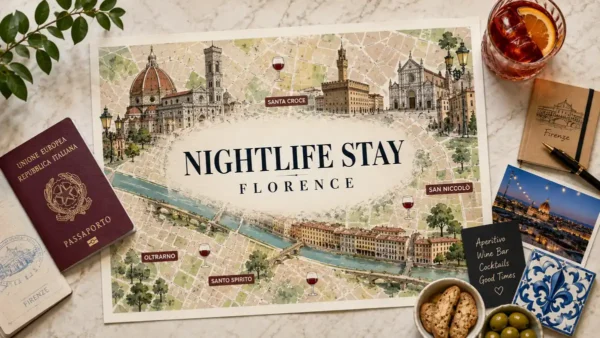

Florence rewards visitors who arrive knowing a handful of local rules. The city runs on its own rhythm — late dinners, a small cover charge on the bill, museums that sell out weeks ahead, and churches that turn away bare shoulders. None of it is hard once you know it, but first-timers trip over the same few habits again and again. This is the etiquette and execution set: how dining, money, museums, and churches actually work, plus the mistakes that cost people time. It is about behavior, not logistics.
Quick Answer
Book Florence’s big museums — David and the Uffizi — ahead, dine after 7:30pm, and cover your shoulders and knees inside churches. Cards work almost everywhere, but carry small cash for markets; tipping is optional, not expected. Plan around museum closure days and midday closures, and stay alert in crowds.
Trust Layer
Tripstou planning guide for travelers resolving one travel decision. Covers the main variable, traveler context, and practical tradeoffs.
Produced with AI assistance and reviewed by Alex Perrut, working in tourism since 2015, for the Tripstou editorial team. See our editorial process for details.
Last factual review: July 15, 2026.
Official sources consulted: Italia.it, ENIT.
Key Takeaways
- Florentine dinner service starts around 7:30pm, adds a small per-person coperto, and the bill only arrives once you ask.
- Cards cover almost everything, but keep small cash for markets and bars; tipping stays optional and modest, never obligatory.
- Pre-book David and the Uffizi, arrive early, and route your days around the Monday closures that catch first-timers out.
- Florence’s churches, including the Duomo, refuse bare shoulders and knees, so pack a light scarf or layer in summer.
- Most first-timer frustration comes from fighting the city’s rhythm — sightseeing through the midday heat instead of resting indoors.
Table of Contents
How dining works in Florence: late meals, coperto, and the bill
Florence dining runs later than many visitors expect and adds a small cover charge. Restaurants rarely fill before 7:30pm, and dinner service often starts around then. Expect a per-person coperto — a standard bread-and-cover charge — on your bill. You also have to ask for the check; waiters won’t bring it unprompted.
Show up at 6pm and you’ll find kitchens still resting or half-staffed. Locals eat late, so the atmosphere you came for arrives with the later tables. Lunch has its own window too: many trattorias serve roughly midday to 2:30pm, then close before reopening for dinner.
- Dinner starts late. Aim for 7:30pm or later; the earliest slots are mostly other tourists.
- The coperto is normal. A small per-person cover charge appears on almost every sit-down bill — it is not an error.
- Ask for the bill. Say “il conto, per favore”; staff leave you alone until you request it, as a courtesy.
- Mind the midday gap. Kitchens often close in the afternoon, so plan lunch before it shuts.
The coperto is not a tip in disguise. It is a fixed charge for the table and bread, so piling a large tip on top double-pays for service most Florentines never bother to leave.
Paying in Florence: card, cash, and tipping
Cards work nearly everywhere in Florence, but small cash still smooths the day. Contactless is standard in restaurants, shops, and museums, and many places now prefer it. Keep a few coins and small notes for market stalls, tiny cafés, and the occasional cash-only trattoria. Tipping is optional and modest, never the American norm.
You can run an entire trip on a card and rarely hit a wall. The exceptions are small and predictable: a produce vendor at the Mercato Centrale, an espresso at a stand-up bar, a church donation box. A modest cash buffer covers all of them. For how this fits the wider national picture, our Italy travel tips cover cash and card habits across the country.
- Cards almost everywhere. Restaurants, museums, and shops take contactless without fuss.
- Cash for the small stuff. Markets, kiosks, and bar counters may want coins.
- Tipping is a bonus. Rounding up or leaving a euro or two is plenty when service was good.
Because the coperto already pays for the table, rounding up a couple of euros reads as generous in Florence. Leave a 15–20% tip out of habit and you simply mark yourself as a visitor — no one expects it, and no one is offended without it.
Do you need to book Florence museums in advance?
Yes — book Florence’s major museums ahead to skip long entry lines. The Accademia, home to Michelangelo’s David, and the Uffizi sell out timed slots in busy months, and walk-up queues can swallow hours. Reserve a slot online, arrive early in the day, and check closure days before you lock in your plan.
Timed-entry booking is the change that saves the most time on a Florence trip. A reserved slot walks you past the general line; without one, a peak-season morning at the Uffizi can mean a very long wait outside. Early slots are also cooler and calmer than midday. Keep the closure pattern in mind when you sketch your days.
- Pre-book the headliners. David at the Accademia and the Uffizi are the two that reliably sell out.
- Go early. The first entries of the day beat both the crowds and the afternoon heat.
- Check closure days. Several major state museums, the Uffizi and Accademia included, traditionally close on Mondays.
Monday is the trap. With the Uffizi and Accademia both traditionally shut, a short trip that saves its two must-sees for a Monday can lose them entirely — build the big bookings around that closed day first, then fit everything else around them.
Tours and activities
Book skip-the-line tickets, day trips and local tours with free cancellation on most activities.
You can also browse everything on getyourguide.com.
Tripstou may earn a commission if you book through this link, at no extra cost to you.
What to wear to churches in Florence
Cover your shoulders and knees to enter Florence’s churches, including the Duomo. Religious sites enforce a modest dress code, and staff will turn away visitors in tank tops or short shorts. Carry a light scarf or layer in summer so a sleeveless outfit doesn’t cost you the entry you queued for.
The rule catches people out most in July and August, when the heat pushes everyone into vests and shorts. A thin scarf or a packable overshirt solves it in seconds and weighs nothing in a day bag.
- Shoulders covered. No tank tops, spaghetti straps, or bare-shouldered dresses inside.
- Knees covered. Skip the short shorts and very short skirts on church days.
- Pack a layer. A light scarf doubles as sun cover and instant church-ready sleeves.
Common mistakes first-time visitors make in Florence
The most common Florence mistake is skipping museum bookings and losing half a day to queues. First-timers also sightsee through the midday heat, underestimate summer crowds, and get turned away from churches for bare shoulders. A little planning around timing, bookings, and dress code prevents nearly every avoidable frustration.
Most of these errors share one cause: fighting the city’s rhythm instead of using it. The historic center is compact and walkable, which means the punishing midday hours are best spent inside a cool museum or over a long lunch — not trudging between sights in full sun. Drivers hit a different snag: the center is a restricted-traffic zone (ZTL) with camera-enforced limits, so leave the car outside it and walk.
- Booking nothing. Walk-up queues for the Uffizi and Accademia eat hours you can’t get back.
- Peak-heat sightseeing. Save open-air walking for morning and evening; take the middle of the day indoors.
- Ignoring the dress code. Bare shoulders or knees mean a turned-away entry at churches.
- Driving into the center. The ZTL fines unauthorized cars; park outside and go on foot.
Crowds thin the moment you step a few streets off the Duomo-to-Ponte-Vecchio spine, so treat the famous core as something to visit early and then escape. For deeper pickpocket and scam guidance, see how to stay safe in Florence; to pick a base that keeps you close to the quiet streets, read where to stay in Florence. For the wider picture, our Florence travel guide ties the practical pieces together.
Frequently Asked Questions
Is the tap water safe to drink in Florence?
Yes, Florence’s tap water is safe to drink and freely available at public fountains across the city. Restaurants often serve bottled water by default, but you can ask for tap or refill a bottle at the ornate fountains dotted through the historic centre, saving money and plastic in the summer heat.
Do shops still close in the afternoon in Florence?
Some do, though fewer than before. Smaller, family-run and traditional shops may shut for a few hours around midday, especially outside the busiest tourist streets. Large stores, chains, and central boutiques generally stay open all day. If a specific shop matters to your plans, check its hours rather than assuming a lunchtime break.
Do you need to speak Italian in Florence?
No, you can get by comfortably in English throughout Florence. Hotels, restaurants, museums, and shops in the tourist areas deal with international visitors daily and switch to English easily. Learning a few polite phrases — buongiorno, grazie, per favore — is appreciated and opens doors, but it is never a requirement for a smooth trip.
Is it OK to order a cappuccino after lunch in Florence?
You can, but it marks you instantly as a tourist. Italians treat cappuccino and other milky coffees as a morning drink and switch to espresso after meals. No one will refuse to serve you, so order what you enjoy — just know that an after-lunch espresso is the local habit if you want to blend in.
How far ahead should you book Uffizi and Accademia tickets?
Book as early as you can, ideally a few weeks ahead for peak months. In spring and summer, timed slots for the Uffizi and Accademia sell out well before your visit, and the best morning entries go first. Off-season you have more flexibility, but reserving still spares you the walk-up queue.
Is it considered rude not to tip in Florence?
No, skipping a tip is not rude in Florence. Service is not tip-dependent the way it is in the United States, and the coperto on your bill already covers the table. Rounding up or leaving a euro or two for good service is a kind gesture, but nobody expects a percentage.
Related Guides
Keep planning your trip with these Florence and Italy resources, each covering a decision this page deliberately leaves to a specialist guide.
- Florence travel guide — the broader city overview and where the practical pieces connect.
- Florence safety — pickpocket, scam, and street-smart detail for the busy center.
- Where to stay in Florence — choosing a base and neighborhood for your trip.
- Italy travel tips — national etiquette, money, and habits beyond Florence.
- Getting around Florence — trams, buses, and when walking simply wins.
- Florence trip cost — daily budgets and what a stay in the city typically costs.
Did this guide save you time or money? Tripstou is independent and reader-funded — if you'd like to give something back, you can support the site with a crypto contribution of any size.