You have narrowed your Florence search to the Centro and now you are deciding whether to actually book there. This guide gives you a clear verdict on that one question, plus the honest trade-offs and who the area really suits. The Centro Storico is Florence’s most central and most walkable base — and also its most expensive and most crowded. That single tension shapes the whole decision. First-timers on a short, sightseeing-led trip usually thrive here, because the major sights sit outside the door. Travelers who prize quiet, lower cost, or a slower pace often do better a few minutes further out. Read on for what the area is, what you can reach on foot, why it wins for the right trip, the downsides worth knowing, and where to look if the Centro is not your fit.
Quick Answer
Yes — for first-timers and short, sightseeing-led trips, the Centro is Florence’s most central and walkable base. The trade-off is cost and crowds: it is the priciest, busiest area, and the ZTL limits driving and parking. Light sleepers, budget travelers, or slower-paced visitors should weigh a quieter central alternative.
Trust Layer
Tripstou stay guide for travelers choosing where to base. Covers area atmosphere, budget, convenience, noise, and traveler fit.
Produced with AI assistance and reviewed by Alex Perrut, working in tourism since 2015, for the Tripstou editorial team. See our editorial process for details.
Last factual review: July 15, 2026.
Official sources consulted: italia.it, enit.it.
Key Takeaways
- Book the Centro if you’re a first-timer on a short, sightseeing-led trip — the headline sights sit within a short walk of your door.
- Expect the highest prices and heaviest crowds in the Centro, with rates climbing further in peak season.
- The Centro sits inside the ZTL, so driving and parking are impractical — plan to arrive and get around on foot.
- On a two- or three-night trip, the time saved not commuting to sights outweighs the Centro’s nightly price premium.
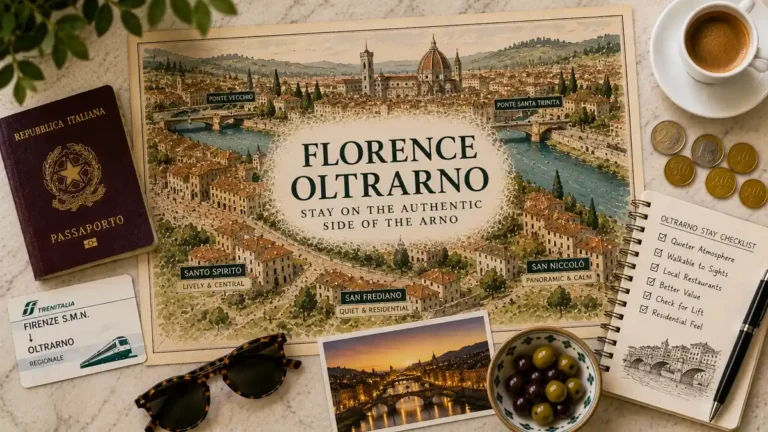
- If quiet or value matters more than being dead-center, shift one bank or square over to Oltrarno or Santa Croce.
Table of Contents
What is the Centro Storico, and what’s it like to stay there?
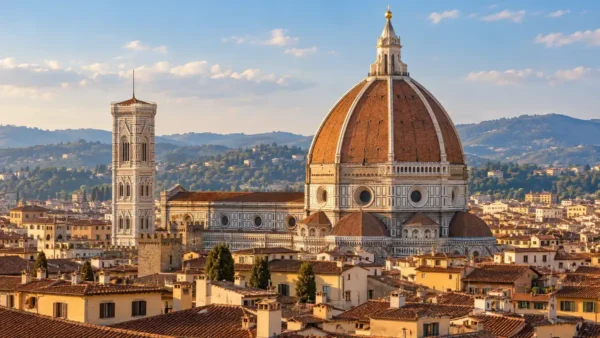
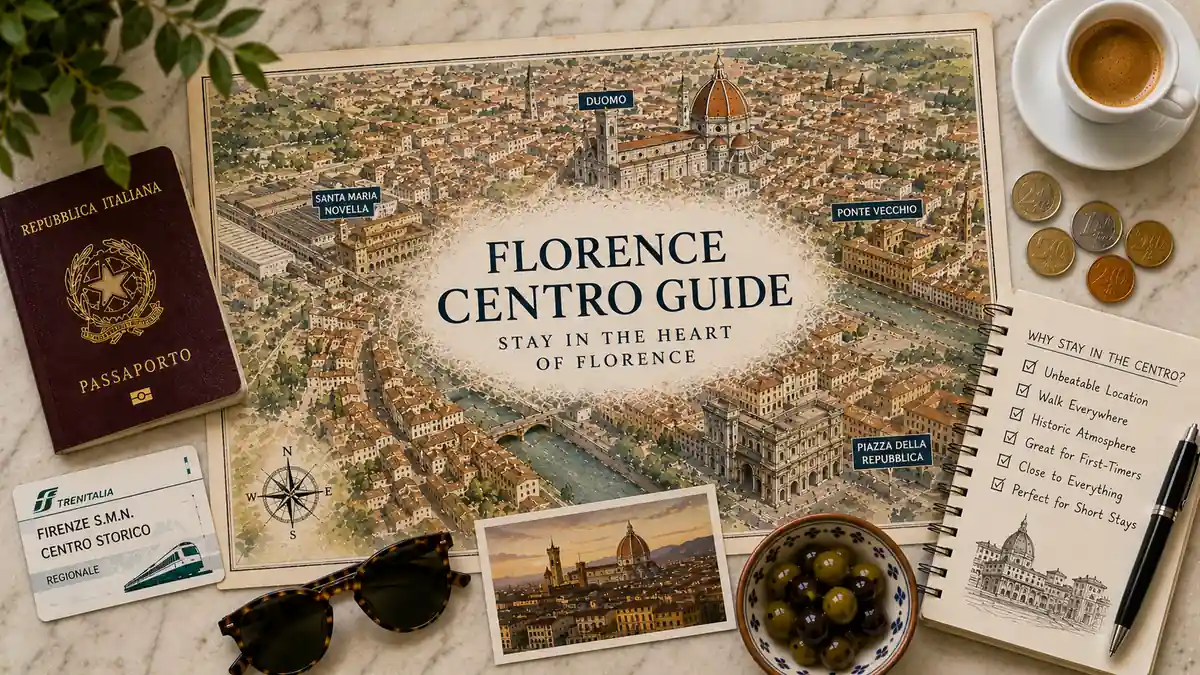
The Centro Storico is Florence’s historic core, the dense grid of streets around the Duomo and Piazza della Signoria. Staying here feels immersive and monument-lined: you step out of the door into UNESCO-listed streets, marble façades, and steady foot traffic. It is atmospheric and central, never quiet or spread out.
Day-to-day, basing in the Centro means living at the center of the action. Renaissance landmarks are your neighbors, not a bus ride away. The streets are narrow, largely pedestrian, and busy from morning through late evening, especially along the Duomo–Signoria axis. Cafés, gelaterie, and restaurants sit at every turn, though many lean tourist-facing at these prices.
The atmosphere is the draw and the caveat in one. You are inside the postcard, which is thrilling on a first visit — and it also means noise, crowds, and premium rates come with the address. For how the Centro fits into a wider itinerary, see our Florence trip guide.
What can you walk to from the Centro?
Yes — Florence’s headline sights are all a short walk from the Centro. That walkable density is the area’s main reason to book here. The Duomo, Uffizi, Palazzo Vecchio, and Piazza della Signoria sit within or beside the core, so you sightsee on foot without transport or planning around distance.
From a Centro base, the marquee stops are a short walk apart:
- The Duomo (Santa Maria del Fiore) — the cathedral complex sits at the heart of the core.
- The Uffizi Gallery — a short walk toward the river from the cathedral.
- Palazzo Vecchio and Piazza della Signoria — the city’s civic square, steps from the Uffizi.
- The Ponte Vecchio — a short walk on toward the Oltrarno bank.
This is walkability as a real planning advantage, not a slogan. You can see the major sights across a compact area on foot alone, with no need to time buses or taxis around a museum slot. That compactness is exactly what makes the Centro efficient for a sightseeing-led stay.
The Centro is the strongest base for a first, sightseeing-led Florence trip
The Centro is the strongest base for a first, sightseeing-led Florence trip. Everything central is on foot, and the atmosphere of living inside the historic core is hard to match. For a short trip built around the major sights, the convenience outweighs the higher price and the crowds.
The case for the Centro comes down to a few things a first-time itinerary values most:
- Walkable sightseeing — the headline landmarks are on foot from your door.
- Unmatched atmosphere — you sleep inside the Renaissance city, not adjacent to it.
- Central to everything — dining, transport hubs, and evening strolls all radiate from here.
On a two- or three-night trip, the hours you save not commuting to the sights buy back more than the nightly premium costs you. The Centro’s price makes the least sense the longer you stay and the less you plan to sightsee. Short and sights-led is where it earns its keep. Stretch to a week of slow living, and the math tilts elsewhere.
What are the trade-offs of basing yourself in the Centro?
The Centro’s trade-off is cost and crowds. It is Florence’s priciest and busiest area, and because it sits inside the ZTL you cannot drive or park freely. You accept steady tourist density and a higher nightly rate in exchange for putting the whole historic core outside your door.
The balance sheet is short and honest:
- For it: maximum walkability, unmatched atmosphere, central to every sight and transport link.
- Against it: highest prices, heaviest crowds, and driving or parking is impractical inside the ZTL.
The crowds and the ZTL are not bugs to fix — they are the direct cost of the address. Being at the dead center of a walkable historic city is also what makes it busy and car-unfriendly. If those are dealbreakers, the fix is location, not the Centro itself.
Is the Centro too touristy or crowded?
The Centro is Florence’s most crowded area, and that density is highest in peak season and around the Duomo and Uffizi. Expect steady foot traffic through the day and thinner streets early morning and late evening. It is a real trade-off for light sleepers and crowd-averse travelers, but the flip side is being at the center of everything.
How expensive is it to stay in the Centro?
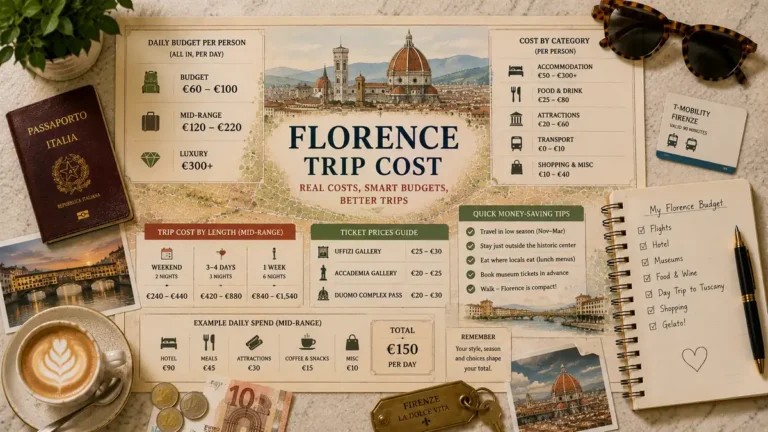
The Centro is Florence’s most expensive area to base in, across budget, mid-range, and high-end brackets. You pay a location premium for the walkable core, and rates climb further in peak season. There are still options at different price points, but the same standard costs more here than a few minutes out. For where the value sits, see our budget stay guide for Florence; if you are leaning upmarket, compare Florence’s luxury hotels. Treat all pricing as relative and verify current rates before booking.
Who should stay in the Centro — and who should look elsewhere?
The Centro suits first-timers, short stays, and sightseeing-first travelers. It fits less well those who want quiet, lower cost, or a slower pace. The deciding question is what you value most: being inside the action, or a calmer, cheaper night’s sleep a few minutes further out.
Who it suits:
- First-time visitors who want the landmarks on their doorstep — start with our first-time Florence stay guide.
- Short-trip sightseers whose two or three days are built around the major sights.
- Couples wanting atmosphere and walkable evenings — see where couples should stay.
- Travelers who prize convenience over price and quiet.
Who should look elsewhere:
- Light sleepers who need quiet at night rather than a lively central street.
- Budget-focused travelers stretching a stay — the location premium hits hardest here.
- Families needing space and calmer streets — compare family-friendly Florence bases.
- Night-out travelers chasing bars and clubs — see the nightlife stay guide; upmarket seekers can review luxury stay areas.
If quiet or value matters more to you than being dead-center, the smart move is not to leave Florence’s heart — just shift one bank or one square over. The nearby central alternatives keep most of the walkability while trimming the crowds and the premium: weigh Centro vs Oltrarno and Centro vs Santa Croce. For the full picture across every district, start from our Florence where-to-stay overview.
Hotels and places to stay
Compare hotels, apartments and stays for your dates in one search.
Search hotels and stays on hotels.com →
Tripstou may earn a commission if you book through this link, at no extra cost to you.
Frequently Asked Questions
Can you drive or park in the Centro’s ZTL?
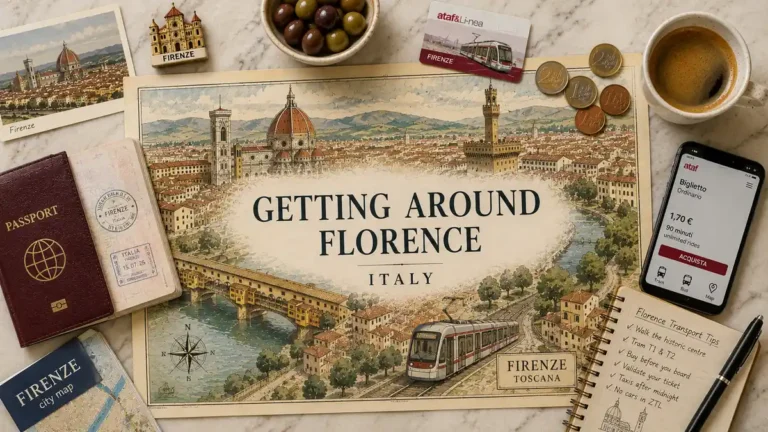
Driving and parking in the Centro are impractical because it sits inside a ZTL, a limited-traffic zone that restricts non-resident vehicles. Most visitors arrive by train or leave a car in a garage outside the zone and explore on foot. Check current ZTL rules before driving, as access and fines change.
Is the Centro noisy at night?
The Centro can be noisy at night, since its lively central streets carry foot traffic, restaurants, and passersby into the late evening. Light sleepers should look for a room on a courtyard or upper floor, or choose a quieter central area nearby. Noise eases on side streets away from the main piazzas.
Is the Centro Storico safe to stay in?
The Centro Storico is generally considered a safe area to stay, with busy, well-trafficked streets day and night. The main concern is pickpocketing in crowded tourist spots, so keep valuables secure around the Duomo, Uffizi, and Ponte Vecchio. Standard city precautions are enough for most visitors basing here.
How far is the Centro from Florence’s Santa Maria Novella station?
The Centro is a short walk from Santa Maria Novella, Florence’s main train station, which sits just northwest of the historic core. Most Centro accommodation is reachable on foot with luggage, though the exact distance depends on where you stay. This proximity makes arriving by train straightforward without needing a taxi.
Is the Centro worth it for just one or two nights?
For a one- or two-night stay, the Centro almost always wins, because those trips live or die on how fast you reach the sights. Basing in the core removes transit time entirely, letting you fit more in. Reserve the quieter alternatives for longer, slower stays where cost compounds.
Related Guides
- Where to stay in Florence — the full area-by-area overview and your starting hub.
- Centro vs Oltrarno — the quieter, artisan-bank alternative head to head.
- Centro vs Santa Croce — a calmer central district compared with the core.
- Where to stay in Florence for first-timers — the base decision for a first visit.
- Florence stay on a budget — where value sits across the city.
- Florence trip guide — planning the wider stay beyond where you sleep.
Did this guide save you time or money? Tripstou is independent and reader-funded — if you'd like to give something back, you can support the site with a crypto contribution of any size.