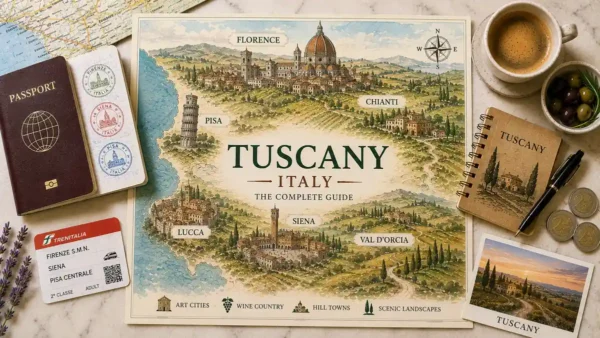
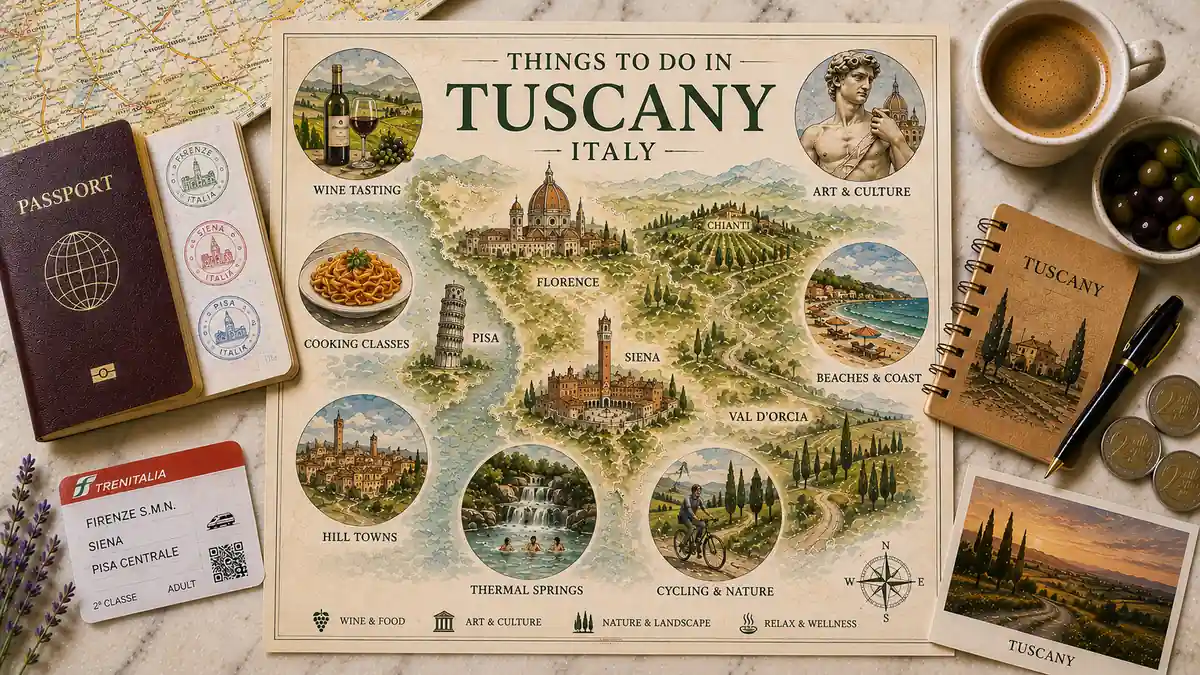
Tuscany holds more worth doing than any single trip can absorb. The real challenge is not finding things to do — it is deciding which experiences deserve your limited days. This guide answers that by organizing Tuscany around what you actually do, not which town you tick off a map.
Wine, food, countryside, art, hill towns, thermal springs and the coast each pull a trip in a different direction. A food-and-wine traveler builds a very different week than someone chasing Renaissance galleries or a slow spa retreat. Knowing which experience type fits your style is the fastest way to plan a Tuscany trip you will remember.
Everything below is grouped by experience, with the trade-offs that help you choose.
Quick Answer
Tuscany’s best experiences are wine, food, slow countryside, Renaissance art, hill towns, thermal springs and coast. Which mix suits you depends on your travel style — food and wine, countryside, culture, relaxation or coast. Most trips blend two or three categories; book tastings and cooking classes ahead in peak season.
Trust Layer
Tripstou selection guide for travelers choosing between multiple places. Covers selection criteria, traveler fit, and trip value.
Produced with AI assistance and reviewed by Alex Perrut, working in tourism since 2015, for the Tripstou editorial team. See our editorial process for details.
Last factual review: July 3, 2026.
Official sources consulted: Italia.it, ENIT.
Key Takeaways
- Wine tasting and food experiences anchor most Tuscany trips, rewarding couples and social travelers who prefer slow, sensory afternoons over packed sightseeing.
- Match experiences to your travel style, not the map: culture-first visitors, active countryside walkers, and beach lovers each want a different week.
- The biggest trade-off is breadth versus depth: pick two or three categories instead of rushing all seven into a short trip.
- For slower trips, thermal springs like Saturnia and a change of pace on the coast build restful downtime between busy days.
- Book wine tastings and cooking classes ahead in peak season, when summer weekends and popular estates fill up quickly.
Table of Contents
How to Choose Which Tuscan Experiences Fit Your Trip
Tuscany’s experiences fall into seven categories, and the right mix depends on your travel style, not the map. Wine, food, countryside, Renaissance art, hill towns, thermal springs and coast each reward a different traveler. Choose two or three that match how you like to spend a day.
The trade-off is always breadth against depth. Try to sample all seven categories in a short trip and each becomes a rushed photo stop. Pick two or three that fit your style and Tuscany opens up — a long cellar lunch, an afternoon lost in a walled town, a slow morning in a thermal pool. Depth wins here.
| Experience | Best for | Pace | Main trade-off |
|---|---|---|---|
| Food and wine | Foodies, couples, social travelers | Relaxed, half-day outings | Books up fast in peak season |
| Slow countryside | Cyclists, walkers, slow travelers | Unhurried, needs own transport | Rewards time over ticking sights |
| Renaissance art | Culture-first and first-time visitors | Busy, timed entries | Crowds and queues in cities |
| Medieval hill towns | Wanderers, photographers, romantics | Flexible, best on foot | Best without a fixed schedule |
| Thermal springs | Relaxation seekers, slow couples | Very slow, restorative | Adds downtime, not sightseeing |
| Tuscan coast | Beach lovers and summer families | Seasonal, summer-weighted | Quiet or closed off-season |
The mistake most first-timers make is stacking galleries and hill towns into every day; Tuscany’s food, wine and countryside experiences only pay off when you leave gaps for a long lunch or an unplanned detour.
Once you know which experiences to prioritize, the practical questions — where to base yourself, how to get around, and when to go — belong in the wider Tuscany travel guide. Turning your chosen experiences into a day-by-day plan is a separate job, handled in our Italy itinerary guide.
Wine Tasting Is Tuscany’s Signature Experience
Wine tasting is the experience most Tuscany trips are built around, and for good reason. The region’s three headline areas — Chianti, Montalcino and Montepulciano — let you taste world-class reds where they are grown. Even casual drinkers leave with a sharper sense of what Tuscan wine is.
Each area is a different tasting experience, not just a different label:
- Chianti: the classic and most accessible region, dense with cellars between Florence and Siena; easiest for a first tasting or an easy day out.
- Montalcino: home of Brunello, the region’s most prestigious red; quieter, more serious tastings that suit dedicated wine lovers.
- Montepulciano: known for Vino Nobile, with atmospheric cellars carved beneath a hilltop town; pairs the tasting with medieval streets.
This experience suits couples, food-and-wine travelers and anyone who enjoys a slow, social afternoon. Cellar visits range from a short flight of a few pours to longer estate tastings with a meal, and prices climb with the estate’s prestige. Treat any figure you see as a range and confirm it when you book. One caution: summer weekends fill quickly.
Booking directly with a single estate usually beats a multi-stop minibus tour if you actually want to talk to the winemaker — group tours optimize for logistics, while a direct visit buys you access and time.
Tours and activities
Book skip-the-line tickets, day trips and local tours with free cancellation on most activities.
You can also browse everything on getyourguide.com.
Tripstou may earn a commission if you book through this link, at no extra cost to you.
Cooking Classes and Food Tours Put You Inside the Culture
Cooking classes and food tours put you inside Tuscan culture through its kitchens and markets. You learn to make fresh pasta, ragù or ribollita with a local cook, or eat your way through a market with a guide. Both turn a meal into the memory people bring home.
The experience takes a few common forms:
- Hands-on cooking class: roll pasta or bake with a local, then eat what you made — the most popular option for first-timers.
- Market-to-table food tour: taste your way through cheese, cured meats, wine and street food with a guide.
- Agriturismo experience: cook on a working farm using produce grown on-site, usually at a slower, fuller-day pace.
- Seasonal add-ons: truffle hunts and olive-oil tastings appear in their windows; treat exact dates as approximate.
These suit families, curious eaters and travelers who want more than a restaurant meal. Half-day classes and food tours vary widely in length and price by group size and menu. Confirm what is included before you book. If you want to compare Tuscan food experiences against the broader picture, our guide to things to do in Italy covers the national spread.
A farm-based class at an agriturismo usually delivers more than a city-center studio: you cook what was grown on the property and the pace is unhurried, which is the whole point of eating in Tuscany.
Slow Countryside: Cycling, Walking and the Via Francigena
The Tuscan countryside is an experience in itself, best enjoyed slowly on foot or by bike. Rolling Val d’Orcia hills, cypress-lined avenues and the ancient Via Francigena pilgrim route reward travelers who trade speed for atmosphere. It suits active and unhurried travelers over box-tickers.
The countryside experience takes a few forms: cycling the gentle roads and gravel strade bianche of Chianti and the Crete Senesi, walking sections of the Via Francigena on foot, or renting an e-bike to flatten the hills. Photographers come for the light alone. None of it needs a fixed route — the point is to move slowly and stop often.
The trade-off is practical: you generally need your own transport or a fair level of fitness, and the open landscape is at its best in the milder months. That keeps it out of reach for travelers who want everything walkable from a city.
Val d’Orcia rewards the edges of the day far more than midday — the low, golden light that made the cypress roads famous is a dawn-and-dusk phenomenon, so build countryside time around sunrise and sunset, not lunch.
Renaissance Art and Culture Worth Planning Around
Renaissance art is the reason many travelers plan a Tuscany trip around specific days and tickets. This is the birthplace of the movement, and standing before its masterpieces in the cities where they were made is an experience galleries elsewhere cannot copy. It suits culture-first and first-time visitors most.
As an experience, this is less a museum checklist and more a chance to see art in its original setting — frescoed chapels, sculpture in the squares it was carved for, and cathedral interiors that still function as they did centuries ago. That context is what makes it land. It rewards travelers who read a little before they go.
The trade-off is crowds. The headline sites draw long queues, and popular galleries use timed entry, so booking major sites ahead saves hours. Opening hours and entry rules shift by season and site — check the current details before you plan a day around one.
The art that lingers is often the site-specific fresco cycle no one could move to another museum — prioritize works still in the churches and chapels they were painted for over the trophy pieces everyone queues to photograph.
Wandering Medieval Hill Towns and Walled Cities
Wandering medieval hill towns is one of Tuscany’s most atmospheric experiences, and it works best without an agenda. The pleasure is the act itself — climbing stone lanes, emerging onto a piazza, watching the valley light shift from the walls. Which towns you pick matters less than leaving time to wander.
What makes the experience distinct is compression: centuries of stone, church, tower and square packed into a few walkable streets you can cross in minutes. You are not there to see one monument. You are there to lose an afternoon. Skip the rigid schedule and let the town set the pace.
Which specific towns to prioritize is a separate question worth its own answer. For a ranked shortlist of where to go, our guide to the best places to visit in Italy has you covered — this section stays with the experience of wandering itself, not a town ranking.
Hill towns reveal themselves best once the day-trippers leave. When the tour buses clear in early evening, a walled town turns quiet and lamp-lit, with locals reclaiming the piazza — a different place entirely from the one crowds see by day.
Thermal Springs and Spa Days for Slow Relaxation
Thermal springs turn a Tuscany trip into a slow, restorative one. Warm mineral water has drawn people here since Roman times, from free natural pools to polished spa resorts. This experience suits relaxation seekers and slow-traveling couples who want downtime built into the trip.
Two anchors define the experience:
- Saturnia: famous terraced hot waterfalls you can soak in for free, with a nearby spa resort for those who want comfort and services.
- Bagno Vignoni: a tiny village built around a steaming thermal pool at its center — more atmosphere and history than swimming.
The trade-off is honest: a spa day adds recovery and calm, not sightseeing, so it works best as a counterweight to busier days. Access varies — some pools are free and open, others sit inside paid resorts, and popular spots get crowded — so check current access before you go. Keep exact seasonal windows loose.
Free springs like Saturnia’s cascades are busiest at midday and on weekends; arriving at dawn or after dark buys you the empty, steaming pools the photos promise — bring a headlamp and shoes for the slippery rocks.
The Tuscan Coast: Maremma and Versilia Beaches
The Tuscan coast adds beach time and a change of pace to a trip most people spend inland. Two very different styles define it: wild, pine-backed Maremma in the south and polished, resort-lined Versilia in the north. It suits summer travelers and families extending a countryside trip.
The two coasts are almost opposite experiences:
- Maremma: wild, natural beaches backed by pine forest and nature reserves in the south; for travelers who want space and rugged scenery.
- Versilia: organized resort beaches with lidos, services and nightlife in the north; for families and comfort-seekers who like everything laid on.
The coast is seasonal, and how you time it matters more than any single date. High summer is warm and lively but busy and pricier; the shoulder months are quieter, and off-season many beach services simply close. Match the coast to your travel style before you commit a day to it.
The Tuscan coast is a shoulder-season secret: Maremma’s beaches and reserves are pleasant and near-empty in late spring and early autumn, while peak summer packs the Versilia lidos and pushes prices up — the wild south rewards the off-peak visit most.
Frequently Asked Questions
What’s the best time of year for Tuscany experiences?
Late spring and early autumn suit most Tuscany experiences best. The shoulder months bring soft countryside light, mild walking weather, and thinner crowds. September and October add wine-harvest energy and truffle season, summer favors the beaches, and thermal springs and hill towns reward visits year-round.
Are Tuscany wine tours and cooking classes worth it?
Yes, for most travelers they are among Tuscany’s most rewarding experiences. A cellar tasting or hands-on class turns a passive meal into something you actively learn and remember. They suit couples, foodies, and curious eaters most; travelers indifferent to food or wine will get less from the time and cost.
Do you need a car to do things in Tuscany?
For countryside, wineries, thermal springs, and the coast, a car helps enormously and is often essential. Cities and larger hill towns connect by train and bus, so an art- or town-focused trip can skip driving. For scattered rural experiences, renting a car unlocks far more of the region.
Are Tuscan experiences suitable for families with kids?
Many are. Cooking classes, market food tours, gentle bike rides, thermal springs, and Versilia’s organized beaches all work well with children. Long cellar tastings and quiet art-focused days suit adults more. Families usually do best mixing one or two hands-on, active experiences with slower downtime each day.
How far ahead should you book Tuscany tastings and classes?
In peak summer, book wine tastings, cooking classes, and popular estate visits several weeks ahead, especially for weekends. Small cellars and hands-on classes cap group sizes and sell out fastest. In shoulder and off-season, a few days’ notice usually suffices, though top-rated experiences still fill quickly.
Can you experience Tuscany without joining guided tours?
Absolutely. Self-drive wine routes, independent hill-town wandering, countryside cycling, and free thermal pools all reward going solo. Guides add most value for cooking classes, market food tours, and interpreting Renaissance art in context. A mix works best: book a guide where expertise matters, and explore freely everywhere else.
Related Guides
Use these guides to move from choosing experiences to planning the rest of your Tuscany trip:
- Tuscany travel guide — the regional hub for logistics, where to base yourself, and when to go.
- Best places to visit in Italy — which specific towns and places to prioritize.
- Italy itinerary — how to sequence experiences into a day-by-day trip.
- Things to do in Italy — broader Italy-wide experiences beyond Tuscany.
- Hidden gems in Tuscany — the underrated towns to pair with the famous stops.
- Pisa travel guide — the city many Tuscany trips pass through, and what is worth stopping for.
- Siena travel guide — the walled hill town in full, and how to give it more than a day trip.
- Best time to visit Italy — the seasons behind when to plan each of these experiences.
Did this guide save you time or money? Tripstou is independent and reader-funded — if you'd like to give something back, you can support the site with a crypto contribution of any size.