Genoa is the Ligurian city most travelers pass through on the way to the coast, and this guide decides whether passing through is a mistake for you. It answers the questions that settle the trip: whether Genoa is worth a real stop, how long to stay, when to come, where to base yourself broadly, how to arrive and move around a city built on a slope, what a trip here costs in spend-style terms, and which day trips along the Riviera are genuine. Genoa can be read two ways — as a gateway to the Ligurian coast, or as a destination in its own right — and almost every planning decision on this page follows from which read fits your trip. Treat the gateway read as the default and you will book a half-day. Treat it as a destination and the city changes shape.
Quick Answer
Genoa is worth a real stop, best for travelers who want a working, unpolished port city. Two to three days turns it from a stopover into a destination; a half-day sees only the port edge. It suits food travelers, first-timers wanting a city without queues, and anyone touring the Riviera; resort-seekers should look elsewhere.
Trust Layer
Tripstou city guide for travelers planning a city trip. Covers trip length, stay style, season, cost, and mobility tradeoffs.
Produced with AI assistance and reviewed by Alex Perrut, working in tourism since 2015, for the Tripstou editorial team. See our editorial process for details.
Last factual review: September 19, 2026.
Official sources consulted: Italia.it, ENIT — Italian National Tourism Agency, Visit Genoa and Genoa Airport.
Key Takeaways
- Genoa rewards a real stop, not a half-day: the port edge is all a stopover ever shows you.
- Give Genoa two days for the city itself and three if you want one genuine coastal day trip.
- Shoulder seasons suit Genoa best because the bottleneck in summer is the coastal train, not the city itself.
- Base in the old town for atmosphere or the waterfront for calm; check the contour lines, not the distance.
- One €2.00 AMT ticket covers buses, the metro, the funiculars and the public lifts for 110 minutes.
- No train reaches Portofino itself, and Cinque Terre from Genoa is a full day, not an afternoon.
Table of Contents
Genoa Is Worth Visiting — and Worth More Than a Pass-Through
Genoa is worth visiting, and worth more than the half-day most travelers give it. The city holds one of the largest medieval centres in Europe, a genuine working port, the UNESCO-listed Rolli palaces, and a food identity that belongs to it alone — without the crowds that fill the coast an hour away.
The pass-through read is right in exactly one case: a tight Riviera schedule with no spare days. Genoa then works as a transit point — arrive, eat, sleep, move on. Any itinerary with two spare days gets more from Genoa than from a third coastal town, because the city offers something the coast cannot: scale, architecture, and an ordinary Italian life that never reorganised itself around visitors. That is also where Genoa sits among Italy’s best places to visit — a mid-table name that punches above its ranking.
Four traveler types get the most out of it. Food travelers eat pesto and focaccia at the source. First-timers get a major Italian city with no queue at the door. Families get a compact centre with a port to walk. And travelers moving along the Riviera get a base that is cheaper and better connected than the coast towns themselves. If you are planning a wider Italy trip, Genoa slots in as the Liguria stop that doubles as a hub.
Genoa does not suit anyone wanting a resort, a beach town or a polished centre. Parts of the old town are dark, unrestored and frankly scruffy. The port side is industrial. The grit is real, and it is the price of everything else — the city was never rebuilt for visitors, which is exactly why it still feels like itself.
The travelers who leave Genoa disappointed almost always arrived from a Riviera beach town; the ones who arrived from Milan or Turin leave impressed. Same city, different comparison.
What Genoa Is Known For: Caruggi, Rolli Palaces and the Working Port
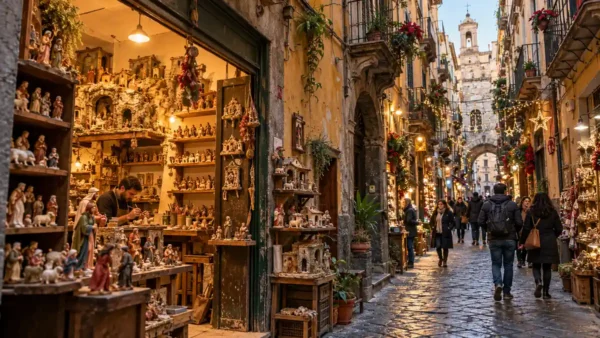
Genoa is known for its caruggi — the medieval alley maze — its UNESCO-listed Rolli palaces, and a working port. It was the capital of a maritime republic that once rivalled Venice, and it is the home city of pesto genovese and Genoese focaccia, both of which originate here and still define how the city eats.
These are the names worth knowing before you arrive:
- Via Garibaldi and the Palazzi dei Rolli — the aristocratic street of UNESCO-listed palaces.
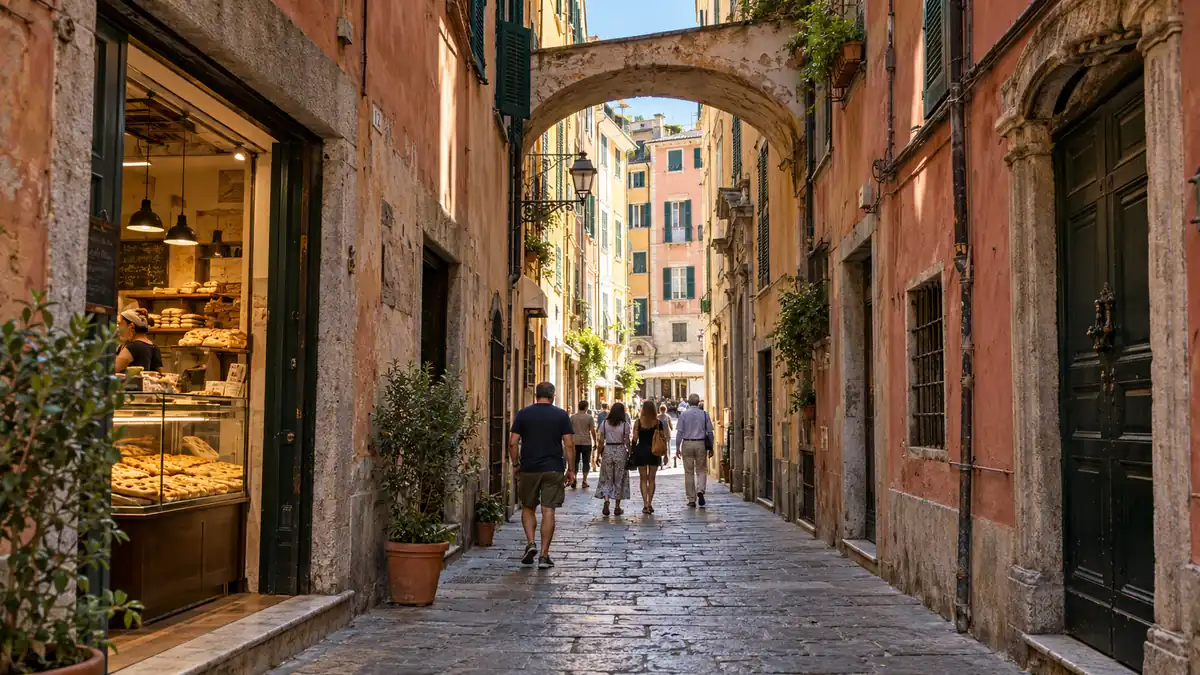
- The caruggi — the old town’s alley network, among the largest medieval centres in Europe.
- Porto Antico — the redeveloped waterfront, with the Aquarium as its anchor.
- San Lorenzo cathedral — the striped-marble church at the heart of the centro storico.
- Boccadasse — the old fishing village absorbed by the city’s eastern edge.
The port is not a backdrop. Cranes, ferries and container ships work through the day, and the old town runs right up against them, which is the detail that separates Genoa from every restored Italian city centre you have seen. Those five names are orientation, not a shortlist; the full selection, with what each is actually like, sits in our guide to things to do in Genoa.
Tours and activities
Book skip-the-line tickets, day trips and local tours with free cancellation on most activities.
You can also browse everything on getyourguide.com.
Tripstou may earn a commission if you book through this link, at no extra cost to you.
How Many Days You Need in Genoa
Two to three days is the right stay in Genoa: two covers the city, three adds a day trip. The centre is dense enough that a single day only skims it, and the vertical layout means moving between the waterfront, the caruggi and the hill terraces eats time a flat city would not charge you.
- Half-day stopover — buys the Porto Antico waterfront and one walk into the caruggi, nothing above street level. Fits travelers on a fixed Riviera train schedule.
- Two days — buys the city itself: Via Garibaldi and the Rolli palaces, the old town properly, one funicular or lift ride up for the view, and two meals that matter. Fits first-timers.
- Three days — buys the city plus one genuine day trip down the coast. Fits anyone using Genoa as a base.
The half-day stopover is what makes people leave thinking Genoa is nothing. Arriving at Principe, walking to the port, eating a slice of focaccia and boarding the next train shows you the edge of the city and none of its substance. If your schedule truly allows only the half-day, spend it in the caruggi and skip the waterfront — the alleys are the part the coast cannot match, and the port is the part every Ligurian town already has in miniature. For the day-by-day order, our two-day Genoa itinerary sets the pacing; for the wider route, see fitting Genoa into an Italy itinerary.
When to Visit Genoa
Shoulder seasons — spring and early autumn — are the best time to visit Genoa. The coastal air stays mild, the Riviera around the city has not reached peak pressure, and Genoa is still running as a working city instead of a summer destination, which is when it is at its most itself.
Summer changes the trip around Genoa far more than the trip inside it. The city absorbs visitors easily — it is too large and too busy with its own business to feel overrun — but the coastal trains fill, the Riviera towns queue, and a day trip that feels easy in spring becomes an endurance test at the height of summer. Winter is the quiet working-city season: the old town runs as usual, and the caruggi are at their most atmospheric in the rain.
Traveler fit matters more here than the calendar. Food travelers and city-first visitors do fine year-round, because nothing they came for is seasonal. Anyone pairing Genoa with the coast should avoid peak summer outright, since the bottleneck is the train, not the city. Genoa is one of the few Italian destinations where the off-season costs you almost nothing: the draw is streets, architecture and food, and none of those close. For how this fits the country’s wider pattern, see the best time to visit Italy.
Where to Stay in Genoa: Old Town Atmosphere or Waterfront Calm
First-timers choose between the atmospheric but gritty old town and the calmer waterfront and residential edges. The old town puts you inside the thing you came for and costs you quiet; the waterfront and the eastern residential districts trade immediacy for calm, space, and an easier walk home at night.
The old town — the centro storico around Via Garibaldi and the caruggi — is the atmospheric choice. Everything is walkable from it: the Rolli palaces, San Lorenzo, the port, the focaccia counters. The cost is noise, narrow unlit lanes after dark, and a general absence of polish. It suits travelers who want to be inside the medieval core and do not mind that the core is a working, lived-in neighbourhood.
The waterfront and residential edges — the Porto Antico side, and Foce running east toward Boccadasse — are the calm choice. They are easier with children, easier with luggage, and they give you a sea-facing evening walk; the trade is a short transit hop or a longer stroll into the old town each morning.
Proximity in Genoa is measured vertically, not just horizontally. A stay that looks close to the centre on a map can sit well above it on the hillside, which turns a five-minute walk into a funicular ride each way — read the contour lines before the distance. Which street to pick inside either area is a separate decision, resolved in our guide to where to stay in Genoa.
Hotels and places to stay
Compare hotels, apartments and stays for your dates in one search.
Search hotels and stays on hotels.com →
Tripstou may earn a commission if you book through this link, at no extra cost to you.
How to Get to Genoa and Get Around Once You Arrive
Genoa has two central stations, Piazza Principe and Brignole, plus Cristoforo Colombo airport west of the centre. The centre is walkable but vertical, and a single AMT ticket covers everything that moves — buses, the metro, the public lifts and the funiculars — so the climb is included in the fare you already paid.
Arriving: which station, and the airport bus
Both central stations work, and the choice comes down to which side of the centre you are staying on. Genova Piazza Principe sits on the western edge beside the port, closest to Via Garibaldi and the old town, and takes most arrivals from the west. Genova Brignole sits on the eastern side, closest to Foce and the Boccadasse direction, and is the useful one for the eastern Riviera. Both are Volabus stops.
Volabus is the one official airport connection. It links Cristoforo Colombo airport at Sestri Ponente with both stations, takes about 30–40 minutes depending on traffic, and costs around €6 with AMT network time included. It runs from early morning to around midnight. If you are buying the €10.00 MetDaily day ticket anyway, the airport ride is already inside it.
Getting around: one ticket, a vertical city
One AMT ticket covers the whole network, and the fare set is short:
- Single urban ticket — €2.00, valid 110 minutes across the whole urban and provincial network: bus, metro, funiculars and lifts.
- Integrated AMT/Trenitalia ticket — €2.20, for journeys that combine city transport with local rail.
- MetDaily 24-hour ticket — €10.00, covering the whole network including Volabus, the Genova-Casella railway and line 782.
- Network shape — one metro line with seven stations, two funiculars (Sant’Anna and Zecca-Righi), and ten public lifts.
The lifts and funiculars are transport, not novelty. Genoa climbs steeply from the waterfront to the hill terraces where much of the city actually lives, and the public lifts work like short vertical bus routes: you tap in, ride up, and walk out onto a street that would have cost you a staircase. Locals use them to commute.
The walkability verdict is simple. The old town and the waterfront are flat walking territory, and you will cover both on foot without thinking about transport. Anything uphill is a lift or a funicular, and the €2.00 ticket already covers the climb.
How Much a Genoa Trip Costs
Genoa is one of the cheaper large Italian cities to visit, and clearly cheaper than the Riviera towns beside it. It prices like a working city instead of a resort: everyday food, everyday accommodation, a flat-fare transit network that costs the same wherever you go, and a centre whose best hours cost nothing to walk.
- Budget — a hostel or simple guesthouse in or near the old town, focaccia and farinata counters covering two meals a day, and everything on foot plus the €2.00 ticket when the hill wins. Genoa is unusually kind here: the cheapest food in the city is also the food it is famous for.
- Mid-range — a small hotel on the waterfront or a room near Via Garibaldi, sit-down trattorie in the evening, an occasional taxi, and a day trip or two down the coast. This is the style the city is built for.
- High-end — a restored palazzo stay, a boat along the coast, and the serious seafood restaurants. Genoa simply has less to spend heavily on than Milan or Florence, so the top tier buys atmosphere here more than it buys scale.
The lever that moves a Genoa budget is not the hotel star rating; it is whether you treat the city as a base or as one stop among several. Basing here and travelling out cheaply beats booking a coastal room for the same nights, every time. For per-day bands across the country, see what a trip to Italy costs — Genoa sits at the kinder end of them.
Day Trips From Genoa, Ranked by Travel Time
The Riviera east of Genoa is the day-trip zone: Portofino is the short trip, Cinque Terre the long one. One correction saves most first-time plans — no train reaches Portofino itself. You take the train to Santa Margherita Ligure-Portofino and finish by bus or on foot, which is why the timing surprises people.
| Destination | Route from the central stations | Rough journey time | Genuine day trip? |
|---|---|---|---|
| Portofino | Brignole to Santa Margherita Ligure-Portofino, then bus 782 or on foot | Roughly 1–1.5 hours each way | Yes — works as a half or full day |
| Cinque Terre | Principe direct to the nearest village, or via La Spezia | Around 1.5–2 hours each way | Yes, but a full day — start early |
Genoa works as a base for both, and they are not the same kind of day. Portofino is a short hop: the train down the coast, then bus 782 or a walk of roughly 5 km from Santa Margherita, and you are back in the city for dinner. Cinque Terre is a committed full day — the travel time is manageable in one direction and tiring in both, and the evening return is the part people underestimate. Both are easier from Genoa than from a smaller coastal town with fewer direct services, and that connectivity is the strongest practical argument for basing here at all.
Is Genoa Safe for Tourists?
Genoa is safe for tourists, and its reputation is about grit, not danger. The caruggi are dark, narrow and genuinely confusing after nightfall, and some lanes on the port side feel rough, but that is a comfort question, not a safety one. Ordinary city sense is enough here.
“Gritty” means specific, visible things in Genoa: unrestored façades, alleys too narrow for daylight to reach, and a working port that was never dressed up for visitors. It does not mean a high-risk city. The precautions are the ones any large European city asks for — watch your bag in crowds and around the stations, keep your phone out of sight in the tightest alleys, and choose a route home you have already walked in daylight.
Families and solo travelers do fine with that much planning. The honest adjustment is a stay-style one: if unlit medieval lanes at night will bother you, base on the waterfront or the eastern residential side and visit the caruggi by day, when they are the best thing in the city. The caruggi after midnight and the caruggi at breakfast are two different experiences, and only one of them is why people fall for Genoa.
Frequently Asked Questions
Is one day in Genoa enough?
One day is enough to see why Genoa deserves longer, not enough to see Genoa. You get the old town, the waterfront and one good meal, and you leave the Rolli palaces, the hill terraces and any coastal day trip untouched. Two days closes most of that gap.
How much is the Volabus from Genoa airport?
Volabus costs around €6, and that fare includes time on the AMT city network once you arrive. If you plan to use buses, the metro or the funiculars on the same day, the €10.00 MetDaily ticket already covers the airport ride and works out better value.
Genoa Piazza Principe or Brignole — which station should you use?
Use the station nearest your bed: Principe for the old town and Via Garibaldi, Brignole for Foce and the eastern side. Both are central, both are Volabus stops, and a single AMT ticket connects them, so picking the wrong one costs you a short ride, not a morning.
What food is Genoa famous for?
Genoa is famous for pesto genovese and focaccia, both of which were born in this city and are still eaten here daily, not as a tourist ritual. Farinata, sold by the slice at the same counters, belongs to that everyday food culture. Eating well here costs very little.
Is Genoa walkable?
Genoa is walkable where it is flat — the old town and the waterfront are covered comfortably on foot. Above that the city climbs hard, and the lifts and funiculars work as ordinary transport, covered by the same €2.00 ticket. Wheeled luggage in the caruggi is the real strain.
Is Genoa a good base for the Ligurian coast?
Genoa is a strong base for the coast: it is cheaper than the seaside towns, has two main stations, and puts Portofino within a short hop and the far coast within a long day. The exception is a beach holiday — for that, base on the coast itself.
Related Guides
- Things to do in Genoa — the full selection of sights, with what each is actually like.
- Where to stay in Genoa — neighbourhood-level resolution beyond the old town and waterfront split.
- Two-day Genoa itinerary — the day-by-day order for the two-day stay.
- Best places to visit in Italy — where Genoa sits among the country’s destinations.
- Italy itinerary — fitting Genoa into a wider route.
- Italy travel guide — the country-level planning hub.
- Cinque Terre travel guide — the planning layer for the coast east of the city, covered on its own page.
Did this guide save you time or money? Tripstou is independent and reader-funded — if you'd like to give something back, you can support the site with a crypto contribution of any size.