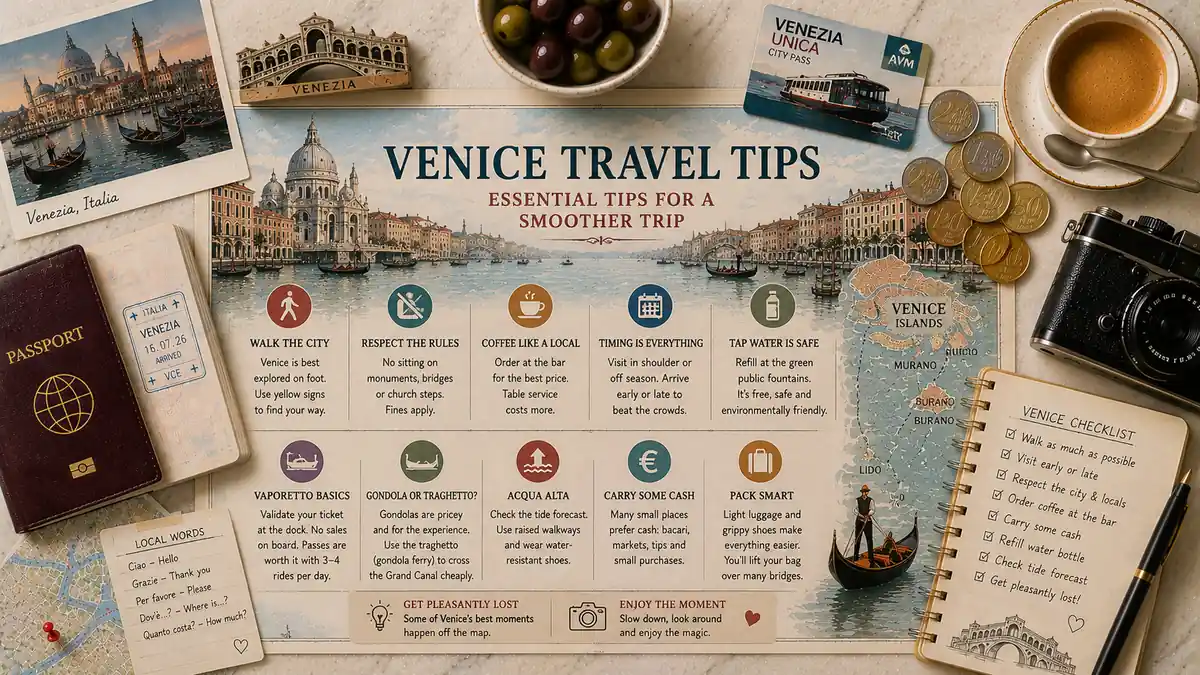
Venice runs on different rules than any normal city. It is a car-free lagoon of alleys, bridges, and boats — there are no roads, no taxis in the usual sense, and no shortcut around walking. A handful of habits separate a smooth visit from a stressful, overpriced one: knowing where to stand, when to arrive, how to order coffee, and what to do when the water rises. This guide groups the essentials into scannable tips — etiquette, timing, money, common mistakes, acqua alta, and packing — so you can spend your days enjoying the city instead of decoding it. Most of these fixes are small. Together they change your whole trip.
Quick Answer
Treat Venice as a walkable lagoon city: you will walk more than you expect, and local etiquette matters. Timing and habits change the experience most — visit off-peak, order coffee at the bar, and carry some cash. It suits first-timers who want to dodge crowds, fines, and tourist-trap prices; pack light and stay flexible on navigation.
Trust Layer
Tripstou planning guide for travelers resolving one travel decision. Covers the main variable, traveler context, and practical tradeoffs.
Produced with AI assistance and reviewed by Alex Perrut, working in tourism since 2015, for the Tripstou editorial team. See our editorial process for details.
Last factual review: July 16, 2026.
Official sources consulted: italia.it, enit.it.
Key Takeaways
- Walking beats the vaporetto for most central hops, so orient by the yellow landmark signs — Rialto, San Marco, Ferrovia — not your phone.
- Never sit or picnic on monuments, bridges, or church steps; Venice enforces decorum rules, and fines apply.
- Visit in shoulder or off season, and reach each sight before the day boats dock or after they leave.
- Order coffee standing at the bar and carry some cash for small bacari, markets, and cash-only spots.
- Pack light with grippy, water-resistant shoes; you carry every bag over stepped bridges and on and off boats.
- Treat acqua alta as a scheduling problem — check the tide forecast, use raised walkways, and wear proper footwear.
Table of Contents
What Should You Know Before Visiting Venice?
Venice is a car-free maritime city built on water, so you walk everywhere and orient by landmarks. Do not treat it like Rome or Florence — there are no cars, streets twist and dead-end, and boats replace buses. Slow down, expect to get a little lost, and let the lagoon set the pace.
The single mindset shift is accepting that the map lies about time. Distances look short but stretch out on foot, because you cross dozens of stepped bridges to get anywhere. Once you stop fighting that, the city becomes far easier.
- Addresses use a sestiere (district) plus a number, not a street name, so house numbers jump around.
- The vaporetto (water bus) is scenic but slow; walking is frequently faster for central hops.
- Yellow signs painted on walls point toward major landmarks — Rialto, San Marco, Ferrovia (the train station) — so follow those, not your phone.
- Wi-Fi and GPS both stutter in the narrow alleys, so screenshot a route before you set off.
The fastest way across Venice is almost never a straight line. The city has no grid, so learning three or four landmark directions — Rialto, San Marco, Accademia, Ferrovia — saves more time than any map app. For the wider orientation before you arrive, our Venice travel guide covers the bigger picture.
Venice Etiquette and Rules Visitors Get Wrong
Do not sit down to eat or rest on monuments, bridges, church steps, or the ground in busy squares. Venice enforces decorum rules to protect a fragile, overcrowded city, and fines apply. Keep moving on bridges, save meals for tables or benches, and behave as you would inside any historic town.
Most visitor slip-ups come from treating public space like a picnic ground or a photo studio. A short list of behaviours keeps you out of trouble:
- No sitting or picnicking on the steps of monuments, bridges, or around Piazza San Marco.
- Step to the side before you stop to photograph or check a map — bridges and narrow alleys clog instantly.
- Keep noise down in residential calli, especially at night; people live here.
- No swimwear, bare chests, or wading in canals.
- Do not feed the pigeons in San Marco; it is prohibited.
Fines for these behaviours are real and can be steep, though the exact amounts change over time. Treat every “no sitting” or “no swimming” sign as enforced, not decorative. Much of this is simple courtesy that carries across the country, and our Italy travel tips cover the broader etiquette that applies beyond the lagoon.
Common Mistakes and Tourist Traps to Avoid in Venice
The biggest mistake is only day-tripping, which drops you into the midday crush and misses the quiet, magical Venice. Stay at least one night, eat away from the main squares, and avoid restaurants with photo menus and touts outside. Where you eat and sleep decides whether Venice feels enchanting or exhausting.
Most tourist traps cluster in the busiest few hundred metres around San Marco and Rialto. Sidestep them with a handful of rules:
- Skip eating on or beside Piazza San Marco, where you pay a premium for the view and often get mediocre food.
- Avoid restaurants with multilingual photo menus, “tourist menu” boards, or staff waving you in — walk a few alleys further.
- Agree the route and price before any gondola ride; rates are fixed, but touts improvise.
- Do not haul heavy wheeled luggage over stepped bridges — pack light or your arrival becomes a workout.
- Be wary of cheap “Murano glass” souvenirs, which are often mass-produced imports rather than the real thing.
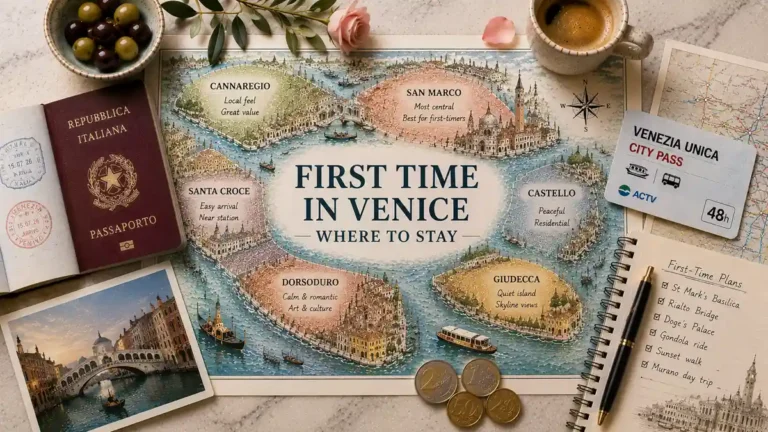
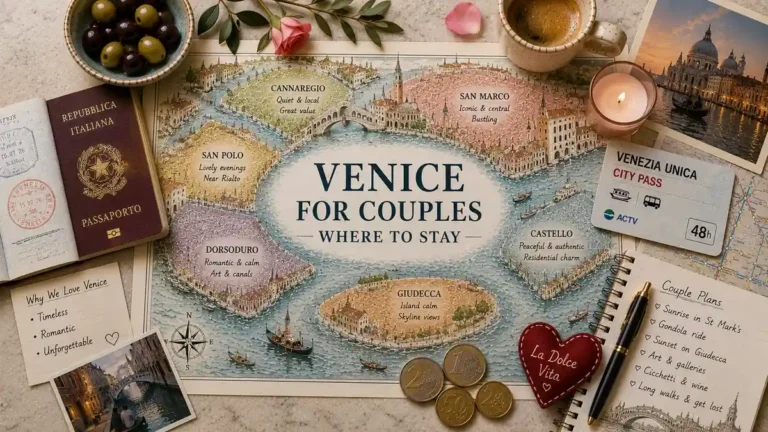
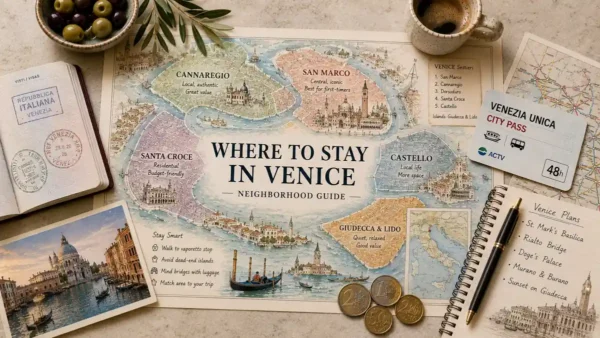
Venice empties out twice a day — before the day-trippers arrive and after they leave. Staying inside the historic centre, not on the mainland, is what buys you those two windows; a cheaper Mestre hotel hands the best hours back to the crowds. If you can, deciding where to stay in Venice turns a rushed day trip into early-morning and evening streets that are almost empty. Pickpocketing and overcharging do happen in the busiest spots; for the specifics, see our guide to Venice scams and safety.
Hotels and places to stay
Compare hotels, apartments and stays for your dates in one search.
Search hotels and stays on hotels.com →
Tripstou may earn a commission if you book through this link, at no extra cost to you.
When Is the Best Time to Visit Venice to Avoid Crowds?
The best time to avoid crowds is the shoulder and off seasons, plus early mornings and evenings year-round. Late autumn through early spring, outside Carnival and the winter holidays, brings thinner crowds and lower prices. Even in peak months, reaching a sight before the day boats dock — or after they leave — transforms it.
Season sets the baseline, but the daily rhythm matters just as much. The cruise and day-trip surge peaks from late morning to mid-afternoon, then drains away.
- Summer and major holidays are the busiest and hottest; the alleys and vaporetti get uncomfortable.
- Spring and autumn shoulder weeks balance mild weather with manageable crowds.
- Winter is quietest and atmospheric, but it overlaps with the acqua alta season and cold, damp days.
- Any month rewards early risers: the first hour after sunrise is the calmest.
In Venice the hour beats the month. A July morning at 7am is emptier than a November afternoon with three cruise ships in port, so if you can only control one thing, control your start time, not your dates.
What Is Acqua Alta and What Should You Do?
Acqua alta is the seasonal high water that temporarily floods Venice’s lowest areas, especially around Piazza San Marco. It is driven by tides and weather, mostly between autumn and early spring, and usually recedes within hours. When it happens, follow the raised walkways, wear waterproof footwear, and check the city’s tide forecast before heading out.
It is a schedule problem, not a reason to cancel. Because it follows the tide, you can usually check the day’s peak time and simply plan your walking and photos around it.
- The city sounds warning tones when a significant tide is forecast, giving advance notice of the expected level.
- Elevated walkways (passerelle) are set up along main routes so you can cross flooded zones dry-shod.
- Knee-high boots or waterproof shoes beat the flimsy plastic covers sold to tourists at a markup.
- Flooding is usually short-lived and localised — it rarely spoils more than an hour or two of a day.
Eating, Coffee, and Cash Habits Like a Local in Venice
Order and drink your coffee standing at the bar, where it costs far less than sitting at a table. Sitting down — especially on a main square — adds table service and, in prime spots, a premium for the setting. Eat a few streets from the big piazzas, and carry cash for small bars, bacari, and markets.
Eating and drinking well in Venice is mostly about geography. Step off the main tourist arteries and both quality and value improve fast.
- Coffee comes in tiers: cheapest standing at the bar, more at a table, most on a Piazza San Marco terrace with music.
- Cicchetti — small bar snacks eaten with a glass of wine (an ombra) — are the local, affordable way to graze.
- The best-value meals sit in quieter residential corners, away from the main thoroughfares.
- Many small bacari, market stalls, and cash-only spots still prefer cash, so keep a modest amount on you.
A cappuccino at a bar counter and the same cup on a San Marco terrace can differ several times over. The coffee is nearly identical, so you are paying for the chair and the orchestra, not the drink. Stand, sip, and move on like the locals do.
What Should You Pack for Venice?
Pack light and wear comfortable, water-resistant shoes with grip for wet, uneven pavement and bridge steps. You carry your own bag over dozens of stepped bridges and on and off boats, so a compact, soft load beats a heavy suitcase. Add layers and a packable rain shell, because lagoon weather shifts quickly.
The whole packing logic follows from one fact: you move everything on foot. Choose gear that survives steps, stone, and sudden rain.
- Shoes first — flat, cushioned, and grippy, because you will walk for hours on stone that turns slick when wet.
- A backpack or soft holdall handles bridge steps far better than a rigid four-wheel case.
- Layers and a compact rain jacket cover the lagoon’s quick weather swings across the year.
- In acqua alta season, waterproof shoes or boots earn their space; skip the disposable plastic covers.
- Bring a refillable bottle — Venice’s public fountains run clean, drinkable water.

Frequently Asked Questions
Can you sit on the ground or have a picnic in Venice?
No — sitting or picnicking on bridges, monuments, church steps, or in Piazza San Marco is banned and can be fined. Venice protects its crowded, fragile spaces, so eat at cafes, benches, or designated areas instead. Treat every “no sitting” sign as enforced, and move on quickly after taking photos on busy bridges.
Does Google Maps work well in Venice?
Not reliably — GPS and Wi-Fi stutter in Venice’s narrow, high-walled alleys, and the map underestimates walking time. Follow the yellow signs painted on walls pointing to Rialto, San Marco, Accademia, and Ferrovia instead. Screenshot a route before you set off, and expect to get pleasantly lost anyway.
How many days do you need in Venice?
Two to three days suits most first-timers, letting you see the main sights and reach the quieter islands or backstreets. A single day only catches the crowded midday hours and the busiest squares. Staying at least one night unlocks the calm early mornings and evenings that make Venice memorable.
Is the tap water safe to drink in Venice?
Yes — Venice’s public drinking fountains run clean, safe tap water, so bring a refillable bottle. The green-spouted fountains scattered across the squares are free and constantly flowing. Refilling saves money and cuts plastic, and it beats paying inflated prices for bottled water near the main tourist sights.
Are gondola rides worth the price in Venice?
For many travelers, yes — a gondola ride is a memorable splurge. It costs a premium, though, and rates rise after dark. Agree the route and price before boarding, because touts improvise. For a cheaper taste of the water, cross the Grand Canal on a shared traghetto for a couple of minutes.
Do you need to pay the Venice access fee?
Sometimes — Venice charges a day-visitor access fee on certain peak days, mainly targeting day-trippers who are not staying overnight. Overnight guests and various exemptions typically fall outside it. Because the rules, dates, and amount change, check the official city channels before you travel, since older figures go stale fast.
Related Guides
Ready to plan the rest of your trip? These guides pick up where these tips leave off.
- Venice travel guide — the full overview of the city, from orientation to what to see.
- Venice safety and scams — how to stay safe and sidestep the common overcharging tricks.
- Where to stay in Venice — choosing a base so you catch the quiet early and late hours.
- Italy travel tips — the wider etiquette and practical habits that apply across the country.
- Getting around Venice — vaporetto passes, and when walking is simply faster.
- Venice trip cost — daily budgets and what a stay in the city typically costs.
Did this guide save you time or money? Tripstou is independent and reader-funded — if you'd like to give something back, you can support the site with a crypto contribution of any size.