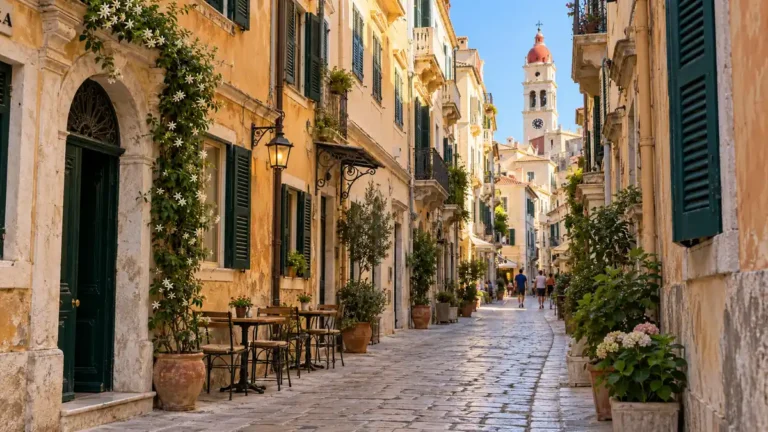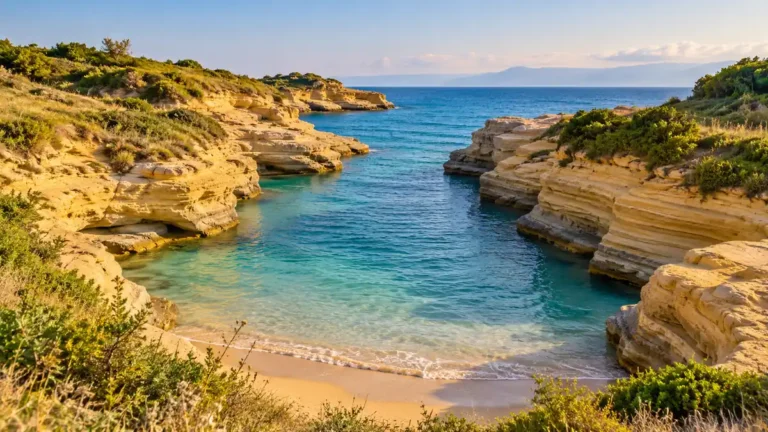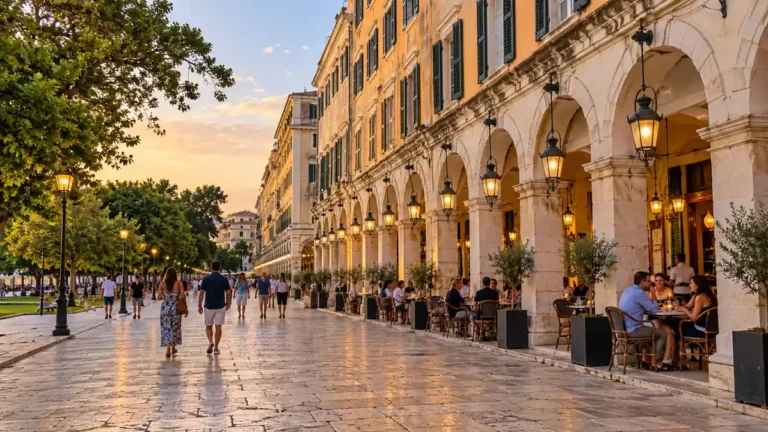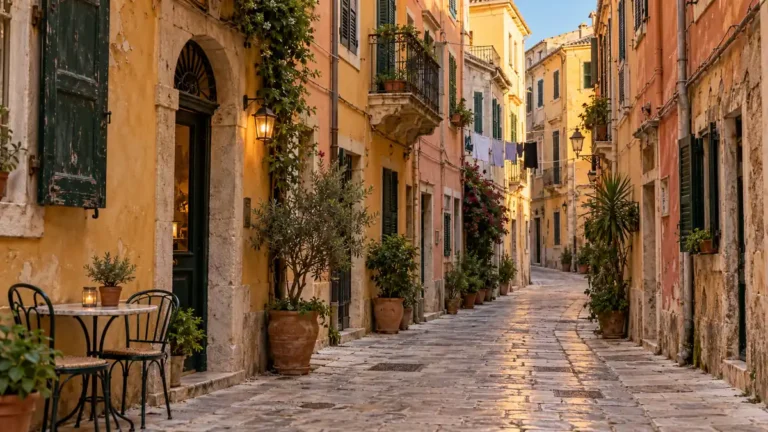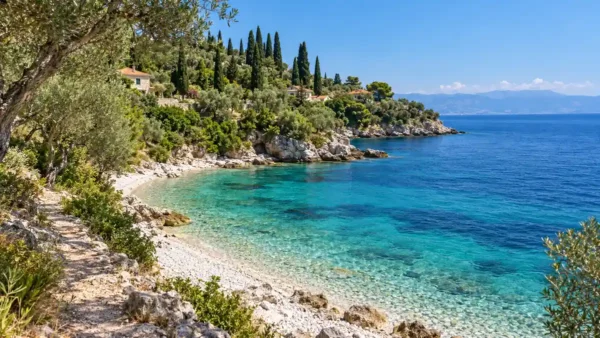
Paleokastritsa is Corfu’s most scenic base, and the right one for couples, walkers, snorkellers and slow beach days, provided you accept hills and steps, one long road, midday day-trippers and quiet nights. Car-free or step-averse travelers belong at the flat harbour end; drivers can take the hillside or Lakones; nightlife-seekers should base on the east coast.
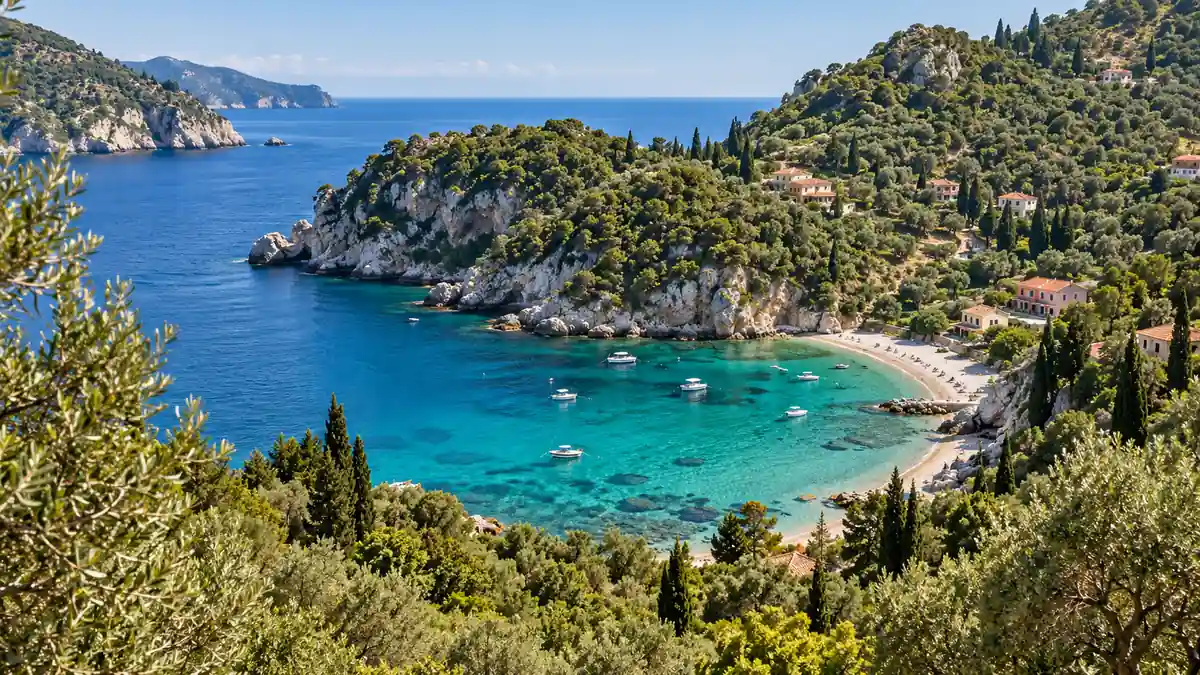
Paleokastritsa is probably already on your Corfu shortlist. The real question is whether to book a room there or see it on a day trip and sleep somewhere easier. It is the most photographed corner of the island: green headlands, a string of small bays and a monastery above clear water. It is also a base with real friction. The resort climbs steep hillsides, strings itself along one long road and fills with coach and boat day-trippers around the middle of the day.
This guide gives the verdict on who should stay, explains which of its four micro-areas to book, and answers the car-free question directly, bus included. If Paleokastritsa is not your fit, it says so early and points you to a better starting point.
Where to Stay in Paleokastritsa: The Four Micro-Areas
The harbour end suits car-free stays, Agia Triada–Alipa suits beach days, the hillside suits views, Lakones suits walkers. The road is the decision. How far along it you sleep sets your walk to the bus and the boats; how far above it you sleep sets the view and the number of steps.
| Micro-area | Vibe | Beach access | Car needed? | Best for |
|---|---|---|---|---|
| Harbour end (Agios Spyridon) | Busy by day, calm harbour evenings | Flat walk to Agios Spyridon beach | No, bus and boats on foot | Car-free stays avoiding steps |
| Agia Triada to Alipa | Beach-and-taverna days, crowds spread out | Beaches and Alipa boats on the doorstep | Not for beach days, useful for touring | Slow beach days with boat trips |
| Hillside above the bays | Quietest part, terrace-and-sunset evenings | Steps or a drive down | Yes, in practice for most stays | Couples who put the view first |
| Lakones | Hillside village life, sunset viewpoints | Drive, taxi or steep path down | Yes, for every beach day | Walkers and sunset-watchers with a car |
Agios Spyridon and the harbour end: the flat, car-free choice
The harbour end is the best micro-area for car-free stays and anyone avoiding steps. It is the flattest part of the resort, with the bus terminus, the harbour and the monastery road close together. You trade some quiet for that access.
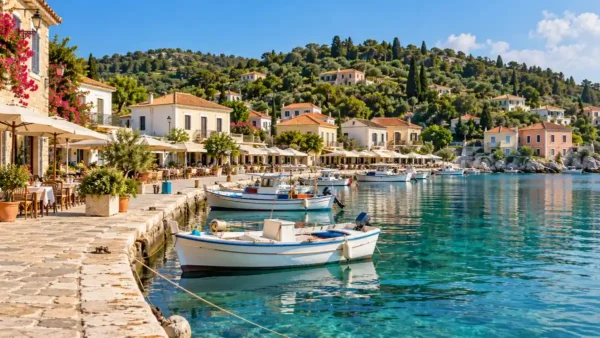
This is the busiest stretch by day. Day-trippers funnel into Agios Spyridon beach and the harbour around midday, and boat operators work the waterfront. Once the coaches leave, it turns back into a small, calm harbour with tavernas facing the water.
Everything a car-free stay needs is on foot: the A9 bus stop, boats to the other bays and the sea caves, and the path up to the monastery. Longer walks along the road reach the central bays.
Prices sit mostly in the mid-range, with fewer high-end view properties than the hillside and some simpler budget rooms.
Agia Triada to Alipa: beach-and-taverna rhythm
The Agia Triada to Alipa stretch is the best micro-area for slow beach days. Beaches, tavernas and the boat departures at Alipa share the same part of the road, so a full day needs no planning. It is calmer than the harbour end, though not flat everywhere.
Days here follow a simple loop: swim, lunch, boat, swim. The midday crowd still arrives, but it spreads across several bays. Evenings are quiet and centred on the tavernas by the water.
Boats to the sea caves and the other bays leave from Alipa, right on your doorstep. The harbour end and its bus stop are a walk along the road, and rooms set back from the water often involve steps.
Expect mid-range pricing, climbing toward high-end for rooms directly above the beaches, with few true budget options on this stretch.
The hillside above the bays: views first, legs or a car required
For the postcard view, nothing in the resort beats the hillside, though it is the wrong choice without a car or strong legs. Apartments and villas here look straight down over the bays and the monastery headland. Every trip to the water starts with steps or a drive.
It is the quietest part of the resort. Day-tripper noise stays on the road below, and evenings revolve around the terrace and the sunset. The catch is commitment: once you walk down for dinner, the climb back is part of the night.
Convenience depends on the car. With one, the bays, the harbour and the inland villages are easy; without one, a daily descent and climb on steep lanes becomes the price of the view.
This is where Paleokastritsa skews high-end, with view villas and upscale apartments; mid-range options sit further from the best angles. It suits couples with a car who choose the view over the walk.
Lakones: the village above, and how it compares with staying down in the resort
Lakones suits walkers and sunset-watchers better than the resort below, and beach-first travelers worse. It is a real hillside village above Paleokastritsa, with its own lanes, tavernas and viewpoints. Every swim means a drive, a taxi or a steep walk down.
Village life sets the tone. Local houses, a few tavernas and viewpoints over the bays shape the day, and the sunsets are the reason most people choose it. Nights are quieter than anywhere down in the resort.
Lakones is fully car or taxi dependent for beach days. The old donkey path down to the resort is steep and rough: a good walk down, a hard one back up. Dinner by the water means a drive.
Prices are kinder than in the resort, from budget rooms to mid-range village houses, with some high-end views on the village edge.
A sea-view listing in Paleokastritsa is almost always a hillside listing, so ask how many steps sit between the door and the road before you book.
Liapades, next door, is the fallback when Paleokastritsa is full or over budget. It is a quieter, separate village with its own bay and its own bus line, the A10, so it works as an alternative base instead of a fifth part of the resort. It suits travelers who want west-coast water at gentler prices and do not need the Paleokastritsa bays every day.
Hotels and places to stay
Compare hotels, apartments and stays for your dates in one search.
Search hotels and stays on hotels.com →
Tripstou may earn a commission if you book through this link, at no extra cost to you.
Which Paleokastritsa base suits couples, walkers or families?
Couples take the hillside, car-free travelers the harbour end, beach families the Agia Triada–Alipa stretch, walkers Lakones. Each fit follows from where a micro-area sits on the road and how far above it. Distance along the road decides the bus and boats; height above it decides the view and the steps.
- Couples: the hillside, for the view and quiet evenings, with a car for the daily run to the water.
- Walkers: Lakones, for the village lanes, the viewpoints and the old path down to the bays.
- Snorkellers and boat-trippers: Agia Triada to Alipa, where the boats leave and several bays are a short walk or hop away.
- Car-free travelers: the harbour end, the only flat base with the bus and the boats on foot.
- Families with older kids: Agia Triada to Alipa, close to beaches and boats; the deep, cool water and the steps make the resort harder with toddlers. For the island-wide picture, see Corfu’s best areas for families.
- First-timers: the harbour end or Agia Triada to Alipa, if scenery is the priority and limited touring without a car is acceptable. The island-wide answer is in our guide to where first-timers should stay in Corfu.
- Travelers with limited mobility: the harbour end only, after checking access to the room itself; otherwise a flatter resort elsewhere on the island.
- Nightlife-seekers: elsewhere, since the resort goes quiet after dinner.
No micro-area suits every type. Pick the one that matches your main reason for coming.
Some travelers should stay elsewhere. Anyone who wants bars after dinner, flat beaches with shallow water or easy touring across the island without a car will find the resort working against them. Our guide to where to stay in Corfu compares the east coast for nightlife and flat beaches with the other bases on the island.
What is Paleokastritsa like to stay in?
Paleokastritsa is a string of bays on one road of about 2.5 km, busy by day, quiet at night. The road runs from the resort entrance to the harbour and monastery end. Only the stretch near the main car park and Agios Spyridon is flat; almost everything behind the road climbs.
The daily rhythm follows the day-trippers. Coach and boat visitors peak around the middle of the day, when the main beaches and the monastery are at their fullest. Mornings and evenings belong to the people staying. That split is the core argument for sleeping here.
Evenings are dinner and sunset. Tavernas along the road and above the bays set the pace, and the resort has no club scene. Nights are quiet.
The water differs from the east coast. The west-coast bays here are deeper, noticeably cooler and very clear, which suits snorkellers and confident swimmers better than small children.
Timing changes the experience. The shoulder months are calmer and easier on the budget; July and August are the busiest and priciest weeks, when the main car park fills by late morning. For seasons across the whole island, the Corfu guide covers when to visit and how to plan the rest of the trip.
How hilly is Paleokastritsa?
Paleokastritsa is steep behind its one road. Most apartments and villas are reached by steps or a sloping lane, and some bays involve a climb back up. Only the harbour end near Agios Spyridon is flat. That rules out much of the resort for travelers with limited mobility, pushchairs or heavy luggage without a car.
- Flat: the harbour end, Agios Spyridon beach and the area around the main car park.
- Walkable but long: the road itself, which links the bays along its length.
- Steep: the hillside above the bays, the lanes to most apartments and the village of Lakones above.
Can you stay in Paleokastritsa without a car?
Yes, if you stay at the harbour end and treat Corfu Town as your one bus trip. Car-free days work well inside the resort: you walk between the bays and take boats from Alipa. The limit is height. The hillside and Lakones need a car or a taxi for daily life.
Paleokastritsa sits on Corfu’s north-west coast, about 25 km from Corfu Town. Three options cover that distance:
- Bus: the Green Bus (KTEL Kerkyras) line A9 runs Corfu – Paleokastritsa in about 50 minutes for €2.80, with tickets bought on board by card or cash. It suits harbour-end stays; the tradeoff is a timetable that is frequent in summer and thinner off-season, so check the KTEL timetable before building a day around it.
- Car: around half an hour to Corfu Town, and the freedom to tour the island. It suits hillside and Lakones stays; parking is the catch, since the main car park fills by late morning in summer.
- Taxi: door to door from any micro-area, the hillside included. Good for arrival days and the odd evening out, but the cost adds up quickly as a daily habit.
When booking a hillside or Lakones stay, confirm the room comes with parking, because you will be driving to the bays most days.
Rain can disrupt the bus. Some A9 departures are cancelled in rainy weather, so check the day’s timetable before relying on it for a fixed plan.
Arrival needs one extra step. The airport is on the far side of the island near Corfu Town, so reaching Paleokastritsa means a transfer or a change in town.
Every island trip by bus starts with the ride into Corfu Town, so a car-free stay here works best when the resort itself is the holiday.
What’s on the doorstep when you base in Paleokastritsa
From the harbour end, several bays, the monastery headland and sea-cave boats are all within walking distance. Staying puts all of it into the hours day-trippers miss. You swim before the coaches arrive and have the bays largely to yourself after they leave. That timing is the base’s real advantage.
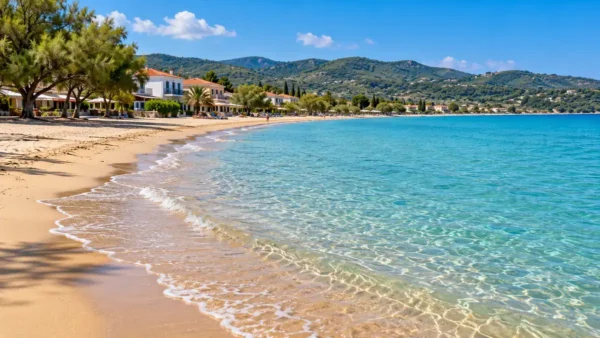
The bays come first. Several small coves sit along the road and can be reached on foot or by a short boat hop, so a stay can mean a different bay each day without a car.
Boat trips to the sea caves, including the Blue Eye, leave from Alipa and the harbour. Staying close lets you go early, ahead of the midday boat traffic.
The monastery of Panagia Paleokastritsa sits on the headland above the main beach. It was founded in the 13th century, and most of its buildings date from the 18th century. Entry is free, and modest dress is required. From a harbour-end base it is an easy uphill walk.
The Lakones path is the walk for the view. The old path climbs from the resort to the village above, and it is steep. Most people treat it as a morning outing with lunch at the top.
Tours and activities
Book skip-the-line tickets, day trips and local tours with free cancellation on most activities.
You can also browse everything on getyourguide.com.
Tripstou may earn a commission if you book through this link, at no extra cost to you.
Paleokastritsa is Corfu’s most scenic base, not its most practical
Paleokastritsa is the right base for couples, walkers and snorkellers who want scenery and quiet evenings over convenience. The reason is on the doorstep: small bays under green cliffs, the monastery headland and clear west-coast water. The limitation is equally local: steep hills, one long road, midday crowds and no nightlife.
Prices lean up. Sea-view rooms and apartments sit in the mid-range to high-end bracket, and the best views command the top of it. Lakones and neighbouring Liapades are kinder on price, at the cost of a drive or a climb to the main bays. Budget stays exist here, but they rarely come with the view.
Paleokastritsa rewards a stay more than a visit: the bays belong to guests before the coaches arrive and after they leave, which is exactly the part a day trip misses.
Notes Behind the Paleokastritsa Verdict
This page settles whether to base yourself in Paleokastritsa and which part of it to book, from the flat harbour end up to Lakones; it is not a guide to Corfu as a whole, a hotel roundup, an itinerary or a nightlife guide.
This Paleokastritsa base guide was written with AI assistance and read through by Alex Perrut, working in tourism since 2015, for the Tripstou editorial team; what that read-through involves is set out on our editorial process page.
Official sources consulted: Visit Greece, Greek Ministry of Tourism, KTEL Kerkyras.
Did this guide save you time or money? Tripstou is independent and reader-funded — if you'd like to give something back, you can support the site with a crypto contribution of any size.