Pick one coast, plan one area a day and time each Corfu day around the heat. Your base coast decides the car question: the west and north need one, Corfu Town and the near east coast work by bus. Pack water shoes, cover shoulders and knees for St Spyridon, and save the Old Town for evenings.
Most first-timers treat Corfu as a small island they can cross in an afternoon, and that is where plans start to slip. The roads are narrow and winding, so the island takes longer to cross than the map suggests. The two coasts are different places: sandy beaches and sunsets on the west, calmer pebble coves on the east. The public buses radiate from Corfu Town. They do not run resort to resort. This page is the island layer of practical habits for a first trip. It covers how the coast you sleep on decides whether you need a car, how heat and cruise-ship days shape when you do things, and what to wear, pack and book. Transport, costs, stays and day plans each have their own guides, so this one stays on the habits that save time on the ground.
Reviewer and Sources for These Corfu Habits
This page settles one Corfu question, how to handle the island on a first trip: which coast to base on, whether that means a car, and how heat, cruise days, beaches and churches shape the day. It is not a broad Corfu guide or an itinerary; fares, prices and stays have their own pages.
From the coast choice to church dress, the habits on this page were gone over by Alex Perrut, working in tourism since 2015, for the Tripstou editorial team; the wording itself was written with AI assistance, and the editorial process page explains how the two fit together.
Official sources consulted: Visit Greece, Greek Ministry of Tourism.
On This Page
What do first-timers get wrong about Corfu?
First-timers underestimate Corfu’s size and try to see both coasts from one base in one day. The island is slower to cross than it looks, the west and east coasts offer different beaches, and the buses connect resorts through Corfu Town, not directly to each other. Planning around those three facts fixes most early mistakes.
One area a day is the habit that keeps a Corfu trip relaxed. Pick a coast, a stretch of beaches or the Old Town, and let the day belong to it. Crossing the hilly middle of the island eats time on roads that twist through villages and olive groves. Add the return, and a two-beach day on opposite coasts turns into a day spent driving.
The bus network works like a star. Green Buses run out from Corfu Town to the resorts and back, so moving between two resorts usually means going through town. That shapes where you sleep as much as what you see. For the island’s overall layout and how its regions fit together, start with our Corfu guide.
A beach that looks close on the map across the island’s middle can mean riding into Corfu Town and back out again by bus. Check the route, not the distance.
Which side of Corfu is best for a first trip?
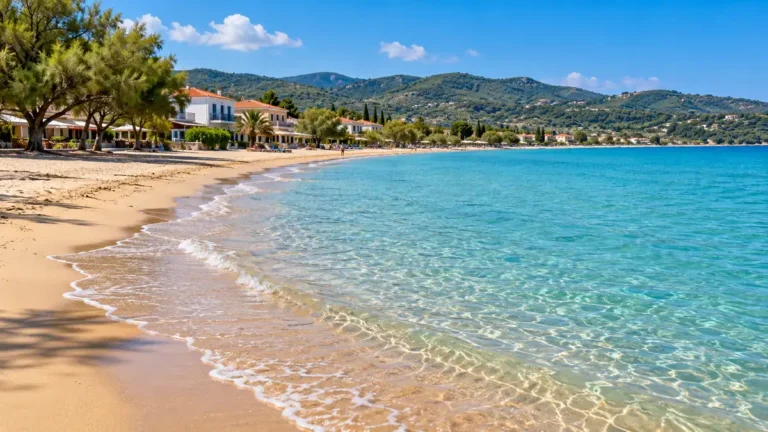
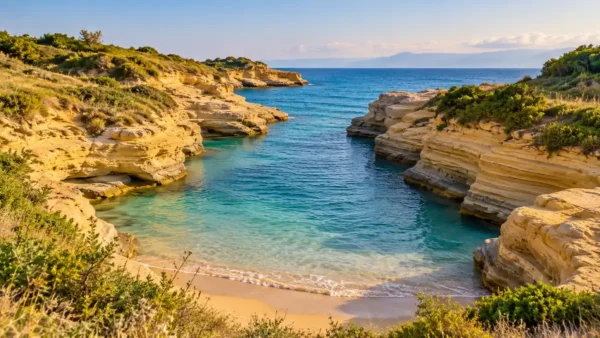
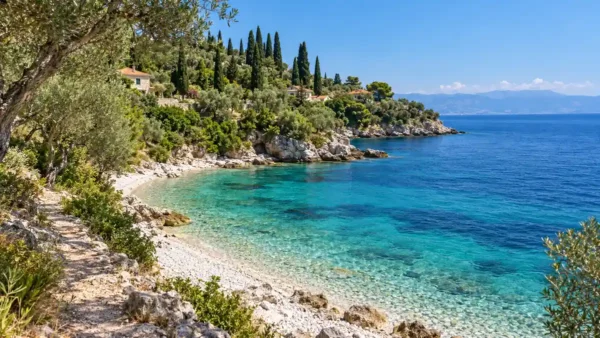
The west coast is the sandy, sunset side; the east and north-east are pebbly, calmer and closer to town. Pick the west for sandy beaches and evening light, the east for sheltered coves and easier bus links, and Corfu Town itself for a car-free base with the Old Town on your doorstep.
Each coast sets the terms for the rest of the trip. It fixes your beach type, whether you drive, and how easily you reach town for dinner.
| Base | Beaches | Car or bus | Suits |
|---|---|---|---|
| West coast | Sandy beaches with open sunset views | A car for most beach days and evenings | Travelers who put sand and sunsets before town life |
| Near east coast | Pebble and rocky coves, usually calmer water | Green Bus into town works from many resorts | Swimmers and families who want calm, sheltered water |
| Corfu Town | Town beaches are limited; coves reached by bus | Walk in town, take buses out to beaches | First-timers who want evenings and history without driving |
The coast you pick also picks your evenings. A west-coast base trades easy Liston nights for sunsets, because an evening in town means a drive back across the island in the dark. An east-coast or town base keeps the Old Town within reach after dinner. For the area-by-area choice of village and resort, see where to stay in Corfu.
Do you need a car in Corfu?
You need a car on the west and north coasts, not in Corfu Town or along the near east coast. Green Buses link town to the main resorts, and the town itself is walkable. A car earns its place when your base is remote or you want several beaches in one day.
Driving in Corfu is slow going. Roads are narrow and winding, many climb through hill villages, and parking near popular beaches fills in summer. Permit rules for driving in Greece vary with the country that issued your licence, so check them before you book a car or scooter. Fares, routes, car hire and driving rules all sit in the Corfu transport guide.
- Rental car: suits west and north coast bases and beach-hopping days; the tradeoff is slow roads and summer parking.
- Green Bus: works for town and near east coast bases, but routes run through Corfu Town and longer lines run few times a day.
- Walking plus Blue Bus: enough for a Corfu Town base, though beaches need a bus or a taxi.
Mixing works too. Some travelers stay in town for the first days car-free, then rent a car for a west-coast stretch.
Is the Green Bus in Corfu cash only?
No. Green Buses accept cards on board as well as cash, and e-tickets and an app also exist. The habit to build is keeping the two networks apart:
- Green Buses (KTEL Kerkyras): the island-wide network from Corfu Town to the resorts and villages.
- Blue Buses: the urban network around Corfu Town and its suburbs, run by a separate operator with separate tickets.
- Different stops: the two networks use different stops in town, so check which one your route leaves from.
- Last return: longer routes have few daily departures, so check the last bus back before you head out.
Is it worth renting a scooter in Corfu?
Only for confident riders making short hops near their base. Corfu’s roads are narrow, winding and hilly, so a scooter is a poor way to cross the island or carry beach gear. Licence and permit rules depend on where your licence was issued, so check them in the Corfu transport guide before you rent.
When is the best time to visit Corfu to avoid crowds?
Late May, June and September give warm sea and thinner crowds than July and August. High summer is the hottest and busiest stretch, with rooms, cars and beaches under the most pressure. In the Old Town, the cruise calendar shapes a given day more than the month does, so check the ship schedule too.
June and September suit different trips. June has the longest days, which stretches the late-evening rhythm the island runs on. September has had a whole summer to warm the sea. Both keep the beaches easier than peak weeks.
Off-season has a cost. Outside the summer months, bus departures thin out, and a trip that relies on the Green Bus needs more planning around the last return.
How do cruise-ship days change the Old Town?
Cruise-ship days bring crowds to the Old Town and its fortresses. On those days, walk the Old Town early or save it for the evening, and spend the middle of the day on the coast. Check the day’s cruise calls on the Corfu Port Authority schedule before you plan a town day.
Sights early, beach at midday, the Liston after dark
Corfu’s summer heat sets the timetable: sights before late morning, sea or shade at midday, town after dark. Walk the Old Town and fortresses while the air is cooler, swim or rest through the afternoon, then join the evening stroll on the Liston and eat late, as locals do.
Dinner runs later than most northern Europeans expect. Tavernas stay quiet in the early evening and fill once the heat breaks. Eating early suits families and gets you a table without a wait; eating late puts you among locals, when the Old Town lanes are at their liveliest. Lunch is often the long meal, taken in the shade.
Evenings belong to the Liston and the Old Town. The arcaded promenade fills with families and couples on the volta, the slow evening walk that is part of Greek town life. Arrive after sunset. Take a table, order a drink and watch the square come alive.
- Carry water: refill a bottle before every outing, and more on walking days.
- Use shade: plan the fortresses and uphill streets for the morning.
- Pace the first day: keep it short while you adjust to the heat.
For how to sequence sights and beaches across a short stay, see two days in Corfu for town plus one coast, or three days in Corfu to add the other side of the island.
Do you need water shoes in Corfu?
Yes, for most east-coast coves: they are pebble or rock, and water shoes turn a wince into a swim. They also help on rocky entries where sea urchins cling. On the sandy west they are optional, but shade and an early arrival are not, because sunbeds and natural cover fill fast in summer.
A small beach kit covers most Corfu days:
- Water shoes: for pebble coves, rocky entries and sea urchins.
- Shade: a sunbed and umbrella, or arrive early enough to claim natural shade.
- Snorkel gear: the rocky east-coast coves reward a mask more than the sandy west.
- Refillable water: small beaches may have no kiosk.
Swimming sense on Corfu comes down to reading the coast. The east is usually calmer. The west faces the open sea and can be wind-exposed on some days. Follow beach flags and lifeguards where they are present, and skip cliff jumping, including from the rock formations around Sidari.
The wind picks the beach. On a day when the west coast is choppy, the sheltered east is usually calm, so keep one beach on each side in mind before you set out.
What should you wear at St Spyridon and other Corfu churches?
Cover shoulders and knees to enter St Spyridon and any Orthodox church on Corfu. The rule applies to everyone, and inside, visitors keep their voices low and avoid photographing people at prayer. A light scarf or wrap in the beach bag solves it, so a church stop never needs a trip back to change.
Church visits fit the early Old Town slot. St Spyridon sits in the Old Town lanes, so it pairs well with a morning walk before the heat. A beach day that ends in town can include one too. Keep the wrap handy.
Worshippers come and go all day. Step aside for anyone lighting a candle or kissing an icon, and leave beachwear outside.
What should you book and sort before you arrive in Corfu?
Book summer rental cars, boat trips and rooms ahead, because they sell out first. In peak weeks, late bookers get what is left. Carry some cash for small tavernas, sunbeds and village kiosks, even though cards are widely accepted in Corfu Town. Sort your phone data before landing too.
- Rental car: book early for a west or north coast base in summer.
- Boat trips: reserve the popular coast and island trips ahead in peak weeks.
- Rooms: book the base first, since the car and bus plan follow from it.
- Cash: keep some for small places; use a card on the Green Bus and in town.
- Data: set up an eSIM for Greece before you fly.
The car is the booking everything else hangs on. On a west-coast base, a car booked too late can force you to rework the whole plan around buses that route through town.
Take out cash before heading to a remote beach or village. Tipping, card habits and everyday etiquette follow national norms, covered in our Greece travel tips. For budget figures on rooms, cars, meals and beach days, see what a Corfu trip costs.
Tours and activities
Book skip-the-line tickets, day trips and local tours with free cancellation on most activities.
You can also browse everything on getyourguide.com.
Tripstou may earn a commission if you book through this link, at no extra cost to you.
Tap Water and the Hop-On Bus
Can you drink the tap water in Corfu?
Most visitors drink bottled or filtered water, and your host is the one to ask about the local supply before you drink from the tap. Carry a refillable bottle and top it up from a large bottle or a filter jug, which matters most on long beach and walking days in the summer heat.
Is the hop-on hop-off bus in Corfu Town worth it?
Not as a default. Corfu Town’s Old Town is compact and best explored on foot, with the Liston, the fortresses and St Spyridon within walking distance of each other. Consider the bus only if walking in the heat is hard for you, or if you want a quick orientation loop before exploring on foot.
Did this guide save you time or money? Tripstou is independent and reader-funded — if you'd like to give something back, you can support the site with a crypto contribution of any size.