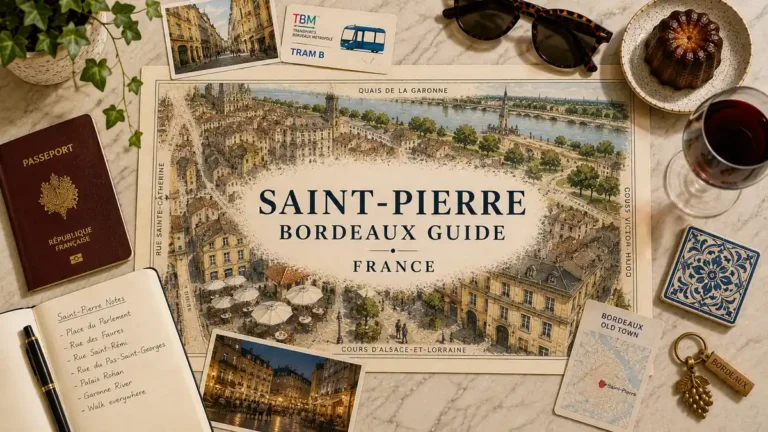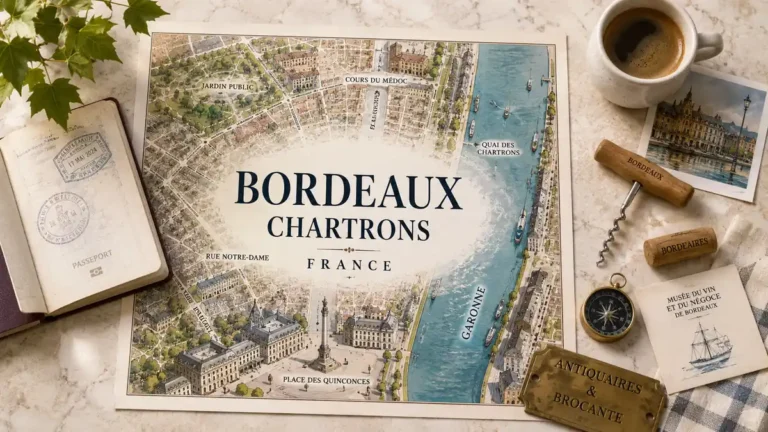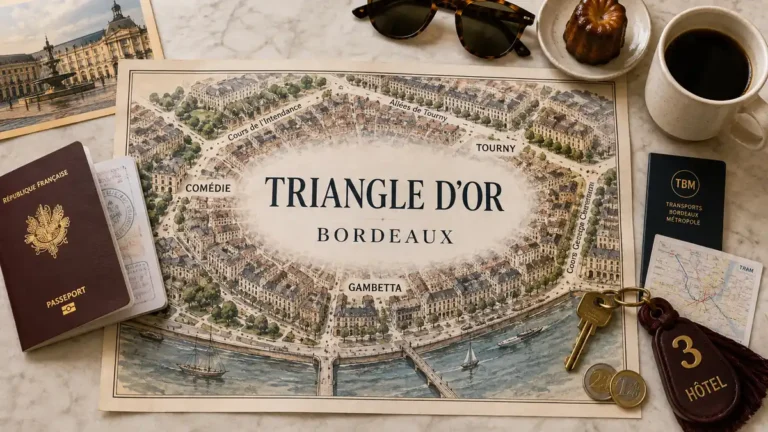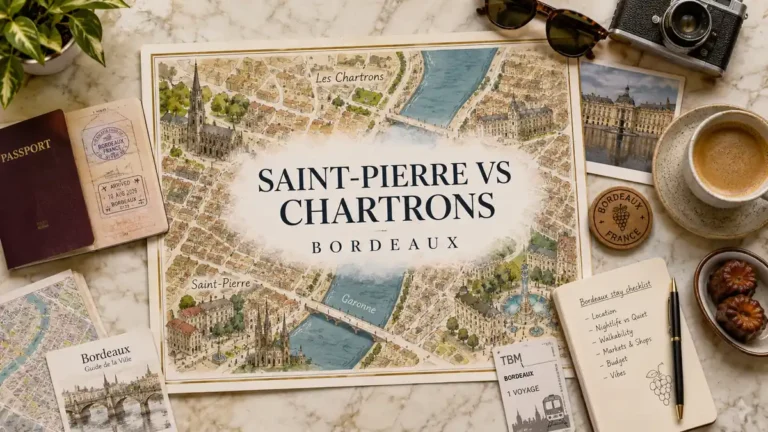
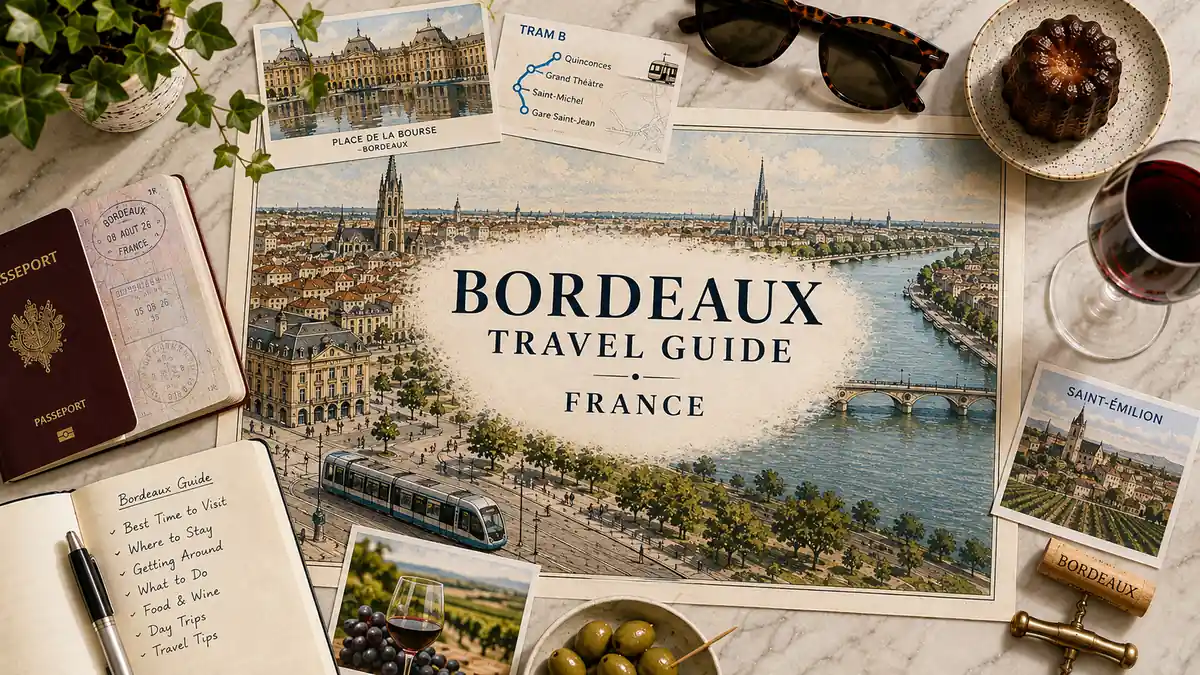
Most people know Bordeaux as a word on a bottle, which is exactly why the trip is hard to plan. You arrive at the research unsure whether this is a wine trip with a city attached or a city break with wine attached — and the pages that rank never say, because they are hotel roundups, restaurant lists or operator pitches with a commercial interest in a long stay. That question decides everything downstream: how many days you book, whether you need a car, what the trip costs, and whether it works at all if you do not drink. This guide answers it first, then works through the planning fan in the order the decisions actually arrive — what Bordeaux is best for, how many days it needs, whether the châteaux belong in your trip, when to go, where to base yourself, how the city is laid out, what it costs, and who it suits. Two things do most of the work here: the golden-stone centre, and the arithmetic of the château day.
Quick Answer
Bordeaux is a compact golden-stone city break at the door of famous wine country. Trip length hinges on whether a vineyard day belongs in the trip: around three days covers the city plus one day out, two works as a pure city weekend. Base in the walkable historic centre; the city needs no car.
Trust Layer
Tripstou city guide for travelers planning a city trip. Covers trip length, stay style, season, cost, and mobility tradeoffs.
Produced with AI assistance and reviewed by Alex Perrut, working in tourism since 2015, for the Tripstou editorial team. See our editorial process for details.
Last factual review: August 8, 2026.
Official sources consulted: France.fr, Atout France.
Key Takeaways
- Bordeaux is a city break first and a wine trip second — the vineyards are an optional extension, not the reason to come.
- Book three days for the city plus one day out; two is enough if you skip the wine country entirely.
- A château day costs you a full day in the centre, so settle that question before you fix the trip length.
- Late spring and early autumn win, and harvest gives September an atmosphere no other French city can offer.
- Base yourself in the walkable historic centre and skip the rental car — walking plus the tram covers the city.
- If you do not drink wine, Bordeaux still works: the architecture, markets and food carry the whole trip.
Table of Contents
Is Bordeaux Worth Visiting?
Yes — Bordeaux is worth visiting as a city break in its own right, not just a wine label. The golden-stone centre is a UNESCO-listed 18th-century ensemble you can cross on foot, with a serious eating culture and a river front. The wine country is an optional extension, not the point.
The centre is the attraction before any individual sight is. Bordeaux is inscribed on the UNESCO World Heritage List as “Bordeaux, Port of the Moon” — the name comes from the crescent the Garonne draws around the old port — and the listing covers a living, inhabited city, not a monument behind a fence. Bordeaux holds more protected buildings than any French city except Paris, which is why the streetscape reads as one continuous piece instead of a scatter of monuments.
That changes what a day here feels like. You are not queueing between set pieces; you are walking a continuous streetscape of pale stone façades, arcaded squares and a wide riverside promenade along the curve of the water. The eating is the other half of the appeal — market culture, oyster counters, canelés, and a wine list culture that filters down to ordinary neighbourhood tables. Which sights actually deserve your limited hours, including the wine museum, is a separate question answered in our guide to things to do in Bordeaux.
Bordeaux rewards travelers who like walking, eating and looking at buildings more than ticking off landmarks. It also works as one stop inside a longer French trip, and country-level context — regions, seasons and entry requirements — sits in our France travel guide.
The wine reputation does Bordeaux a quiet disservice: people book it for the vineyards and come home talking about the streets.
How Many Days You Need in Bordeaux
Three days is the standard floor for a first visit to Bordeaux, and four to five is the comfortable band. Two days works if you treat it as a pure city weekend. The city core is genuinely small; what stretches the trip is the day spent out in the wine country.
The first day buys the shape of the city: the riverfront squares, the old-town lanes, the grand 18th-century quarter and one long dinner. The second day fills in the gaps — a museum, the market, the promenade, the streets you walked past. From there the honest answer is that the extra day is usually better spent outside the city than inside it. A fifth day starts buying a second day out, to the coast or deeper into the countryside, and a slower rhythm in between.
Longer recommendations circulate widely. For the city alone, they are generous.
| Trip length | What it realistically buys | Who it suits | Does a wine-country day fit? |
|---|---|---|---|
| Two days | The historic centre, the riverfront and one long dinner | Weekenders treating Bordeaux as a pure city break | No — the city fills both days |
| Three days | The centre unhurried, plus one full day outside the city | First-timers who want the wine country included | Yes — this is the standard shape |
| Four days | City, a vineyard day, and a slower neighbourhood day | Travelers who dislike a packed schedule | Yes, with recovery time on either side |
| Five days or more | A second day out, to the coast or the countryside | Repeat visitors and slow travelers with time | Yes, and a second day out fits |
If you have already settled on the short end, the sequencing is where the value is: our 2-day Bordeaux itinerary builds the pure city weekend, and the 3-day Bordeaux itinerary adds the day outside without wrecking the pace of the other two.
Bordeaux is one of the few cities where the fourth day is better spent leaving it.
Fitting Bordeaux Into a Wider France Trip
Bordeaux needs less time as a stop than as a destination — two nights is a workable slot inside a wider French route. It sits in the south-west, so it pairs naturally with the Atlantic coast, the Dordogne countryside and the Basque south, and awkwardly with anything in the east. A direct high-speed connection links Paris and Bordeaux, which is why it slots so easily into rail-based trips.
How Bordeaux fits depends on the trip shape you are building. Our France itinerary guide covers how to sequence cities and regions across a whole trip; the France by train itinerary handles rail-first routing and connection logic; and if you would prefer to drive between stops, the France road trip guide covers the routes where a car earns its keep.
Do You Have to Leave Bordeaux to Visit the Châteaux?
Yes — the famous châteaux sit outside the city, and a proper visit costs a full day of city time. That trade is the whole decision: a vineyard day means one less day in the centre. The compensation is that Bordeaux’s wine culture is also meetable inside town, which is why the answer is genuinely optional.
The decision comes down to what you want the memory to be. A day at the estates buys landscape, cellars, scale and the sense of standing inside the thing the city is named for; it costs you a day of walking, eating and drifting in a centre that is the reason most people enjoy Bordeaux at all. Neither choice is wrong. What does go wrong is booking three days, assuming both fit, and discovering the city on the way to the airport.
A rough map helps the region read straight. The wine country falls into two loose halves — the villages east of the city, on the far side of the Dordogne, and the great estates strung north-west along the Gironde estuary. The eastern villages are under an hour’s drive from the centre; the estuary estates are a longer, flatter run. Visits generally need arranging in advance, and what is open to visitors varies through the year. The full substance — the Bordeaux wine region, from Saint-Émilion and the Médoc to Arcachon and the dune — belongs to the region guide, and if you are still deciding which French wine area deserves your time at all, our guide to choosing a French wine region compares them.
The wine country is not the only day out. The Atlantic coast is close enough to reach and return the same day, which makes it a genuine competitor for those hours, and our guide to the best beaches in France covers the Atlantic stretch.
The estate day is worth it for the landscape and the cellars, not for the tasting itself — you can taste more widely, more cheaply and without a designated driver inside the city.
Can You Do Wine Tasting in Bordeaux Itself?
Yes — you can meet Bordeaux wine seriously without leaving the city. Three categories do it: the big riverside wine cultural centre and museum, the wine bars scattered through the old streets where tasting by the glass is normal, and the old wine-merchant quarter north of the centre along the river, where the trade was run from and where the cellars and shops still are. None of that requires a car, a booking chain or a full day.
This also answers the question people are often embarrassed to ask. Bordeaux is worth visiting if you do not drink wine at all — the architecture, the pedestrian centre, the river, the markets and the food carry the trip on their own. The wine is an available dimension here, not an entry requirement.
Tours and activities
Book skip-the-line tickets, day trips and local tours with free cancellation on most activities.
You can also browse everything on getyourguide.com.
Tripstou may earn a commission if you book through this link, at no extra cost to you.
When to Visit Bordeaux — and Why Early Autumn Is Different
Late spring and the stretch from September into early October are the best times to visit Bordeaux. Both deliver warm-but-workable weather without the July and August crush. Early autumn carries an extra argument no other French city can make: the harvest is happening in the countryside all around you.
That harvest window is the genuinely Bordeaux-specific season answer. The city fills with the smell and talk of it, the countryside is at its most alive, and the light is at its best for the drive out. It is also the moment the estates are working hardest, so what visitors can see and do at them shifts — worth knowing before you build the trip around it.
Summer is the season that costs you something. Heat sits heavily in the stone centre through the afternoon, the crowds are at their peak, and the calendar is dense with festivals and events — good energy if that is what you came for, a queue if it is not. Winter goes the other way: quiet streets, short grey days, and rooms materially cheaper outside the warm months. It is also the season where Bordeaux has an unusually strong indoor argument, because tasting a heavy red in a low-lit cellar bar is better in December than in July.
| Season | Crowds | Weather character | Price direction | Main trade-off |
|---|---|---|---|---|
| Late spring | Busy but rarely uncomfortable | Mild days, long evenings, terraces open | Rising towards the summer peak | Everything works, nothing is cheap |
| Summer | Peak, and visibly so | Hot, heavy afternoons in the centre | Highest of the year | Festival energy against heat and queues |
| Early autumn | Thinning after the summer exodus | Warm days, cooler nights, clear light | Easing back from the peak | Harvest atmosphere, but estates are working |
| Winter | Lightest crowds of the year | Cool, often grey and wet | Materially cheaper outside the warm months | Cosy indoor tasting, very short daylight |
Bordeaux’s seasonality is milder than the national picture suggests, because the south-west stays gentler at both ends of the year; our guide to the best time to visit France sets the country-wide pattern if Bordeaux is one stop among several.
Harvest is the one moment the wine country is at its most alive and its least available — the estates are at work, and that cuts both ways.
Where to Stay in Bordeaux: Choosing Your Base by Style
The walkable historic centre is the default base for a first visit to Bordeaux. Everything you came for sits within walking distance of it, which is the whole point of a city this compact. The real trade is atmosphere: old-town buzz, a calmer riverside address, or the polished central shopping and dining district.
Start with the resolver. Our guide to where to stay in Bordeaux takes the choice down to quarter level, with the specific streets, the noise reality and the walk times each area actually delivers. What follows here is the style logic that sits above that decision.
The old-town core buys immediacy — you step out into narrow lanes, bars and restaurants, and you never plan an evening around getting home. It costs you quiet. The riverside and the calmer streets just off the centre buy space, light and a proper night’s sleep, at the price of a short walk back to dinner. The elegant central district around the theatre and the main shopping streets buys polish, better hotel stock and easy tram access, and gives up a little of the lived-in texture that makes the old lanes fun. All three are walkable to each other. That is the reassuring part.
By traveler type:
- First trip — the historic core, because orientation is free when everything is a walk away. Details in where to stay in Bordeaux for a first visit.
- Budget — the streets just outside the tourist core, close to a tram line, where the same walk costs less. See budget places to stay in Bordeaux.
- Couples — quieter old-town side streets or the riverside, for atmosphere without the late-night noise. See where to stay in Bordeaux for couples.
- Families — calmer residential streets near the river, where apartments are bigger and evenings are quieter. See family-friendly places to stay in Bordeaux.
- Nightlife — the old-town bar streets, where the walk home is barely a walk. See where to stay in Bordeaux for nightlife.
- Luxury — the elegant central district and the best of the riverside stock. See luxury places to stay in Bordeaux.
Bordeaux is unusually strong on small design-led hotels inside restored 18th-century buildings, which is a style choice as much as a budget one; our guide to boutique hotels in Bordeaux covers that end.
The base decision is lower-stakes in Bordeaux than in most cities, because the core is small enough that a wrong choice costs you a walk, not a day.
Hotels and places to stay
Compare hotels, apartments and stays for your dates in one search.
Search hotels and stays on hotels.com →
Tripstou may earn a commission if you book through this link, at no extra cost to you.
How Bordeaux Is Laid Out — and How to Get Around
Bordeaux’s golden-stone centre curls along the west side of the Garonne, inside the river’s crescent bend. That crescent is what gave the historic port its name — the Port of the Moon — and almost everything a first visit wants sits inside it. Walk the core, tram the gaps; no car is needed.
The sights cluster tightly enough that days stop zig-zagging once you see the pattern. The quays and grand riverside squares run along the water; the old-town lanes, the cathedral and the market streets sit just inland behind them; and the wider 18th-century quarter of theatre, esplanade and shopping streets spreads north and west of that. Those three bands touch each other. Planning a day means picking a band, not plotting a route across the city.
Walkability is not a marketing claim here — the largest pedestrian area in France runs through the centre, and the core is small enough to cross on foot without planning to. Across the river, on the east side, a regenerating district of workshops, warehouses and open-air spaces has become a half-day curiosity for travelers with time, reached over the bridges or by tram.
The tram is what covers the rest. Four lines run through the city and the tourist office describes the network as the most extensive in France outside the Paris region, backed up by buses, river shuttles and a public bike scheme. Tickets, passes and how validation works are a decision of their own, covered in our guide to trams, tickets and getting around Bordeaux. Arrival is the other mechanical question, and the options between the airport and the centre are laid out in our guide to getting from Bordeaux airport into the city.
One caveat sits underneath the no-car answer: the wine country is the part of the trip where transport stops being trivial, since the estates are spread across countryside the tram does not reach. That is a one-day problem with several solutions, not a reason to keep a car parked in the centre for a week.
The mistake worth avoiding in Bordeaux is renting a car for the whole trip when only one day of it leaves the city.
How Much a Bordeaux Trip Costs
A Bordeaux trip costs less than the same trip in Paris, but Bordeaux is not a budget city. Accommodation and restaurants price like a prosperous mid-sized European city with a strong food scene. The variable that moves your total most is how many days you spend out in the wine country.
How that plays out by spend style:
- Budget — a hostel bed or a simple apartment a tram stop outside the core, market lunches and bakery breakfasts, walking almost everywhere. Bordeaux is kind to this style, because the centre itself is free to enjoy and the pedestrian area is the main attraction. A vineyard day is where the budget breaks, so lean on the in-city wine alternative instead.
- Mid-range — a central hotel or apartment, one proper restaurant meal a day, wine by the glass in the evening, tram for the gaps. This is where the city sits most naturally, and where one wine-country day fits without redesigning the trip.
- High-end — a design hotel in the centre or a riverside address, tasting menus, and an arranged day at the estates with a driver. This is the tier where the wine country genuinely changes the total, because the estate day can outweigh the city day around it.
Numbers belong on the pages that maintain them. Real daily figures for the city are in our Bordeaux trip cost guide, and if you are budgeting a longer route through the country, our France travel budget guide sets the national baseline.
Wine is the one line where the cheaper-than-Paris rule stops holding: a day at the estates can cost more than everything else you do that day combined.
Who Bordeaux Suits — and Who Will Find It Small
Bordeaux suits travelers who want a handsome, walkable, food-led short break with wine available on the side. It disappoints anyone chasing big-city density or a long checklist of famous sights, because that checklist does not exist here. It reads best as a second or third French city, not a first.
The non-drinker question is worth repeating, because it stops people from booking: Bordeaux stands up entirely without the wine. Architecture, river, markets, pedestrian centre and food carry it. What Bordeaux will not do is impress you with quantity — the list of things you must see is short, and travelers who measure a city by how much is left undone often leave underwhelmed.
On safety, Bordeaux is a normal, comfortable French city for visitors, and nothing about a first trip here needs a special approach. The fuller picture, and how the city reads to different travelers, is in our Bordeaux safety guide; the tricks that turn up across the country are catalogued in our guide to common scams in France; and if you are travelling alone, our guide to solo female travel in France covers the practical context.
Set your expectations on the eating rhythm too. Lunch and dinner run on French hours, kitchens close between services, and the gap between them catches out anyone used to eating whenever — a pattern our French food guide explains in full. The smaller local habits that make a first visit smoother, from greetings to market timing, sit in our Bordeaux travel tips.
Bordeaux rewards the travelers who arrive with an appetite instead of an itinerary.
Frequently Asked Questions
Is a weekend enough in Bordeaux?
A weekend is enough for the city itself but not for the wine country. Two days covers the golden-stone centre, the riverfront and a proper dinner without rushing. Adding a vineyard day to a weekend means giving up roughly half the city, which is the trade most first-timers regret.
Do you need a car in Bordeaux?
No car is needed in Bordeaux, and one is a liability inside the centre. Walking plus the tram covers everything a first visit wants, and the pedestrianised core makes driving awkward anyway. If you arrive mid-road-trip, park on the edge and leave the car there until you head out to the vineyards.
Is Bordeaux worth visiting in winter?
Yes, if you are coming for the city and not the countryside. Winter strips out the crowds and the heat, and rooms are materially cheaper than in the warm months. The real cost is daylight: short grey days shrink your walking hours and push the trip indoors, towards museums and cellar bars.
Is Bordeaux good during the wine harvest?
Harvest suits travelers who want atmosphere more than access. Timing a trip to it is imprecise, because the window moves with the growing season and is not fixed to a calendar date. Plan for early autumn broadly and treat the harvest as a bonus, not something to book a trip around.
Is Bordeaux safe for tourists at night?
Bordeaux is a comfortable city to walk at night, including in the centre after dinner. The historic streets stay busy late, and ordinary city awareness — bags closed on crowded trams, phones away on the bar streets — covers it. Nothing here calls for a different routine than any comparable European city.
Do you need to book restaurants in advance in Bordeaux?
For dinner in the centre, yes — especially at weekends and through the warm months. Bordeaux eats out seriously for its size, and the good rooms are small. Weekday lunches and market counters are usually fine as a walk-in. Book a few days ahead for anything you have set your heart on.
Is Bordeaux better than Paris for a short trip?
Neither is better — they are different trip shapes. Paris gives you a long list of famous sights and the pressure of choosing between them. Bordeaux gives you one handsome centre you can finish, with a wine region at the door. Pick Bordeaux when you want a short trip that feels unhurried.
Related Guides
Bordeaux rarely travels alone. These guides place it inside a wider French trip and cover the practical setup around it.
- 7-day France itinerary — where a short French trip can realistically include Bordeaux.
- 10-day France itinerary — the length at which the south-west stops feeling like a detour.
- 14-day France itinerary — room for Bordeaux, the wine country and the Atlantic coast together.
- Best places to visit in France — where Bordeaux ranks among French destinations.
- France packing list — what to bring for a trip that mixes city walking and countryside days.
Did this guide save you time or money? Tripstou is independent and reader-funded — if you'd like to give something back, you can support the site with a crypto contribution of any size.