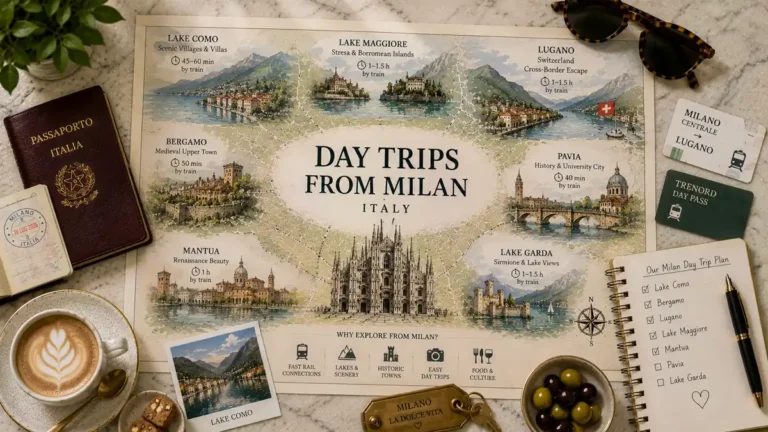
Milan surprises first-time visitors, and not always in the way they expect. Travelers arrive picturing terracotta rooftops and lingering three-hour lunches, then find a fast, fashion-driven business city that runs on its own rhythm. That gap is exactly why a little preparation pays off here more than in Rome or Venice. Milan does things its own way—from how coffee is ordered to how people dress on an ordinary Tuesday—and knowing the local codes turns a confusing first day into a smooth one. This guide gathers the practical tips that matter before you go: the etiquette that keeps you from looking like a tourist, the expectations to reset, the mistakes first-timers repeatedly make, and the one booking you cannot leave to chance. Read it as a scannable checklist: each section answers one common question and points you to the right place for deeper planning.
Quick Answer
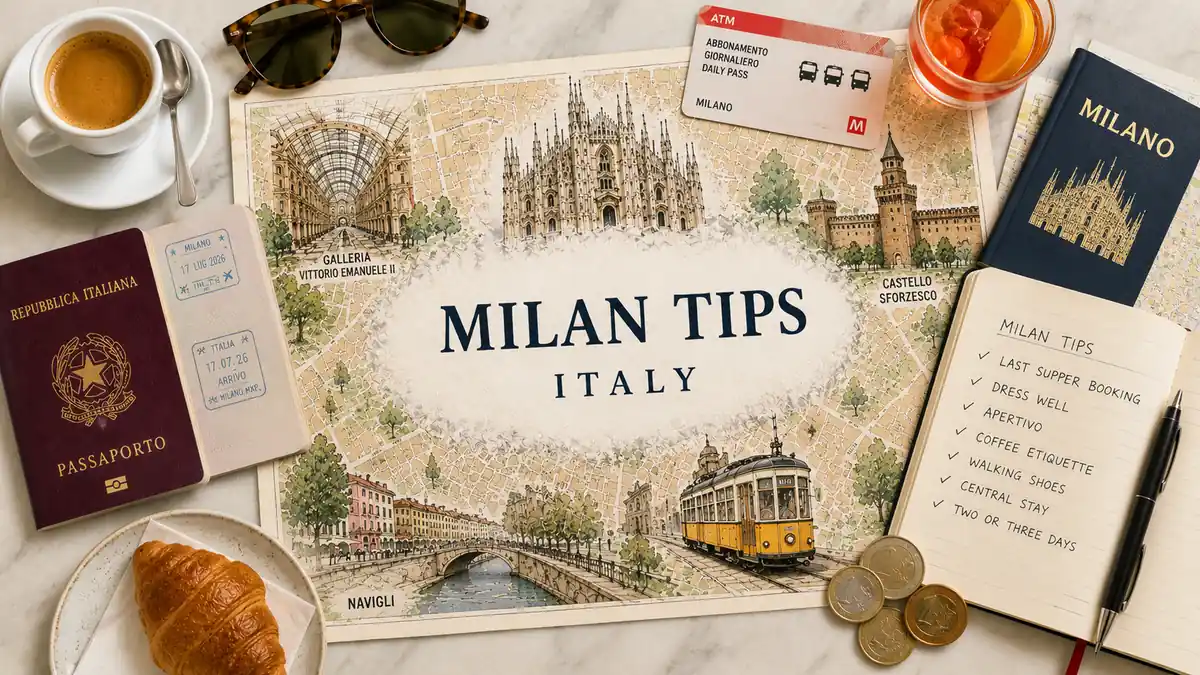
Milan is a modern, fashion-driven working city, not the postcard Italy of Rome or Florence. Set that expectation and the essentials fall into place: tipping isn’t expected, coffee and aperitivo follow local rhythms, and dressing a notch smarter helps you blend in. Book the Last Supper far ahead, stay central, and plan two or three days.
Trust Layer
Tripstou planning guide for travelers resolving one travel decision. Covers the main variable, traveler context, and practical tradeoffs.
Produced with AI assistance and reviewed by Alex Perrut, working in tourism since 2015, for the Tripstou editorial team. See our editorial process for details.
Last factual review: July 17, 2026.
Official sources consulted: italia.it, enit.it.
Key Takeaways
- Milan is a modern, fashion-driven working city; expect design and aperitivo, not the postcard “classic Italy” of Rome or Florence.
- Tipping isn’t expected—round up a euro or two for good service, but skip the North American percentages entirely.
- Order cappuccino only in the morning, drink espresso standing at the bar, and treat aperitivo as an unhurried pre-dinner ritual.
- Dress a notch smarter than elsewhere in Italy, since looking put-together matters more here than expensive labels.
- Avoid the costly first-timer traps: eating on the Duomo square, basing yourself too far out, and skipping the Last Supper booking.
- Book the Last Supper well ahead and plan two or three days, staying central to keep Milan compact and walkable.
Table of Contents
What is Milan really like for first-time visitors?
Milan is a modern, fashion- and business-driven city that does things its own way. It is Italy’s financial and design capital, not the postcard “classic Italy” of Rome or Florence. Expect sleek boutiques, aperitivo bars, and working professionals over sprawling ancient ruins. Reset that expectation early and the city clicks.
The disappointment some visitors report usually comes from the wrong yardstick. Judged against Florence’s Renaissance density, Milan’s centre can feel small and businesslike—the Duomo, the Galleria, and a handful of blockbuster sights sit close together, and the rest of the city reveals itself slowly. Judged on its own terms—design, food, football, and nightlife—it is one of Italy’s most rewarding cities.
Its real character lives in daily habits: the evening aperitivo, the design showrooms, the quiet emphasis on looking put-together. Milan rewards travelers who treat it as a living working city rather than an open-air museum—the best moments here are an unhurried aperitivo or a canal-side evening, not a rushed lap of the monuments.
If you want the full orientation—neighbourhoods, sights, and how the pieces fit together—start with our Milan travel guide. This page stays focused on the practical know-before-you-go layer.
Do you tip in Milan?
No, tipping is not expected in Milan, and locals rarely do it. Restaurants often include service, or add a small cover charge (coperto) for the table and bread, so the price on the menu is close to what you pay. Round up for genuinely good service if you like—nothing more is required.
A few habits keep you on the right side of local custom:
- Leave coins, not percentages. If you round up at all, dropping a euro or two on the table is plenty—the fixed North American percentage simply isn’t the norm here.
- Expect a coperto. That small per-person charge covers the table setting and bread; it is standard, and it is not a tip substitute you can decline.
- Don’t tip at the coffee bar. An espresso taken standing is a quick transaction, not a service you gratuity.
- Taxis and hotels are the same story. Round the fare up if it is convenient, but there is no obligation.
The one thing to skip is reaching for a tipping calculator. Exact expected percentages don’t really exist here, so treat any figure you see online as a loose ceiling, not a rule.
Milan etiquette and dining customs for tourists
A handful of dining and coffee customs separate visitors who blend in from those who read as tourists. Cappuccino is a morning-only drink, espresso is taken standing at the bar, and greetings matter. Learn the aperitivo rhythm and a few coffee-bar habits and daily life in Milan gets much smoother.
The customs worth knowing are few and easy:
- Coffee has rules. Cappuccino and other milky coffees are a breakfast thing; ordering one after lunch marks you instantly. Espresso is standard the rest of the day.
- Standing costs less than sitting. Bars frequently charge more for table service, so paying at the counter and drinking there is both normal and cheaper.
- Greet people. A simple “buongiorno” entering a shop or “buonasera” in the evening is expected courtesy.
- Meals run late. Dinner rarely starts before 8pm, and kitchens can open even later.
Many of these apply across the country, not only Milan. For the wider set of national customs—regional dining habits, church dress, and general courtesies—see our Italy travel tips. Here we stay on what specifically trips up first-timers in Milan.
What is aperitivo and how does it work in Milan?
Aperitivo is Milan’s early-evening ritual of a drink served with snacks before dinner, and the city is its spiritual home. You order a drink—a Negroni, an Aperol spritz, or a glass of wine—and the bar brings olives, chips, or a small buffet at no extra cost. It runs roughly from 6 to 8pm.
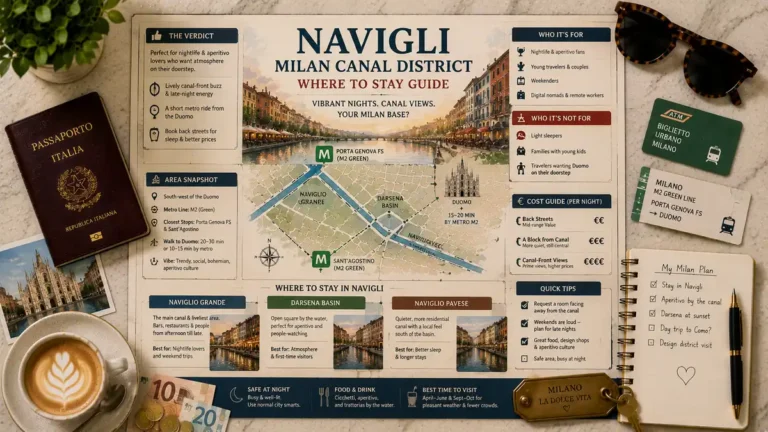
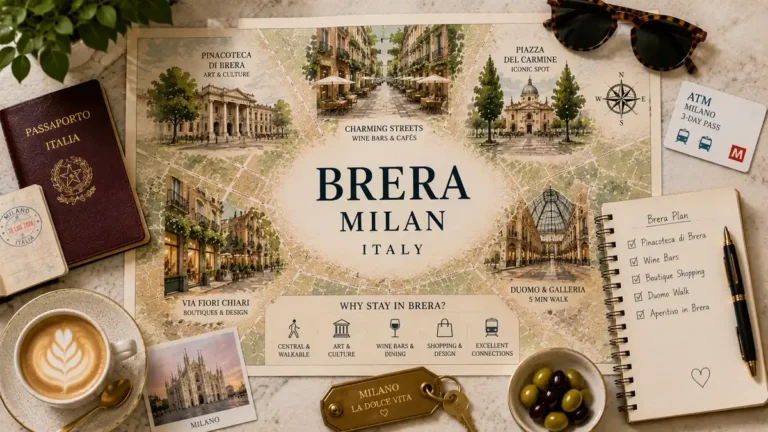
Treat it as a warm-up, not dinner. In some bars the spread is generous enough to fill you up, but locals use it to bridge the gap before a late meal. Pick a bar in the Navigli canal district or Brera for the classic version, arrive around 6:30pm, and settle in—aperitivo is meant to be unhurried.
How should you dress in Milan?
Dress a notch smarter than you would elsewhere in Italy. Milan is the country’s fashion capital, and locals lean toward polished, put-together outfits even for everyday errands. Smart-casual works almost everywhere—neat trousers, a shirt or blouse, clean shoes. You don’t need designer labels, but visibly touristy athleisure stands out here more than in most cities.
What this looks like in practice:
- Everyday. Smart-casual covers sightseeing, restaurants, and bars. Dark jeans in good condition are fine; gym gear and flip-flops away from the pool are not.
- Dining out. Mid-range and upscale restaurants expect you to look tidy. Most have no formal dress code, but effort is noticed.
- Churches. The Duomo and other churches enforce covered shoulders and knees, so pack a light layer in summer.
- Shoes. The centre is walkable and often cobbled, so comfortable-but-presentable shoes beat bright white trainers or heels.
The practical win isn’t buying a new wardrobe—it’s packing fewer, better pieces you can layer, because Milan reads how put-together you look far more than how expensive the clothes are.
Common mistakes first-timers make in Milan
The costliest first-timer mistake is treating the Duomo square as the place to eat and drink. Prices there are inflated and the food is forgettable. Beyond that, travelers base themselves too far out, skip booking the Last Supper, and write Milan off after a rushed half-day. Small planning fixes prevent all of them.
The mistakes that trip up first-timers, and how to sidestep them:
- Eating on the Duomo square. Walk two or three streets away and quality jumps while prices drop. The cafés with the best view charge you for it.
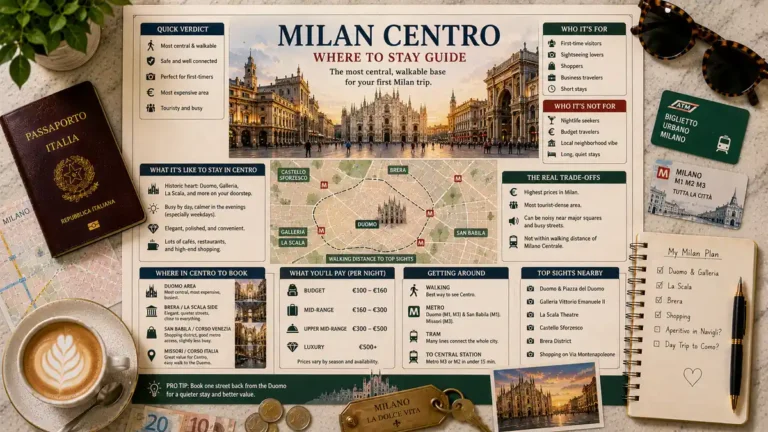
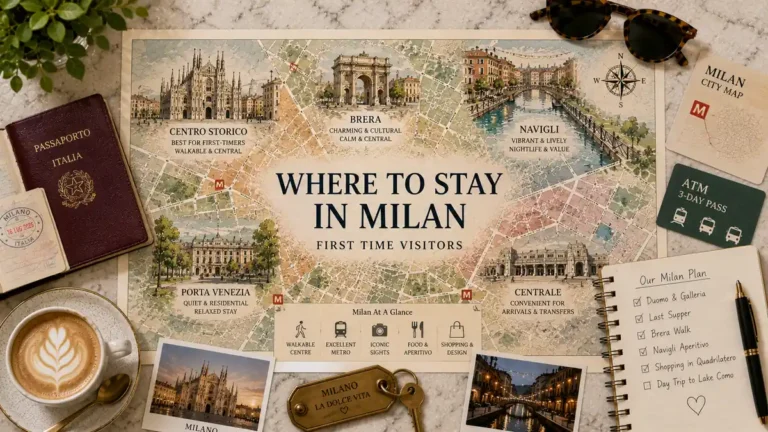
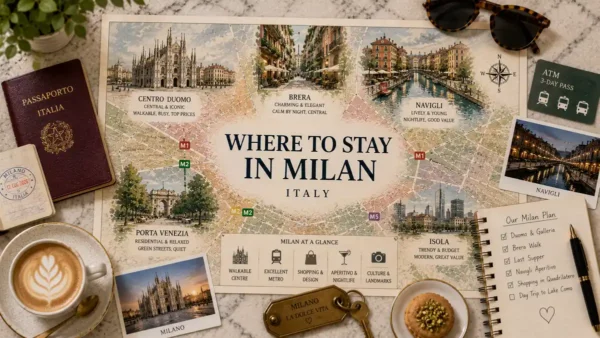
- Basing yourself too far out. Milan is compact, and staying central saves you time and transit hassle; our guide to where to stay in Milan breaks down the areas.
- Skipping the Last Supper booking. It requires an advance reservation and regularly sells out—more on this in the FAQ below.
- Falling for street scams. Friendship bracelets, petition clipboards, and “found” rings cluster around the Duomo and Central Station; a firm “no” is usually enough, and our Milan safety guide covers the specifics.
- Treating Milan as a day trip. A rushed few hours only sees the cathedral queue. Give it two or three days to actually land.
Notice that four of these five mistakes share one root cause—orbiting the Duomo. Step a few blocks off the tourist axis for food, lodging, and your evenings, and Milan gets cheaper, calmer, and far more likeable.
Tours and activities
Book skip-the-line tickets, day trips and local tours with free cancellation on most activities.
You can also browse everything on getyourguide.com.
Tripstou may earn a commission if you book through this link, at no extra cost to you.
Do you need to speak Italian in Milan?
No, you don’t need to speak Italian in Milan. It is Italy’s most international city, and English is widely understood in hotels, restaurants, museums, and shops across the tourist areas. That said, a few courtesy phrases go a long way and are warmly received, so learning a handful before you arrive is worth the small effort.
A short courtesy kit covers almost every interaction:
- Buongiorno / buonasera — good morning / good evening, used entering shops and restaurants.
- Per favore / grazie — please and thank you.
- Parla inglese? — “Do you speak English?”, a polite opener before switching.
- Il conto, per favore — “the bill, please”, since servers won’t rush it to you.
Away from the centre—neighbourhood trattorias, markets, older shopkeepers—English thins out, so a translation app on your phone is a useful backup. Starting in Italian and letting the other person switch to English is the move locals appreciate most.
When is the best time to visit Milan?
Spring and autumn are the best times to visit Milan. From April to June and September to October the weather is mild, the light is good for walking, and the city feels lively without peak-summer heat. Summer is hot and emptier as locals leave, especially in August; winter is cold but rich in culture and shopping.
Each season has a clear trade-off:
- Spring (April–June). Mild and green, arguably the sweet spot, though later spring draws more visitors.
- Summer (July–August). Hot and humid, and many restaurants and shops close in August when the Milanese head to the coast. The upside is a quieter, cheaper city.
- Autumn (September–October). Comfortable weather and full city life return; a strong all-round choice.
- Winter (November–March). Cold and grey, but Christmas markets, opera season at La Scala, and indoor culture shine.
One timing trap outranks the weather. Milan’s fashion weeks and major trade fairs—Salone del Mobile in spring, the fashion shows in autumn and winter—sell out hotels and spike prices citywide, so check whether a big fair overlaps your dates before you book, whatever the season looks like on paper.
Frequently Asked Questions
Do I need to book the Last Supper in advance?
Yes, you must book Leonardo’s Last Supper well in advance, as timed tickets are strictly limited and sell out early. Reserve as soon as your dates are set—often weeks ahead, and more in peak season. If official slots are gone, a guided tour that includes entry is the reliable fallback.
Should you use cash or card in Milan?
Cards work almost everywhere in Milan, from restaurants and shops to taxis, so you rarely need much cash. Contactless and mobile payments are widely accepted. Still, carry a small amount of cash for neighbourhood bars, markets, and the occasional cash-only spot, and to round up a bill when you want to.
Is Milan walkable?
Yes, central Milan is compact and very walkable, with the Duomo, Galleria, and main sights clustered within an easy stroll. For longer hops the metro and trams are efficient and pass options exist. Wear comfortable shoes for the cobbles, and you can cover most first-visit highlights on foot.
Can you drink the tap water in Milan?
Yes, tap water in Milan is safe to drink and generally good quality, so you can refill a bottle instead of buying plastic ones. Public drinking fountains, the green cast-iron “vedovelle”, run clean water across the city. In restaurants, though, table water is usually bottled and ordered by the litre.
Are shops in Milan open on Sundays?
Yes, unlike much of Italy, central Milan keeps many shops, department stores, and restaurants open on Sundays, especially around the Duomo and the main shopping streets. It is a genuine shopping city, so a Sunday visit rarely feels shut down. Smaller neighbourhood shops and family-run spots may still close, however.
Is Milan a good city to visit with kids?
Yes, Milan works well with kids, offering the rooftop walk atop the Duomo, the Museo della Scienza e Tecnologia, parks like Sempione, and easy gelato stops. The compact centre keeps walking distances short. Aperitivo hour is relaxed but adult-leaning, so plan earlier dinners when travelling with young children.
Related Guides
Keep planning your Milan trip with these cluster guides:
- Milan travel guide — the full orientation: neighbourhoods, sights, and how the city fits together.
- Where to stay in Milan — which central areas suit which travelers, and where to base yourself.
- Milan safety — the common scams, safe areas, and practical precautions in detail.
- Italy travel tips — the wider national etiquette and customs beyond Milan.
- Getting around Milan — metro, tram and the ticket choices worth making early.
- Milan trip cost — daily budgets and what a stay in the city typically costs.
Did this guide save you time or money? Tripstou is independent and reader-funded — if you'd like to give something back, you can support the site with a crypto contribution of any size.