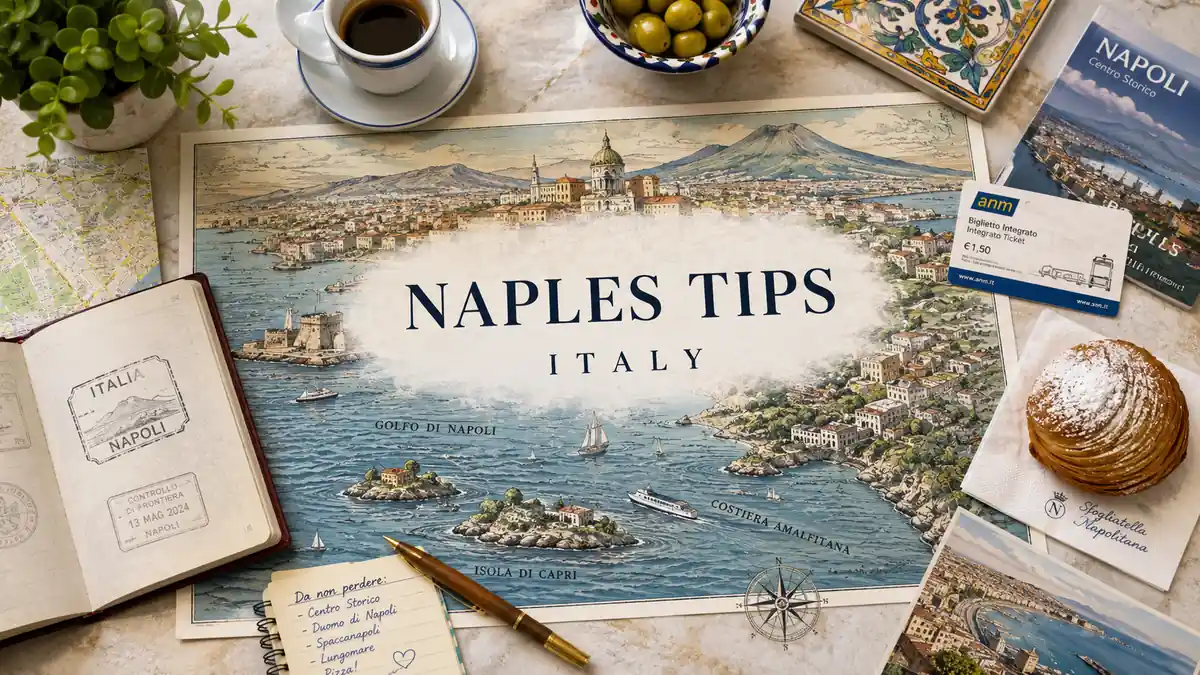
Naples is loud, chaotic, rough around the edges — and one of the most rewarding cities in Europe. No Italian destination divides first-timers so sharply, and almost every bad review traces back to the same mistake: arriving unprepared for what the city actually is. The grit is normal. It is not a warning sign, and it is not the whole story. This guide covers the tips that genuinely change a first Naples trip: the mindset that lets the city land well, how many days to give it, when to go, why cash still rules, how to eat world-class pizza without wasting an hour in a queue, the few Italian phrases worth learning, and how to cross the street like you were born there. Everything here is Naples-specific — the things that surprise even travelers who already know the rest of Italy well.
Quick Answer
Naples is gritty at first glance and absolutely worth visiting — arrive prepared and lean into its energy. Expectations decide the trip: visitors who want polish struggle, while those who embrace noise and chaos thrive. Carry some cash daily, stay in the historic centre, and give the city two to three days.
Trust Layer
Tripstou planning guide for travelers resolving one travel decision. Covers the main variable, traveler context, and practical tradeoffs.
Produced with AI assistance and reviewed by Alex Perrut, working in tourism since 2015, for the Tripstou editorial team. See our editorial process for details.
Last factual review: July 25, 2026.
Official sources consulted: italia.it, enit.it.
Key Takeaways
- Naples’ grit is normal, not a warning sign; judge it by the second morning, not the station district’s first hour.
- Give a first visit two to three days — two for the city, a third for Pompeii or a slower pace.
- Carry small cash every day; classic pizzerias, street counters, and the airport bus often refuse cards despite wider card acceptance.
- For pizza, arrive at the famous names early or pick a neighbourhood room full of locals to skip queues entirely.
- Stay central in the historic centre, not beside Napoli Centrale, so the city works for you from arrival onward.
- Cross streets decisively at a steady pace and let scooters flow around you; hesitation, not motion, causes the danger.
Table of Contents
Is Naples Worth Visiting, and What Should You Expect?
Yes — Naples is absolutely worth visiting, but it rewards travelers who accept its rough edges from the start. Expect noise, faded facades, laundry strung over the alleys, and scooters everywhere. Underneath that surface sits one of Europe’s most alive, generous, and rewarding cities.
The first impression is the trap. Napoli Centrale and the surrounding Piazza Garibaldi area — where most visitors arrive — are grittier than the tourist-facing centre, and judging the whole city by its station district is the classic first-timer mistake. Travelers who leave Naples disappointed almost always made up their minds within the first hour, somewhere between the platform and the taxi rank. Give the city until the second morning. By then the centro storico, the coffee, and the people have usually done their work.
On safety, Naples asks for normal big-city awareness, not fear. Pickpockets work the crowded lanes and transport hubs, so keep phones and wallets out of easy reach and stay attentive in dense crowds — that habit alone covers most risk. For honest, neighbourhood-level context, read our Naples safety guide.
One principle covers accommodation: stay central, not beside the station — our guide on where to stay in Naples handles the rest.
How Many Days Do You Need in Naples?
Two to three days is the right first visit to Naples for most travelers. Two days cover the historic centre, the food, and the waterfront at a comfortable pace. A third day makes room for Pompeii or a slower rhythm without stretching the city thin.
The answer moves with two variables — day trips and pace. Pompeii and Herculaneum sit a short train ride from the city, which is exactly why so many first-timers stretch their stay. The third day usually earns its place only if one of those ancient sites is on it; city-only visitors rarely regret leaving after two.
- Two days, city only: the historic centre, the underground layers, the pizza, and the seafront — the core Naples experience, done properly.
- Three days with a day trip: the default for first-timers who want Pompeii or Herculaneum without rushing the city itself.
- Longer, slower stays: suit travelers using Naples as a base and settling into its daily rhythm — markets in the morning, long dinners at night.
For what to fill those days with, the Naples city guide maps the essentials.
Tours and activities
Book skip-the-line tickets, day trips and local tours with free cancellation on most activities.
You can also browse everything on getyourguide.com.
Tripstou may earn a commission if you book through this link, at no extra cost to you.
When Is the Best Time to Visit Naples?
Spring and autumn are the best times to visit Naples. Shoulder seasons bring comfortable walking weather, manageable crowds, and a city that still feels like itself. Summer works if you handle heat well; winter stays mild but quieter, with shorter days and a slower pace.
The tradeoff runs between comfort and atmosphere. Naples is a walking city — narrow lanes, hills, few shortcuts — so the weather you walk in shapes the whole trip more than any single sight does. High summer combines the strongest heat with the biggest crowds, and the dense centro storico holds warmth long into the evening. Winter keeps the city open and local, at the cost of some seaside energy. If your dates are flexible, aim for the shoulder months on either side of summer and let the city breathe.
Do You Need Cash in Naples?
Yes — carry some cash in Naples every day. Cards work in hotels, larger restaurants, and most shops, but classic pizzerias, small family-run places, street food counters, and the airport bus are cash-first. A modest amount in small notes keeps every plan intact.
Cash is simply how much of the city still runs. The places most worth eating at are precisely the ones least likely to take a card — cash-only and legendary overlap constantly in Naples. Expect to pay cash at:
- Classic pizzerias and old-school trattorias — many of the most famous rooms in the city remain cash-only by tradition.
- Street food counters and markets — fried pizza, sfogliatella stands, produce stalls, and anywhere the queue moves fast.
- Coffee at the bar — espresso culture runs on coins, and small bars prefer them.
- The airport bus — drivers expect cash, so have it ready before you land or before you leave.
Small notes matter as much as the cash itself. Breaking a large bill for an espresso earns a sigh anywhere in the city, so keep change from bigger purchases and let it fund the small ones.
Spending money abroad
A Wise account converts your money at the mid-market exchange rate and shows every fee upfront, with a card you can spend in the local currency.
Check Wise’s rates and fees for your currency →
Tripstou may earn a commission if you sign up through this link, at no extra cost to you.
How Do You Find Great Pizza in Naples Without the Queues?
Go to the famous pizzerias early, or pick a neighbourhood pizzeria and skip the queue entirely. Both routes eat brilliantly in Naples, because great pizza here is the default. The real skill is avoiding the tourist traps that sit between those two options.
Naples is the birthplace of pizza, and the baseline quality across the city is extraordinary. That changes the maths of queueing: the line outside a famous name measures fame more than any gap in quality, because the unphotographed pizzeria two streets away works the same dough tradition. Pizza also stays cheap across the city, so price is never the reason to wait.
- For the famous names: arrive when doors open, or eat before the local dinner rush — Neapolitans eat late, so earlier sittings are calmer.
- For zero queues: walk into any neighbourhood pizzeria with a room full of Neapolitans. That crowd is the only review you need.
- Tourist-trap tells: laminated menus with photos, hawkers waving you in, and terraces planted on prime tourist squares. Real pizzerias do none of these.
Do People Speak English in Naples?
English is common in tourist-facing Naples — hotels, central restaurants, main sights — and much thinner elsewhere. You can manage a whole trip without Italian, but a handful of phrases changes how the city treats you. Neapolitans respond warmly to even clumsy attempts.
The phrases below cover most exchanges. Naples is a city of personal interactions — greeting people when you enter a shop or bar is basic etiquette, and skipping it reads as cold.
- Buongiorno / buonasera — good morning / good evening; open every interaction with one.
- Grazie — thank you.
- Per favore — please.
- Il conto, per favore — the bill, please.
- Scusi — excuse me, for attention or apology.
- Parla inglese? — do you speak English? Asking first always lands better than assuming.
For customs that apply across the country — tipping habits, coffee etiquette, dress codes — our Italy travel tips cover the layer above this page.
How Do You Handle Naples Traffic and Cross the Street?
Cross Naples streets decisively — step out at a steady pace, make eye contact, and keep moving. Drivers and scooters read your trajectory and flow around you. Hesitation is what causes confusion, because it breaks the unspoken agreement that keeps Neapolitan traffic working.
Traffic here looks like chaos and behaves like a negotiation. Nobody fully stops, and nobody expects you to wait forever at the kerb; the system runs on predictability. A pedestrian moving at a constant speed is easy to steer around. One who freezes, sprints, or doubles back is not.
- Shadow a local for your first few crossings — cross when they cross, at their pace, and the rhythm clicks fast.
- Never stop or dart mid-crossing — pick your moment, then commit to a steady line.
- In the narrow centro storico lanes, listen behind you — scooters share the alleys with pedestrians, so keep to one side and let them pass.
Frequently Asked Questions
Is Naples a good base for day trips to Pompeii, Amalfi, and Capri?
Yes, Naples is an excellent base for day trips. Pompeii and Herculaneum sit a short train ride away, and the Amalfi Coast and Capri are reachable by regional transport or ferry. Basing yourself in the city lets you explore the wider bay while keeping one central home.
Do you tip in Naples?
Tipping in Naples is modest and optional, not the obligation it is in some countries. Locals often leave small change or round up a restaurant bill, and a coin for good service is always welcome. There is no expected percentage, so tip lightly and only when service earns it.
What should you wear in Naples?
Dress comfortably and casually, but pack modest layers for churches. Naples is a walking city of hills and cobbles, so supportive shoes matter most. To enter the Duomo and other churches, cover your shoulders and knees; carrying a light scarf or wrap makes switching between sightseeing and worship effortless.
Is tap water safe to drink in Naples?
Yes, tap water in Naples is safe to drink. The city’s public fountains and household taps deliver clean, tested water, and refilling a bottle saves money and plastic. Some travelers prefer bottled water for taste, but there is no health reason to avoid the tap across the city.
Can you sit down for coffee in Naples, or should you drink it at the bar?
You can do both, but standing at the bar is the local way and often cheaper. Neapolitans order an espresso, drink it in a few minutes at the counter, and move on. Sitting at a table is fine for a longer break, though it usually carries a service charge.
Is Naples worth visiting if you have already seen Rome, Florence, and Venice?
Yes, and it may surprise you most of all. Naples feels rawer and more lived-in than Italy’s polished cities, with a street energy, food culture, and character entirely its own. Travelers who love the classic trio often find Naples the trip they remember longest, precisely because it refuses to be tidy.
Related Guides
- Naples city guide — the hub for what to actually see, do, and eat in the city.
- Naples safety guide — honest, neighbourhood-level safety context beyond the one paragraph here.
- Where to stay in Naples — the area-by-area breakdown behind the stay-central principle.
- Italy travel tips — the country-wide practical layer: customs, connectivity, and prep.
- Getting around Naples — metro, funiculars and buses, and when walking is simply faster.
- Naples trip cost — daily budgets and what a stay in the city typically costs.
Did this guide save you time or money? Tripstou is independent and reader-funded — if you'd like to give something back, you can support the site with a crypto contribution of any size.